

TALLAHASSEE, Fla. — The American agricultural engine is sputtering, not from a lack of grit or ambition, but from the asphyxiating weight of soaring operational costs. As national diesel prices shatter historical benchmarks, touching an unprecedented average of $6.23 per gallon—nearly three dollars higher than figures recorded at this exact juncture last year—producers across North Florida and South Georgia find themselves trapped in an escalating economic vice.
What is occurring at the local pump is not merely a localized inconvenience; it is a systemic crisis threatening the financial viability of family farms, commercial crop producers, and the intricate support network of machinery mechanics and logistics providers that keep the rural economy moving. With heavy-duty trucks averaging single-digit fuel economies and tractors requiring hundreds of gallons just to complete a single cycle of field preparation, the cost of putting food on the American table has never been more painfully apparent to those who grow it.
Executive Overview
The convergence of multi-year inflationary pressures, volatile global energy markets, and lingering supply chain bottlenecks has created a worst-case scenario for the agricultural sector. Diesel fuel is the lifeblood of modern farming. It powers the heavy machinery that tills the soil, drives the irrigation systems during dry spells, fuels the transport trucks that haul harvests to processing plants, and powers the service vehicles of independent mechanics who maintain the vital equipment of the agricultural community.
In the region spanning Tallahassee, Bainbridge, and Cairo, the reality of $6.29-per-gallon diesel at local truck stops has transformed routine farming operations into high-stakes financial gambles. Producers are no longer simply budgeting for seed, fertilizer, and labor; they are calculating whether the fuel required to harvest a crop will cost more than the market value of the yield itself.
This investigative report examines the ripple effects of record-high diesel prices through the lens of those living it firsthand. By analyzing the microeconomic impact on individual farming operations, exploring the cascading service-fee hikes felt by local clients, contextualizing macroeconomic fuel projections, and evaluating the long-term threat to consumer grocery prices, we outline an industry standing precariously at a crossroads.
Detailed Chronology: The Escalation of the Fuel Crisis
To understand how the agricultural community arrived at this precarious juncture, it is necessary to trace the rapid escalation of fuel costs over the past year.
The Slow Burn of Early Inflation
Throughout the previous agricultural cycle, farmers operated under the strain of steadily rising input costs. While crude oil markets experienced episodic volatility, agricultural producers managed to absorb incremental fuel hikes by tightening operational efficiencies, optimizing tractor routes, and deferring non-essential equipment upgrades. At that time, national diesel averages hovered near the $3.25 to $3.50 range—a level already considered burdensome by independent operators, yet manageable within traditional profit margins.
The Spring Acceleration
As global geopolitical tensions intensified and domestic refining capacities faced localized disruptions, wholesale and retail fuel prices accelerated rapidly. By late spring, the national average for diesel climbed past the $5.00 threshold, outpacing even the most pessimistic projections issued by federal energy analysts. Local farmers in South Georgia and the Florida Panhandle watched in dismay as regional truck stops adjusted their marquee pricing upward on a weekly, sometimes daily, basis. By the time AAA figures logged the national average at $5.90 last week, individual stations in Bainbridge had already pushed past the $6.25 mark, peaking at $6.29 per gallon.
The Breaking Point at the Pump
For local producers, the escalation transformed abstract economic data into tangible, heart-stopping math. A weekly trip to the fuel depot—once a routine operational expense—now drains upwards of $1,000 per vehicle. As fields require continuous tilling, planting, and maintenance, these weekly expenditures compound relentlessly, draining operational reserves that were traditionally earmarked for debt reduction, land acquisition, or infrastructure modernization.
Supporting Context & Metrics: The Anatomy of an Agricultural Fuel Drain
To grasp the true magnitude of the crisis, one must examine the specific mechanics of farming equipment and the staggering fuel consumption rates required to maintain modern agricultural output.
The Heavy Machinery Burden
Agriculture is, by its very nature, an energy-intensive enterprise. Unlike standard consumer vehicles that measure fuel efficiency in dozens of miles per gallon, heavy agricultural equipment operates on entirely different mathematical scales.
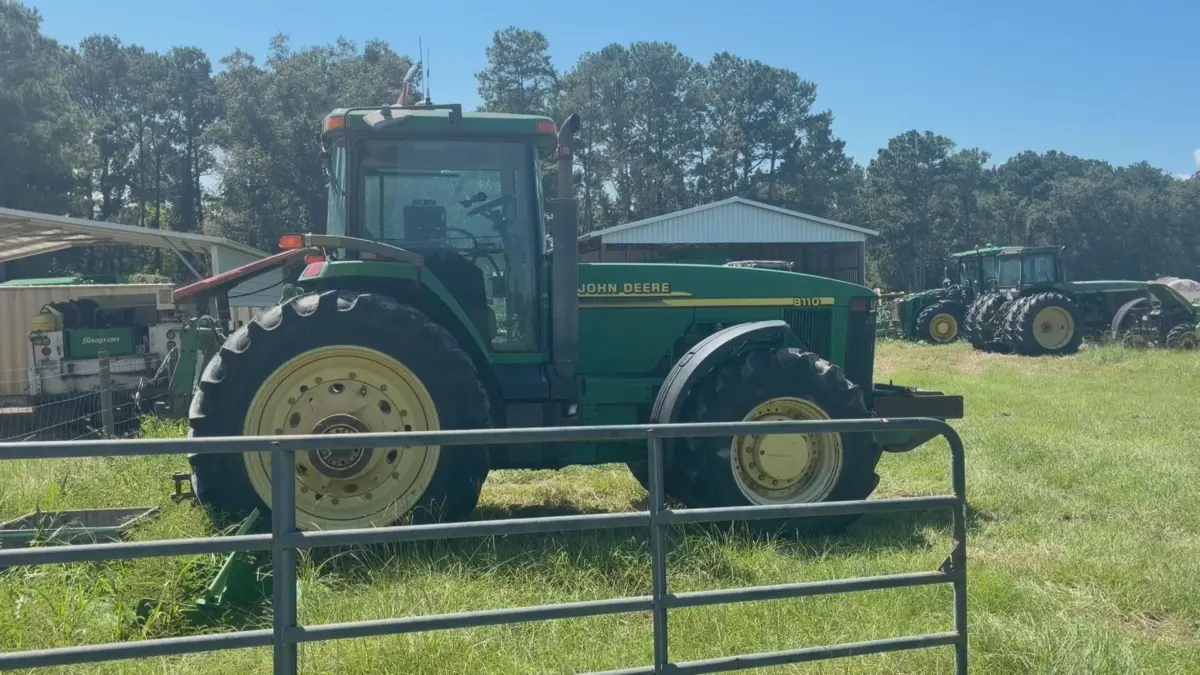
Consider the operations managed by Wayne Connell, a prominent peanut farmer and specialized agricultural equipment repairman operating across the South Georgia region. Connell’s daily routine requires him to transition seamlessly between working his own fields and traveling across county lines to service the failing machinery of fellow growers. The math governing his fleet tells a grim story:
- Tractor Fuel Capacity: Standard row-crop tractors utilized in peanut and general crop production feature massive fuel tanks holding approximately 180 gallons of diesel.
- Service Vehicle Economy: Connell’s primary work truck, laden with heavy tools, replacement parts, and diagnostic equipment, achieves a dismal 7 miles per gallon (mpg) under normal operating conditions.
- The Fill-Up Reality: When factoring in the current local rate of over $6.00 per gallon, a single complete fill-up for his working vehicles and tractors scales to roughly $1,030.
+-------------------------------------------------------------+
|              WAYNE CONNELL'S FLEET METRICS                  |
+-------------------------------------------------------------+
| Equipment Type       | Fuel Capacity / Efficiency           |
+-------------------------------------------------------------+
| Heavy Tractor        | ~180 Gallons per machine             |
| Service Work Truck   | ~7 Miles Per Gallon (mpg)            |
| Cost Per Full Tank   | Approx. $1,030 per major fill-up     |
+-------------------------------------------------------------+
These figures do not account for idled engine hours during deep-soil tilling, nor do they factor in the auxiliary fuel required to run irrigation pumps during prolonged dry spells. When fuel costs multiply across dozens of tractors, combine harvesters, irrigation engines, and transport semis, the baseline cost of production swells to unsustainable levels.
Macroeconomic Projections vs. Reality
The severity of the current crisis is further highlighted by how severely actual market conditions have outpaced official federal forecasts.
Earlier economic models released by the U.S. Energy Information Administration (EIA) projected that the average price for diesel throughout 2026 would stabilize around a much more modest $5.07 per gallon. However, reality completely obliterated those projections. When AAA reported last week that the national average had surged to $5.90—with retail locations in rural hubs touching $6.29—it became abundantly clear that federal benchmarks were failing to capture the hyper-inflationary pressures hitting rural energy consumers.
Coupled with stubbornly high fertilizer costs, which have remained elevated due to global supply chain realcriptions and raw material shortages, farmers are caught in a destructive cost-price squeeze: the cost of growing food is skyrocketing, while the prices they receive at the market gate fail to scale proportionally.
Official Statements and Local Perspectives: Voices from the Field
The human cost of this macroeconomic squeeze is best understood through the testimonies of the individuals whose livelihoods depend on the soil.
Wayne Connell: Spreading the Burden Across a Fragile Network
Wayne Connell occupies a unique vantage point within the agricultural community. As both a peanut farmer and a trusted equipment repair specialist, he sees the crisis from two distinct angles: the cost of farming his own land, and the cost of traveling to rescue broken machinery for other growers.
Because his service truck burns through fuel at a rate of just seven miles per gallon, traveling to remote farms across South Georgia has become an exorbitant expense. To survive, Connell has been forced to alter his billing structures, implementing policies that were unthinkable just a few years ago.
"We’re having to increase a little bit on our service call fees to kind of offset some of the fuel prices such as that," Connell explained.
"Used to, where I would only bill a certain amount of fuel mileage on a service call fee, now we’re having to bill a service call fee and the mileage too to help cover the added costs of fuel."
This decision, while essential for Connell’s survival as a small business owner, introduces a painful domino effect. By charging clients for both service calls and mileage, he passes his high operational overhead directly onto fellow growers. In an industry where profit margins are traditionally razor-thin, these added service expenses bite deeply into the already depleted revenues of surrounding farms.
The Multiplier Effect: Fertilizer and Consumer Prices
Other regional farmers interviewed amid the crisis warn that the pressure cannot be absorbed indefinitely. As fuel expenditures claim an increasingly large percentage of farm revenue, producers are staring down a stark ultimatum: either raise the prices of their agricultural yields or face inevitable insolvency.
One local producer noted that the compounding nature of fuel and fertilizer inflation makes a consumer-facing price hike nearly inevitable if energy markets do not course-correct soon. When it costs thousands of dollars merely to fuel the tractors needed to plant a crop, and hundreds more to deliver it to market, those costs are inevitably baked into the supply chain. Ultimately, the burden threatens to cascade downstream to grocery store shelves, impacting consumers who are already grappling with broader cost-of-living increases.
Future Outlook: Navigating Uncharted Waters
As the agricultural community looks toward the remainder of the season, uncertainty reigns supreme. The sustainability of regional farming operations depends heavily on whether energy markets can achieve stabilization or if relief measures materialize from regulatory bodies.
Key Factors to Monitor
- Global Crude Supply & Refining Capacity: The divergence between EIA projections and current retail realities underscores the volatility of domestic refining margins. Until regional fuel supplies stabilize, localized spikes will continue to threaten rural transport economics.
- Input Cost Synergy: Diesel prices do not exist in a vacuum. Their symbiosis with chemical fertilizers—which rely heavily on natural gas and energy-intensive manufacturing processes—means that high fuel prices inherently exacerbate other agricultural cost centers.
- Adaptive Business Models: As demonstrated by service providers like Wayne Connell, small agribusinesses will likely continue adopting dynamic pricing models, passing transportation costs downstream. While this preserves local mechanics and service providers, it accelerates the financial strain on primary crop growers.
- Consumer Price Transmission: The ultimate destination of these escalating operational costs is the retail grocery market. Industry analysts warn that persistent high diesel costs will inevitably translate into elevated food prices for everyday shoppers in the months ahead.
Conclusion
The crisis unfolding across the pump stations of Bainbridge, Cairo, and the broader Tallahassee region is a stark reminder of the delicate infrastructure supporting modern civilization. When diesel touches $6.29 a gallon, it does not just hit the balance sheets of energy companies; it strikes at the heart of the plow, the tractor, and the service truck. Unless meaningful relief arrives to ease the burden of fuel and operational inputs, the resilience of the American farmer will face its most severe test in generations.

0 Comments