

Executive Overview
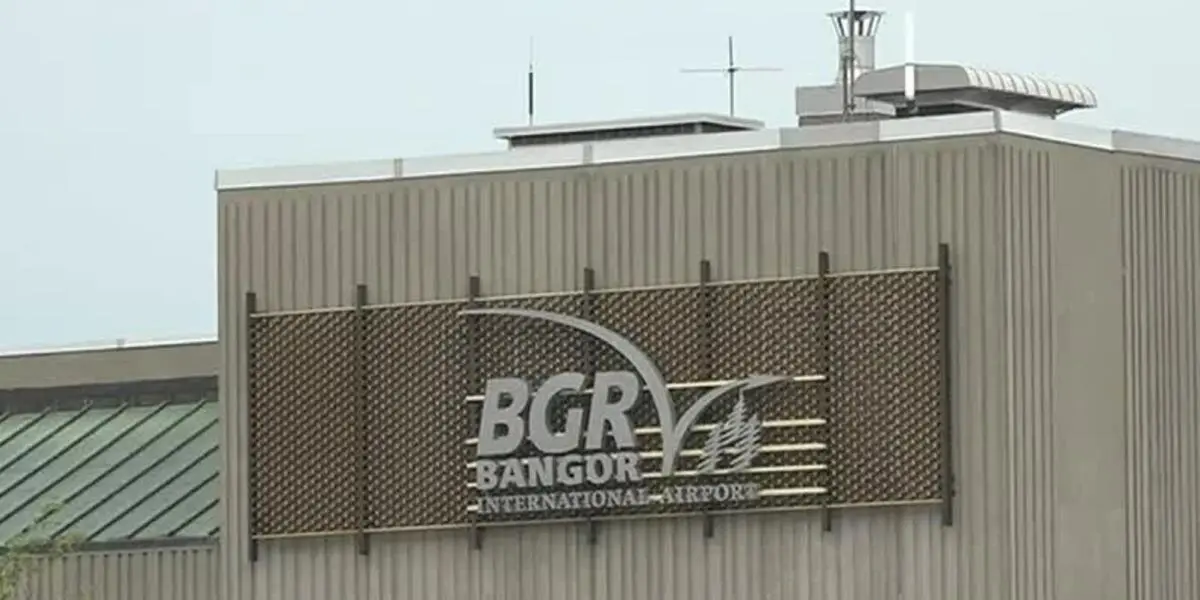
BANGOR, Maine — What was intended to be a routine transatlantic commercial flight transformed into a harrowing airborne crisis last week, culminating in a federal court appearance on Wednesday. United Airlines Flight, traveling from Milan, Italy, to Newark, New Jersey, was forced to make an unscheduled emergency diversion to Bangor International Airport in Maine after a passenger allegedly launched a violent assault on the flight crew.
The suspect, identified in federal court documents as Russian national Kristina Kedysheva, reportedly flew into a rage after flight attendants refused to continue serving her alcoholic beverages. According to investigative filings submitted by the Federal Bureau of Investigation (FBI), the situation escalated rapidly from verbal disobedience into a chaotic physical confrontation. Kedysheva allegedly ignored mandatory safety directives, began recording the cabin crew, and ultimately bit and kicked multiple crew members as they attempted to restore order in the cabin.
The incident underscores a persistent and alarming trend of unruly passenger behavior plaguing the commercial aviation industry. Federal agencies, including the FBI, U.S. Air Marshals, Department of Homeland Security (DHS), and U.S. Customs and Border Protection (CBP), coordinated a rapid response upon touchdown in Maine, apprehending the suspect and slapping her with serious federal charges. Additionally, immigration authorities have lodged an Immigration and Customs Enforcement (ICE) detainer against Kedysheva, setting the stage for a complex legal proceeding that intersects federal aviation law, criminal assault, and immigration enforcement.
This comprehensive report examines the detailed chronology of the flight, the specific allegations contained within federal court records, the broader context of escalating air rage incidents, and the official responses from law enforcement and aviation stakeholders.
Detailed Chronology: From Milan to Bangor
The Inception of the Flight and Escalation
The flight commenced under standard operating conditions from Milan Malpensa Airport, bound for Newark Liberty International Airport. For the initial hours of the journey, the transatlantic crossing proceeded without notable incident. However, according to witness testimonies and airline logs detailed in court affidavits, Kedysheva began consuming alcohol and subsequently requested further service from the cabin crew.
Per federal aviation regulations and internal airline policies, flight attendants are strictly mandated to monitor passenger intoxication levels to ensure safety at high altitudes. Recognizing signs of excessive consumption, the flight crew exercised their professional judgment and politely refused to provide Kedysheva with additional alcoholic beverages. This refusal served as the primary catalyst for the subsequent escalation.
Defiance of Safety Protocols
As the aircraft progressed across the Atlantic and encountered standard turbulence or airspace transitions, the flight deck illuminated the mandatory seat belt sign. Cabin crew members systematically walked the aisles to ensure all passengers were seated and secured.
Kedysheva openly defied these safety directives, refusing to return to her assigned seat. Instead of complying with instructions designed to protect passengers and crew from injury, she escalated the confrontation by pulling out a recording device and aggressively filming the flight attendants as they attempted to manage the cabin. Her behavior quickly drew the concern of nearby travelers, who noted that her demeanor appeared erratic, swinging unpredictably between severe agitation and incoherent shouting.
The Outbreak of Physical Violence
The situation deteriorated from non-compliance into active physical violence when flight attendants attempted to intervene and guide Kedysheva back to her seat to secure the cabin. According to FBI testimony, Kedysheva lunged at a flight attendant, biting them during the scuffle.
As the crew moved to restrain the increasingly violent passenger to protect the safety of the wider cabin, Kedysheva directed her attacks toward the same flight attendant, kicking her squarely in the stomach. The kinetic force of the kick resulted in a significant shoulder injury for the crew member, requiring immediate medical intervention upon landing.
Airborne Interventions and Diversion
Recognizing that the safety of the aircraft was severely compromised, the flight crew initiated emergency protocols. Five individuals—comprising a combination of trained cabin crew members and courageous civilian passengers—joined forces to physically subdue Kedysheva and secure her in a safe location for the remainder of the flight.
With an injured crew member requiring medical attention and a volatile, unrestrained threat neutralized within the cabin, the flight deck made the critical decision to divert. The aircraft altered its flight path, heading north toward Bangor International Airport in Maine, where local authorities and federal agents stood ready to intercept the flight upon its emergency landing.
Supporting Context & Metrics: The Crisis of Air Rage
A Persistent Industry-Wide Problem
The harrowing incident aboard the United Airlines flight is far from an isolated event. Over the past several years, commercial aviation has witnessed a dramatic surge in unruly passenger incidents, commonly referred to as "air rage." While numbers peaked sharply during the immediate post-pandemic travel boom—often fueled by mask mandates and operational disruptions—disruptive behavior tied to alcohol consumption and personal non-compliance remains a critical operational hazard for global airlines.
According to data compiled by the Federal Aviation Administration (FAA), hundreds of unruly passenger investigations are initiated annually. These incidents range from verbal abuse and refusal to follow crew instructions to physical assaults on flight attendants and attempts to breach the cockpit door.
The Alcohol Factor
Alcohol is frequently cited as a primary catalyst in the most severe cases of air rage. Physiological changes at cruising altitude—such as lower cabin pressure and reduced oxygen saturation—can amplify the effects of alcohol on the human body, leading to unpredictable behavioral spikes.
Airlines maintain strict protocols regarding the service of alcohol, and flight crews are legally empowered under federal regulations to cut off any passenger exhibiting signs of intoxication. Despite these clear boundaries, flight attendants continue to face verbal and physical abuse when enforcing these policies.
The Legal and Economic Toll on Aviation Professionals
Flight attendants are fundamentally safety-critical personnel, distinct from their customer-service roles. When crew members are assaulted, injured, or forced to spend critical flight hours managing an unruly individual, the overall safety margin of the flight is diminished.
Injuries such as the shoulder trauma sustained by the United Airlines flight attendant in this incident carry long-term career, physical, and psychological consequences for aviation professionals. Industry advocates and labor unions have continuously pushed for harsher penalties, mandatory no-fly lists shared across all commercial carriers, and increased federal prosecution rates to deter such behavior.
Official Statements and Legal Proceedings
Federal Charges and Court Appearance
Following the emergency landing in Bangor, law enforcement agencies swiftly boarded the aircraft. Kedysheva was taken into custody by a coordinated multi-agency response team consisting of the FBI, U.S. Air Marshals, and local municipal law enforcement officers.
On Wednesday, Kedysheva appeared before a federal judge in Maine to face formal charges. According to court filings, she has been charged with:
- Interference with flight crew members and attendants, a federal offense that carries severe penalties, including lengthy imprisonment and substantial fines.
- Application of certain criminal laws to acts on aircraft, bringing the extraterritorial jurisdiction of U.S. federal law to bear on crimes committed aboard international flights entering United States airspace.
The Department of Homeland Security and ICE Detainer
The Department of Homeland Security (DHS) and U.S. Customs and Border Protection (CBP) played an instrumental role in processing the suspect upon the aircraft’s arrival in Maine. Given her status as a foreign national holding citizenship in the Russian Federation, federal immigration authorities quickly stepped in.
In an official statement released following the arrest, DHS confirmed that an immigration detainer has been lodged by U.S. Immigration and Customs Enforcement (ICE) against Kedysheva. This detainer ensures that if she posts bond, completes a potential criminal sentence, or has her federal criminal charges resolved, she will be transferred directly into ICE custody for removal proceedings.
The involvement of multiple federal agencies highlights the gravity with which the United States government treats security breaches and assaults within the national airspace system.
Future Outlook and Industry Implications
Strengthening Passenger Accountability
As the legal proceedings against Kristina Kedysheva advance through the federal court system, the case serves as a stark reminder of the zero-tolerance policy enforced by U.S. authorities regarding in-flight disturbances. Legal experts anticipate that federal prosecutors will push for a robust sentence to send a clear deterrent message to the traveling public.
The integration of criminal prosecution with immediate immigration enforcement via the ICE detainer illustrates a seamless interagency approach designed to protect the integrity of America’s borders and transportation infrastructure.
Implications for Airline Security and Crew Training
For United Airlines and the broader commercial aviation sector, incidents of this magnitude prompt continuous reviews of cabin security protocols, de-escalation training, and crew resource management. Airlines are increasingly investing in advanced self-defense training for flight attendants, as well as enhanced communication tools to alert law enforcement on the ground long before an aircraft touches down.
Furthermore, industry stakeholders continue to lobby federal legislators for a unified, federally mandated "no-fly" database that would permanently bar individuals convicted of violent air rage from stepping foot on any commercial aircraft operating within or transiting through the United States.
Conclusion
The emergency diversion of a transatlantic flight to Bangor, Maine, caused by an alcohol-fueled rampage, highlights the profound vulnerabilities and operational pressures faced by modern commercial aviation. While the prompt actions of the flight crew, supportive passengers, and multi-agency law enforcement personnel successfully neutralized the threat and averted a catastrophic escalation, the incident remains a sobering illustration of the work still required to ensure safety and order in the skies. As Kristina Kedysheva faces the full weight of the American legal and immigration systems, the aviation industry watches closely, hoping that strict accountability will help stem the tide of disruptive air rage.

0 Comments