A quiet but seismic realignment of the American electorate has fundamentally altered the nation’s political landscape. Driven by aggressive, retaliatory mid-decade redistricting battles, approximately 34.8 million Americans—nearly one in ten citizens—now find themselves living in different congressional districts than they did during the 2024 election cycle.
According to a landmark study released by the nonpartisan democracy advocacy group Protect Democracy, this unprecedented wave of mid-decade map-making has not only shifted district boundaries but has also radically transformed the voter composition of the U.S. House of Representatives. In roughly one-fifth of all congressional districts nationwide, more than 25 percent of the registered voters are entirely new to their district compared to just two years ago.
The findings highlight a profound shift in how American political parties secure and maintain power. Historically, congressional district lines were drawn once every ten years following the federal decennial census. However, the collapse of this norm has ushered in an era of continuous, highly partisan cartography. By prioritizing raw partisan advantage over geographic continuity, historical communities, and local economies, mapmakers are increasingly selecting their voters rather than voters choosing their representatives.
Legal scholars and political scientists warn that this transition threatens the core of representative democracy, accelerating polarization, alienating voters, and locking both major political parties into a self-reinforcing "doom loop" of retaliatory redistricting.
Detailed Chronology of the Mid-Decade Redistricting War
The current crisis did not emerge in a vacuum; it is the result of a rapid escalation of constitutional hardball that began shortly after the 2024 elections.
[Late 2024 / Early 2025]
Trump urges Texas GOP to redraw maps mid-decade
       │
       ▼
[Mid-2025]
Texas passes highly partisan GOP map
       │
       ▼
[Late 2025]
California Democrats respond: Referendum suspends independent commission
       │
       ▼
[Early-to-Mid 2026]
Other states (including Missouri) attempt retaliatory map-making
       │
       ▼
[Late August 2026]
U.S. Supreme Court blocks Trump-backed Missouri maps; state reverts to older lines
       │
       ▼
[September 2, 2026]
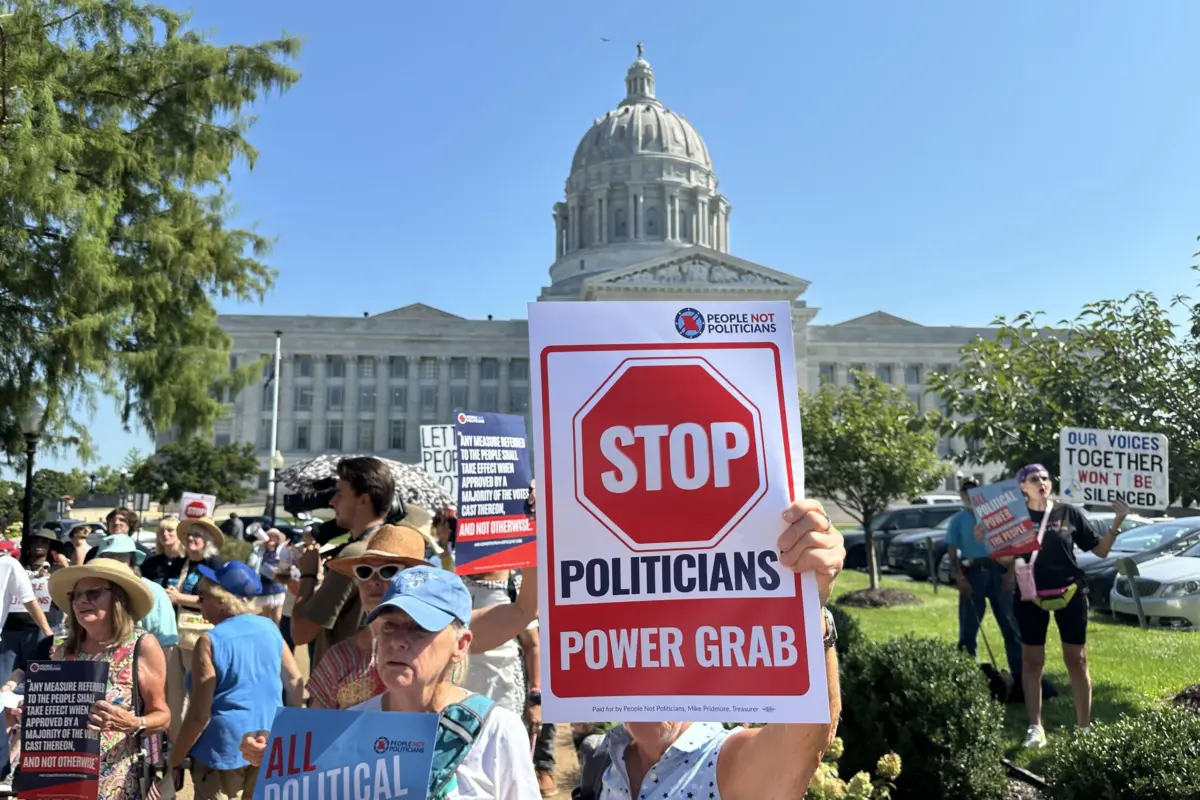
Mass protests erupt at Missouri State Capitol amid widespread voter confusion
The Spark: The Texas Maneuver
The catalyst for this nationwide redistricting race occurred when former President Donald Trump publicly pressured the Republican-controlled Texas Legislature to scrap the state’s 2021 congressional map. Although the existing map already favored Republicans, Trump and national party strategists argued that a more aggressive mid-decade redraw could permanently lock in additional seats, neutralizing potential Democratic gains in rapidly growing suburban areas.
Texas lawmakers complied, passing a highly controversial map that systematically dismantled competitive districts. This maneuver relied on a key legal loophole: while federal law mandates redistricting at least once a decade to account for population shifts, it does not explicitly forbid states from redrawing lines more frequently.
The Retaliation: California’s Counter-Punch
The Texas redraw triggered an immediate and powerful counter-response from Democrats. In California—the nation’s most populous state—party leaders argued they could not unilaterally disarm in the face of Republican aggression.
For over a decade, California’s congressional lines had been drawn by an independent, nonpartisan citizen commission. However, in late 2025, Democratic allies successfully organized a high-stakes statewide referendum that temporarily suspended the commission’s maps. The state legislature subsequently pushed through a revised congressional map designed to maximize Democratic advantages in the Central Valley, Orange County, and the political suburbs of Los Angeles.
The Domino Effect and the Missouri Meltdown
Following the actions of Texas and California, several other state legislatures attempted to secure their own partisan advantages ahead of the 2026 midterm elections.
In Missouri, the push for mid-decade redistricting descended into bureaucratic and legal chaos. The Republican-led legislature, urged on by factional pressure and Trump-aligned national strategists, passed a highly aggressive map that split historic urban neighborhoods in Kansas City and St. Louis to dilute Democratic voting strength.
The plan met immediate resistance, sparking a flurry of lawsuits and conflicting rulings from state and federal lower courts. The legal uncertainty culminated just weeks before the general election. In late August 2026, the U.S. Supreme Court issued an emergency stay, blocking the new, Trump-backed Missouri map that had been utilized during the state’s primary elections. The high court ordered Missouri to revert to its pre-existing congressional districts for the November 2026 general election.
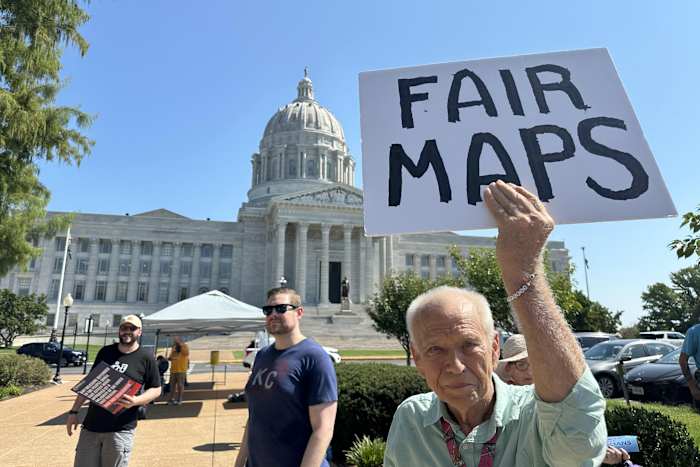
The sudden reversal triggered widespread administrative confusion. On September 2, 2026, grassroots protests erupted outside the state Capitol in Jefferson City, Missouri. Demonstrators, community organizers, and local voters gathered to voice their frustration over the shifting lines, with many expressing deep concern that they no longer knew who their candidates were or which congressional district they resided in.
Supporting Context & Metrics: The Scale of the Shift
The quantitative findings compiled in the Protect Democracy report, titled Re-Gerrymandering: The Democratic Cost of Continuous Redistricting, reveal the sheer scale of the disruption to the American electorate.
The Macro-Level Impact
Total Displaced Voters:34.8 million Americans have been reassigned to a different congressional district since the 2024 cycle. This represents roughly 10.5% of the entire United States population.
District Composition Shifts: Approximately 20% of all congressional districts (87 out of 435) now feature electorates where more than 25% of the registered voters are new to the district.
National Partisan Imbalance: Analysts estimate that mid-decade redistricting maneuvers have net-benefited the Republican Party by approximately nine congressional seats nationally, largely due to efficient map-drawing in Southern and Midwestern states, which offset Democratic gains in California and New York.
State
Original Map Drawer
2026 Status / Map Mechanism
Estimated Net Seat Shift
Texas
State Legislature
Mid-Decade Legislative Redraw
+4 Republican
California
Independent Commission
Suspended via Partisan Referendum
+3 Democrat
Missouri
State Legislature
Blocked by Supreme Court (Reverted to 2022 Map)
Neutral (but High Voter Confusion)
North Carolina
State Legislature
Mid-Decade Legislative Redraw
+3 Republican
The "Doom Loop" Phenomenon
Political scientists use the term "doom loop" to describe the cyclical, escalatory nature of modern redistricting. When one party successfully alters district maps mid-decade to gain an advantage, the opposing party faces immense pressure from its base and national donors to retaliate in states where it holds legislative trifectas.
┌────────────────────────────────────────────────────────┐
│  Party A enacts aggressive mid-decade gerrymander      │
└───────────────────────────┬────────────────────────────┘
                            │
                            ▼
┌────────────────────────────────────────────────────────┐
│  Party B suffers seat losses in national elections      │
└───────────────────────────┬────────────────────────────┘
                            │
                            ▼
┌────────────────────────────────────────────────────────┐
│  Party B retaliates in states under its control        │
└───────────────────────────┬────────────────────────────┘
                            │
                            ▼
┌────────────────────────────────────────────────────────┐
│  Norm of 10-year redistricting cycle collapses entirely│
└───────────────────────────┬────────────────────────────┘
                            │
                            ▼
┌────────────────────────────────────────────────────────┐
│  Mapmaking becomes a continuous, permanent campaign    │
└────────────────────────────────────────────────────────┘
This dynamic erodes the traditional incentive for parties to field moderate candidates who can appeal to broad geographic coalitions. Instead, continuous map-making encourages candidates to cater strictly to highly partisan primaries, secure in the knowledge that their districts will be safely drawn to protect them from general election challenges.
Official Statements and Expert Analysis
The fallout from the Protect Democracy report has sparked fierce debate among policymakers, advocates, and citizens regarding the future of representative government.
The Authors’ Perspective
Ben Raderstorf, a leading policy advocate at Protect Democracy and co-author of the study, expressed deep concern over the long-term systemic consequences of this trend:
"If this trend continues unchecked, it really brings into question whether or not elected officials are representing their constituents anymore, or if the voters are simply being randomly selected by partisan mapmakers to squeeze out a marginal advantage.
The logic of gerrymandering points inevitably toward maximalist partisan advantage on both sides. There is no natural off-ramp other than systemic reform. It is the only way to break this destructive cycle."
Grassroots Frustration
For everyday citizens, the constant redrawing of maps has created unprecedented hurdles for political participation and community advocacy.
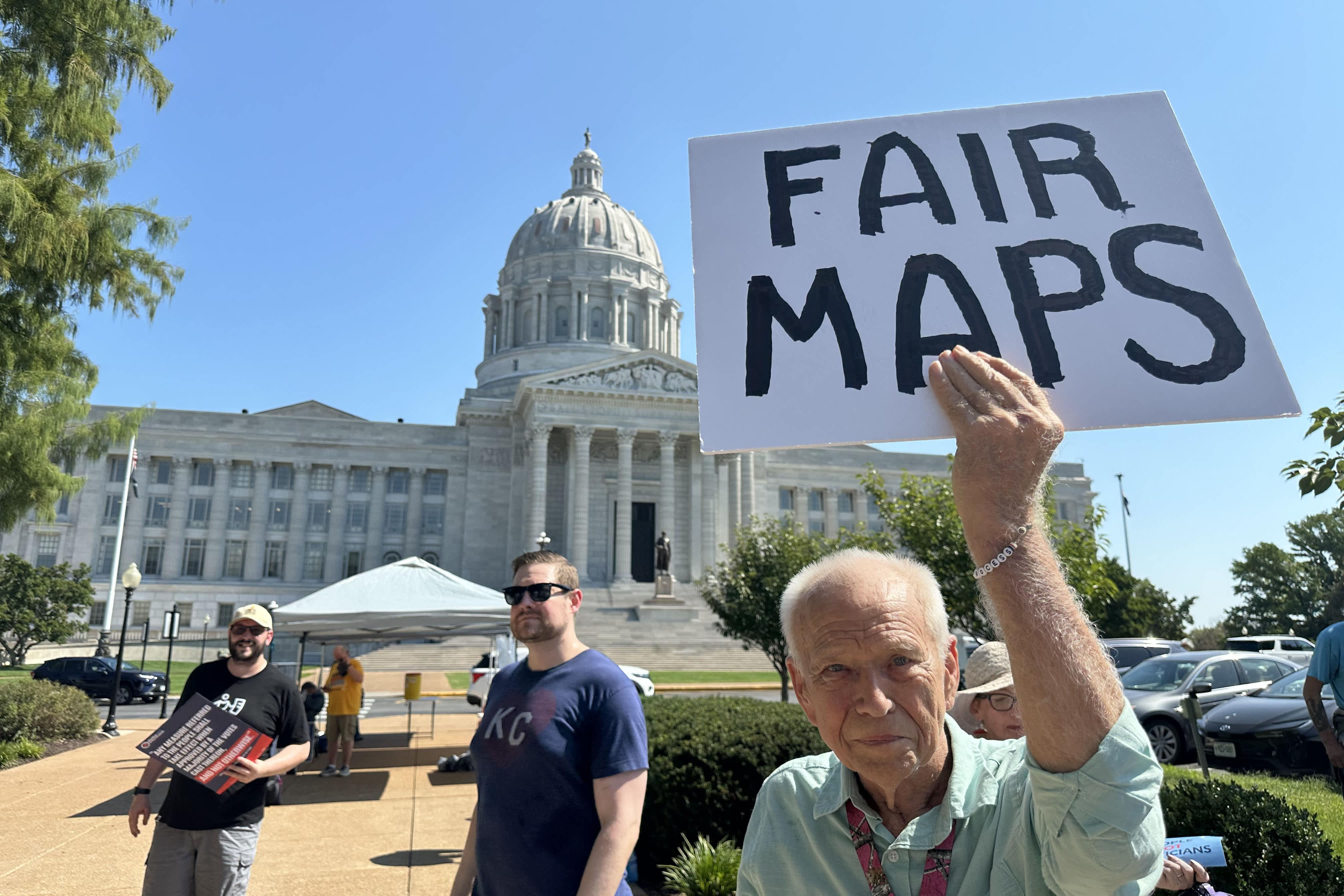
Standing outside the Missouri State Capitol during the September 2 protests, Steve Perry, a resident of Kansas City, held a hand-painted sign protesting the state’s redistricting chaos. Speaking to reporters, Perry highlighted the practical difficulties facing local communities:
"We spent years building coalitions in our neighborhood to advocate for federal funding, infrastructure, and community development. Now, with the stroke of a pen, they’ve sliced our neighborhood in half, thrown us into a district with communities hundreds of miles away, and then changed it back at the last minute because of a court order.
Nobody knows who their congressman is, who is running, or where we are supposed to vote. It feels like our voices are being intentionally drowned out by partisan games in Jefferson City and Washington."
Academic and Legal Consensus
Constitutional scholars warn that the judiciary’s reluctance to police partisan gerrymandering has effectively greenlit this perpetual map-making cycle. Following the Supreme Court’s 2019 ruling in Rucho v. Common Cause, which declared that partisan gerrymandering claims present nonjusticiable political questions for federal courts, state legislatures have felt increasingly emboldened to experiment with aggressive cartography.
"What we are seeing is the natural consequence of removing federal judicial guardrails," said Dr. Elena Vance, a political scientist specializing in electoral systems. "Without a clear federal prohibition against mid-decade redistricting for purely partisan purposes, state-level politicians would be politically foolish not to engage in it. The system now actively penalizes restraint."
Future Outlook and Structural Reforms
As the United States heads toward the late 2020s, the battle over congressional map-making is poised to intensify. Without structural intervention, the continuous redrawing of congressional districts could become a permanent feature of American political campaigns.
Proposed Legislative and Structural Remedies
The Protect Democracy report outlines several potential pathways to break the redistricting doom loop, though each faces significant political and legal hurdles:
Federal Legislative Ban on Mid-Decade Redistricting: Congress possesses the constitutional authority under Article I, Section 4 (the Elections Clause) to regulate the time, place, and manner of congressional elections. Passing federal legislation that restricts states to drawing maps once per decade—immediately following the decennial census—would instantly halt the current cycle of retaliatory map-making.
Proportional Representation: Some electoral reform advocates argue that the single-member district system itself is the root cause of the crisis. Transitioning to multi-member districts with ranked-choice voting would render traditional geographic gerrymandering obsolete, ensuring that a party’s legislative representation closely mirrors its actual share of the popular vote.
National Nonpartisan Commission Mandate: Mandating that all states utilize independent, nonpartisan citizen commissions to draw congressional lines would remove partisan politicians from the map-drawing room entirely. However, as California’s recent suspension of its commission demonstrates, state-level commissions remain vulnerable to legislative overrides and popular referendums during times of intense national polarization.
The Road Ahead
Implementing any of these reforms will require overcoming deep-seated partisan divisions in a closely divided Congress. For the foreseeable future, both major parties are locked in an arms race where neither can afford to stop drawing maps without ceding a decisive advantage to the other.
As voters head to the polls under a patchwork of contested, redrawn, and legally precarious maps, the ultimate cost of this cartographic warfare may be the further erosion of public trust in the democratic process itself. As Ben Raderstorf warned, "This is only going to get worse until someone stops it. The stability of our representative system depends on breaking this cycle before the maps lose all connection to the communities they are meant to represent."



0 Comments