

Executive Overview
In an era marked by persistent inflationary pressures and rising cost-of-living indexes, the financial burden of basic education requirements has become an increasingly acute challenge for working-class families. This economic reality was starkly evident in Jacksonville, Florida, where a massive community-led initiative mobilized to distribute free school uniforms to hundreds of local students. Organized by prominent local leaders—former City Councilman Reginald Gaffney Sr. and current Jacksonville City Councilman Reggie Gaffney Jr.—the event served as a critical economic safety valve for families navigating the financial demands of the academic year.
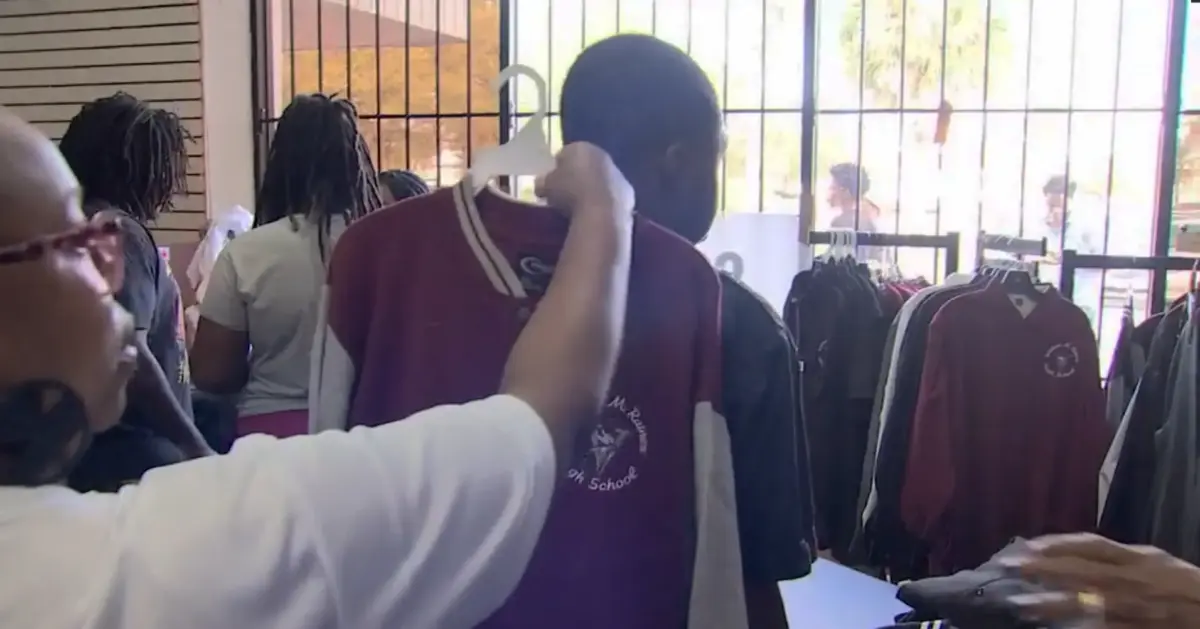
The distribution event, which drew more than 500 students and family members, targeted several historically underserved schools in the Duval County Public Schools (DCPS) system. By providing essential school attire—including polo shirts, trousers, and cold-weather jackets—at no cost, the organizers sought to alleviate the immediate financial anxiety that often peaks ahead of the winter holiday season.
This initiative highlights a broader, systemic issue within public education: while mandatory uniform policies are designed to foster discipline, minimize peer pressure, and enhance campus safety, they simultaneously impose a non-negotiable financial levy on low-income households. The success of the Jacksonville giveaway underscores the vital role that targeted mutual aid and localized political leadership play in bridging the gap between institutional mandates and community affordability.
Detailed Chronology
The planning and execution of the uniform giveaway required a coordinated logistical effort to ensure that the families most in need were successfully reached and served.
Phase 1: Needs Assessment and School Selection
Organizers began by identifying specific clusters of schools within the Duval County Public School district characterized by high concentrations of economically disadvantaged students. The selection process prioritized institutions with Title I designations, ultimately extending targeted invitations to families with students attending:
- William M. Raines High School
- Jean Ribault High School
- Jean Ribault Middle School
- Andrew Jackson High School
- Lake Shore Middle School
These schools represent core educational institutions in Jacksonville’s Northside and Westside neighborhoods—areas that have historically faced systemic economic disinvestment.
Phase 2: Inventory Sourcing and Outreach
In the weeks leading up to the event, the Gaffneys and their network of volunteers secured a diverse inventory of standard school attire. Because DCPS guidelines require specific color schemes and clothing types depending on the school, organizers had to source a wide range of sizes and colors to ensure compliance with individual school dress codes.
To maximize attendance, the organizers bypassed traditional, slow-moving bureaucratic communication channels in favor of direct-to-consumer outreach. Using digital databases, community networks, and school-associated contact lists, they sent targeted SMS alerts and digital notifications directly to parents’ mobile phones. This grassroots communication strategy proved highly effective, reaching parents during their working hours and allowing them to plan their weekend schedules around the giveaway.
Phase 3: Day-of-Event Operations
On Saturday morning, the distribution center opened its doors to a waiting crowd. The event was structured similarly to a retail experience to preserve the dignity of the participating families:
- Check-In and Intake: Families were greeted by volunteers who helped identify the specific uniform requirements of their children’s respective schools.
- Sizing and Selection: Rather than receiving pre-packaged bundles, parents and students were encouraged to browse racks of shirts, pants, and jackets, allowing students to try on items to ensure a proper fit.
- Distribution and Community Engagement: Over the course of several hours, more than 500 individuals processed through the distribution lines, receiving high-quality, brand-new apparel completely free of charge.
Supporting Context & Metrics
To understand the necessity of this giveaway, it is essential to examine the underlying economic data of the Jacksonville metropolitan area, the demographics of the targeted schools, and the shifting dynamics of back-to-school and mid-year shopping expenses.
The True Cost of "Free" Public Education
While public K-12 education is tuition-free, the ancillary costs of attendance have risen dramatically. According to data from the National Retail Federation (NRF), the average American household spends over $800 annually on back-to-school shopping, with clothing and shoes representing the largest share of non-electronic expenditures.
Estimated Annual Cost of Mandatory School Uniforms per Student:
+------------------------+------------------+
| Item Category          | Average Cost ($) |
+------------------------+------------------+
| Polo Shirts (5-pack)   | $50.00 - $75.00  |
| Khaki/Navy Pants (3x)  | $60.00 - $90.00  |
| Winter Jacket/Sweater  | $30.00 - $50.00  |
| Required Footwear      | $40.00 - $80.00  |
+------------------------+------------------+
| Estimated Total        | $180.00 - $295.00|
+------------------------+------------------+
For a family with three school-aged children, complying with mandatory uniform policies can easily demand an upfront investment of $500 to $900 per year. For households living at or near the federal poverty line, this expenditure competes directly with basic necessities such as rent, utilities, and groceries.
Demographic and Economic Indicators
The schools selected for this initiative serve student bodies with profound economic needs. Under the federal National School Lunch Program, schools where a high percentage of students qualify for free or reduced-price lunch are designated as Title I.
- Raines and Ribault High Schools: Both institutions serve student populations where the economically disadvantaged rate consistently exceeds 70-80%.
- Jacksonville Poverty Metrics: According to recent U.S. Census Bureau data, the poverty rate in Jacksonville hovers around 15%, but this figure is highly concentrated. In specific ZIP codes within the Northside (where Raines and Ribault are located), poverty rates climb past 25%, more than double the national average.
The Mid-Year Growth Spurt and Holiday Pressure
Many charitable efforts focus exclusively on the start of the school year in August. However, organizers pointed out that late autumn and early winter represent a second crisis point for families. By November and December:
- Children have frequently outgrown the uniforms purchased in August.
- Daily wear-and-tear has damaged initial clothing supplies.
- Dropping temperatures necessitate heavier, more expensive garments like jackets and sweaters.
- Household budgets are already strained by seasonal utility hikes and holiday-related financial expectations.
Official Statements
The voices of organizers and participants alike paint a vivid picture of the immediate relief and broader community solidarity fostered by the event.
Organizers’ Perspective
Jacksonville City Councilman Reggie Gaffney Jr. emphasized that the initiative was designed not only to distribute clothing but also to foster a sense of unity across different school communities.
"It was great to bring all the schools together to be able to provide for students in need, to give back to the community," said Councilman Gaffney Jr. "It’s a blessing. It’s a lot of families and a lot of kids in need, especially around this time of year, especially with the holidays coming up."
His father, Reginald Gaffney Sr., echoed these sentiments, noting that public service must extend beyond the legislative chambers and manifest as direct, tangible aid on the ground. The Gaffney family has long maintained a visible presence in Jacksonville’s civic and philanthropic circles, frequently utilizing their platform to mobilize resources for high-priority neighborhood initiatives.
Parents’ Perspective
For the parents in attendance, the event was a welcome reprieve from the constant, low-grade financial stress that characterizes low-wage work.
Lasheba Granger, a local parent, described the moment she learned about the event while juggling her work schedule.
"I got a text message to my phone about a uniform giveaway by Mr. Gaffney," Granger recalled. "I had just got off of work, and I made sure I came up here as soon as possible. Uniforms do cost a lot of money, so any help is good. You want them to look good and feel good when they go to school."
Granger’s observation touches on a critical psychological aspect of educational equity: student dignity. Research indicates that students who feel self-conscious about worn, ill-fitting, or non-compliant clothing are more likely to experience social anxiety, face disciplinary action for dress code violations, and experience lower overall engagement in school.
Another parent, Rae Barkley, emphasized the immediate budgetary relief the giveaway provided.
"It was just a great thing, giving us the opportunity to come out and get these for our kids, you know, saving us money, and I’m glad they looking out for us," Barkley said.
Future Outlook
As school districts nationwide grapple with funding shortages and families face persistent inflation, the need for community-supported educational aid is projected to grow.
Expanding the Footprint
Following the success of Saturday’s event, organizers announced plans to scale the initiative. Recognizing that the economic challenges facing Northside families are mirrored in other pockets of Duval County, the Gaffneys plan to coordinate subsequent distributions targeting additional schools in the coming months.
To sustain this expansion, future iterations of the program will likely require:
- Corporate Partnerships: Engaging local major employers and retailers to secure bulk inventory donations.
- Institutional Alignment: Working more closely with the Duval County School Board to integrate uniform distribution directly into back-to-school registration and mid-year check-ins.
- Volunteer Mobilization: Creating a structured, year-round volunteer network to manage sorting, logistics, and outreach.
Policy Implications for School Districts
The success of this giveaway raises important policy questions for school boards. While mandatory uniform policies are widely popular among administrators for their role in reducing gang-related clothing and visible wealth disparities, critics argue they function as a regressive tax on poor families.
Education advocates suggest that if public school districts mandate specific attire, they should also establish permanent, state-funded uniform banks to ensure that compliance does not become a barrier to attendance. Until such systemic reforms are codified into district policy, the responsibility of safeguarding educational access and student dignity will continue to fall on community leaders, local philanthropists, and grassroots mutual aid networks.

0 Comments