
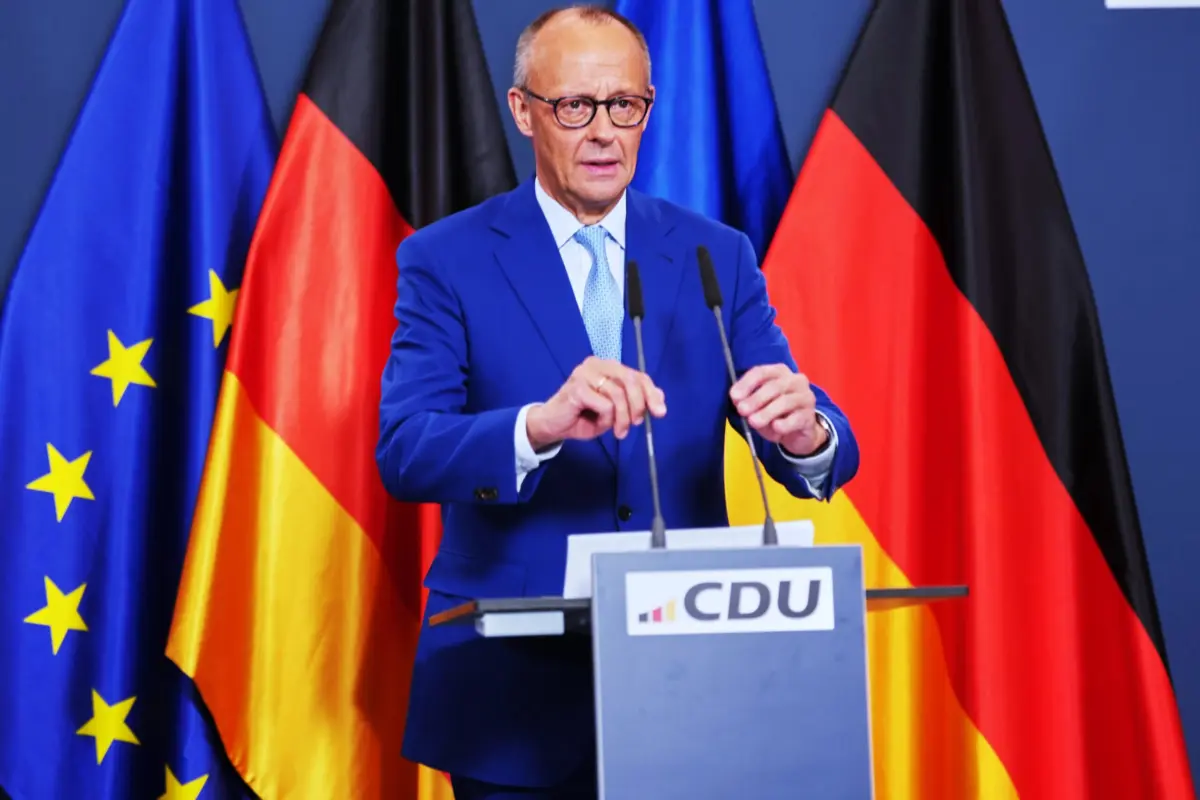

BERLIN — German Chancellor Friedrich Merz faced an uphill battle to stabilize his administration and salvage his domestic reform agenda on Monday, following a bruising weekend at the ballot box. Voters delivered two successive electoral blows to his center-right party, including an unprecedented ejection from a regional state legislature for the first time in modern German history.
Despite conceding a regional "disaster," an embattled Merz vowed to press forward, committing to push through a slate of much-needed economic and structural reforms across Europe’s largest economy. However, as questions surrounding his leadership mount both internally and externally, the political shockwaves from Berlin and Mecklenburg-Western Pomerania threaten to unravel Germany’s delicate governing coalition and throw the nation’s political landscape into deep uncertainty.
Executive Overview: A Weekend of Unprecedented Reversals
The twin regional elections held on Sunday served as a referendum on Merz’s leadership and his federal coalition’s legislative trajectory. In Mecklenburg-Western Pomerania—a largely rural, eastern region stretching along the Baltic Sea coast—the chancellor’s Christian Democratic Union (CDU) suffered a catastrophic collapse. The party hemorrhaged more than half its previous support, finishing with less than 5% of the total vote.
This narrow threshold failure means the CDU was entirely shut out of the regional parliament, marking a historic low point for the party across its 77-year history in the Federal Republic of Germany.
Simultaneously, in the capital city of Berlin, the CDU dropped to second place behind the hard-left Left Party. While coalition mathematics could potentially still allow the CDU to retain control of Berlin’s city hall, the psychological defeat compounded the damage.
Coming just two weeks after a stinging defeat dealt by the far-right Alternative for Germany (AfD) in Saxony-Anhalt, the latest results have exposed profound vulnerabilities within Merz’s center-right base. Political analysts suggest that the cumulative losses have critically undermined his authority, transforming what began as isolated regional discontent into a national crisis of confidence.
Detailed Chronology: How the Regional Elections Unfolded
The Lead-Up and Campaign Dynamics
The political atmosphere heading into Sunday’s elections was already charged with palpable tension. Merz’s national government had spent months grappling with stagnant economic growth, high energy costs, and contentious debates over public spending.
In Mecklenburg-Western Pomerania, the campaign quickly morphed into a fiercely polarized battle. The incumbent center-left Social Democratic Party (SPD)—the junior partner in Merz’s national coalition—anchored its entire strategy around popular state governor Manuela Schwesig. Positioned aggressively as a bulwark against the surging far-right, Schwesig successfully framed the election as a choice for stability around her leadership.
This hyper-polarization proved fatal for mainstream centrist alternatives. While the far-right Alternative for Germany (AfD) capitalized on anti-establishment sentiment to emerge as the strongest party in Mecklenburg-Western Pomerania, the SPD managed to stave off total dominance by rallying voters around regional defense.
Election Day and Immediate Fallout
As polls closed at 6:00 PM local time on Sunday, early projections immediately pointed to a historic rout. By late evening, final tallies confirmed the CDU’s worst fears: falling below the mandatory 5% electoral hurdle in Mecklenburg-Western Pomerania.
At the CDU party headquarters in Berlin, a grim-faced Merz addressed the media shortly after the results were finalized. Refusing to step down, he acknowledged the severity of the setbacks while insisting that his government’s reform mandate remains non-negotiable.
"We have heard the message from voters, and we understand the gravity of these results," Merz told reporters. "However, halting our modernization efforts is not an option. Germany cannot afford to stand still while structural inefficiencies drag down our economic engine."
Supporting Context & Metrics: Economic Stagnation and Regional Divides
To fully understand the turbulence rocking Berlin, one must examine the severe macroeconomic headwinds and regional fractures shaping modern German politics.
The Economic Reform Agenda
Merz’s federal government has staked its political survival on a sweeping, albeit deeply unpopular, legislative package designed to revitalize Germany’s sluggish economy. Key pillars of this agenda include:
- Pension System Overhaul: Addressing demographic pressures by restructuring a creaking, unsustainable pension framework.
- Bureaucratic Reductions: Dismantling stifling regulatory red tape that businesses have long cited as a primary deterrent to investment.
- Tax Relief: Implementing targeted income tax cuts aimed at providing relief for low- and middle-income families struggling with persistent inflation.
However, these proposed reforms have run into fierce resistance—not only from the political opposition but also from within the ranks of Merz’s own governing coalition. Critics argue that measures like pension reform impose unfair burdens on working-class citizens during an already precarious economic climate.
Regional Divides and the Rise of Populism
The electoral maps continue to highlight a deep-seated chasm between western Germany and the formerly communist eastern states.
While Berlin’s political identity has historically leaned left—with the CDU’s victory there in 2023 standing as its sole triumph in the capital over a 25-year span—the east has become an epicenter of populist sentiment. In Saxony-Anhalt two weeks prior, and now in Mecklenburg-Western Pomerania, the far-right AfD has leveraged economic anxiety, demographic shifts, and skepticism toward federal mandates to capture significant voter blocks.
Furthermore, the CDU has historically struggled to gain lasting traction in Mecklenburg-Western Pomerania. Yet, the sheer velocity of this collapse—dropping below the parliamentary threshold for the first time—signals that traditional party loyalties are fracturing even further under the weight of national discontent.
Official Statements and Political Reactions
The fallout from Sunday’s ballots has triggered urgent internal debates among coalition partners and party powerbrokers across the political spectrum.
The Social Democrats Urge Caution
Matthias Miersch, head of the Social Democrats’ parliamentary group in the national legislature, acknowledged the pressing need for structural fixes while simultaneously cautioning against heavy-handed governance.
"It is entirely clear that our country needs structural reforms to remain globally competitive," Miersch stated in an interview with ARD television. "At the same time, politicians cannot govern in a vacuum. We must listen closely and take people’s everyday concerns seriously. Reform cannot mean ignoring social stability."
Schwesig and other regional leaders within the SPD have similarly distanced themselves from parts of Merz’s federal agenda, signaling that coalition unity will face intense strain in the coming months as lawmakers debate the specifics of the upcoming federal budget and labor reforms.
CDU Leadership Conclave
Behind closed doors, Merz has been working frantically to consolidate support among the party’s influential regional heavyweights. Last week, the CDU’s eight state governors issued a tentative statement of backing for the chancellor. However, political insiders note that the endorsement was lukewarm at best, leaving lingering doubts regarding how long regional bosses will tolerate national-level electoral bleeding.
Merz held continuous crisis meetings with senior party officials throughout Monday morning at the Konrad-Adenauer-Haus in Berlin, seeking to forge a unified front ahead of parliamentary sessions later in the week.
Future Outlook: The Road Ahead
As the dust settles on another punishing weekend for Germany’s ruling establishment, attention is already shifting toward the political horizon.
Immediate Legislative Hurdles
For Chancellor Merz, the immediate priority is survival. He must navigate delicate negotiations with coalition partners who are increasingly eager to distance themselves from his unpopular legislative measures. If the federal government fails to deliver tangible economic relief while managing public backlash over pension and tax policies, coalition fractures could widen into a full-scale government collapse.
Upcoming Electoral Tests
Fortunately for Merz, the 2026 electoral calendar features no further regional tests, granting the administration a brief window of breathing room. However, the respite will be short-lived.
Looking ahead to next year, Germany faces a punishing slate of five state elections, three of which are scheduled to take place as early as April.
Crucially, these upcoming votes will include an election in North Rhine-Westphalia, Germany’s most populous and economically vital state. The region is currently led by prominent CDU figure Hendrik Wüst, a heavyweight widely regarded by political analysts as a top contender to succeed Merz should the chancellor be forced out. Notably, none of the five states scheduled to vote next year are located in the east, where the AfD currently commands its strongest support—offering a potential, albeit narrow, pathway for the CDU to rebuild momentum.
Whether Friedrich Merz can weather the current storm, heal the divisions within his party, and steer his reform agenda through a fractured parliament will determine not only his own political future, but the stability of Germany’s democratic center for years to come.

0 Comments