

Executive Overview
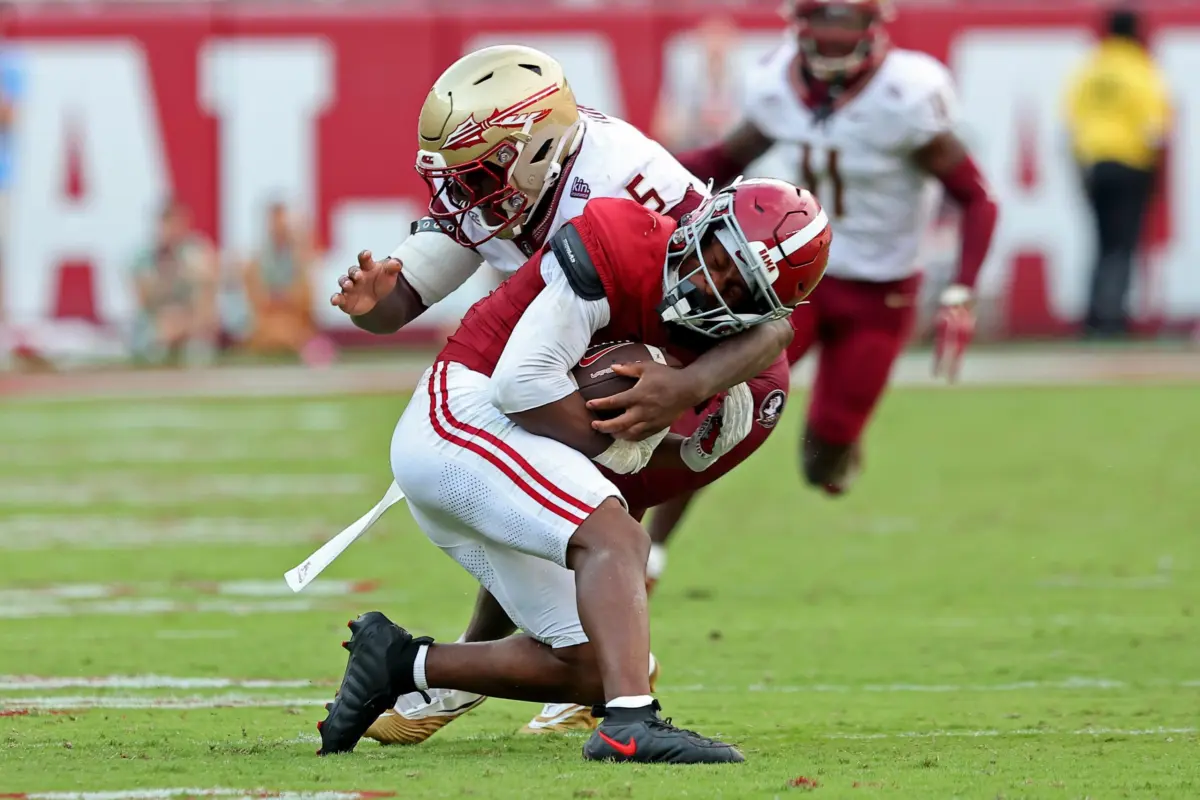
TUSCALOOSA, Ala. — For a fleeting moment on Saturday night, the Florida State Seminoles looked every bit like a program capable of rewriting the narrative of its troubled early-season campaign. Playing on the road against a powerhouse opponent in the Alabama Crimson Tide, FSU seized control of the contest, surging to a commanding 21-6 lead that sent shockwaves through Bryant-Denny Stadium.
Yet, college football is a game measured in four quarters, and resilience remains the ultimate currency of elite programs. As the dust settled on a chilly Saturday evening, the scoreboard told a familiar, agonizing story for the garnet and gold: Alabama 50, Florida State 26.
The 24-point margin of defeat does not entirely capture the dramatic narrative arc of the game, but it accurately reflects the stark gulf in depth, execution, and psychological endurance between the two rosters. With the loss, Florida State slips to 1-2 overall and 0-1 in Atlantic Coast Conference (ACC) play, while extending a deeply troubling program milestone: their tenth consecutive loss in true road games.
For head coach [Insert Coach Name] and his staff, the defeat laid bare the harsh realities of a transitional season. While the Seminoles’ offense flashed explosive capability—racking up 471 total yards and a staggering 22.2 yards per completion—fatal errors in judgment, compounding defensive breakdowns, and three costly interceptions by quarterback Ashton Daniels ultimately dismantled FSU’s upset bid.
Compounding the crisis is a defensive unit that continues to hemorrhage yardage at an alarming rate. Surrendering 567 total yards to the Crimson Tide, Florida State has now yielded upwards of 550 yards of total offense in back-to-back weeks. The defensive frailties that plagued the Seminoles earlier this month have metastasized into a systemic vulnerability, threatening to derail the team’s aspirations before the calendar even flips to October.
As the FSU traveling party boarded the flight back to Tallahassee, the questions surrounding the program were heavier and more urgent than ever. From the erratic play at the game’s most important position to the viability of the defensive scheme, the Tomahawk Nation editorial and reporting staff break down the wreckage of Tuscaloosa, analyze the turning points, and assess the road ahead for a proud program desperately searching for answers.
Detailed Chronology of a Collapse
To understand how a game that began with such promise dissolved into a 24-point rout, one must examine the micro-moments that shifted the momentum of Saturday night’s primetime matchup.
The First Half: A Dream Start
The opening two quarters painted a picture of an inspired Florida State team executing a flawless game plan. Entering the hostile environment as heavy underdogs, the Seminoles absorbed Alabama’s early punches before landing several of their own.
FSU’s offensive coordinator dialed up a brilliant mix of play-action passes and deep shots that caught the Crimson Tide secondary flat-footed. Ashton Daniels, despite his later struggles, played with poise and confidence during the initial frames. The Seminoles capitalized on early Alabama miscues, stringing together sustained drives punctuated by explosive plays. When FSU punched in another score to stretch their lead to 21-6, the sideline was electric, and the upset was not merely plausible—it appeared to be unfolding in real-time.
The Momentum Shift: Closing the Second Quarter
Every elite team possesses a counterpunch, and Alabama’s arrived with surgical precision late in the first half. The Crimson Tide offense, which had looked disjointed and stymied by FSU’s initial scheme adjustments, suddenly found a rhythm through quick-hitting crossing routes and punishing runs between the tackles.
A rapid-fire scoring drive just before halftime sliced the deficit, injecting life into the home crowd and altering the psychological landscape of the locker rooms. What felt like a comfortable 15-point cushion for the Seminoles suddenly evaporated into a precarious eight-point margin at the break. It was a sequence that robbed FSU of its breathing room and signaled to the Crimson Tide that the vulnerability they showed early was entirely correctable.
The Third-Quarter Avalanche
If the late-second-quarter score was the warning tremor, the third quarter was the full-scale earthquake. Alabama emerged from the locker room with an aggressive, suffocating tempo that completely overwhelmed Florida State’s defense.
The Crimson Tide offensive line began to win the line of scrimmage decisively, opening gaping running lanes and affording their quarterback ample time to pick apart FSU’s secondary. Simultaneously, the game began to unravel for Ashton Daniels. Pressured by an energized Alabama pass rush, Daniels began forcing throws into tight windows.
The turning point of the game—and perhaps the season—occurred midway through the third quarter. Trailing by a narrow margin, FSU looked to regain the lead through the air. Instead, Daniels locked onto his primary target, failing to read the underneath zone defender. The resulting interception was returned deep into Seminole territory, setting up a short touchdown field that swung the scoreboard permanently in Alabama’s favor.
From that moment onward, the floodgates opened. Alabama reeled off unanswered points in rapid succession, turning a competitive contest into a rout. FSU’s defense, exhausted from extended time on the field and devoid of structural answers for the Tide’s multi-dimensional attack, completely wore down, missing open-field tackles and surrendering chunk plays at will.
Supporting Context & Metrics
Numbers rarely lie, and the statistical ledger from Saturday night tells an unflattering story of a team undone by its own mistakes and defensive deficiencies.
Offense: Explosive Yet Flawed
At first glance, Florida State’s offensive output appears competitive against an elite SEC defense. The Seminoles accumulated 471 total yards, a figure that would win the vast majority of college football games. The most eye-catching metric was FSU’s yards per completion: a staggering 22.2 yards.
This proves that offensive coordinatorially, the scheme was capable of generating massive chunk plays downfield. Receivers found separation, and Daniels connected on several high-degree-of-difficulty throws that kept the Crimson Tide defenders on their heels.
However, gross yardage masks the fatal poison: turnovers and situational inefficiency. FSU’s inability to sustain drives when it mattered most, coupled with three catastrophic interceptions by Daniels, completely negated the explosive plays. In football, high-risk, high-reward passing offenses live on the razor’s edge; when the high-risk throws result in turnovers rather than touchdowns, the margin for error vanishes entirely.
Defense: The 500-Yard Threshold
If the offense’s story was about squandered potential, the defense’s story was an outright alarm bell. Surrendering 567 total yards of offense is unacceptable by any standard of major-college football. More concerning is the historical trend: this marks the second consecutive week that FSU’s defense has allowed more than 550 yards of total offense to an opponent.
The metrics highlight systemic failures across all three defensive levels:
- Pass Defense: Unable to generate consistent pressure with a four-man rush, FSU was forced to blitz, leaving defensive backs exposed in single-coverage assignments that Alabama exploited for long gains.
- Run Defense: As the game progressed, the front seven wore down, yielding high yards-per-carry averages that allowed the Crimson Tide to control the clock and salt away the victory in the fourth quarter.
- Third-Down Conversions: Alabama routinely converted high-leverage third downs, extending drives that demoralized an already overworked FSU defense.
The Road Woes Continue
With this defeat, Florida State’s dubious streak extends to 10 consecutive losses in true road games. For a program with championship pedigree, this metric represents a psychological hurdle as much as a tactical one. Winning on the road in hostile environments requires discipline, mental toughness, and error-free football—three qualities that deserted the Seminoles when the lights shone brightest in Tuscaloosa.
Official Statements and Insider Breakdown
Following the final whistle, the Tomahawk Nation staff convened to dissect the wreckage. Below is a synthesized breakdown of the internal discussions addressing the defining questions of the night.
Did Saturday Tell Us Anything New About FSU?
The consensus among analysts is that Saturday night did not necessarily invent new flaws, but rather magnified existing ones to an unsustainable degree.
Entering the game, observers questioned whether FSU’s defensive front could hold up against elite, physical offensive lines. The answer was a resounding no. Furthermore, while the offense’s ability to hit deep passes was known, the fragility of the passing game under intense, hostile pressure was proven beyond doubt. What we learned is that this team has a high ceiling—as evidenced by the 21-6 start—but an catastrophically low floor when adversity strikes.
The Official Turning Point
While the third-quarter interception served as the physical catalyst for the collapse, the staff agreed that the late-second-quarter defensive breakdown was the true turning point.
Allowing Alabama to march down the field and score just before halftime completely shifted the psychological momentum. It transformed what should have been a comfortable, multi-score cushion for FSU into a nervous one-score game, giving the Crimson Tide all the momentum heading into the locker rooms.
Grading the Units (Scale 1–10)
- Offense: 5.5 / 10
- Rationale: The grade is a split decision. The explosive plays and the first-half execution earn high marks, but the three interceptions and the second-half stagnation drag the overall score down into mediocre territory. You cannot beat elite teams with self-inflicted turnovers.
- Defense: 2.0 / 10
- Rationale: Giving up 567 yards and 50 points leaves little room for praise. Missed tackles, blown coverages, and an inability to get off the field on third down sink the defense to a failing grade for the second straight week.
The Bright Spot: Glass Quarter-Full
Despite the lopsided score, the bright spot of the evening was the performance of FSU’s perimeter wide receivers and the play-calling ingenuity that unlocked those early deep shots. Players like [Insert Standout Receiver Name] demonstrated that they can win individual matchups against top-tier SEC cornerbacks. If the coaching staff can harness that explosiveness while cleaning up the protection and decision-making, the passing game remains a viable weapon moving forward.
The Quarterback Dilemma: Do You Move on from Ashton Daniels?
Perhaps the most contentious debate surrounding the program centers on starting quarterback Ashton Daniels. After throwing three interceptions and struggling mightily under the third-quarter onslaught, fans and analysts are naturally asking whether a change under center is necessary.
The Tomahawk Nation staff approaches this with nuance. While benching a quarterback after a rough night in Tuscaloosa is an emotional temptation, coaching staffs must evaluate whether the backup options offer a higher ceiling or simply different flaws. Daniels possesses undeniable talent and grit, as shown during the 21-6 surge. However, his decision-making under duress is currently capping the offense’s potential.
Moving on entirely requires absolute confidence that the replacement can execute the offense without catastrophic mistakes. If the coaching staff elects to stick with Daniels, it must immediately implement quicker-hitting passing concepts to protect him from heavy pass rushes and reduce the likelihood of costly turnovers.
Future Outlook: The Road Ahead for the Seminoles
A 50-26 defeat on national television is the kind of result that can fracture a season—or serve as the ultimate crucible for growth. At 1-2, Florida State’s margin for error has officially been reduced to zero.
The ACC schedule looms large, and the defensive issues cannot be hand-waived. Surrendering over 550 yards in consecutive weeks points to structural and personnel challenges that cannot be fixed overnight through simple scheme adjustments. The coaching staff faces a monumental task in shoring up the tackling fundamentals, improving gap integrity in the front seven, and simplifying coverage assignments for a secondary that appeared frequently confused on Saturday night.
Offensively, the blueprint for success exists. The first 25 minutes of the game proved that FSU can attack elite defenses through calculated aggression and explosive downfield passing. The challenge for the offensive staff is consistency: finding ways to sustain drives, establishing a reliable ground game to balance the playbook, and building a protective framework around the quarterback to eliminate the destructive turnovers that cost them the game in Tuscaloosa.
As Florida State returns to Tallahassee, the narrative of the 2025 campaign hangs in the balance. The ten-game road losing streak is a historical anchor that this team must eventually shake off, but the immediate concern is simply righting the ship at home and preparing for the conference gauntlet ahead.
The Seminoles have proven they can play like champions for a quarter and a half. The defining question of the season is whether they can find the mental fortitude, defensive discipline, and institutional resilience to sustain that standard for a full sixty minutes.

0 Comments