
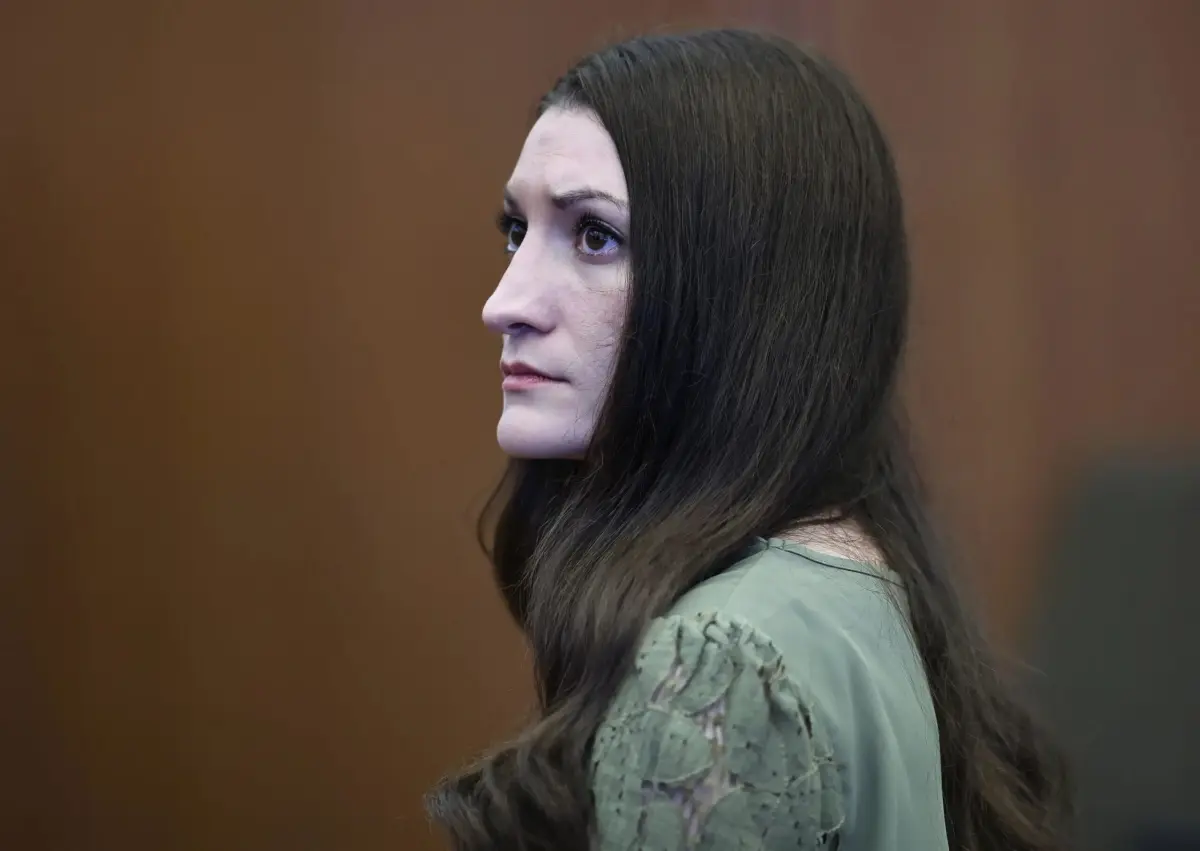

BOSTON, MA — The highly publicized and emotionally charged murder trial of Lindsay Clancy—the Massachusetts mother accused of strangling her three young children in January 2023—has entered a volatile new legal phase. Following the declaration of a mistrial on September 4, 2026, the battleground has shifted from the tragic facts of the case to the sanctity of the jury room itself.
In a series of aggressive post-trial motions, Clancy’s defense team is demanding a full judicial inquiry into the conduct of the sole holdout juror, Michael Desronvil, who blocked what would have otherwise been a landmark acquittal based on a defense of lack of criminal responsibility due to postpartum psychosis. The defense has simultaneously petitioned the court to dismiss all charges, arguing that the trial judge erred by declaring a mistrial rather than seating an alternate juror, and that prosecutors have failed to present sufficient evidence to justify a second trial.
As the legal community and the public watch closely, the case has evolved into a complex study of juror vetting, the legal boundaries of postpartum mental illness, and the procedural mechanics of the American justice system.
Executive Overview
On September 4, 2026, Plymouth Superior Court Judge William Sullivan declared a mistrial in the Commonwealth of Massachusetts v. Lindsay Clancy after the 12-member jury announced they were hopelessly deadlocked. It was subsequently revealed that the jury stood 11 to 1 in favor of finding Clancy not guilty by reason of lack of criminal responsibility—commonly referred to as the insanity defense. Eleven jurors agreed with psychiatric experts that Clancy, a former labor and delivery nurse, was experiencing severe postpartum psychosis when she took the lives of her children: 5-year-old Cora, 3-year-old Dawson, and 8-month-old Callan.
The lone holdout, Michael Desronvil, adamantly maintained that Clancy was criminally responsible and should be convicted of first-degree murder.
Now, the defense is accusing Desronvil of misconduct, claiming he violated court rules during deliberations and was untruthful during jury selection. In a motion made public on September 28, 2026, defense attorney Kevin Reddington requested that the court subpoena Desronvil’s cellphone records and conduct an evidentiary hearing regarding his suitability to serve on the jury. Meanwhile, co-counsel Martin Weinberg has filed an extraordinary motion to dismiss the case entirely, arguing that the mistrial was prematurely declared and that the state should have replaced the holdout juror with an alternate.
Detailed Chronology
The Tragedy in Duxbury (January 2023)
The case began on January 24, 2023, when emergency responders were called to the Clancy family home in Duxbury, Massachusetts. Patrick Clancy, Lindsay’s husband, returned home from picking up takeout food and medicine to find his wife had jumped from a second-story window in an apparent suicide attempt. Inside the home, emergency personnel discovered the three young children strangled with exercise bands. Cora and Dawson were pronounced dead that evening; infant Callan survived for several days on life support before succumbing to his injuries. Lindsay Clancy survived her fall but was left permanently paralyzed from the waist down.
The Road to Trial (2023–2026)
For over three years, Clancy remained confined to medical and psychiatric facilities. The prosecution argued that the killings were planned and deliberate, pointing to her sending her husband on errands as evidence of premeditation. The defense painted a starkly different picture: a dedicated mother suffering from severe postpartum depression and escalating psychosis, who had been prescribed a rotating cocktail of 13 psychiatric medications in the months leading up to the tragedy.
The Trial and the 11-1 Split (August–September 2026)
The trial culminated in late August 2026. During several days of intense deliberations, the jury repeatedly signaled to Judge Sullivan that they were deadlocked. On September 4, the judge declared a mistrial.
Subsequent interviews and court filings revealed that 11 of the 12 jurors were prepared to acquit Clancy, concluding that she lacked the capacity to appreciate the wrongfulness of her actions or conform her conduct to the law. Desronvil remained the sole obstacle to a verdict.
The Post-Mistrial Revelations (September 2026)
Following the mistrial, public scrutiny focused heavily on Desronvil. Investigations by local media and amateur online sleuths unspooled a series of personal, financial, and legal struggles in Desronvil’s background that went undetected—or unaddressed—during the voir dire (juror questioning) process.
- September 24, 2026: Kevin Reddington files a motion to block a retrial based on the insufficiency of the prosecution’s evidence.
- September 25, 2026: Reddington files a second motion, demanding a formal investigation into Desronvil’s conduct during the trial.
- September 28, 2026: Martin Weinberg files a motion to dismiss the indictment, alleging procedural errors in declaring the mistrial. Both motions are unsealed and made public.
Supporting Context & Metrics
The post-trial filings have illuminated severe friction within the jury room, alongside startling revelations about the holdout juror’s background.
The Allegations of Juror Misconduct
Under Massachusetts law, jurors are strictly prohibited from using electronic devices, including cellphones, during active deliberations. In his motion, defense attorney Kevin Reddington requested that the court compel the production of Desronvil’s cellular data. Specifically, the defense wants a detailed record of all calls, text messages, and data usage made by Desronvil between 8:00 a.m. and 4:30 p.m. on each day the jury deliberated.
The defense alleges that Desronvil was not only distracted but also untruthful during the jury selection process. According to court documents, at the time of jury selection, Desronvil was facing several legal and financial crises:
- Eviction Proceedings: He was facing eviction from his apartment for failing to pay more than $12,000 in back rent.
- Active Restraining Order: He was subject to an active restraining order at the time he was selected for the jury.
- Domestic Violence History: He had been charged with domestic violence in 2021, a charge that was later dismissed.
The defense argues that these factors, particularly the active restraining order and eviction proceedings, should have been disclosed during jury selection and likely would have disqualified him from serving.
Juror Michael Desronvil: Undisclosed Legal & Financial Background
┌─────────────────────────────────────────────────────────┐
│ • Eviction Proceedings (Over $12,000 in Unpaid Rent)    │
├─────────────────────────────────────────────────────────┤
│ • Active Restraining Order During Jury Selection        │
├─────────────────────────────────────────────────────────┤
│ • Dismissed 2021 Domestic Violence Charge               │
└─────────────────────────────────────────────────────────┘
The Financial Polarization of the Case
The case has deeply divided the public. While mental health advocates have rallied behind Clancy, emphasizing the terrifying reality of postpartum psychosis, a substantial contingent believes she should be held criminally responsible. This divide has manifested financially: a crowdfunding campaign launched to assist Desronvil with "security, legal representation, and lost wages" following his public exposure has raised nearly $375,000.
Official Statements
The legal battle has prompted a flurry of statements from the defense, the holdout juror, and legal experts, while the prosecution maintains a calculated silence.
The Defense: Demanding Accountability and Dismissal
In his filing, Kevin Reddington emphasized the necessity of investigating the integrity of the deliberation process:
"We are asking the court to determine whether the jury’s deliberations were compromised by outside influences or prohibited electronic communication. The integrity of the judicial process demands that every juror abides by the rules established by the court."
Co-counsel Martin Weinberg focused on the judge’s decision to declare a mistrial rather than utilize alternate jurors:
"Contrary to the court’s stated belief at the time, it did have viable choices other than declaring a mistrial. The court should have replaced the holdout juror with an alternate after the foreperson made it clear that one juror was refusing to participate in deliberations in good faith and refused to apply the law on reasonable doubt."
The Holdout Juror: Standing Firm
Through his attorney, Edward Paltzik, Michael Desronvil released a statement on the social media platform X, vigorously denying any claims of bias, bad faith, or admitting to having "reasonable doubt."
"I didn’t have any doubts. As I tried to explain different possible theories during deliberation, I kept getting cut off as if I had doubts based on the evidence presented. Based on all the physical evidence, key witnesses, and what the prosecution presented, I thought it was enough proof that [Clancy] knew exactly what she was doing."
The Prosecution: No Comment
A spokesperson for Plymouth County District Attorney Timothy Cruz declined to comment on the defense’s pending motions or whether the Commonwealth intends to proceed with a second trial.
Future Outlook
The next critical step in this legal saga is scheduled for September 29, 2026, when Judge William Sullivan will preside over a highly anticipated motion hearing.
Key Upcoming Milestones: Clancy Proceedings
┌───────────────────┐      ┌───────────────────┐      ┌───────────────────┐
│   Sept 29, 2026   │ ───> │  Judicial Ruling  │ ───> │ Possible Retrial  │
│  Motion Hearing   │      │   on Dismissal    │      │    or Dismissal   │
└───────────────────┘      └───────────────────┘      └───────────────────┘
Judge Sullivan faces three primary paths forward:
- Order an Evidentiary Hearing on Juror Misconduct: The judge could order Desronvil to appear in court, authorize the subpoena of his phone records, and investigate whether his presence on the jury compromised the trial’s validity.
- Rule on the Motion to Dismiss: If the judge agrees with Weinberg’s argument that an alternate juror should have been seated, or with Reddington’s argument regarding the insufficiency of the state’s evidence, the charges against Clancy could be dismissed entirely. This outcome is rare but legally possible.
- Schedule a Retrial: If the judge denies the defense’s motions, the Plymouth County District Attorney’s Office will have to decide whether to expend the resources and subject the families to another emotionally draining trial.
Clancy remains committed to a state psychiatric hospital, where she continues to receive mental health treatment and physical rehabilitation. Regardless of the outcome on September 29, the case of Commonwealth v. Clancy has already secured a permanent place in legal textbooks, highlighting the deep complexities of mental illness defenses, the challenges of modern jury selection, and the razor-thin margin between justice and a mistrial.

0 Comments