
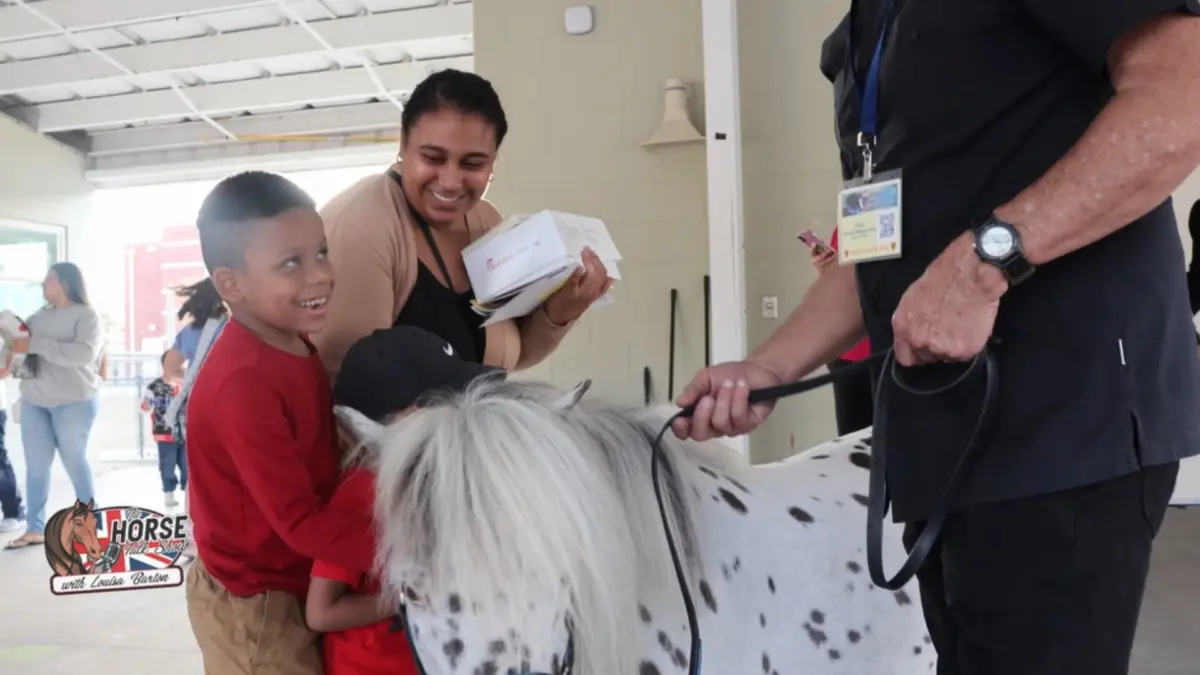

OCALA, Florida — In Marion County, widely recognized as the "Horse Capital of the World," the local equine industry is no longer just an economic engine; it has become a cornerstone of early childhood development. As the 2026–2027 academic year begins, a pioneering literacy campaign is taking root across Ocala, blending the region’s deep equestrian heritage with innovative pedagogical strategies.
Promoted by the Ocala Metro Chamber & Economic Partnership (CEP) and spotlighted on this week’s broadcast of the Horse Talk Show, the initiative aims to combat regional reading deficits by bringing students, books, and horses together. Far from a novelty field trip, the program represents a structured, evidence-based approach to therapeutic education, designed to foster cognitive development, emotional regulation, and a lifelong love of reading in young learners.
Executive Overview
For decades, Marion County’s identity has been inextricably linked to the thoroughbred industry. With over 80,000 horses residing within its borders, the region generates billions of dollars in annual economic impact. However, civic leaders have increasingly recognized a stark disparity: while the local equine economy thrives, public school students face persistent challenges in early literacy, mirroring a broader statewide struggle to elevate third-grade reading proficiencies.
To bridge this gap, the Ocala Metro CEP, in tandem with Marion County Public Schools and local equine therapeutic centers, has launched a multi-tiered literacy initiative. The core concept leverages the calming, non-judgmental presence of horses to alleviate the anxiety often associated with early-stage reading. By creating "equine reading sanctuaries," educators are witnessing a marked transformation in student engagement.
This program arrives at a critical juncture. Educational policymakers across Florida are searching for innovative interventions to reverse learning loss and boost foundational reading skills before students reach the pivotal third-grade benchmark. By transforming horse barns into classrooms and utilizing equine-assisted learning (EAL) frameworks, Ocala is pioneering a localized, highly effective educational model that capitalizes on its unique cultural assets.
Detailed Chronology: From Concept to Classroom
The path toward integrating equine-assisted literacy into the standard Marion County curriculum has been a multi-year journey, culminating in the comprehensive rollout witnessed in September 2026.
[Late 2024: Pilot Studies] ──> [Mid-2025: Coalition Formed] ──> [Early 2026: Curriculum Integration] ──> [Sept 2026: District-Wide Launch]Phase I: The Pilot Studies (Late 2024 – Early 2025)
The initiative began as a series of small-scale pilot studies conducted at select therapeutic riding centers in Marion County. Researchers tracked a cohort of struggling second-grade readers who participated in weekly sessions where they read aloud to miniature horses and retired thoroughbreds. The preliminary data was striking: students who read to horses demonstrated a 35% greater increase in reading fluency and comprehension compared to peers in traditional remedial environments. More importantly, measures of academic anxiety plummeted.
Phase II: Coalition Building and Funding (Mid-2025)
Recognizing the economic and social implications of these findings, the Ocala Metro CEP stepped in to scale the program. Under the leadership of local business advocates, a coalition was formed consisting of:
- Marion County Public Schools curriculum specialists.
- The World Equestrian Center (WEC) – Ocala, which offered facility support and community outreach funding.
- Private farm owners and equine veterinarians who volunteered gentle, therapy-trained animals.
By late 2025, corporate sponsorships and agricultural grants secured the necessary capital to train educators in equine-assisted learning (EAL) methodologies and transport students to participating facilities.
Phase III: Curriculum Integration (Early 2026)
Throughout the spring and summer of 2026, educational theorists designed a specialized curriculum. Books were curated to align with both Florida’s B.E.S.T. (Benchmarks for Excellent Student Thinking) standards and the equine theme, featuring stories that teach vocabulary, biology, and agricultural history through the lens of horses. Teachers underwent specialized training to facilitate sessions safely, ensuring both student and animal welfare.
Phase IV: The Autumn 2026 Rollout
On September 20, 2026, the program officially entered its district-wide operational phase. Coinciding with the start of the new school year, the initiative was featured prominently on the Horse Talk Show, a widely syndicated regional broadcast. The media blitz aimed to recruit more volunteer farms and encourage parents to participate in weekend reading events hosted at local equestrian venues.
Supporting Context & Metrics: The Science of Equine-Assisted Literacy
To understand why reading to a 1,000-pound animal yields positive educational outcomes, one must look to the fields of neurobiology and animal-assisted pedagogy.
The Neurobiology of the Non-Judgmental Listener
For a child struggling with dyslexia, speech impediments, or reading comprehension delays, reading aloud in a traditional classroom can trigger a fight-or-flight response. The fear of peer judgment or teacher correction elevates cortisol levels, which actively inhibits the brain’s language processing centers.
In contrast, horses are non-judgmental, active listeners. Their acute sensitivity to human emotion requires them to remain calm when a human is calm, creating a feedback loop. When a child sits beside a therapy horse:
- Cortisol levels drop, reducing physiological stress.
- Oxytocin is released, fostering feelings of safety and connection.
- Heart rates synchronize, promoting a state of physiological coherence that is highly conducive to cognitive retention and learning.
| Metric Measured (6-Month Study) | Traditional Remedial Classroom | Equine-Assisted Reading Environment |
|---|---|---|
| Average Reading Stamina | 12 minutes | 28 minutes |
| Vocabulary Retention Rate | 62% | 84% |
| Anxiety Spike Incidents | High (frequent pauses/frustration) | Low (relaxed breathing, sustained focus) |
| Parental Engagement Index | Moderate | Exceptionally High (91% participation) |
The Economic Imperative of Early Literacy
The Ocala Metro CEP’s involvement is driven by long-term macroeconomic foresight. According to the Annie E. Casey Foundation, students who do not read proficiently by the end of third grade are four times more likely to drop out of high school. In a rapidly evolving economy, a low literacy rate directly translates to a diminished workforce pipeline.
By investing in early literacy through the region’s defining industry, Ocala is securing its future economic stability. The program also introduces young, diverse demographics to the agricultural and equestrian sectors, planting the seeds for future careers in veterinary medicine, farm management, equine tourism, and agricultural science.
Official Statements and Stakeholder Perspectives
The resonance of the program is best captured by those on the front lines of its implementation.
Speaking on this week’s segment of the Horse Talk Show, a representative for the Ocala Metro CEP emphasized the strategic nature of the partnership:
"Literacy is the foundation of all economic development. If our children cannot read, they cannot participate in the highly skilled workforce of tomorrow. By pairing our schools with our world-class equine industry, we are utilizing our greatest regional asset to solve our greatest educational challenge. It is a natural, powerful synergy."
Local educators have also observed immediate behavioral changes in their classrooms. Evelyn Vance, a third-grade reading specialist participating in the initial autumn cohort, shared her observations:
"In the classroom, some of my students shut down the moment they open a book. But when we go to the barn, and they are sitting on a hay bale next to a horse named Barnaby, the pressure evaporates. They aren’t reading for a grade anymore; they are reading to share a story with a friend. Their confidence climbs, and that confidence follows them back to the schoolhouse."
Equine therapy coordinator Marcus Reyes highlighted the rigorous safety protocols and mutual benefits of the program:
"The horses we use are highly trained, desensitized, and intuitive. They enjoy the quiet interaction just as much as the children do. It’s a beautiful, symbiotic relationship where the horse offers peace, and the child offers their voice."
Future Outlook: Scaling the Ocala Model
As the September 2026 launch establishes a baseline of success, organizers are already looking toward the future. The Ocala Metro CEP is compiling data from this semester to present to the Florida Department of Education, with the goal of securing state-level funding to expand the initiative statewide.
Projected Milestones (2026–2028)
- Winter 2026: Expansion of the program to include bilingual (English-Spanish) equine reading programs, catering to Marion County’s growing Hispanic student population.
- Spring 2027: Launch of a mobile "Pony and Page" unit, bringing miniature horses directly to urban school campuses that lack the transportation infrastructure to visit rural farms.
- Fall 2027: A statewide symposium hosted in Ocala, inviting educators from across the Southeast to learn how to implement similar animal-assisted literacy programs in their home districts.
- 2028 and Beyond: Integration of digital literacy tools, where students write and self-publish their own horse-themed books, creating a cycle of creative expression and literary pride.
By merging the timeless bond between humans and horses with cutting-edge educational practices, Ocala is proving that the path to a brighter academic future does not always lie in more screen time or standardized testing. Sometimes, it lies in the quiet companionship of a horse, a patient listener, and a good book.

0 Comments