

Executive Overview
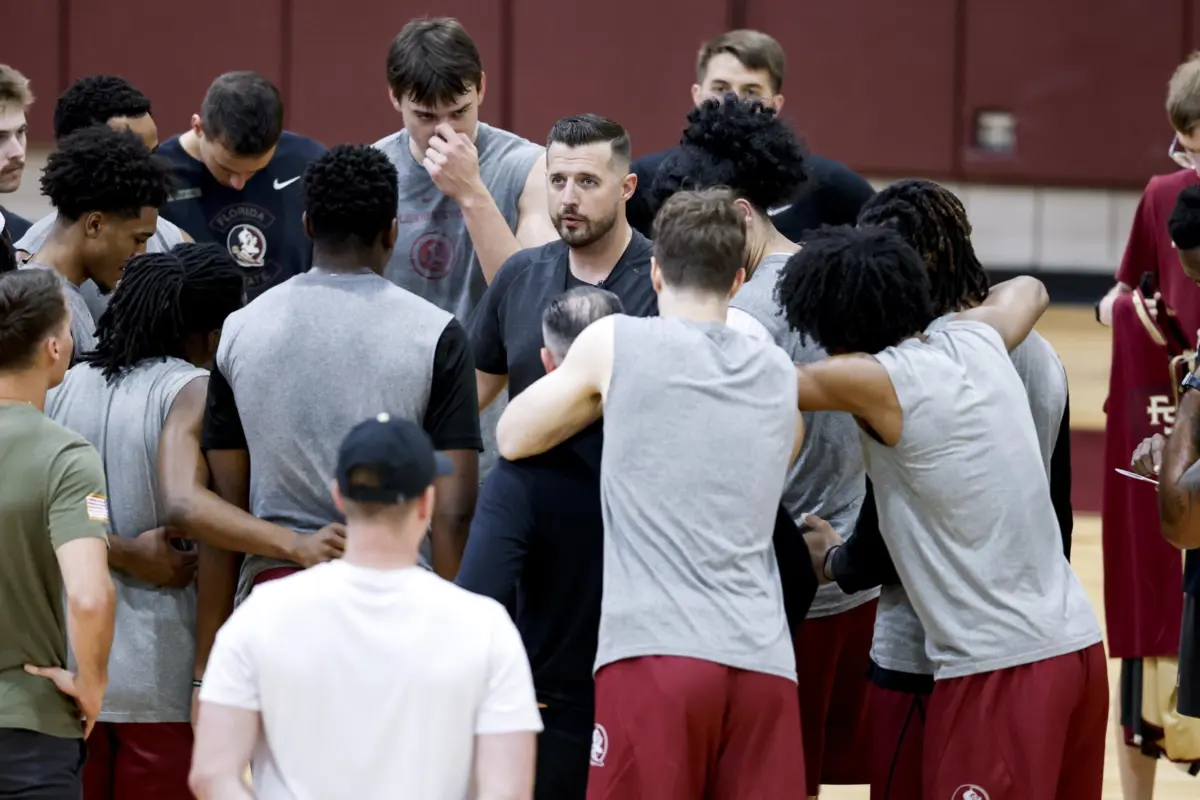
The dawn of a new college basketball season always brings with it an intoxicating cocktail of boundless optimism, tactical curiosity, and structural unknowns. For the Florida State Seminoles, the opening of fall practice on Monday, September 21, 2026, marked not merely the routine commencement of another training cycle, but the official ignition point of Year Two under head coach Luke Loucks.
If the inaugural campaign of the Loucks era could be accurately summarized, it was a masterclass in athletic bifurcation—a veritable tale of two entirely distinct seasons. The first chapter was fraught with growing pains: a sluggish 7-11 opening salvo that included four humbling defeats by margins of 28 points or more, alongside a demoralizing 0-5 start to Atlantic Coast Conference (ACC) play. Yet, the concluding chapter offered a breathtaking glimpse into the program’s high-ceiling potential. FSU galvanized down the stretch, orchestrating an 11-4 closing surge that featured victories in nine of their final eleven regular-season conference matchups. They culminated this resurgence by pushing the eventual ACC Champion Duke Blue Devils to the absolute brink, falling short by a heartbreaking six inches in a frantic ACC Tournament quarterfinal finish.
Now, as the calendar inches closer to competitive action, the overarching narrative shifts from retrospective redemption to prospective execution. The primary question echoing through the halls of the Tucker Civic Center and dominating message boards alike is as daunting as it is compelling: How can Loucks and his coaching staff successfully bottle the hard-earned lessons of last year’s turbulent roller coaster and apply them to a roster that has undergone a total, sweeping offseason overhaul?
With the first 90 minutes of fall practice in the books, early observations suggest that the Seminoles are wasting no time establishing a culture rooted in unrelenting physicality, tactical modernization, and rapid chemistry building. As FSU prepares for a rigorous slate of three exhibition games against SEC opponents—kicking off against Mississippi State on October 10th at the Southern Tip-Off in Pensacola—the infrastructure of the 2026-27 squad is beginning to take shape. This comprehensive report delves deep into the structural metamorphosis of the program, analyzing the trajectory of year one, evaluating the integration of new roster components, and examining how technological innovation and philosophical evolution are converging to redefine Florida State basketball.
Detailed Chronology: From Early-Season Struggles to Late-Season Surge
To fully comprehend the stakes of Year Two under Luke Loucks, one must contextualize the extraordinary developmental arc that defined his debut campaign. A first-time head coach stepping into the high-stakes ecosystem of the ACC faces a steep, unforgiving learning curve. For Loucks, that curve initially resembled a sheer cliff face.
The Trial by Fire: Winter 2025–Early January 2026
The opening months of the Loucks era tested the psychological resilience of the entire program. Compiling a meager 7-11 record through their first 18 games, the Seminoles looked disconnected, defensively vulnerable, and offensively disjointed. The nadir of this stretch was characterized by structural breakdowns that manifested in four separate blowout losses, each by 28 points or more. Opponents exploited FSU’s defensive rotations, while the offense frequently bogged down into isolation stagnation.
Compounding these structural issues was an unforgiving baptism into conference play. The Seminoles stumbled out of the blocks with an 0-5 hole in ACC competition. For a program historically accustomed to dictating terms through length, athleticism, and defensive disruption, the early-season returns were jarring. Critics began to question whether the transition from assistant coaching ranks to the head chair had come too quickly, and the whispers surrounding roster construction grew louder.
The Crucible of Candor
Throughout this difficult stretch, however, Loucks refused to retreat behind coach-speak or deflect blame. In post-game press conferences and media availability sessions, the young head coach was remarkably candid. He repeatedly pointed out the specific structural breakdowns, tactical miscalculations, and communication gaps that plagued his team.
Crucially, Loucks maintained that these losses were not systemic failures of philosophy, but rather educational stepping stones. He routinely emphasized that his staff and players were learning the exact tolerances required to win at the highest level of collegiate basketball. This radical transparency fostered a unique internal accountability. Instead of fracturing under the weight of blowout defeats, the locker room absorbed the tactical adjustments mandated by the coaching staff.
The Spring Awakening: February and March 2026
The inflection point arrived quietly in late January and erupted into full view throughout February. The lessons absorbed during the harrowing 0-5 start suddenly crystallized into tangible execution. The defense sharpened its teeth, communication on switches improved exponentially, and the offensive sets began to hum with crisp ball movement and decisive cutting.
The numbers during this closing stretch tell a remarkable story of transformation. FSU closed the campaign on a blistering 11-4 run. More impressively, they secured victories in 9 of their final 11 regular-season ACC games, transforming a moribund conference campaign into a surging upward trajectory.
The crowning jewel—and the ultimate validation of Loucks’ developmental arc—occurred in the ACC Tournament quarterfinals against the powerhouse Duke Blue Devils. In a game that captivated the college basketball landscape, the Seminoles went toe-to-toe with the tournament’s eventual champions. FSU executed their game plan with surgical precision, fighting tooth and nail until the final buzzer. When a potential game-winning or tying shot rolled agonizingly off the rim—falling a mere six inches short—it marked the end of their tournament run, but the unofficial beginning of a new belief system within the program.
Supporting Context & Metrics: The Roster Overhaul and Technological Integration
As the Seminoles returned to the parquet floor on Monday, September 21, for the official tip-off of fall practices, observers were greeted by a drastically altered visual landscape. The core challenge facing Loucks in Year Two is not merely building upon momentum, but doing so with a roster that has been almost entirely rebuilt.
The Complete Roster Reconstruction
College basketball’s modern era, defined by the fluidity of the transfer portal and Name, Image, and Likeness (NIL) incentives, demands unprecedented roster turnover management. Florida State was no exception to this macroeconomic trend. Having lost key veteran leadership and productive contributors from the late-season surge, Loucks and his staff hit the recruiting trail and the portal hard to inject fresh talent, positional versatility, and high-major pedigree into Tallahassee.
Evaluating a completely overhauled roster during an initial 90-minute practice window is akin to reading the first chapter of a complex novel; the plot is established, but the character arcs are still unfolding. Yet, early indicators from the open practice session highlighted several critical structural shifts:
- Heightened Baseline Intensity: Without the established hierarchy of a veteran-laden group from Day One, the competition for starting spots and rotation minutes has turned every drill into a high-stakes battle. Intensity and physicality were immediately recognizable themes of the opening day, with players diving for loose balls, communicating loudly through defensive breakdowns, and challenging one another at the rim.
- Positional Versatility: Loucks has consistently prioritized players who can defend multiple positions and stretch the floor offensively. The newcomers exhibit a high basketball IQ, seamlessly switching ball screens and pushing the pace in transition—traits that will be vital to replicating the up-tempo success of late last season.
Cutting-Edge Innovation: New Ball-Tracking Technology
Beyond human capital, the Florida State program is aggressively investing in technological infrastructure to accelerate player development. One of the most fascinating takeaways from the September 21 practice was the integration of brand-new, state-of-the-art ball-tracking technology.
While collegiate programs have increasingly adopted optical tracking and wearable analytics over the past half-decade, the system recently installed at FSU represents a significant leap forward. The technology provides real-time telemetry on:
- Shot Arc and Spin Rate: Giving shooters instantaneous visual feedback on the biomechanical consistency of their jumpers.
- Pass Velocity and Window Efficiency: Mapping ball trajectory to evaluate decision-making speed in pick-and-roll scenarios.
- Spatial Spacing Metrics: Quantifying floor balance during live-action defensive and offensive sequences to ensure optimal spacing parameters are maintained.
For a coaching staff focused on maximizing every minute of practice time ahead of a brutal early-season schedule, this technology bridges the gap between subjective observation and objective, data-driven optimization. Loucks and his assistants can now correct a shooter’s elbow alignment or a passer’s timing not just with anecdotal instruction, but by pointing directly to empirical data generated seconds prior.
Official Statements: Culture, Accountability, and the Road Ahead
The prevailing sentiment emanating from the Florida State program is one of quiet determination. While the euphoria of last spring’s late surge provided undeniable momentum, the coaching staff is acutely aware that college basketball operates on a clean slate every November.
Speaking to media members following the conclusion of the first fall practice, Coach Loucks addressed the delicate balance between honoring last year’s growth and aggressively pursuing this year’s potential.
"We learned invaluable lessons last year about what it takes to survive and ultimately thrive in this conference," Loucks stated. "When you go through a stretch where you take some heavy blows early on, you find out very quickly what your foundation is made of. Our guys showed incredible character by not letting the losses define them, but instead using them as fuel. But make no mistake—that was year one. This is a brand-new team with a brand-new identity. The challenge right now isn’t reliving how we finished in March; it’s establishing the habits today that will allow us to compete from the very first tip in October."
Loucks also emphasized the importance of the upcoming exhibition schedule as a primary evaluation tool for the newly constructed roster. Rather than easing into the competitive calendar with lower-tier regional matchups, the Seminoles have deliberately scheduled a gauntlet of three exhibition contests, all against powerhouse SEC competition.
The journey begins in earnest on Saturday, October 10th, when FSU travels to Pensacola, Florida, to battle the Mississippi State Bulldogs as part of the high-profile Southern Tip-Off event held at the Pensacola Bay Center. This matchup serves as the crucible for the Seminoles, providing an immediate, high-major benchmark to test their physical conditioning, tactical retention, and chemistry under fire.
Future Outlook: The 2026–2027 Horizon
As the Seminoles grind through the next two and a half weeks of grueling preseason preparation, the stakes for the program are crystal clear. The narrative arc of the Luke Loucks era is transitioning from an exploratory phase into an accountability phase.
The structural foundations are firmly in place: a coaching staff hardened by the trials of a turbulent debut season, an upgraded technological infrastructure designed to accelerate developmental curves, and a revamped roster hungry to prove itself on a national stage. Yet, translating these ingredients into sustained, wire-to-wire success will require discipline, health, and a rapid acceleration of chemistry.
If the intensity and physicality witnessed on Monday, September 21, are any indication of what lies ahead, Florida State is fully prepared to embrace the grind. As they board the bus for Pensacola in early October to face Mississippi State, the Seminoles will carry not just the playbook of a new season, but the hard-earned wisdom of a program determined never to look back—and certainly not to fall six inches short again.
Key Dates & Schedule Snapshot
- September 21, 2026: Official start of fall practice (First 90-minute media viewing window).
- October 10, 2026: Exhibition Game 1 vs. Mississippi State (Southern Tip-Off, Pensacola Bay Center, Pensacola, FL).
- Mid-October 2026: Subsequent exhibition matches against SEC opponents (dates and venues to be finalized).
- Late October / Early November 2026: Tip-off of the official 2026–2027 regular season.

0 Comments