
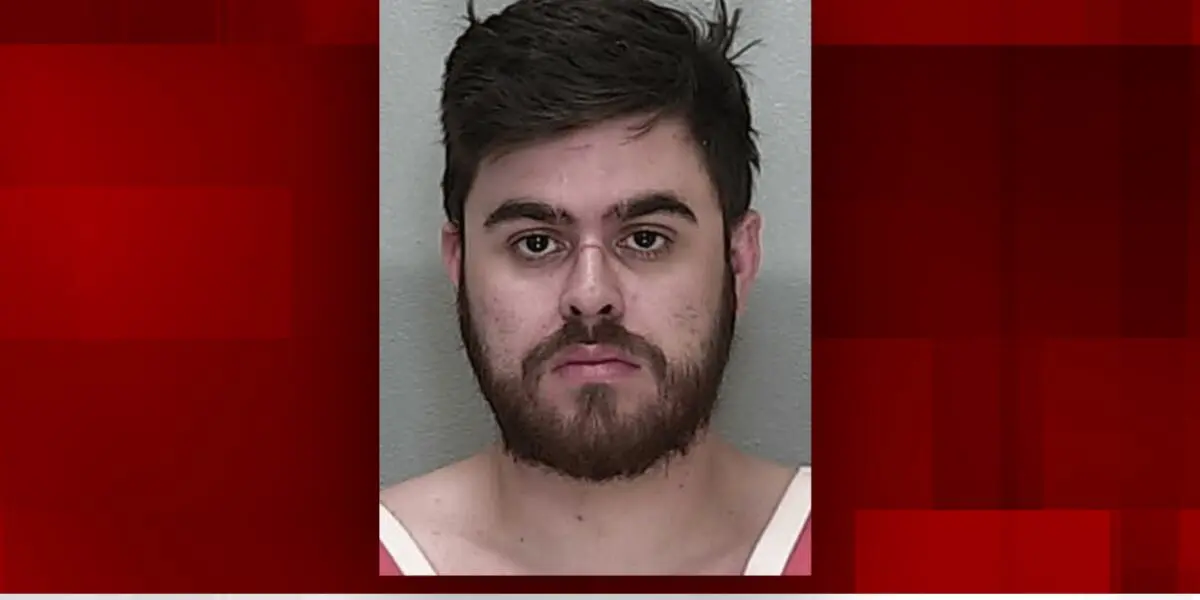

OCALA, Fla. — Law enforcement officials in Marion County have arrested a local youth pastor following a disturbing, multi-year investigation into allegations of child sexual abuse and grooming. Caleb Fischer Ray, 27, who served as a youth pastor at Connection Church in Ocala, was taken into custody on Thursday on multiple felony charges, including lewd and lascivious battery and unlawful sexual activity with a minor.
The arrest has sent profound shockwaves through the local community, raising critical questions regarding institutional oversight, the vulnerabilities of minors within religious organizations, and the insidious nature of predatory grooming behavior hidden in plain sight.
According to an arrest report filed by the Ocala Police Department (OPD), investigators established probable cause after a survivor came forward last month to detail a harrowing six-year cycle of manipulation and abuse. The victim, who was just nine years old when they first encountered Ray at their shared place of worship, alleged that the youth pastor systematically groomed them over the course of their formative years, transitioning the relationship from a trusted mentor-mentee dynamic into one marked by illegal sexual contact as they grew older.
Following his booking into the Marion County Jail, Ray posted a $150,000 bond and was subsequently released pending further judicial proceedings. As detectives continue to comb through digital evidence and interview potential witnesses, the Ocala Police Department has taken the extraordinary step of urging the public to come forward with any additional information concerning Ray’s interactions with minors.
Executive Overview: A Profile of Trust Betrayed
The unfolding case against Caleb Fischer Ray embodies a devastating archetype of abuse that criminologists and child advocates have warned about for decades: the exploitation of spiritual and positional authority. Youth pastors and religious leaders occupy a unique psychological space in the lives of adolescents and their families. Positioned as moral compasses, spiritual guides, and safe harbors, these individuals are frequently granted a high degree of unsupervised access to children and teenagers under the protective umbrella of institutional trust.
In this instance, the allegations suggest a long-term, calculated strategy of manipulation. Investigators note that the grooming process began when the victim was only nine years old—a developmental stage defined by extreme reliance on adult authority figures for validation, guidance, and safety. By establishing a foundational relationship within the confines of a church community, Ray allegedly laid the groundwork for years of coercion, eventually leveraging his status to facilitate illegal sexual acts as the victim transitioned from childhood into early adolescence.
The case highlights systemic vulnerabilities inherent in many religious organizations, where decentralized management structures, volunteer-heavy environments, and an inherent reluctance to question figures of spiritual authority can sometimes create blind spots. Connection Church, where Ray was employed, now faces intense scrutiny from its congregants and the wider public regarding its hiring protocols, background check procedures, and internal supervision mechanisms for youth ministry staff.
Law enforcement officials have emphasized that the investigation remains active and fluid. Given the prolonged timeline of the alleged offenses—spanning roughly from 2020 through early 2026—detectives are operating under the hypothesis that other victims or witnesses may exist. The urgency of the public appeal underscores the police department’s commitment to uncovering the full scope of Ray’s activities both within and outside Connection Church.
Detailed Chronology of the Investigation
The timeline constructed by investigators from the Ocala Police Department reveals a methodical gathering of evidence that ultimately culminated in Ray’s arrest. While the alleged abuse spans a period of nearly six years, the formal legal trajectory began only recently when the survivor chose to break their silence.
Phase 1: The Initial Contact and Establishment of Trust (Circa 2020)
According to the victim’s statements to law enforcement, the interaction between Ray and the survivor commenced when the victim was nine years old. Both individuals were frequent attendees at the same church community in Ocala. At this initial stage, the relationship mirrored conventional youth ministry dynamics—casual interactions, church-sponsored events, and mentorship. Investigators note that predatory groomers frequently target this foundational phase to establish emotional dependence, testing boundaries and identifying vulnerabilities in both the child and their familial support network.
Phase 2: Escalation and Grooming (2020–2025)
Over the course of the next several years, as the victim aged from a pre-teen into adolescence (ages 13 to 17, as specified in police reports), the dynamic reportedly shifted. Grooming is rarely an isolated event; rather, it is a gradual desensitization process. The victim detailed years of continuous sexual contact with Ray. During this timeframe, Ray allegedly utilized his position at Connection Church to maintain regular contact with the minor, integrating himself into spaces where his presence as a youth pastor would not arouse suspicion from parents or congregants.
Phase 3: The Disclosure (Early 2026)
The turning point in the case occurred last month, when the survivor made the courageous decision to report the incidents to law enforcement. Stepping forward to accuse an established figure in a tight-knit religious community presents monumental psychological and social barriers for survivors of abuse. The victim’s detailed disclosure provided detectives with specific behavioral patterns, timeframes, and descriptions of the alleged offenses, giving authorities the actionable intelligence required to initiate a formal criminal investigation.
Phase 4: Digital Forensics and Evidence Gathering (February 2026)
Armed with the victim’s testimony, Ocala Police Department detectives secured search warrants and subpoenas for digital communications. An analysis of phone records corroborated key elements of the victim’s account. Investigators recovered numerous telephone calls placed between Ray and the minor, as well as a significant volume of text messages. Among the digital evidence were explicit exchanges in which Ray and the minor communicated affectionate statements, including mutual "I love you" messages—a classic indicator of boundary erosion in grooming scenarios, where adult perpetrators emotionalize relationships with minor victims to mimic romantic or familial attachments.
Phase 5: Arrest and Bond Release (Late February/Early 2026)
Following the consolidation of physical testimony, digital footprints, and corroborating statements, OPD detectives established probable cause. On a Thursday in late February 2026, arrest warrants were executed, and Caleb Fischer Ray was taken into custody. He was formally booked into the Marion County Jail on charges of lewd and lascivious battery and unlawful sexual activity with a minor. Following his initial appearance before a magistrate, Ray secured his release after posting a $150,000 bond, setting the stage for forthcoming pre-trial hearings and grand jury or formal state attorney charging decisions.
Supporting Context & Metrics: The Mechanics of Grooming and Institutional Vulnerability
To understand the gravity of the allegations against Caleb Fischer Ray, it is essential to examine the socio-psychological mechanics of child grooming, particularly within faith-based institutions. Criminological data and psychological research provide a stark framework for understanding how individuals like Ray operate and why detection is often delayed.
The Psychology of Grooming in Religious Settings
Child sexual exploitation experts define grooming as a deliberate process through which an abuser gains the trust of a child and their family, isolates the victim, and desensitizes them to inappropriate physical contact. When perpetrated by a youth pastor or religious leader, this process is frequently accelerated by the "halo effect"—a cognitive bias where individuals assume that someone wearing a religious mantle, holding a leadership title, or expressing pious sentiments is inherently incapable of harm.
Key tactics typically identified in similar investigative files include:
- Special Attention: Singling out a vulnerable or impressionable youth under the guise of specialized mentorship or spiritual counseling.
- Boundary Crossing: Gradually replacing peer relationships with adult-child confidences, often sworn to secrecy under spiritual or emotional pretexts.
- Digital Isolation: Utilizing private messaging platforms, text threads, and phone calls—such as the digital correspondence uncovered by Ocala detectives—to cultivate an exclusive, unsupervised communication channel.
- Normalization: Framing physical intimacy or inappropriate emotional attachment as a sign of unique maturity, special divine favor, or deep personal devotion.
Statistical Context on Institutional Abuse
The arrest of Ray reflects a broader, systemic issue facing religious institutions across the United States. According to comprehensive studies by child advocacy organizations and investigative journalists over the past two decades, faith-based organizations are frequently targeted by bad actors precisely because of systemic blind spots.
Key risk factors identified in institutional abuse analyses include:
- Volunteer Reliance: Many youth ministries rely heavily on volunteers or low-paid staff members, sometimes leading to abbreviated background-screening processes or lax reference checks.
- Unsupervised Access: The cultural expectation of trust often results in youth workers being permitted to spend one-on-one time with minors behind closed doors, in vehicles, or on overnight trips without institutional oversight or accountability policies (such as the "two-adult rule").
- Fear of Scandal: Historically, some religious organizations have prioritized institutional reputation over transparency, inadvertently creating environments where victims feel silenced and perpetrators are permitted to move laterally to new communities.
Connection Church has not yet released a comprehensive public statement detailing its historical vetting processes for Ray, nor have they publicly clarified the exact nature of his employment history or supervisory structure. However, legal analysts suggest that the church could face civil liability if investigations reveal that leadership ignored red flags or failed to enforce basic child-protection policies.
Official Statements and Ongoing Law Enforcement Appeals
The Ocala Police Department has handled the high-profile arrest with a mixture of professional urgency and community outreach. Recognizing that predators who operate within positions of trust often leave a wider trail of secondary or undocumented victims, local authorities are casting a wide net to ensure no other children remain at risk.
In their official communications, OPD detectives have underscored that the investigation remains open. Because Ray was embedded in the youth ministry ecosystem of Connection Church, law enforcement is treating the case as potentially having a broader scope than initially documented.
The Police Appeal
Detective Bessette, who is leading the investigative efforts, has issued a direct appeal to the community:
"Officers ask anyone who has had inappropriate interactions with Caleb Ray to contact Detective Bessette at 352-369-7000."
Law enforcement agencies routinely issue such calls to action in grooming cases because victims of long-term psychological manipulation frequently experience shame, confusion, or fear of retaliation that prevents them from immediately reporting abuse. By encouraging past attendees, former youth group participants, parents, and community members to come forward confidentially, police hope to gather additional corroborating evidence or identify other individuals who may have been targeted during Ray’s tenure at Connection Church or any previous assignments.
Community and Institutional Response
The reaction within Ocala has been one of deep concern and dismay. Parents whose children attended Connection Church’s youth programs have expressed anxiety regarding safety protocols and a desire for transparency from church leadership.
While Connection Church has yet to issue a detailed public debriefing, local faith leaders and child advocacy groups in Marion County have utilized the incident to reiterate the critical importance of safeguarding protocols in all community organizations. Advocates emphasize that true prevention requires:
- Mandatory Background Screening: Comprehensive, fingerprint-based background checks for all staff and volunteers interacting with minors.
- Transparent Reporting: Immediate mandatory reporting to state child welfare agencies and local law enforcement upon the receipt of any allegation, bypassing internal church discipline procedures.
- Open-Door Policies: Strict enforcement of multi-adult presence rules, eliminating private, closed-door counseling sessions between adult leaders and minors without parental notification or digital transparency.
Future Outlook: Legal Proceedings and Accountability
As the case transitions from the initial investigative phase to the judicial system, several critical milestones lie ahead. Caleb Fischer Ray faces severe legal jeopardy under Florida state statutes regarding sexual offenses against minors.
Understanding the Charges
Ray has been formally charged with:
- Lewd and Lascivious Battery: A serious felony under Florida law, typically carrying substantial prison time upon conviction, reflecting the gravity of sexual contact between an adult in a position of authority and a minor victim.
- Unlawful Sexual Activity with a Minor: A charge designed to penalize sexual relations with individuals below the age of consent, particularly where age differentials and positions of trust compound the criminality of the act.
Legal experts following the Marion County circuit indicate that the $150,000 bond allowed Ray’s release, but pre-trial conditions typically include strict parameters, such as GPS monitoring, surrendering of passports, mandatory stay-away orders prohibiting contact with the victim or any minors, and restrictions on accessing youth-oriented environments or digital communication channels.
Upcoming Legal Milestones
- Formal Arraignment and Information Filing: The Office of the State Attorney for the Fifth Judicial Circuit will review the Ocala Police Department’s investigative file to formally file charging documents (an Information or Grand Jury Indictment).
- Discovery and Pre-Trial Motions: Defense counsel and prosecutors will exchange evidence, including the digital phone records, text message transcripts detailing the "I love you" exchanges, and forensic interview transcripts of the survivor.
- Community Impact and Potential Civil Litigation: Beyond the criminal proceedings, legal representation for the victim may pursue civil action against entities associated with the supervision or employment of the accused, focusing on institutional liability and failure to protect a minor in their care.
A Message to Survivors
Child advocacy agencies across Central Florida have used the media attention surrounding Ray’s arrest to remind the public that resources exist for survivors of abuse. The psychological impact of grooming can persist for years, making community support, professional trauma-informed counseling, and legal advocacy essential components of the healing process.
Law enforcement urges anyone with knowledge regarding Caleb Fischer Ray’s activities, or anyone experiencing similar trauma, to utilize confidential reporting channels, emphasizing that justice relies heavily on the courage of survivors to speak out against those who abuse positions of trust.
Additional updates regarding the legal proceedings of State of Florida v. Caleb Fischer Ray will be provided as court dockets are updated in the Marion County Judicial Circuit.

0 Comments