

Executive Overview
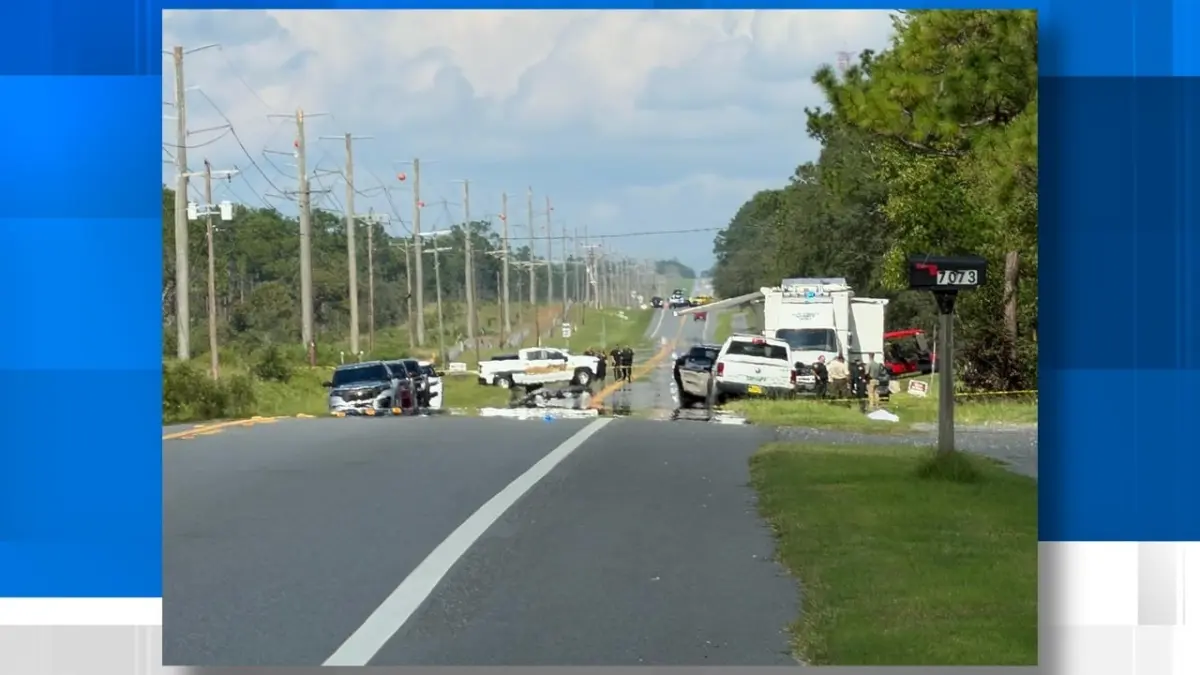
A quiet Tuesday afternoon in Keystone Heights, Florida, was shattered by a fatal confrontation that has once again brought the critical intersection of mental health crises and law enforcement response into sharp focus. On Tuesday, deputies from the Clay County Sheriff’s Office (CCSO) responded to a wellness check that rapidly escalated, culminating in the shooting death of an unidentified male suspect.
The incident, which unfolded near the intersection of Gas Line Road and State Road 21, began as an attempt to locate a man in acute psychological distress. According to sheriff’s deputies, the individual had made explicit threats of self-harm—specifically threatening to "blow his brains out"—following a recent adjustment or discontinuation of psychiatric medication prescribed by the Clay Behavioral Health Center.
When deputies located the suspect parked in a vehicle, the encounter quickly turned confrontational. Law enforcement officials report that the suspect brandished a handgun and refused repeated commands to disarm, prompting deputies to discharge their service weapons. Despite immediate, life-saving intervention attempted by Clay County Fire Rescue, the man succumbed to his injuries at the scene.
In accordance with regional protocol for officer-involved shootings, the Florida Department of Law Enforcement (FDLE) alongside the State Attorney’s Office has launched an independent investigation into the incident. This tragedy underscores the persistent, high-stakes challenges faced by first responders who are increasingly tasked with managing severe mental health emergencies in the field.
Detailed Chronology of the Incident
The events of Tuesday afternoon transpired rapidly, shifting from a welfare concern to a lethal confrontation within a matter of minutes. Below is a detailed reconstruction of the timeline based on official briefings provided by the Clay County Sheriff’s Office.
[Mental Health Crisis Reported]
       │
       ▼
[CCSO Dispatches Deputies for Wellness Check]
       │
       ▼
[Suspect Located in Vehicle on Gas Line Road]
       │
       ▼
[Deputies Approach; Suspect Brandishes Handgun]
       │
       ▼
[Verbal Commands Ignored; Shots Fired by Deputies]
       │
       ▼
[Clay County Fire Rescue Deploys Life-Saving Measures]
       │
       ▼
[Suspect Pronounced Dead at the Scene]
The Initial Call and Mental Health Precursor
The sequence of events began when the Clay County Sheriff’s Office received reports regarding a male individual experiencing a severe psychiatric crisis. According to investigators, the man had recently been taken off a regimen of medication provided by the Clay Behavioral Health Center, a local community mental health provider.
The sudden cessation or modification of this medication reportedly triggered an immediate and severe decline in the man’s mental stability. He began voicing explicit suicidal ideation, threatening to end his life. Recognizing the imminent danger the individual posed to himself, family members or associates alerted authorities, prompting deputies to initiate a high-priority wellness check.
The Search and Discovery on Gas Line Road
Deputies began patrolling the areas the suspect was known to frequent. On Tuesday afternoon, patrol units successfully located the suspect’s vehicle. The car was pulled over on Gas Line Road, a rural secondary road running adjacent to State Road 21 in Keystone Heights—a heavily wooded, semi-rural portion of southern Clay County.
Upon approaching the stationary vehicle, deputies observed the suspect seated in the front passenger seat. What was initially dispatched as a welfare check immediately transformed into a high-risk tactical encounter.
The Confrontation and Escalation
As deputies attempted to make contact with the occupant and assess his well-being, the suspect produced a handgun. Recognizing the immediate threat to their safety and the safety of any nearby motorists, deputies drew their service weapons.
Command staff reported that deputies on the scene established a perimeter and issued loud, clear verbal commands, instructing the man to drop the firearm. The suspect reportedly refused to comply with these orders, continuing to brandish the weapon in a threatening manner. Fearing an imminent threat of lethal force, deputies discharged their firearms, striking the suspect.
Emergency Medical Response and Pronouncement
Immediately following the shooting, deputies transitioned from a defensive posture to rendering emergency medical aid. Clay County Fire Rescue (CCFR) units, which had been staged nearby as a standard precaution for high-risk calls, arrived on the scene within minutes.
Paramedics deployed advanced life-saving measures, including trauma care and cardiopulmonary resuscitation, in an effort to stabilize the wounded man. However, the injuries sustained were too severe. The suspect was pronounced dead at the scene on Gas Line Road.
The Clay County Sheriff’s Office confirmed that no deputies sustained physical injuries during the encounter.
Supporting Context & Metrics
The fatal shooting in Keystone Heights is not an isolated event but rather a symptom of a broader, systemic challenge facing law enforcement agencies across the state of Florida and the United States.
The Crisis of Mental Health in Law Enforcement Encounters
According to data compiled by the National Alliance on Mental Illness (NAMI), approximately one in four fatal police encounters involves an individual struggling with a severe mental illness. When individuals experience acute psychiatric distress—particularly during sudden withdrawals or adjustments of psychotropic medications—their cognitive processing, impulse control, and ability to comprehend commands can be severely compromised.
| Metric / Statistical Category | Estimated National / State Proportion |
|---|---|
| Fatal Police Shootings Involving Mental Illness | ~20% to 25% of all officer-involved fatalities |
| Wellness Checks Escalating to Use of Force | Varies; highly unpredictable due to weapon presence |
| Clay County Mental Health Call Volume | Hundreds of psychiatric-related dispatches annually |
In this specific case, the suspect’s transition off medication from the Clay Behavioral Health Center appears to be the primary precipitating factor. The sudden discontinuation of psychiatric drugs, particularly antipsychotics or severe mood stabilizers, can induce severe withdrawal symptoms, profound anxiety, paranoia, and suicidal or homicidal ideation.
The Geography of Keystone Heights and Rural Policing
The location of the shooting—Gas Line Road near State Road 21—highlights the unique challenges of rural policing. In suburban and rural sectors of Clay County, deputies often operate with fewer immediate backup units compared to dense urban centers.
The vast geography means that deputies responding to a wellness check must be prepared to handle highly volatile situations in isolated areas where specialized crisis intervention teams (CIT) may not be immediately available on the scene.
Official Statements
Following the incident, leadership from the Clay County Sheriff’s Office held a press briefing to address the community, outline the preliminary findings, and establish the next steps for administrative and criminal reviews.
Undersheriff Ron Lendvay spoke on behalf of the agency, emphasizing the tragedy of the loss of life while defending the actions of the responding deputies under intense pressure.
"Life-saving measures by Clay County Fire Rescue failed to stabilize the condition of the man, and he was pronounced dead at the scene," Undersheriff Lendvay stated. "It’s our policy to have our deputy-involved shootings investigated independently by the Florida Department of Law Enforcement and the State Attorney’s Office."
                     ┌───────────────────────────┐
                     │  Clay County Sheriff's    │
                     │          Office           │
                     └─────────────┬─────────────┘
                                   │
                     Instigates Protocol Review
                                   │
                                   ▼
        ┌─────────────────────────────────────────────────────┐
        │                                                     │
        ▼                                                     ▼
┌──────────────────────────────┐              ┌──────────────────────────────┐
│  Florida Department of       │              │   State Attorney's Office    │
│  Law Enforcement (FDLE)      │              │    (8th Judicial Circuit)    │
│  - Independent Investigation │              │    - Legal Justification     │
│  - Forensic Analysis         │              │      Determination           │
└──────────────────────────────┘              └──────────────────────────────┘
Lendvay affirmed that the identity of the deceased suspect would be withheld temporarily, pending formal notification of the next of kin and the preliminary filings of the state investigators. The names of the deputies involved have also been withheld in accordance with standard active-investigation protocols and Marsy’s Law protections.
Future Outlook & Systemic Implications
As the Florida Department of Law Enforcement (FDLE) conducts its forensic and interview-based investigation, the community of Keystone Heights and the broader Clay County area are left grappling with the fallout of the tragedy. The incident is expected to prompt renewed discussions regarding how local governments fund, deploy, and integrate mental health resources within public safety frameworks.
The Role of Independent Investigations
The involvement of the FDLE and the State Attorney’s Office is designed to ensure complete transparency and objectivity. The FDLE will reconstruct the scene, analyze ballistic evidence, review body-worn camera footage (if available), and interview witnesses and the involved deputies.
Once the FDLE completes its evidentiary report, the findings will be turned over to the State Attorney’s Office. Prosecutors will then review the file to determine whether the deputies’ use of lethal force was legally justified under Florida law, which permits the use of deadly force if an officer reasonably believes it is necessary to prevent imminent death or great bodily harm to themselves or others.
The Call for Co-Responder Models
This fatal shooting will likely intensify calls from mental health advocates for the expansion of "co-responder" models in Northeast Florida. These programs pair law enforcement officers with licensed mental health clinicians when responding to welfare checks or calls involving psychiatric crises.
- De-escalation Prioritization: Clinicians can lead communication, utilizing specialized therapeutic techniques to de-escalate tension before weapons are drawn.
- Reduced Reliance on Force: Studies show that jurisdictions utilizing co-responder models see significant decreases in both arrests and the use of physical force during psychiatric emergencies.
- Post-Crisis Continuity: These teams help bridge the gap between emergency response and long-term psychiatric care, preventing individuals from falling through the cracks of the healthcare system.
Community Healing and Accountability
For the residents of Clay County, the loss of life is a somber reminder of the vulnerabilities faced by those struggling with mental illness. While the legal system processes the actions of the deputies on Gas Line Road, local advocacy groups are urging a closer examination of the discharge and transition policies at regional mental health facilities like the Clay Behavioral Health Center.
Ensuring that patients undergoing significant medication changes have robust, continuous support systems may prove vital in preventing future crises from escalating into fatal encounters on rural Florida roads.

0 Comments