

Executive Overview
WASHINGTON, D.C. — In an empty row of witness chairs reserved for the architects of America’s private surveillance apparatus, a glaring absence spoke louder than any prepared testimony could have.
The chief executive officers of the nation’s leading automated license plate reader (ALPR) and public safety technology companies were conspicuously absent from Capitol Hill on Wednesday. Invited to face a bipartisan Senate subcommittee investigating systemic police abuse, data harvesting, and civil liberties violations, the missing tech leaders left an institutional vacuum.
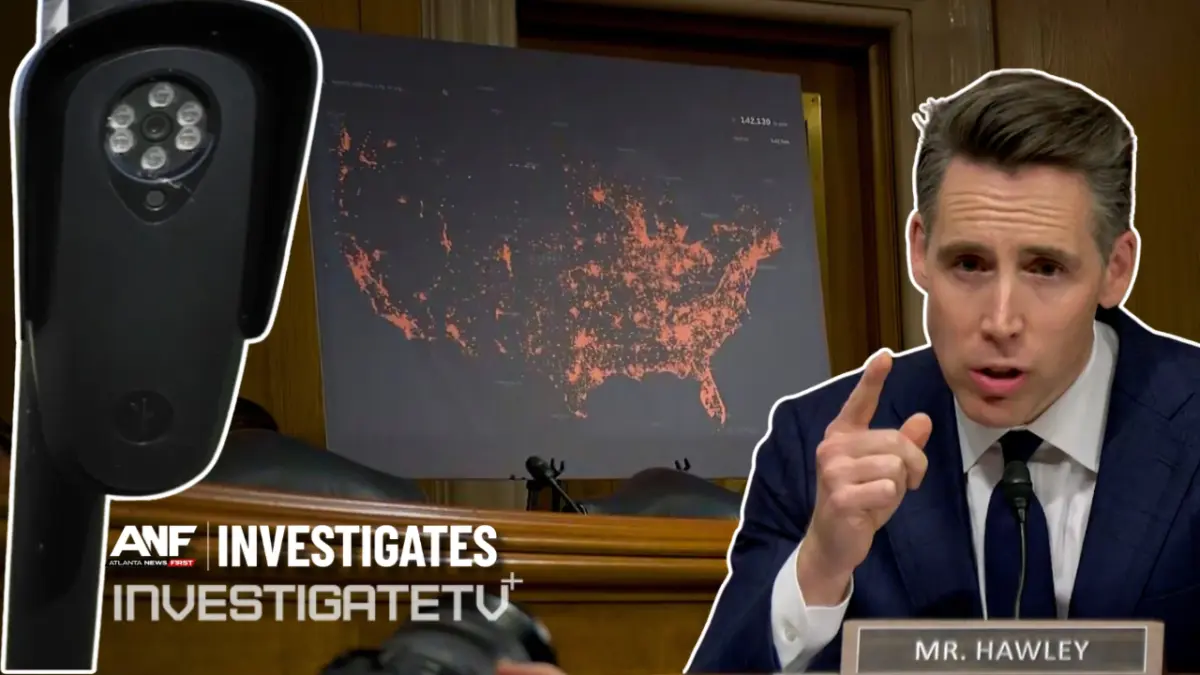
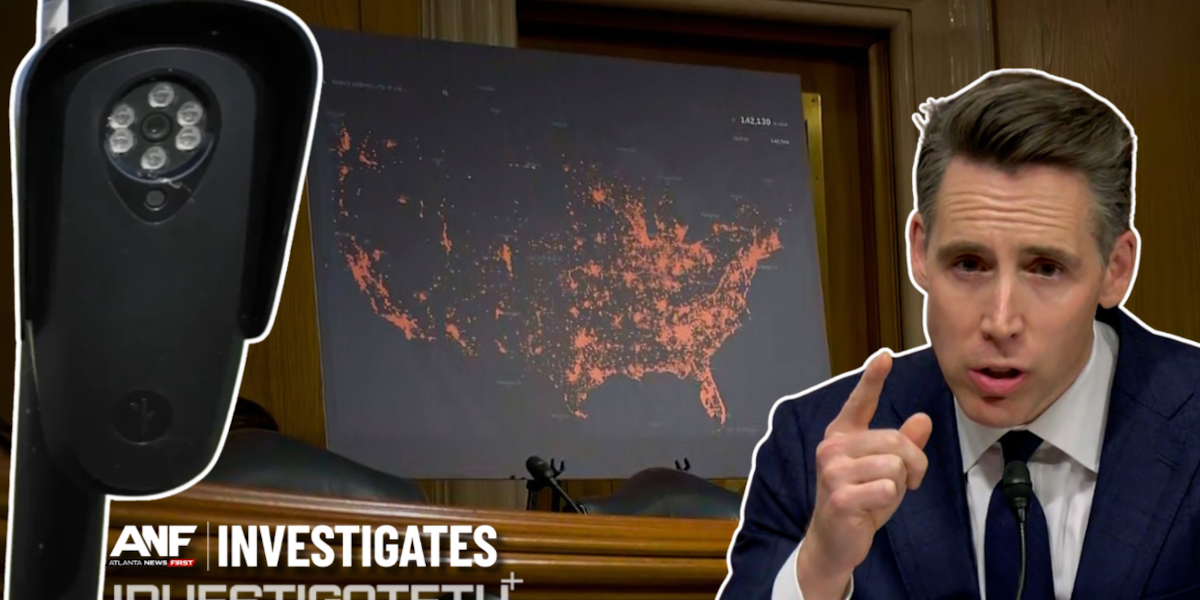
The high-profile no-shows—Garrett Langley of Flock Safety, Rick Smith of Axon Enterprise, Greg Brown of Motorola Solutions, and Filip Kaliszan of Verkada—chose to sit out a grilling by the Senate Judiciary Subcommittee on Crime and Counterterrorism. The hearing, pointedly titled "Always Watching: Flock’s Nationwide AI Surveillance Network," was convened directly in the wake of a months-long, groundbreaking investigative series by InvestigateTV and Atlanta News First.
The reporting exposed a terrifying reality: law enforcement officers across the country have repeatedly weaponized private AI-driven surveillance databases to stalk estranged romantic partners, harass fellow officers, and track citizens without judicial oversight.
For ordinary Americans, the implications are profound. With major manufacturers deploying interconnected networks of cloud-connected cameras that capture millions of vehicle movements daily, the boundary between public safety and mass surveillance has all but dissolved. As lawmakers, civil rights advocates, and victims testified during the harrowing session, the hearing marked a pivotal inflection point in the national debate over the unchecked expansion of the surveillance-industrial complex.
Detailed Chronology: From Investigative Exposes to Congressional Reckoning
The path to Wednesday’s Senate showdown was paved by rigorous, localized investigative journalism that systematically pulled back the curtain on an industry operating largely in the dark.
For months, InvestigateTV and Atlanta News First investigative reporter Brendan Keefe tracked the quiet, rapid proliferation of automated license plate readers across municipal landscapes. What began as an inquiry into traffic monitoring rapidly morphed into a much darker expose on systemic database abuse.
The Georgia Disclosures
Keefe’s reporting uncovered a chilling pattern of localized misconduct: in a single 12-month period in Georgia alone, at least 19 law enforcement officers were arrested, fired, or relieved of duty. Their offenses? Using Atlanta-based Flock Safety’s surveillance database for unauthorized, personal missions. Rather than tracking fugitives or stolen vehicles, officers were found using the multi-jurisdictional network to stalk estranged spouses, monitor acquaintances, and track fellow law enforcement personnel.
These revelations proved that the software’s architecture—designed to retain and share searchable vehicle movement data across municipal, county, and state lines for 30 days—offered a frictionless mechanism for abuse.
The Congressional Response
Armed with this local reporting, the Senate Judiciary Subcommittee on Crime and Counterterrorism stepped in. Subcommittee Chairman Senator Josh Hawley (R-Missouri) opened the proceedings by highlighting the surreal nature of modern digital tracking.
"The reporting on what these cameras can do is really pretty wild," Hawley declared. "The Constitution of the United States is still just as valid and applicable today as it was almost 250 years ago. We have to find a way to protect and enforce the Bill of Rights for every law-abiding citizen of the United States."
Hawley underscored the ubiquity of the technology, offering a stark warning to the chamber: "If you haven’t heard of Flock, Flock has probably heard of you."
He then methodically listed the empty chairs of the corporate chieftains who declined to face Congress: Langley, Smith, Brown, and Kaliszan. Their refusal to testify amplified bipartisan skepticism, transforming what might have been a routine oversight hearing into an aggressive inquiry into corporate accountability.
Supporting Context & Metrics: Inside the Machine
To understand the urgency of the Senate hearing, one must examine the staggering scale of the infrastructure that companies like Flock Safety, Axon, Motorola, and Verkada have built across the American landscape.
The Numbers Game
- 120,000+: The estimated number of automated license plate reader cameras operated by Flock Safety alone across the United States.
- Millions: The volume of vehicle movements captured, logged, and indexed daily.
- 30 Days: The standard baseline retention period for historical data, searchable across jurisdictional boundaries without a warrant in many states.
- 19: The documented number of law enforcement officers in Georgia caught and disciplined or arrested within a single year for misusing the Flock database for personal stalking.
The Illusion of Transparency and the "Audit" Loophole
As public pressure mounted, Flock Safety and its competitors introduced various software updates and monitoring tools purportedly designed to prevent abuse. Earlier this year, Flock launched an AI-powered "audit assistance" tool aimed at flagging suspicious queries for municipal supervisors.
However, investigators and privacy watchdogs revealed that these corporate safeguards are largely window dressing. Victims of database abuse rarely—if ever—learn of the intrusions through official channels. Instead, unauthorized searches typically come to light only through independent public records requests or grassroots digital auditing tools, such as the third-party website haveibeenflocked.com.
Compounding the transparency crisis, investigative findings showed that Flock took steps that actively obscured public oversight. The company removed officer names from external network searches and scrubbed license plate numbers entirely from system audit logs. These design changes effectively slammed the door on transparency, leaving the public blind and completely unable to verify whether their personal travel patterns had been scanned, logged, or searched.
Independent security researchers have also exposed severe structural vulnerabilities within these sprawling digital architectures. Benn Jordan, an independent security researcher who testified before the committee, shocked lawmakers by detailing how he had discovered dozens of Flock cameras streaming live, unsecured data openly online.
"Why create this much data when we can’t secure it?" Jordan asked the panel, challenging Congress to establish universal cybersecurity and privacy regulations that apply evenly across the entire surveillance industry rather than targeting a single vendor.
Official Statements & Testimony: Human Toll and Constitutional Warnings
The hearing featured deeply emotional testimony from ordinary citizens whose lives were upended by technological error, alongside sharp warnings from law enforcement officials and legal scholars.
The Human Cost: Lindsay Issacs’ Ordeal
Perhaps the most visceral testimony came from Lindsay Issacs, a Florida woman whose life was derailed by an errant camera match. Issacs was arrested and charged with causing a horrific vehicular accident that left three people dead. The sole basis for the Florida Highway Patrol’s case? An automated license plate reader "hit" that placed her vehicle in the general vicinity of the crash.
Issacs spent 13 harrowing days behind bars before subsequent police work proved definitively that law enforcement had identified the completely wrong vehicle.
"A Flock camera captured my vehicle a few miles from a terrible crash I had nothing to do with that led to 13 days in jail," Issacs testified, painting a vivid picture of how algorithmic matching can override common sense and personal liberty with catastrophic consequences.
Law Enforcement Split: Utility vs. Autocracy
Even within law enforcement, perspectives on the technology are deeply fractured. Sheriff Ross Teeple of Pinal County, Arizona, testified that while ALPRs possess undeniable utility in tracking fleeing criminals—such as a local case involving a dangerous driver who forced a woman’s car into oncoming traffic—the modern evolution of AI-driven systems has crossed a dangerous threshold.
Sheriff Teeple described a deeply unsettling interaction with Flock Safety representatives when he inquired about the integration of artificial intelligence into their hardware. Initially told that no AI was being utilized, Teeple later encountered corporate statements directly contradicting that assurance.
When he pressed for clarification, Teeple said, "The response I received was chilling. I was told, ‘That wasn’t the AI you were asking about.’"
Legal and Constitutional Boundaries
Alasdair Whitney, legislative counsel for the Institute for Justice, told the subcommittee that modern cloud-connected networks powered by machine learning represent a quantum leap away from the passive, single-purpose cameras of the past.
"We are a long way from a simple automated license plate reader," Whitney testified, urging Congress to establish firm federal guardrails—specifically mandating that law enforcement obtain a probable-cause search warrant before scouring historical license plate databases.
"The Fourth Amendment is a floor, not a ceiling," Whitney emphasized.
Chad Marlow, senior policy counsel for the American Civil Liberties Union (ACLU), delivered a blistering indictment of the profit motives driving the expansion of public safety technology. Marlow argued that venture capital investment has systematically converted tools meant for community safety into a predatory, unregulated surveillance industry.
"The explosion of ALPR use and its tracking of innocent people reflects a view that if ALPR use is scaled up, it could produce the massive profits venture capitalists seek," Marlow said. "Welcome to the surveillance-industrial complex, America."
Marlow went a step further than most, urging Congress to leverage its federal spending power to enact a total prohibition: "The time has come for Congress to ban any law enforcement entity who receives federal funding from using ALPRs. This prohibition should be without exceptions… when it comes to protecting core American civil rights and civil liberties, if you make one exception, you invite others, and that is a slippery slope we must avoid at all costs."
Future Outlook: The Battle for American Privacy
The bipartisan consensus displayed during Wednesday’s hearing signals that the era of unregulated, frictionless private surveillance is drawing under intense legislative crosshairs.
Senators from across the political spectrum voiced a unified determination to establish federal oversight. Senator Dick Durbin (D-Illinois) emphasized that the nation stands at a critical crossroads.
"We have got to find a way to balance in America privacy and security," Durbin said. "There is a balance. Congress needs to lead the way."
Furthermore, bipartisan concern was solidified when Senator Katie Britt (R-Alabama) entered an official joint letter into the congressional record alongside Senator Raphael Warnock (D-Georgia). The letter outlined deep shared concerns over potential civil liberties violations stemming from the unmitigated, nationwide deployment of license plate readers.
As Chairman Hawley summarized during his closing remarks, the fundamental question facing the United States is whether citizens retain the right to move through public spaces unmolested and unrecorded by corporate databases.
"This is still the United States of America, and it shouldn’t be that when you walk out your door in the morning, you just have to agree, in a sense, to accept the fact that you’re gonna be on camera, morning, noon, and night," Hawley concluded. "You’ll be tracked by anybody and everybody in the world. You’ll have no privacy whatsoever."
With empty chairs at the witness table and growing outrage in the hearing room, Wednesday’s session made one thing abundantly clear: the fight to regulate the surveillance-industrial complex has only just begun.

0 Comments