

Executive Overview
On a remote, unpaved airstrip deep within the rugged expanse of the Wrangell Mountains, a routine backcountry takeoff ended in unspeakable tragedy. On the evening of Thursday, September 17, 2026, a Piper Cub aircraft crashed shortly after departing from a dirt strip near Snag Creek, approximately 50 miles southeast of Nabesna, Alaska. The accident claimed the lives of both occupants: 42-year-old pilot Cabot Pitts of Palmer, Alaska, and his 18-year-old passenger, Connor Helsel of Michigan.
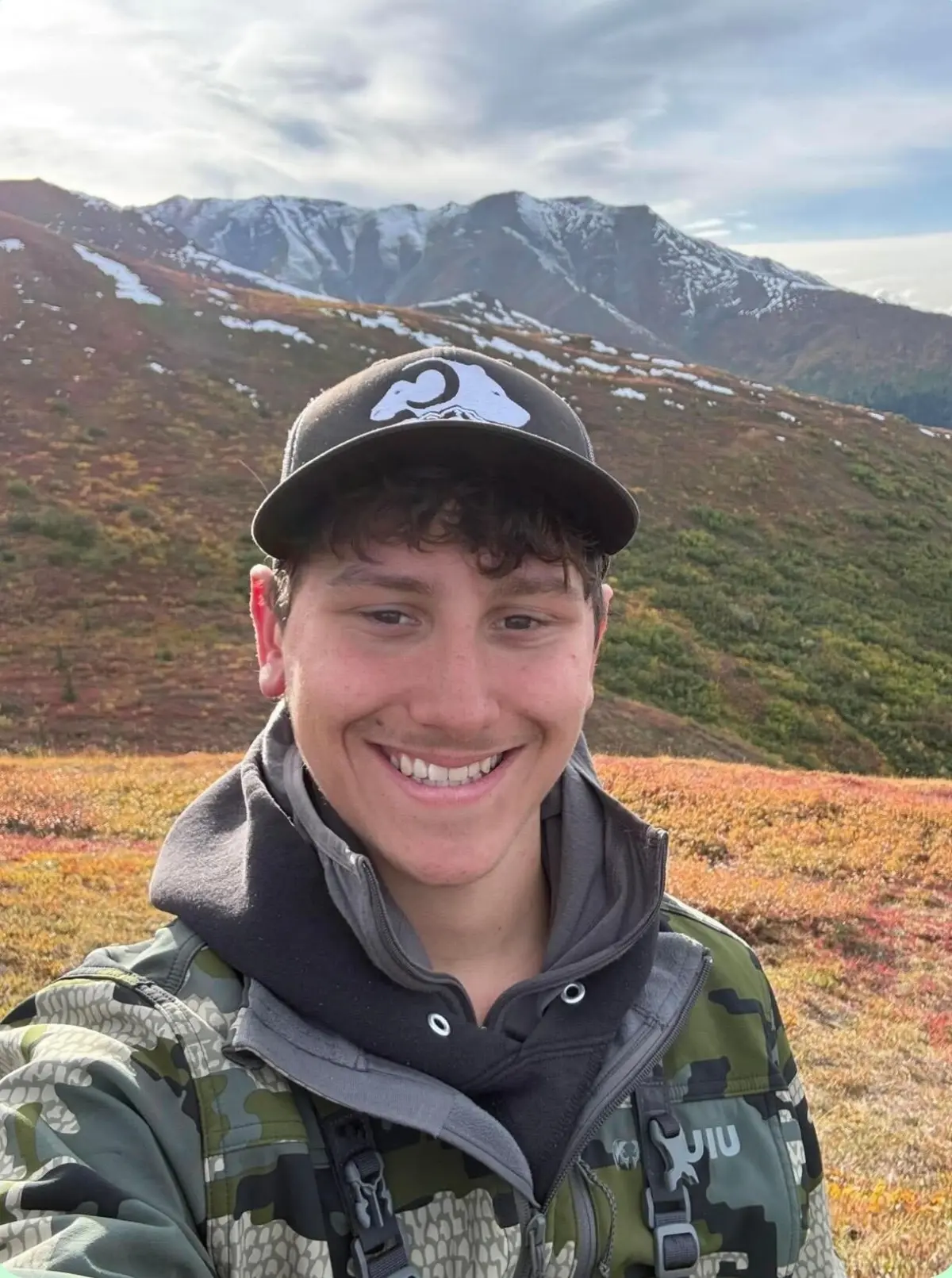
The tragedy has sent shockwaves through the tight-knit communities of Palmer, Alaska, and Michigan’s Upper Peninsula, as well as the broader North American hunting and aviation industries. Pitts, a widely respected figure in the state’s outdoor industry, served as the president of the Alaska Professional Hunters Association (APHA) and operated his own guiding outfit, Alaska Wild Wind Adventures. Helsel, a recent high school graduate, had arrived in Alaska just months prior to pursue his lifelong dream of becoming a wilderness guide and youth minister.
As federal investigators with the National Transportation Safety Board (NTSB) and the Federal Aviation Administration (FAA) begin the arduous process of reconstructing the flight’s final moments, loved ones, clients, and colleagues are choosing to remember the victims not by the suddenness of their deaths, but by the profound faith, tireless work ethic, and shared passion for the Alaskan wilderness that defined their lives.
+-------------------------------------------------------------------------+
|                           ACCIDENT SUMMARY                              |
+---------------------+---------------------------------------------------+
| Date of Incident    | Thursday, September 17, 2026                      |
+---------------------+---------------------------------------------------+
| Location            | Snag Creek airstrip (approx. 50 mi SE of Nabesna)  |
+---------------------+---------------------------------------------------+
| Aircraft Type       | Piper Cub (STOL-capable utility aircraft)         |
+---------------------+---------------------------------------------------+
| Victims             | - Cabot Pitts, 42 (Pilot, Palmer, AK)             |
|                     | - Connor Helsel, 18 (Passenger, MI)               |
+---------------------+---------------------------------------------------+
| Investigation Status| Ongoing (NTSB & FAA active)                       |
+---------------------+---------------------------------------------------+
Detailed Chronology
The Intersection of Two Paths
The partnership between Cabot Pitts and Connor Helsel was forged over a year and a half before Helsel ever set foot in Alaska. Raised as one of six children in the rugged terrain of Michigan’s Upper Peninsula, Helsel was an avid hunter, fisherman, cross-country runner, and devout youth ministry leader. After graduating high school in May 2026, he set his sights on the Last Frontier.
Family friends Biggie and Rachel Stickler facilitated the initial connection between the teenager and Pitts. Recognizing Helsel’s strong character and work ethic, Pitts offered him a coveted position as a wilderness packer for Alaska Wild Wind Adventures—a critical stepping stone toward obtaining an assistant guide license.
The Fatal Flight
In mid-September, Pitts and Helsel were operating in the backcountry of the Wrangell-St. Elias National Park and Preserve, conducting late-season sheep hunts in some of the most demanding terrain on the continent.
- Thursday Evening, September 17, 2026: Pitts and Helsel prepared for departure from a remote, unimproved dirt airstrip near Snag Creek. The area is characterized by narrow valleys, unpredictable mountain wind shear, and high-density altitudes.
- Takeoff: The Piper Cub, a light utility aircraft favored by bush pilots for its Short Takeoff and Landing (STOL) capabilities, initiated its takeoff run.
- The Crash: According to preliminary reports from the Alaska State Troopers, the aircraft crashed shortly after lift-off. The remote nature of the terrain delayed immediate civilian observation, but emergency locator transmitters and subsequent search efforts quickly converged on the site.
- Recovery and Identification: Search and rescue personnel arrived at the remote coordinates, confirming that neither occupant had survived the impact. On Tuesday, September 22, 2026, the Alaska State Troopers officially identified Pitts and Helsel as the decedents.
Supporting Context & Safety Metrics
The Perils of Backcountry Bush Piloting
Operating aircraft in the Alaskan bush is widely recognized as one of the most demanding aviation disciplines in the world. Unlike commercial aviation in the contiguous United States, bush piloting in Alaska relies heavily on Visual Flight Rules (VFR) in areas completely devoid of radar coverage, weather reporting stations, and paved runways.
Key Environmental Hazards in the Wrangell Mountains:
1. Orographic Turbulence: Violent wind patterns created by high mountain peaks.
2. Microclimates: Sudden, localized shifts in visibility, ceiling, and wind speed.
3. Unimproved Airstrips: Short, uneven dirt tracks prone to erosion and soft spots.
4. High Density Altitude: Reduced aircraft performance due to pressure and temperature variables.
According to historical data from the NTSB, Alaska accounts for a disproportionate number of general aviation accidents in the United States. The state’s unique geography makes light aircraft an essential utility rather than a recreational luxury, exposing pilots to extreme environmental variables daily.
A Devastating Coincidence
For those in the outfitting community, the loss of Cabot Pitts was compounded by another recent aviation tragedy. Wayne Wilson, a retired Kentucky conservation officer and game warden who had hunted with Pitts in May 2026, experienced an extraordinary and heartbreaking coincidence in the hours following the crash.
Just minutes after posting an online condolence for pilot Nicholas "Nick" Peters—who had died days earlier in a fatal plane crash near Aniak—Wilson received a notification confirming that Pitts had also perished. Peters had flown Wilson on his very first Alaskan hunt in 2024, while Pitts had piloted him during his 2026 grizzly hunt.
"I got up out of the bed… and I just broke down and cried," Wilson recalled. "It’s unimaginable. What’s the odds of going in 2024 and a guy flying you into the bush, and coming back in ’26 and a different guy flies you into the bush, and you learn on the same day within minutes of each other that you’ve lost both pilots? Both of them. And both of them good men."
Official Statements and Memorial Tributes
The Helsel Family: A Foundation of Faith
In the wake of their son’s sudden passing, Herb and Courtney Helsel have found solace in Connor’s unwavering faith and the joy with which he lived his life.
Herb Helsel recalled a phone call with Connor during a grueling backcountry sheep hunt, when the young man was dealing with severe blisters on his feet:
"He said, ‘Dad, this is the hardest thing I’ve ever done.’ And he said, there was no quit. He said, ‘There’s no quit in me, Dad. I’ll get them doctored up and I’ll be ready to go.’ The guys told me that he read his Bible at least a chapter every day. The last night that he was alive, they looked over at him… Connor had his headlamp, and he was reading his Bible… and he said, ‘This is the Bible my dad gave me and I try to read a chapter a day.’ And he had a hope. He had a hope in Christ."
His mother, Courtney Helsel, remembered Connor as a source of light and humor in their household:
"He was always the one that kept everybody calm and cool or cracked a joke, whether it was the appropriate moment or not. He got us laughing. Connor had that hope all the time. He wasn’t afraid of things. He was willing to take a risk and he wasn’t afraid of death."
Reflecting on his son’s determination to work in the wilderness, Herb added:
"Like I told someone last night from Alaska—and I broke down when I did it—but I said, ‘I sent you my best, my best.’ He died in a plane accident, and that would have been what it took… he wouldn’t have quit any other way."
Remembering Cabot Pitts: A Master of the Skies
Cabot Pitts was widely regarded as a pillar of the Alaskan guiding community. As president of the Alaska Professional Hunters Association, he advocated fiercely for the preservation of ethical hunting practices, wildlife conservation, and safety standards across the state.
       CABOT PITTS: PROFESSIONAL PROFILE
+-------------------------------------------------------+
| - Owner/Operator: Alaska Wild Wind Adventures         |
| - President: Alaska Professional Hunters Association  |
| - Rating: Commercial Pilot & Licensed Master Guide    |
| - Specialization: Backcountry sheep & grizzly guiding |
+-------------------------------------------------------+
Wayne Wilson described Pitts as a consummate professional who immediately put his passengers at ease:
"When you first meet him, it’s like you’ve known him your whole life."
Wilson recalled a poignant memory of flying over the Alaska Peninsula with Pitts as dusk fell over the water:
"It was late evening, the sky was pink, blue. The water below us was like a mirror. And he looked over at me and I told him, I said that there would be people pay big money to be sitting in my seat right now… and he with a big smile and he said, ‘They absolutely would.’ And he said, ‘I get to do this for a living.’"
Wilson also recalled Pitts flying him over a previous crash site during their journey, where Pitts shared a sentiment that now carries prophetic weight:
"He made mention of if that ever happened to him, he said, ‘I’m doing what I love.’ And that was no doubt. He loved what he was doing."
Future Outlook
The Federal Investigation
The National Transportation Safety Board (NTSB) has launched a formal investigation into the Snag Creek crash. Because the accident occurred in an exceptionally remote area of the Wrangell-St. Elias National Park, retrieving the wreckage of the Piper Cub presents significant logistical challenges. Investigators will evaluate several critical vectors:
- Environmental Conditions: Analyzing localized wind data, density altitude, and visibility at the time of takeoff.
- Mechanical Integrity: Examining the engine, control surfaces, and fuel system of the Piper Cub for signs of pre-impact failure.
- Operational Factors: Assessing aircraft weight and balance configurations, which are critical during backcountry takeoffs from short, unimproved strips.
A preliminary report is expected within several weeks, though a full determination of the probable cause could take up to a year or more.
Impact on the Alaskan Guiding Community
The loss of Cabot Pitts leaves a significant leadership void within the Alaska Professional Hunters Association. Colleagues expect the organization to honor his legacy by redoubling its efforts to promote wilderness safety and mentorship programs for young packers and guides—the very path that Connor Helsel was so eagerly embarking upon.
Though the tragedy highlights the unforgiving dangers of the Alaskan backcountry, those who knew Pitts and Helsel believe their stories will continue to inspire future generations of outdoorsmen. They lived with a rare combination of courage, discipline, and profound respect for the wild, leaving behind a legacy that will endure long after the wreckage is cleared from the Snag Creek valley.

0 Comments