

Executive Overview
In the modern service economy, frontline workers—particularly young and vulnerable employees—are frequently caught in the crosshairs of customer volatility, corporate risk management, and the stark realities of public safety. This delicate and often perilous equilibrium was shattered on the evening of September 14, in Washington, North Carolina, when a routine shift at Whistle Express Car Wash escalated from harmless teenage horseplay into a violent physical confrontation.
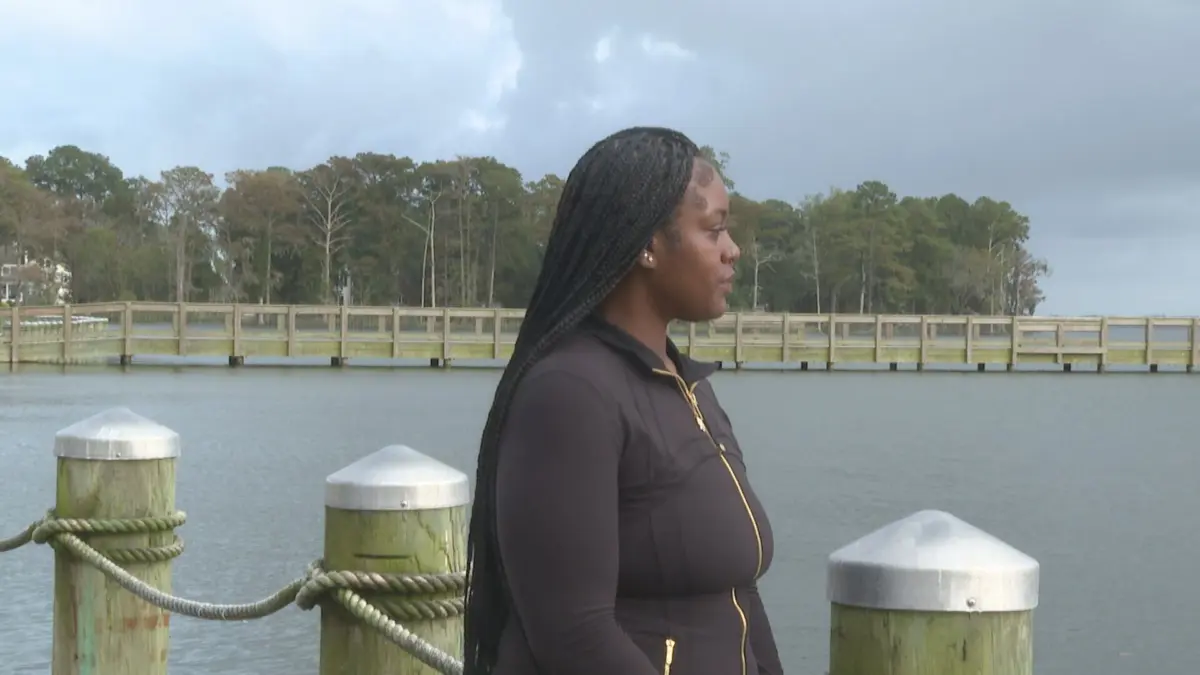
Ja’Neice Shamble, a 17-year-old high school senior striving to save money for her future, found herself fighting not only for her physical safety on company property but, ultimately, for her professional livelihood. What began as a misunderstanding across a neighborhood street transformed into an ordeal involving alleged assault, property theft, conflicting emergency response protocols, and a controversial corporate termination that has ignited local debate over employer duty of care.
According to Shamble, she and a coworker were dancing while on duty when a nearby resident misconstrued the gesture as personal mockery. This perceived slight catalyzed an unprovoked escalation: the local woman crossed the public thoroughfare, entered the car wash premises, and subjected the teenage employees to a torrent of verbal harassment before escalating to physical violence. When Shamble attempted to defend herself and protect customers, she sustained physical injuries, lost personal property, and found herself navigating a labyrinth of legal hurdles.
Worse still, within 24 hours of filing criminal charges against her assailant, Shamble was handed a pink slip. Management at Whistle Express cited policy violations—specifically, that the teenager chose to pursue the fleeing assailant to recover her stolen cellular device rather than immediately dialing 911—despite employee claims that the facility’s landlines were inoperable at the time.
This in-depth investigative report examines the unfolding of that September evening, the structural and legal nuances of workplace violence policies, the responsibilities of modern employers toward teenage staff, and the broader societal implications of corporate liability when the safety of the American worker is compromised.
Detailed Chronology of Events
The Buildup: From Innocence to Misunderstanding
The events of September 14 began like any other early autumn evening in Washington, North Carolina. For 17-year-old Ja’Neice Shamble, a high school senior balancing the rigorous demands of her final year of secondary education with part-time employment, the shift at Whistle Express Car Wash was supposed to be straightforward. Working alongside a peer, Shamble engaged in a momentary display of youthful exuberance: the two teenagers were dancing while managing their duties on the wash floor.
Unbeknownst to the employees, their movements were being observed from a residential porch situated directly across the street. A local woman, whose identity has been withheld pending upcoming court proceedings, apparently convinced herself that the teenagers’ dance moves were directed at her as an act of public mockery. Rather than letting the perceived slight pass, the resident elected to intervene directly.
Leaving her porch, the woman crossed the street and breached the car wash premises. What started as angry verbal reprimands quickly deteriorated into a hostile confrontation. Witnesses and subsequent statements indicate that the situation transformed from a verbal altercation into a physical assault within minutes, catching the young employees entirely off guard.
The Physical Escalation and Self-Defense
As the situation escalated, the angry resident closed the distance and initiated physical contact. According to Shamble, the woman struck her repeatedly—delivering multiple blows that forced the teenager into a defensive posture.
"I just stood there and kind of took it until she began putting her hands on me and started dragging me to the ground and stuff like that," Shamble recounted in interviews following the incident.
Faced with an active physical threat on her employer’s premises, Shamble defended herself, attempting to fend off her attacker as the altercation spilled across the ground. During the struggle, Shamble’s cellular device fell from her pocket onto the concrete. Sensing an opportunity to neutralize the victim’s ability to call for help, the assailant scooped up the phone and fled the scene on foot, carrying the stolen property away.
Left with scraped knees, torn clothing, and emotional trauma, Shamble faced a split-second decision. With her phone stolen and the facility’s internal communication lines reportedly non-functional, she chose to give chase to recover her device before the suspect could completely vanish into the surrounding neighborhood.
Law Enforcement Intervention and the Magistrate’s Office
While the chase ensued, a bystander who had witnessed the unfolding violence successfully dialed 911. Local law enforcement officers from the Washington Police Department responded to the scene, arriving shortly after the suspect had fled.
Upon interviewing the parties involved, officers informed Shamble of a distinct legal reality regarding misdemeanors in North Carolina. Because the alleged crime—simple assault and property damage—was a misdemeanor not committed directly in the presence of a law enforcement officer, police authorities could not make an immediate, on-the-scene arrest. Instead, officers directed Shamble to visit the local magistrate’s office to formally file criminal charges.
Demonstrating resilience, Shamble followed the officers’ instructions. On September 15—less than 24 hours after the traumatic incident—she appeared at the magistrate’s office and officially filed charges against her assailant for simple assault and injury to personal property. Court documentation obtained by regional news outlets confirmed that the paperwork was successfully processed, setting the stage for a judicial reckoning.
The Termination: Fired for Pursuing Justice?
However, Shamble’s administrative victory at the magistrate’s office was immediately overshadowed by a professional catastrophe. On the very same day she filed charges, management at Whistle Express Car Wash delivered devastating news: Shamble was terminated from her position.
According to the teenager, corporate leadership justified her firing by claiming she violated company protocol. Specifically, management argued that Shamble should have called 911 rather than pursuing the fleeing suspect to recover her stolen property.
Shamble vehemently contested this rationale, highlighting the absurd Catch-22 of her situation:
- The facility’s business phones were allegedly not working at the time of the incident.
- Her own cellular device had been stolen by the attacker, rendering immediate digital communication impossible.
- Company staff offered no physical intervention or security measures to protect her or the customers during the invasion.
"I didn’t ask to be in that situation," Shamble stated, her voice reflecting a mix of shock and betrayal. "I was on your guys’ premises, and you guys didn’t do anything to help me, save me, or any of the customers. Like I was there, basically saving other people and myself on your premises."
Supporting Context & Metrics: The Plight of Young Workers and Workplace Violence
To fully comprehend the significance of the Whistle Express incident, one must examine the broader socio-economic and legal landscape surrounding workplace violence in the United States, particularly as it pertains to teenage and young adult workers in the retail and service sectors.
The Vulnerability of Youth in the Service Sector
According to data compiled by the Bureau of Labor Statistics (BLS) and the Occupational Safety and Health Administration (OSHA), service-sector environments—including car washes, gas stations, and fast-food establishments—frequently rank high in vulnerability to customer-perpetrated aggression. Teens aged 16 to 19 represent a substantial portion of the entry-level workforce in these industries, yet they often lack comprehensive de-escalation training or crisis management preparation.
| Metric Category | Statistical Overview / Context |
|---|---|
| Retail & Service Sector Violence | Accounts for a significant percentage of non-fatal workplace assaults annually. |
| Teen Workforce Representation | Millions of 16-to-19-year-olds work part-time in customer-facing roles across the U.S. |
| Duty of Care Obligations | OSHA General Duty Clause requires employers to provide a workplace free from recognized hazards. |
| Bystander & Employee Intervention | Often governed by strict corporate "no-pursuit/no-resistance" manuals to mitigate liability. |
The Corporate Dilemma: Safety Protocols vs. Employee Reality
In the wake of rising retail crime and public volatility, modern corporations have increasingly adopted strict risk-mitigation policies. These manuals typically instruct employees to:
- Avoid physical engagement at all costs.
- Surrender property immediately during robberies or disputes to prevent escalation.
- Retreat to safe zones and contact emergency services (911) instantly.
While these policies are designed to reduce severe injury and limit corporate civil liability, they frequently clash with the visceral human instinct of self-preservation and the practical realities of chaotic incidents. In Shamble’s case, the corporate policy weaponized her instinctive reaction—chasing a thief to retrieve her personal lifeline (her phone)—as grounds for termination, effectively punishing the victim for failing to adhere rigidly to an office manual while under physical duress.
Official Statements and Institutional Responses
As news of the incident spread throughout eastern North Carolina, public interest organizations, legal advocates, and media outlets sought clarity from the primary entities involved.
Whistle Express Corporate Statement
Faced with mounting public scrutiny regarding the handling of a teenage employee who was assaulted on their property, Whistle Express released a carefully worded official statement:
"Whistle Express is committed to providing a safe and respectful environment for our team members and the public. Workplace violence of any kind is contrary to our values and our policies. The individual referenced is no longer employed by the company. Because this concerns a personnel matter, we are not able to discuss the specifics of the decision, other than to confirm it was made following a review of the incident and in accordance with our established policies."
Legal analysts evaluating the statement point out its heavy reliance on standard corporate confidentiality tropes. By framing the termination strictly as a "personnel matter," Whistle Express avoided directly addressing Shamble’s allegations regarding the inoperable business phones, the lack of on-site security, and the physical injuries she sustained while defending customers.
Law Enforcement Perspective
The Washington Police Department maintained a neutral stance regarding the employment dispute while clarifying the jurisdictional boundaries of local law enforcement. Officers reiterated that for certain classes of misdemeanors—such as simple assault and minor property destruction—where the infraction does not occur directly within the line of sight of a responding officer, the judicial system requires the aggrieved citizen to initiate formal proceedings through the local magistrate.
Furthermore, police sources confirmed that the assailant in question was already well known to local authorities, adding weight to community concerns regarding repeat offenses and public safety.
Future Outlook: Legal Horizon and Community Impact
As this narrative moves from local news reports into the formal judicial system, several critical milestones will dictate how the story concludes for Ja’Neice Shamble, Whistle Express, and the broader Washington, N.C. community.
Upcoming Court Proceedings
The criminal case against the alleged assailant is slated to reach a pivotal juncture on October 12, when the suspect is scheduled to make her mandatory appearance in court. Shamble has expressed cautious optimism, hoping that a formal conviction will not only hold the individual accountable for the September 14 attack but also establish a legal barrier preventing the assailant from inflicting similar harm on other community members or local workers.
Employment Law and Accountability
Beyond the criminal courtroom, legal experts suggest that Shamble’s situation highlights a gray area in employment law. While North Carolina operates under strict "at-will" employment doctrines—meaning employers can generally terminate staff at any time for almost any reason—the optics and potential ethical breaches of firing an assault victim who was defending company premises have sparked local outrage.
Community advocates are calling for a thorough re-evaluation of how businesses treat frontline minors. Questions remain as to whether Whistle Express will face civil pressure to compensate Shamble for her medical expenses, lost wages, and the psychological toll of the ordeal.
Long-Term Takeaways for Service-Sector Employers
Ultimately, the Whistle Express controversy serves as a cautionary tale for corporations nationwide. As public spaces become increasingly unpredictable, employers can no longer rely on rigid, boilerplate policies that penalize traumatized victims for failing to act like trained security professionals.
For Ja’Neice Shamble, a young woman preparing to close out her high school career, the experience has been an abrupt introduction to the harsh realities of the adult world. Yet, her determination to pursue justice through the magistrate’s office—refusing to let the assault go unpunished—underscores a resilience that extends far beyond the car wash floor. As October 12 approaches, the community of Washington watches closely, waiting to see if justice will finally be served.

0 Comments