On Friday, September 25, 2026, Milan Fashion Week became the epicenter of a profound transformation within the luxury fashion sector. Against the backdrop of a challenging global economic climate characterized by shifting consumer behavior and softening demand across key luxury demographics, two of Italy’s most storied fashion houses—Gucci and Moschino—unveiled their highly anticipated Spring-Summer 2027 women’s collections. Both presentations served as critical strategic declarations, outlining how these heritage brands intend to balance high-concept artistic direction with the pragmatic demands of commercial retail.
At Gucci, Creative Director Demna delivered his crucial sophomore collection. Moving decisively past the rigid archetypal experiments of his debut, Demna looked inward to the house’s rich heritage, staging a runway show designed as a fully realized, ultra-luxury retail boutique. This theatrical yet commercial setting emphasized a clear directive: translating runway avant-garde into wearable, highly sellable wardrobe investments. Meanwhile, Moschino marked a bold new chapter under the creative co-direction of Loris Messina and Simone Rizzo. The founders of the cult label Sunnei brought their signature intellectual irony and street-level credibility to the house, trading the theatrical camp of previous eras for a democratic, highly wearable, and contemporary vision of urban luxury.
Detailed Chronology
Gucci’s High-Stakes Retail Theatre
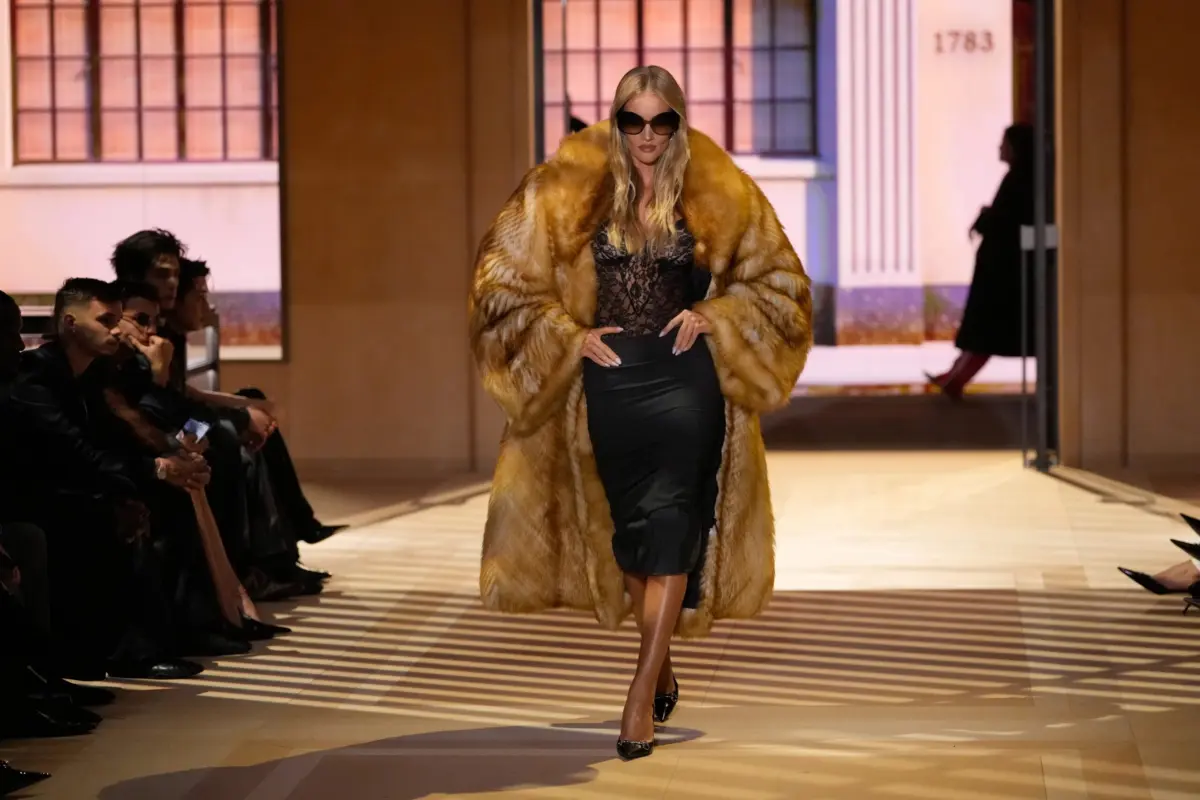
The atmosphere inside the Gucci venue was designed to strip away the traditional distance between the consumer and the clothing. Rather than a sterile runway, the space was transformed into an opulent, immersive Gucci boutique. Cushioned velvet sofas replaced standard benches, and the front row featured a curated assembly of global cultural figures.
Among them was Cardi B, enveloped in a voluminous white faux-fur coat, sitting alongside Donatella Versace, who wore a structured stole salvaged from Demna’s debut Gucci collection. Nearby, global brand ambassador and tennis champion Jannik Sinner sat next to Vogue’s Editor-in-Chief, Anna Wintour.
The presentation began with models walking through the boutique space with a calculated air of casual indifference. Instead of marching in a rigid line, they drifted past brass-rimmed jewelry cases, paused to inspect shelves lined with leather goods, and lingered near racks of ready-to-wear apparel. This staging made the commercial intent of the collection explicit. At a time when the luxury sector faces strict inventory management demands, Demna presented a collection built to move directly from the runway hanger to the customer’s wardrobe.
Deconstructing the Silhouettes of SS27
The design vocabulary of the Spring-Summer 2027 collection relied on strong, instantly recognizable silhouettes that softened into intricate details upon closer inspection.
Sartorial Architecture: Demna established a structural theme centered on the shoulders. Men’s tailoring featured dramatically widened, boxy shoulders, while women’s jackets and dresses utilized distinct, upturned pagoda shoulders. High, stiffened collars were turned upward, framing the models’ faces and adding an assertive, protective quality to the garments.
Italian Styling Codes: Despite the avant-garde proportions, the styling remained rooted in classic Italian dressing. For men, this took the form of precisely cropped trousers paired with elongated leather loafers worn without socks. For women, the collection offered cinched trench coats layered over fluid silk blouses and tailored A-line skirts.
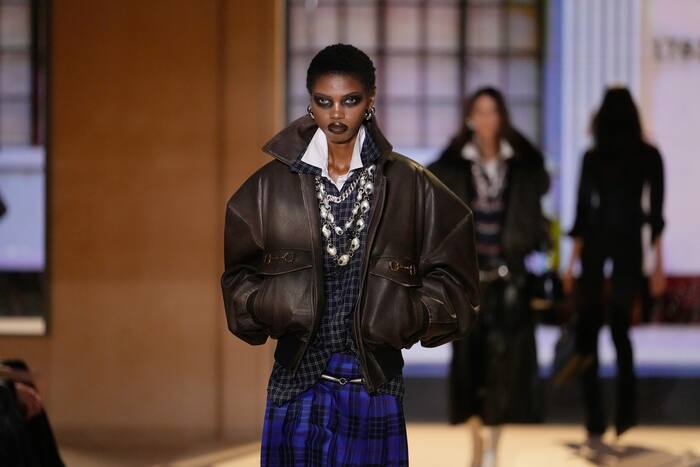
Subversive Layering: The styling introduced a tension between classic bourgeois elegance and contemporary street culture. Low-slung, wide-leg trousers were held up by three layered leather belts, referencing the "maranza" style popular among urban Italian youth. Conversely, a traditional Milanese tartan skirt was paired with a rugged leather bomber jacket, a plaid shirt, and a heavy, oversized statement necklace.
Commercial Highlights: The collection’s most market-ready looks included a double-breasted navy peacoat styled with high-heeled equestrian boots—complete with spurs—and a sporty, striped rugby shirt layered beneath a classic Oxford button-down and a structured jacket featuring the iconic Gucci logo.
As the sun set over Milan, casting a pink glow across the skyline, Loris Messina and Simone Rizzo staged their debut collection for Moschino on the top floor of a concrete parking garage. The venue overlooked the construction site of the ice hockey arena for the 2026 Winter Olympics, establishing an industrial, real-world context for the show.
The designers rejected the traditional, isolated runway format. Instead, they flanked the modeling path with hundreds of everyday citizens walking in the opposite direction. Dressed in their personal clothing, this crowd created a continuous, real-time contrast to the runway looks, firmly anchoring the collection in the context of everyday street style.
Messina and Rizzo preserved the house’s signature irony, but delivered it with a refined, intellectual touch. Rather than relying on the overt pop-culture parodies of Moschino’s past, they integrated humor directly into the construction of the garments:
Subverted Proportions: Exaggerated side bustles added historicist, Marie Antoinette-style volume to casual denim skirts. Innovative padding was built into the rear of several garments, offering a playful, sculptural commentary on traditional feminine silhouettes.
Textural Irony: Precious materials were paired with unexpected, raw elements. Grass-like fringe detailing trimmed clean-cut luxury pieces, while bold, cartoonish graphics were treated as abstract prints rather than literal references.
Pragmatic Accessories: Moving away from novelty accessories shaped like household objects, the designers focused on functional luxury. The central accessory of the collection was an oversized, structured leather bucket bag. The single nod to Moschino’s classic whimsy was a sleek shoulder bag shaped like a cat, designed to sit comfortably on the wearer’s shoulder.
Supporting Context & Metrics
The Spring-Summer 2027 collections arrive during a period of normalization for the global luxury market. Following years of rapid post-pandemic expansion, major luxury conglomerates have reported a deceleration in organic revenue growth.
This economic landscape explains the deliberate strategic shifts executed by both Kering (Gucci’s parent company) and Aeffe (Moschino’s parent company):
The Luxury Slowdown: With key demographics showing greater caution, fashion houses are prioritizing versatile, high-quality garments over fleeting, logo-heavy trends. Demna’s emphasis on wearable heritage at Gucci directly addresses this demand for lasting value.
The Sophomore Challenge: A creative director’s second collection is often more critical than their first. While the debut establishes a new aesthetic direction, the sophomore collection must demonstrate commercial viability and show how that vision translates into sustained retail performance.
The Evolution of Camp: Under Jeremy Scott, Moschino became synonymous with high-camp pop-art spectacles. While highly visible on social media, this approach occasionally struggled to translate into everyday wear. The appointment of Messina and Rizzo represents a strategic pivot toward Sunnei’s signature style: minimalist, highly wearable garments defined by subtle, intellectual humor.
Official Statements
Demna’s Vision for Gucci
In his post-show notes, Demna clarified his intention to move beyond conceptual exercises and embrace the direct, visible nature of luxury:
"Gucci is about luxury that wants to be seen. The collection is not about hiding behind a concept; it is about the reality of the garment, the beauty of the craft, and the confidence of the person wearing it. We wanted to create clothes that people can see, desire, and immediately wear."
This perspective was reflected in the boutique-style runway presentation, where the design team emphasized the tactile quality and immediate retail appeal of each piece.
Moschino’s Contemporary Manifesto
Speaking backstage after their debut, Loris Messina and Simone Rizzo discussed their plans to realign Moschino with contemporary culture without getting stuck in nostalgia:
"We want Moschino to become a cultural loudspeaker again," stated Simone Rizzo. "Franco Moschino was always connected to the street, to the energy of real people, and to the urgent conversations of his time. We have that same urgency in terms of creativity and breaking down barriers, but the year is 2026. Our fashion must reflect the reality of how people live and dress today."
Future Outlook
The Spring-Summer 2027 presentations from Gucci and Moschino point to a broader shift in the luxury fashion landscape, emphasizing a return to wearability, retail pragmatism, and authentic cultural connection.
Demna’s second collection is expected to perform well with retail buyers. By blending high-fashion silhouettes—such as the pagoda shoulder—with commercial essentials like peacoats, trench coats, and classic loafers, Gucci has created a balanced product offering. This approach allows the brand to engage avant-garde consumers while remaining accessible to classic luxury buyers looking for timeless investments.
The New Retail Identity of Moschino
Messina and Rizzo’s streamlined aesthetic may initially surprise consumers accustomed to Moschino’s bright colors and bold novelty items. However, their focus on practical luxury—highlighted by versatile bucket bags and clean denim tailoring—positions the brand to capture a wider share of the contemporary, high-end streetwear market. This shift suggests a sustainable growth model that relies on everyday wardrobe essentials rather than one-off statement pieces.
As the retail season approaches, the success of both collections will depend on how effectively these new design philosophies resonate on the sales floor. By bridging the gap between artistic runway narratives and real-world utility, Milan’s leading houses have set a practical, sophisticated tone for the global fashion industry heading into 2027.




0 Comments