

Executive Overview
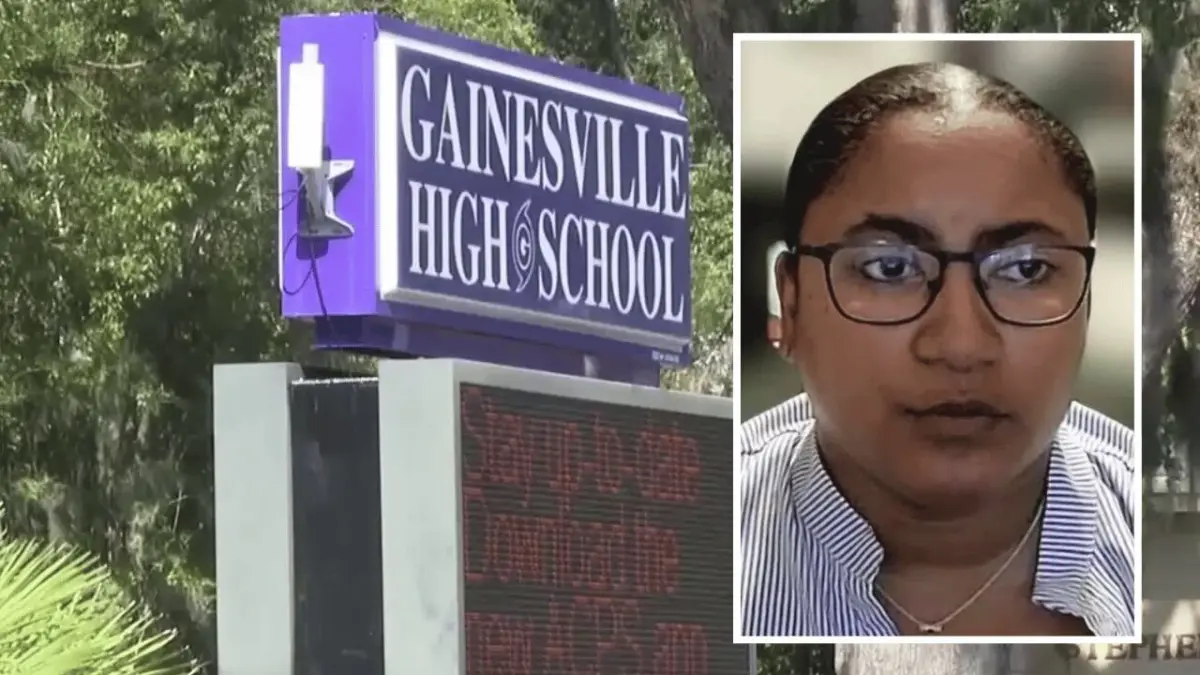
A high-stakes legal battle is unfolding in Florida’s administrative court system, positioning local school autonomy against aggressive state-level regulatory oversight. At the center of the controversy is Lauren Watts, a veteran educator at Gainesville High School within the Alachua County Public Schools (ACPS) district. Watts faces potentially career-ending state sanctions after presenting a mock superlative award—labeling a former student as "most likely to become a dictator"—during an end-of-year classroom activity.
While the local school district deemed a single-day unpaid suspension to be an appropriate and sufficient disciplinary response, the Florida Department of Education has intervened with far more severe recommendations. The state’s Commissioner of Education has formally requested a one-year suspension of Watts’ teaching certificate, to be followed by a two-year probationary period, a formal written reprimand, and a $1,000 administrative fine. Conversely, legal counsel representing Watts argues that any state-level discipline is unwarranted, excessive, and disconnected from the nuances of the classroom environment.
Following a virtual administrative hearing held during the summer of 2026, both parties now await a recommended order from an administrative law judge. This decision, expected by October 15, 2026, will serve as a critical bellwether for the boundaries of classroom humor, the scope of state-level intervention in local district matters, and the evolving standards of professional conduct for educators in the State of Florida.
Detailed Chronology
The trajectory of the dispute spans local administrative action, state-level escalation, and formal legal proceedings:
[Spring 2025] Mock award presented -> [Summer 2025] District issues 1-day suspension -> [Late 2025] FLDOE files administrative complaint -> [Summer 2026] Virtual DOAH hearing -> [Oct 15, 2026] Expected ALJ recommendationThe Incident and Local Intervention
The controversy originated during the final weeks of the academic year at Gainesville High School. As part of an end-of-year classroom tradition, Lauren Watts distributed personalized, lighthearted "superlative" awards to her students. Among these was an award designating one student as "most likely to become a dictator."
While intended as an inside joke reflecting classroom dynamics or specific academic discussions, the superlative drew scrutiny. Upon learning of the award, Alachua County Public Schools administrators launched an internal review. Concluding that the award crossed the line of professional propriety, the district suspended Watts for one day without pay. With this action, local administrators considered the matter resolved, signaling that while Watts had exhibited an error in judgment, her long-term standing as an educator remained intact.
State Intervention and Escalation
The situation escalated significantly when the incident was flagged by the Florida Department of Education (FLDOE). Under Florida law, local school districts are required to report certain disciplinary actions involving certified educators to the state.
Upon reviewing the case, the Florida Commissioner of Education determined that the local district’s single-day suspension was insufficient. The state escalated the matter by filing a formal administrative complaint against Watts’ teaching certificate, alleging violations of the state’s strict educator code of conduct. The commissioner proposed a severe disciplinary package:
- A one-year suspension of her Florida educator certificate;
- A subsequent two-year probationary period upon reinstatement;
- A formal written reprimand placed in her permanent state record;
- A $1,000 administrative fine.
The Administrative Hearing
Refusing to accept the state’s proposed penalties, Watts, supported by her legal counsel and union representatives, contested the allegations. The dispute was referred to the Florida Division of Administrative Hearings (DOAH), which provides independent administrative law judges to resolve disputes involving state agencies.
In the summer of 2026, both parties presented their arguments during a virtual administrative hearing. The state argued that Watts’ actions compromised the emotional well-being of the student and fell far short of professional standards. Watts’ defense team argued that the award was harmless satire, that the student was not harmed, and that the state’s proposed sanctions were an unprecedented overreach.
The administrative law judge presiding over the case took the arguments and evidence under advisement. The judge is legally bound to issue a recommended order, which is anticipated on or before October 15, 2026.
Supporting Context & Metrics
To fully understand the gravity of the case against Lauren Watts, it is necessary to examine the regulatory, legal, and cultural framework governing educators in Florida.
The Florida Educator Standards and Rule 6A-10.081
The state’s case rests on the Principles of Professional Conduct for the Education Profession in Florida (specifically outlined in Rule 6A-10.081 of the Florida Administrative Code). This rule mandates that Florida educators must value "the worth and dignity of every person" and must adhere to specific obligations to the student, including:
- Obligation to protect the student from conditions harmful to learning or to the student’s mental and/or physical health and/or safety.
- Obligation to not intentionally embarrass or disparage a student.
The Commissioner of Education argues that labeling a student as a future "dictator"—a term associated with authoritarianism, human rights abuses, and oppression—inherently disparages the student and risks severe psychological and social harm.
Local vs. State Jurisdictional Friction
This case highlights a growing structural tension in Florida’s educational ecosystem: the divide between local school board autonomy and centralized state control.
| Disciplinary Authority | Typical Sanctions Available | Focus of Intervention |
|---|---|---|
| Local School District (ACPS) | Verbal/written warnings, short-term unpaid suspensions, reassignment. | Operational continuity, local community standards, immediate corrective action. |
| State Department of Education (FLDOE) | Certificate suspension, permanent revocation, state-mandated probation, fines. | Uniform enforcement of state statutes, systemic deterrence, professional licensing standards. |
In recent years, the FLDOE has adopted an increasingly active role in policing classroom discourse, instructional materials, and teacher-student interactions. Critics argue this centralized oversight diminishes the ability of local principals and superintendents—who understand the specific context of their schools—to resolve minor infractions constructively. Proponents of state intervention contend that strict, uniform enforcement is necessary to protect students and maintain high professional standards across all 67 Florida school districts.
Official Statements and Legal Arguments
The legal battle presented during the summer hearing showcases two fundamentally different interpretations of classroom management, student-teacher relationships, and professional accountability.
The State’s Case: Protecting Student Dignity
Attorneys representing the Florida Department of Education argued that the state has a compelling interest in protecting students from public humiliation by individuals in positions of authority.
In their filings, state attorneys asserted:
"An educator occupies a position of profound public trust. To single out a student with an award labeling them a ‘dictator’—even under the guise of humor—constitutes a clear failure to maintain a safe, supportive, and respectful learning environment. Such actions can lead to peer victimization, emotional distress, and a disruption of the educational process. A single-day suspension does not reflect the severity of this breach of professional ethics."
The state maintains that a one-year suspension of Watts’ teaching credential is a necessary and proportionate measure to deter similar conduct and preserve the integrity of the teaching profession statewide.
The Defense’s Case: Context, Proportionality, and Free Expression
Watts’ defense team, bolstered by legal representation from state teacher association affiliates, presented a starkly different narrative. They characterized the award as an benign, lighthearted joke that was well-received within the context of the specific classroom environment.
Her defense attorneys argued:
"The state’s proposed discipline is a draconian overreach that threatens to destroy a dedicated educator’s career over a harmless, satirical classroom superlative. There was absolutely no malicious intent, nor is there any evidence that the student suffered psychological harm or embarrassment. The local school district investigated this matter thoroughly and administered a proportionate, one-day suspension. For the state to intervene and demand a year-long suspension, thousands of dollars in fines, and probation is an abuse of regulatory power that will have a chilling effect on teachers across Florida."
The defense has requested that the administrative law judge recommend a complete dismissal of the state’s administrative complaint, or, at a minimum, find that no further disciplinary action beyond the district’s initial one-day suspension is warranted.
Future Outlook
The administrative law judge’s recommendation, expected by October 15, 2026, represents a critical milestone, but it will not be the final step in this legal process.
The Administrative Adjudication Process
In Florida, the recommendation of an administrative law judge (ALJ) is submitted to the Education Practices Commission (EPC), an independent body composed of teachers, administrators, and lay citizens.
[ALJ Issues Recommended Order]
          │
          ▼
[Submitted to Education Practices Commission (EPC)]
          │
          ▼
┌───────────────────┴───────────────────┐
▼                                       ▼
[EPC Accepts Recommendation]   [EPC Modifies Penalty]
(Imposes final disciplinary action)
While the EPC must give great deference to the ALJ’s findings of fact, it retains the ultimate authority to determine the final disciplinary action. The commission can accept, reject, or modify the penalties proposed by both the ALJ and the Commissioner of Education.
Broader Implications for Florida Educators
The resolution of this case will likely establish an important precedent regarding:
- The Definition of "Harm" in the Classroom: Whether the state must prove actual, documented psychological harm to a student to sustain severe disciplinary action, or if the mere potential for embarrassment is sufficient to justify suspending a teaching license.
- The Viability of Classroom Humor: How teachers navigate informal interactions, humor, and satire in an increasingly scrutinized and litigious educational landscape.
- Teacher Retention and Morale: At a time when Florida continues to grapple with acute teacher shortages, critics warn that high-profile, aggressive prosecutions of educators for non-violent, instructional missteps could further depress morale and deter prospective candidates from entering the profession.
As the October deadline approaches, educators, school administrators, and legal experts across the state will be watching closely to see where Florida draws the line between a harmless classroom joke and a career-ending offense.

0 Comments