

Executive Overview
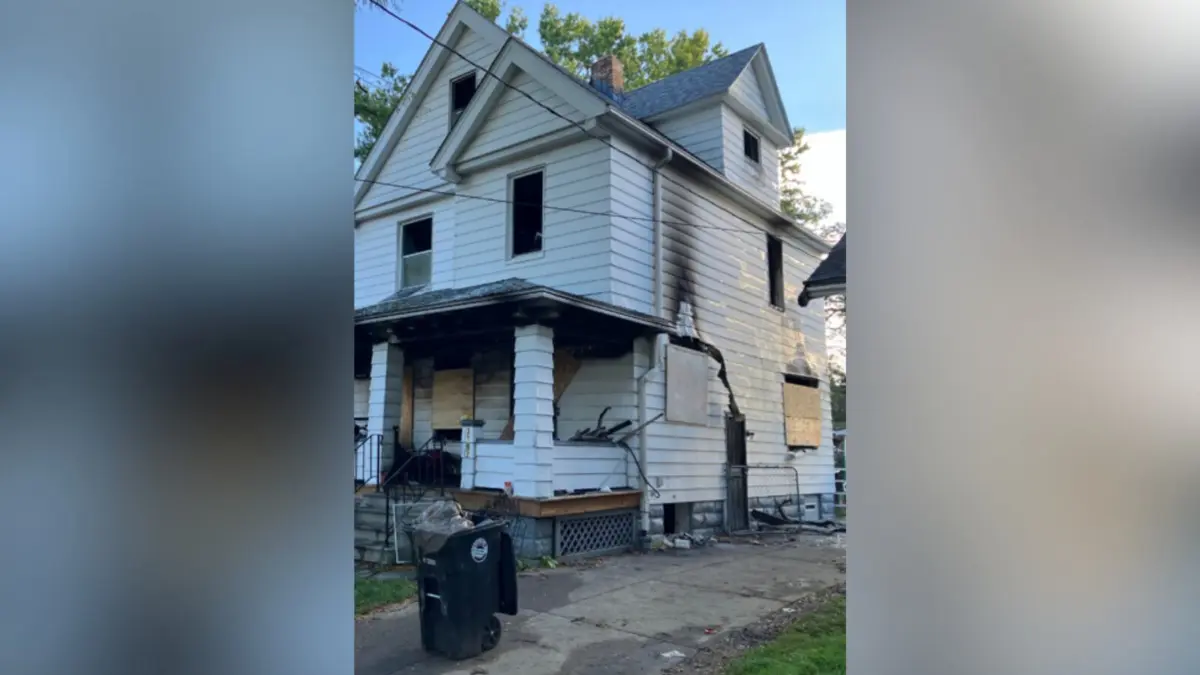
CLEVELAND, Ohio — In the quiet hours of a late September night, a routine evening transformed into a harrowing struggle for survival on Cleveland’s east side. A fast-moving residential fire erupted late Friday night, trapping an entire family inside their home as flames and thick, toxic smoke rapidly blocked their primary pathways to safety. Faced with imminent peril, six children—ranging from toddlers to teenagers—and two adults were forced to make a split-second, life-or-death decision. With exits compromised, the eight residents allegedly leaped from the burning building’s second-story windows into the darkness below, narrowly escaping the encroaching inferno.
The incident, which unfolded at approximately 11:35 p.m. on 82nd Street, triggered a swift and aggressive response from the Cleveland Division of Fire and local emergency medical services. First responders arrived to find a scene of chaotic urgency, working rapidly to secure the perimeter, extinguish the heavy flames, and triage the injured occupants. Miraculously, despite the perilous nature of their escape, all eight individuals survived the ordeal. Transported promptly to MetroHealth Medical Center by Cleveland EMS, the victims were treated for what officials have described as minor injuries—a remarkably fortunate outcome given the catastrophic potential of high-altitude residential leaps during active structure fires.
Subsequent investigations by fire prevention specialists determined that the blaze was accidental in nature, sparing the community from suspicions of foul play while underscoring the relentless unpredictability of household hazards. However, the physical toll on the structure was severe: preliminary estimates place the property and structural damage at roughly $75,000. As the smoke cleared and the immediate medical crises stabilized, local disaster relief organizations, including the American Red Cross, stepped in to provide immediate aid, temporary shelter, and long-term recovery support for the displaced family. This comprehensive report explores the chronology of the event, the broader context of urban residential fires, the crucial response of neighborhood bystanders and emergency personnel, and the ongoing support framework deployed to aid the survivors in the wake of the tragedy.
Detailed Chronology: From Late-Night Calm to Desperate Survival
The sequence of events on that fateful Friday night unfolded with terrifying speed, leaving little margin for error for the family trapped inside the 82nd Street residence.
11:15 p.m. – 11:30 p.m.: The Quiet Before the Storm
In the moments leading up to the disaster, the household had settled into the late-night quiet typical of the neighborhood. Occupied by two adults and six children ranging in age from 2 to 17 years old, the home was dark as the residents slept. According to preliminary timelines reconstructed by fire investigators, an accidental ignition occurred within the dwelling, quietly smoldering and generating intense heat and dense smoke before alerting the occupants. Because residential fires often accelerate rapidly when oxygen is introduced through open doors or ventilation pathways, the fire quickly evolved from a localized spark into a sprawling hazard.
11:35 p.m.: The Discovery and the Alarm
By roughly 11:35 p.m., the reality of the danger broke through the household. Thick, acrid smoke began pouring into the upper levels of the residence, and the roar of the advancing fire alerted the two adults. Realizing that the primary stairwells and lower-level exits were already engulfed in flames or choked by impenetrable black smoke, the adult occupants recognized that traditional evacuation routes were entirely cut off. Seconds mattered. With the fire advancing up the structure, the trapped residents retreated to the second-story rooms, where they faced a grim choice: await rescue against worsening odds or take a devastating leap into the night air.
The Desperate Leap
According to eyewitness accounts provided by neighbors living directly across the street, the urgency of the situation forced the family’s hand. Recognizing that waiting for fire crews could prove fatal, the occupants began opening second-story windows. Witnesses reported seeing the adults help the children—ranging from toddlers to teenagers—out of the windows and drop them toward the ground, before leaping themselves. Such high-altitude jumps carry immense risks of severe orthopedic trauma, spinal injuries, and internal damage. Yet, fueled by adrenaline and the primal instinct for survival, all eight individuals made the jump, clearing the burning footprint of the house just as the interior conditions reached an untenable threshold.
11:38 p.m. – Midnight: Emergency Response and Triage
Moments after the harrowing evacuation, the Cleveland Division of Fire received multiple emergency calls reporting the residential fire on 82nd Street. Engine companies and rescue squads were dispatched instantly, arriving at the scene to find heavy fire conditions venting from portions of the structure.
Upon arrival, firefighters immediately shifted focus between two critical priorities: initiating aggressive interior fire attack lines to suppress the active blaze and establishing a medical triage zone for the eight family members scattered across the exterior grounds. Cleveland EMS units, staged nearby, rushed to assess the victims. Given the nature of their escape, paramedics treated the group for impact-related injuries, smoke inhalation, and lacerations, ultimately transporting all six children and two adults to MetroHealth Medical Center.
Simultaneously, suppression crews battled the blaze with coordinated hose streams, successfully preventing the fire from jumping to closely situated neighboring properties on the densely packed urban street. By midnight, the bulk of the heavy fire had been successfully knocked down, allowing investigators to begin their initial sweep of the charred interior.
Supporting Context & Metrics: Analyzing the Incident and Urban Fire Safety
To fully understand the magnitude of the 82nd Street fire, it is essential to examine the statistical realities of residential blazes, the demographics of the victims, and the financial and structural toll exacted by the flames.
Demographic Breakdown of the Victims
The human element of this emergency highlights a uniquely vulnerable population. Cleveland EMS confirmed that the six children injured in the blaze spanned a wide developmental range, from toddlers of just 2 years old to teenagers approaching adulthood at age 17.
- Total Occupants Injured: 8 individuals
- Adults: 2
- Children (Ages 2 to 17): 6
- Primary Hospital Destination: MetroHealth Medical Center
- Severity of Injuries: Categorized primarily as minor, defying the statistical expectations of second-story falls and heavy smoke exposure.
Medical professionals at MetroHealth noted that while the physical injuries—ranging from minor contractions, sprains, and smoke irritation—did not immediately threaten life, the psychological impact of surviving a catastrophic midnight house fire and a high-fall escape remains an invisible and lingering burden for both the children and the adults.
Financial and Structural Damage Assessment
While human life was successfully preserved, the material cost of the disaster is substantial. The Cleveland Division of Fire released preliminary damage estimates valuing the property loss at approximately $75,000.
+-------------------------------------------------------+
|              FIRE INCIDENT METRICS SUMMARY            |
+-------------------------------------------------------+
| Response Timeframe     | Late Friday (~11:35 PM)      |
| Location               | 82nd Street, Cleveland, OH   |
| Estimated Damage       | $75,000                      |
| Cause Classification   | Accidental                   |
| Displaced Family       | 8 Persons (2 Adults, 6 Kids) |
| Assisting Agency       | American Red Cross           |
+-------------------------------------------------------+
The structural damage centered heavily on the lower levels where the fire originated, coupled with extensive smoke, soot, and water damage throughout the remainder of the home. In urban settings like Cleveland, where older housing stock often features traditional timber framing and close lot proximity, structural repairs of this scale represent a monumental hurdle for working-class families, rendering the home temporarily—if not permanently—uninhabitable.
The Danger of Second-Story Escapes
Jumping from a second-story window is universally discouraged by fire safety experts except as an absolute last resort when all other egress routes are blocked. Falls from heights of 15 to 20 feet frequently result in severe fractures, traumatic brain injuries, or paralysis. However, fire dynamics experts point out that modern home fires reach flashover conditions faster than ever before due to synthetic building materials and furnishings. When toxic gases and superheated air rapidly consume a home’s primary exit pathways, occupants are occasionally left with no rational alternative to jumping. The fact that eight individuals executed this desperate maneuver and emerged with only minor injuries is viewed by emergency responders as an extraordinary statistical anomaly.
Official Statements and Community Response
In the wake of the incident, municipal leaders, emergency services spokespeople, and community welfare organizations released statements detailing the response and rallying resources for the affected family.
The Cleveland Division of Fire and EMS
Representatives from the Cleveland Division of Fire praised the swift actions of both their frontline crews and the civilian bystanders who witnessed the unfolding crisis. While officials declined to elaborate on the exact mechanical or domestic source of the ignition pending final reports, they confirmed the fire’s official classification:
"The cause of the fire has been thoroughly investigated and formally ruled accidental. There is no suspicion of criminal intent or negligence. We commend the quick-thinking nature of the residents under extreme duress, though we continually remind the public that windows should always remain a last-resort option when stairwells and doors are compromised."
Cleveland EMS echoed these sentiments, emphasizing the seamless coordination between dispatchers, field medics, and emergency room staff at MetroHealth Medical Center to ensure that all six pediatric patients and the two adults received immediate, high-priority trauma and respiratory evaluations.
Eyewitnesses and Neighborhood Impact
For the residents living along 82nd Street, the late-night commotion shattered the peace of the neighborhood. Neighbors across the street, who watched the terrifying descent from the second-story windows, spoke with local media outlets about the sheer visceral horror of the moments before emergency crews arrived.
"You never expect to see a family driven to the windows like that," one local resident shared in an interview with news partners. "The smoke was moving so fast, and you could hear the panic. Seeing the kids get dropped down and then the parents jumping after them—it was terrifying. We are just profoundly grateful and relieved that everybody made it out alive and breathing."
The American Red Cross Steps In
With their home heavily damaged and uninhabitable, the displaced family faced an immediate crisis regarding shelter, clothing, and sustenance. Recognizing these acute needs, the American Red Cross Greater Cleveland Chapter mobilized disaster response teams within hours of the incident.
The Red Cross provided immediate emergency financial assistance for temporary lodging, food, and essential clothing items. Furthermore, caseworkers established ongoing lines of communication with the family to help coordinate long-term recovery plans, counseling services for the children, and assistance in navigating housing relocation resources within the Cleveland area.
Future Outlook: Recovery, Prevention, and Community Resilience
As the shockwaves of Friday night’s emergency begin to recede, attention across the Cleveland community turns toward recovery, structural rebuilding, and the broader lessons of fire safety enforcement.
The Road to Recovery for the Family
For the eight survivors, the weeks ahead will be defined by healing—both physical and emotional. While their injuries were classified as minor, the psychological recovery for the six children, ranging from toddlers to teenagers, will require careful attention. Pediatric psychologists emphasize that experiencing a midnight fire and escaping via a high-altitude jump can induce acute stress disorders. Local community health networks and school-support systems in Cleveland are expected to rally around the children to provide counseling resources.
Meanwhile, financial recovery remains a formidable barrier. With $75,000 in property damage, the family faces the daunting task of rebuilding their living situation from the ground up. The intervention of the Red Cross provides an essential first step, but local community advocates are calling for broader philanthropic and grassroots support to help the family secure permanent, safe housing.
Renewed Focus on Fire Safety and Prevention
Incidents of this severity serve as a sobering reminder of the vital importance of residential fire safety, particularly as communities transition through seasonal shifts that often see increased reliance on alternative heating sources and electrical systems.
Fire prevention advocates in Cleveland are using this incident to re-emphasize several critical safety guidelines for urban homeowners and renters:
- Working Smoke Alarms: Ensuring that interconnected smoke detectors are installed on every level of the home and tested monthly is the single most effective defense against late-night fires.
- Clear Escape Routes: Maintaining unobstructed pathways to all primary and secondary exits, ensuring that security bars or storm windows do not trap occupants inside.
- Family Fire Escape Plans: Conducting regular household drills so that every family member—especially children—knows multiple ways out of every room in the event of zero-visibility smoke conditions.
- Emergency Rope Ladders: For multi-story homes where second-story escapes are a theoretical risk, keeping certified fire escape ladders stored near windows can prevent the necessity of dangerous unassisted jumps.
Conclusion
The late-night fire on 82nd Street stands as a stark testament to how quickly disaster can strike, transforming an ordinary evening into a struggle for survival. Yet, above the charred timbers and the property loss stands a narrative of remarkable resilience. Thanks to the raw determination of the occupants who defied the odds, the rapid intervention of the Cleveland Division of Fire and EMS, and the immediate safety net provided by community organizations like the Red Cross, a potential tragedy was averted. As the family embarks on the long road to recovery, the Cleveland community remains united in supporting their healing, while reflecting on the constant vigilance required to keep homes safe from the unpredictable threat of fire.

0 Comments