
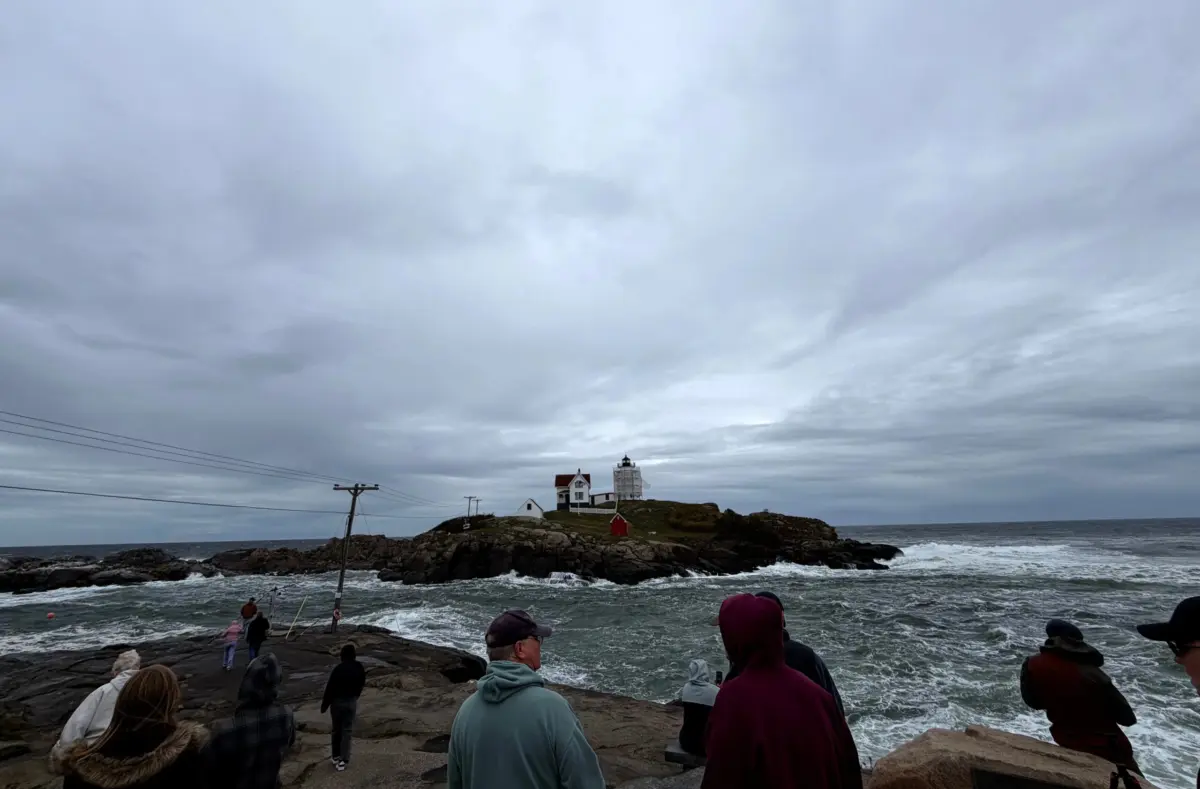

BOSTON — A sprawling, highly destructive nor’easter continued its relentless siege over the Northeastern United States, paralyzing coastal communities, triggering severe tidal flooding, and leaving tens of thousands of homes and businesses in the dark. The slow-moving weather system—characterized by hurricane-force gusts, torrential rainfall, and punishing, mountainous surf—has drawn national attention as it enters its second full day of punishing impact, stretching from the Mid-Atlantic states into New England.
The storm’s heavy toll has already been tragically realized. Authorities confirmed the death of a New York City Housing Authority worker on Saturday, who was fatally struck by a falling tree uprooted by gale-force winds. The fatality underscores the extreme hazards posed by the system, which has upended daily life, triggered widespread travel chaos, and forced local and federal emergency management agencies into a state of heightened readiness.
According to meteorologists with the National Weather Service (NWS), the stalled low-pressure system is positioned just south of Long Island and east of northern New Jersey. Rather than sweeping quickly out to sea, the storm is predicted to loop across the region for an agonizing additional 24 hours. While the system is gradually losing some of its overall atmospheric strength, forecasters warn that its most dangerous attributes—relentless winds, blinding downpours, and severe coastal inundation—will persist through multiple high-tide cycles, threatening vulnerable shorelines that have already taken heavy hits.
Federal, state, and local emergency response teams are maintaining an all-hands-on-deck posture. The Federal Emergency Management Agency (FEMA) has elevated the operational status of its regional coordination centers, while utility crews struggle against hazardous field conditions to restore essential power lines. As communities from North Carolina to Maine survey the damage, the storm serves as a stark reminder of the vulnerability of coastal infrastructure to prolonged, high-impact meteorological events.

Detailed Chronology of the Storm’s Progression
Friday, September 25: The First Signs of Trouble
The precursors to the storm began taking shape late in the week as a robust low-pressure system descended upon the Mid-Atlantic and began tracking northward. By Friday, coastal residents in states like Massachusetts and New Jersey began noticing rapidly deteriorating weather conditions. In Gloucester, Massachusetts, onlookers observed the initial surges of angry, foam-flecked seas crashing against historic sea walls. Meteorological indicators flashed warning signs as barometric pressure dropped precipitously, setting the stage for a classic, highly destructive nor’easter.
Saturday, September 26: Chaos and Inundation Peak
By Saturday morning, the storm had fully materialized into a punishing meteorological event. Hurricane-force wind gusts buffeted coastal areas, sending sea spray flying across boardwalks and coastal highways. In Hampton, New Hampshire, residents braved ferocious winds to document the historic surf.
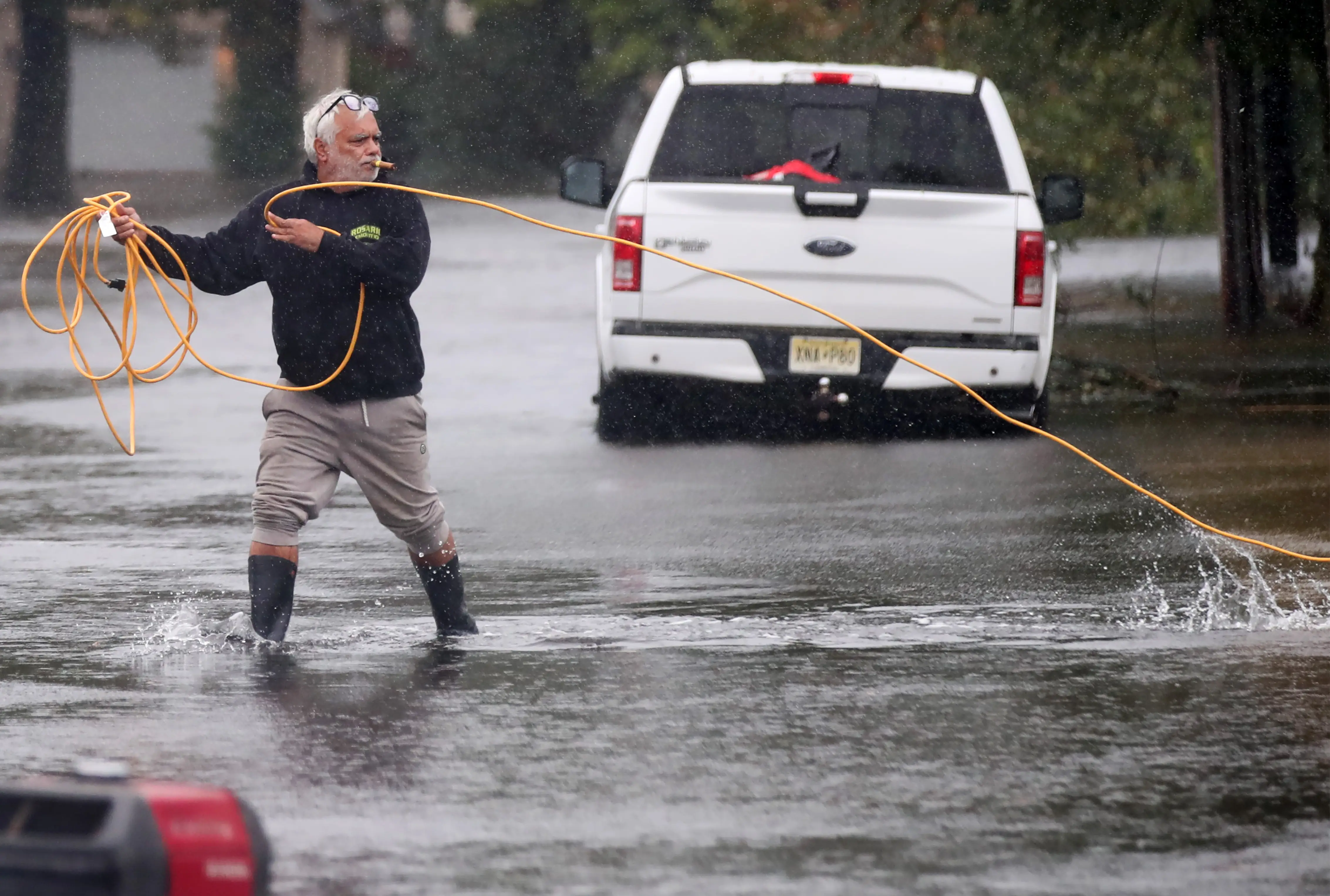
However, the mood quickly shifted from awe to crisis as the tide rose. In Long Branch, New Jersey, streets transformed into navigable waterways; local resident Ted Friedli was photographed kayaking down Florence Ave., while neighbors scrambled to connect generators to flood-engulfed garages. Further south in Surf City, marina owners watched helplessly as storm surges breached property lines, tearing watercraft and Jet Skis from their elevated lifts.
Tragedy struck in New York City, where a housing authority worker was killed by a falling tree. Throughout the afternoon, rescue operations multiplied. In Sea Bright, New Jersey, emergency services executed a daring high-water rescue, pulling a woman and her dog from a vehicle entirely submerged in rapidly rising floodwaters. By nightfall, communities from Virginia up through Maine were grappling with widespread power outages and impassable roads.

Sunday, September 27: A Stalled Siege and Lingering Threat
Entering Sunday morning, the storm stubbornly refused to dissipate. Remaining centered just south of Long Island and east of northern New Jersey, the system began its expected looping motion. Forecasters at the National Weather Service reported that the primary bands of heavy rainfall were concentrated across northern New Jersey, New York City, Long Island, and southern New England.
Although the atmospheric core of the storm showed signs of gradual weakening, the persistence of high-velocity winds ensured that coastal waters remained high. Forecasters issued urgent warnings regarding the morning and evening high-tide cycles, predicting that additional seawater would push over sea walls and flood inland neighborhoods that were already saturated from previous days of heavy precipitation.
Supporting Context, Metrics, and Regional Impacts
Power Outages and Infrastructure Strain
The structural integrity of the Northeast’s power grid has been severely tested. According to real-time tracking data from PowerOutage.us, more than 100,000 homes and commercial properties across the Northeast and Mid-Atlantic were without electricity by Sunday morning.
The breakdown of outages highlights the geographic sweep of the storm:

- New York: Over 40,000 active outages, heavily concentrated in downstate counties and Long Island.
- Connecticut: Approximately 31,000 customers in the dark as wind-whipped branches brought down distribution lines.
- New Jersey: Roughly 21,000 properties impacted, particularly in coastal municipalities like Monmouth and Ocean counties.
- Massachusetts: At least 11,000 customers affected along the wind-battered coastline.
Transportation Paralysis and Travel Nightmares
The nor’easter brought transportation networks across the Eastern Seaboard to a grinding halt. Aviation suffered immensely, with hundreds of flight cancellations and prolonged delays reported at major transportation hubs, most notably Boston Logan International Airport. Airlines urged passengers to check flight statuses continuously as shifting wind directions made landings hazardous.
Ground transportation fared no better. In North Carolina, aggressive tidal surges and heavy rain conspired to cut off highway access to Hatteras Island. The isolation stranded numerous visitors and threw local events into disarray. In one particularly poignant illustration of the storm’s disruptive power, a couple planning a destination wedding on the island watched helplessly as roughly 45 of their invited guests found themselves unable to cross the flooded causeways, forcing a frantic, last-minute relocation of the ceremony.
Further north, urban centers experienced severe disruptions. In Norfolk, Virginia, flash flooding transformed thoroughfares into aquatic obstacle courses, with passing vehicles pushing heavy, destructive wakes against storefronts and residential properties.
Official Statements and Emergency Response
Government and meteorological authorities have maintained an aggressive information campaign, urging citizens to exercise extreme caution as the storm refuses to loosen its grip.

Bob Oravec, lead forecaster with the National Weather Service in College Park, Maryland, outlined the meteorological mechanics of the ongoing crisis during a Sunday morning briefing:
"The storm remains situated just south of Long Island and east of northern New Jersey. It is expected to loop around this general area for roughly another 24 hours. While the system is gradually losing its overall punch, the most impactful parts of the storm are likely going to be the high winds and the ongoing tidal flooding through the high-tide cycles today."
Federal response mechanisms have been fully activated. The Federal Emergency Management Agency (FEMA) formally announced that its regional response coordination centers in the impacted areas are operating at an "enhanced posture." Federal liaisons are embedded with state emergency management divisions, and swift-water rescue teams remain on standby throughout New England to deploy at a moment’s notice should localized breaches or severe inundation require immediate evacuations.
Local municipalities have echoed these federal warnings. Mayors and emergency management directors across coastal New Jersey, New York, and Massachusetts have reiterated stay-at-home advisories, pleading with residents to avoid rubbernecking at beaches and to refrain from driving through barricaded or flooded roadways.
Future Outlook: Recovery, Assessment, and Climate Realities
As the storm system finally begins its anticipated slow drift away from the coast late Monday, attention will inevitably turn from immediate emergency response to long-term recovery and assessment.
The immediate priority for millions will be power restoration. Utility companies have mobilized thousands of lineworkers—including mutual-aid crews brought in from unaffected states—to tackle the thousands of individual wire-down calls. However, officials warn that full restoration could take several days in the hardest-hit, densely wooded suburban areas where downed trees have tangled power lines with heavy debris.
For coastal homeowners and business proprietors, the financial and emotional toll will take much longer to calculate. The persistent saltwater inundation has wreaked havoc on ground-floor structures, electrical systems, and commercial inventories. Municipal governments are already anticipating requests for state and federal disaster declarations to help offset the massive costs of debris removal, road repairs, and infrastructural reinforcement.
Ultimately, this severe late-September nor’easter serves as a sobering reminder of the vulnerability of America’s densely populated eastern seaboard. As coastal storms continue to display erratic behaviors and prolonged dwell times, emergency planners, civil engineers, and local policymakers face growing pressure to rethink coastal zoning, harden electrical grids, and construct more resilient sea defenses to protect communities from the escalating fury of modern weather systems.

0 Comments