

Executive Overview
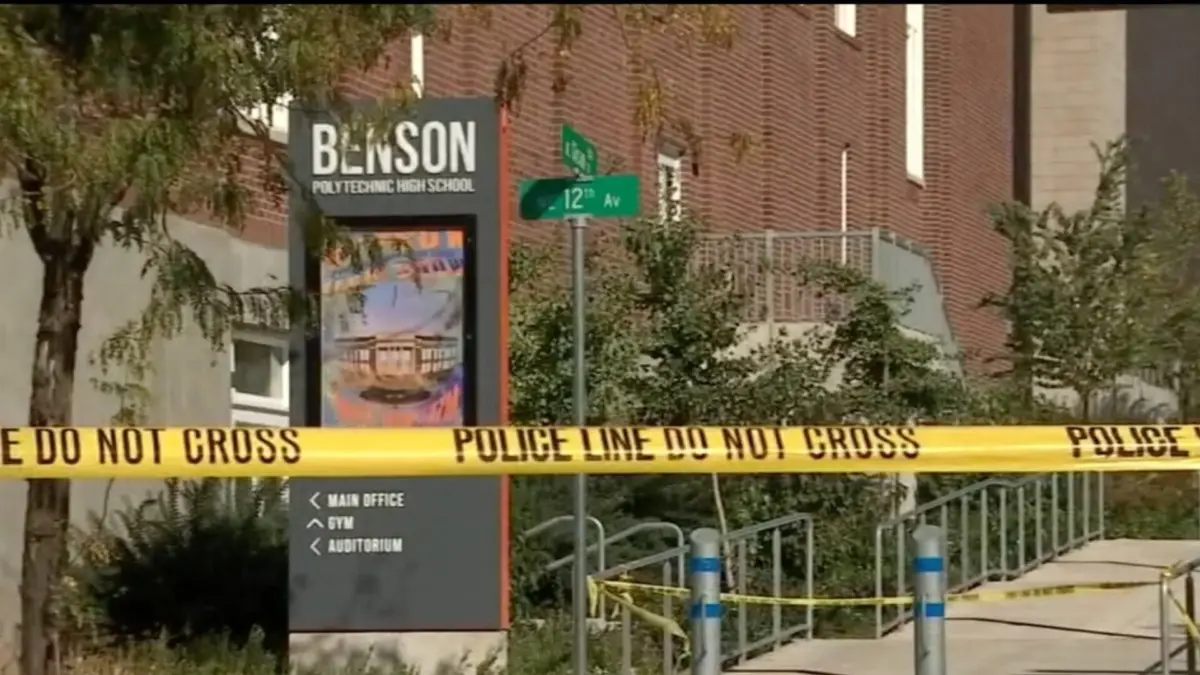
PORTLAND, Ore. — In a chilling case that has sent shockwaves through the Pacific Northwest and drawn federal scrutiny, a 15-year-old high school student in Portland faces a staggering array of charges, including domestic terrorism and multiple counts of attempted murder. The teenager is accused of executing a calculated chemical attack inside the cafeteria of Benson Polytechnic High School on September 8, 2026. Bringing common household items from home, the student allegedly synthesized a deadly cocktail of hydrogen sulfide and hydrogen cyanide—potent, rapidly acting asphyxiants—before succumbing to the toxic fumes himself.
The incident transformed a routine morning into a mass-casualty emergency, triggering a massive hazardous materials response, the evacuation of over 100 students and staff, and immediate emergency medical interventions. While the physical casualties could have been catastrophic, the psychological and structural fallout has deeply fractured the school community.
As the legal proceedings unfold in Multnomah County, the case has evolved far beyond a localized act of adolescent rebellion or school violence. Federal investigators from the Federal Bureau of Investigation (FBI) are examining the teenager’s digital footprint, which allegedly reveals alarming connections to "764"—a violent, transnational online extremist group known for radicalizing vulnerable youth into performing acts of self-harm, violence, and terrorism.
Simultaneously, the case lays bare a profound tension within the American judicial and mental health systems. Prosecutors are pressing for rigorous detention, emphasizing the severity of the charges and the threat to public safety. Conversely, defense counsel and psychiatric professionals argue that the teenager is suffering from severe, debilitating depression, presenting an acute risk of suicide that requires specialized, secure medical intervention rather than traditional incarceration. With a circuit court rehearing scheduled and public safety hanging in the balance, this case stands as a sobering intersection of juvenile mental health crises, the insidious reach of digital extremist networks, and the relentless challenges facing modern school safety.
Detailed Chronology
The Incident: September 8, 2026
The crisis unfolded swiftly at Benson Polytechnic High School during the morning hours. According to surveillance footage and police reconstructions, the 15-year-old suspect arrived at the campus dressed in dark clothing and wearing protective gloves. Moving purposefully into the school cafeteria, the student produced a white jug containing precursor materials and began mixing the substances.
The chemical reaction rapidly generated a deadly cloud of hydrogen sulfide and hydrogen cyanide gases. Hydrogen sulfide, known for its distinct rotten-egg odor at lower concentrations, quickly deadens the olfactory senses at high levels, while hydrogen cyanide interferes with cellular respiration, leading to rapid incapacitation and death.
The suspect himself was quickly overcome by the toxic atmosphere, passing out on the cafeteria floor. The sudden release of fumes caused immediate panic and physical distress among nearby students and faculty.
Junior Eva Branstetter recounted the surreal and terrifying transition from normalcy to chaos. “It was really confusing. For one second, I’m in class, and I’m eating the school breakfast, then next, I’m out on Buckman getting evacuated,” she recalled.
Emergency Response and Evacuation
School administrators and emergency dispatchers responded instantly to the crisis. Portland Fire & Rescue and specialized hazardous materials (Hazmat) teams rushed to the campus, sealing off the area and initiating a sweeping evacuation of the building. More than 100 students and staff members were assessed on-site for exposure symptoms.
While emergency responders managed the immediate environmental threat, paramedics provided life-saving treatment to those overcome by the fumes. The swift containment of the toxic cloud likely prevented a far higher death toll, though the atmosphere of terror left an indelible mark on the student body.
Legal Escalation: Late September to Early October 2026
The investigation progressed rapidly over the subsequent weeks as forensic teams analyzed the teenager’s electronic devices and searched his family home.
- September 9, 2026: Initial reports confirmed that the suspect was expected to survive his chemical exposure, allowing law enforcement to transition from emergency medical stabilization to criminal interrogation and evidence collection.
- October 2, 2026: The 15-year-old made his first formal appearance in Multnomah County court, where prosecutors officially slapped him with a first-degree domestic terrorism charge.
- Later on October 2: The Multnomah County District Attorney’s Office escalated the legal gravity of the case by filing 12 counts of attempted murder, reflecting the broad danger posed to the students and staff present in the cafeteria during the chemical release.
Supporting Context & Metrics
The Toll on Human Health and Community Infrastructure
While the immediate casualty count fortunately did not include fatalities, the medical and psychological impacts were extensive:
- Direct Medical Care: At least seven individuals—comprising a mix of students and school staff members—required direct medical intervention and transport for toxic gas inhalation and secondary trauma.
- Exposed Population: More than 100 individuals were triaged and evaluated by emergency medical personnel during the campus lockdown and evacuation.
- Potential for Mass Casualty: Multnomah County Deputy District Attorney Eric Zimmerman noted that given the toxicity of hydrogen cyanide and hydrogen sulfide in an enclosed space like a cafeteria, the potential for a catastrophic loss of life was extraordinarily high.
Digital Footprints and Extremist Infiltration
The search of the teenager’s home and the subsequent forensic analysis of his computers, hard drives, and confiscated documents revealed a deeply disturbing cache of dangerous materials and ideations:
- Precursor Chemicals: Investigators uncovered raw materials capable of producing thermite-type incendiary mixtures alongside the household chemicals used in the attack.
- Explosive Recipe Research: Digital searches and social media footprints indicated an active interest in manufacturing acetone peroxide (TATP), a volatile explosive frequently utilized in extremist attacks.
- Extremist Rhetoric: Prosecutors highlighted chilling social media posts featuring references to a "kill/death ratio," alongside explicit declarations concerning self-harm and the desire to inflict fatal harm on both himself and others.
- The "764" Connection: Most alarmingly, federal investigators from the FBI have uncovered extensive references to "764," an online violent extremist group notorious for coercing vulnerable minors into self-harm, sadomasochism, and terrorist plotting through encrypted messaging platforms.
Official Statements
Prosecution and Law Enforcement Perspective
The Multnomah County District Attorney’s Office has framed the attack not merely as an isolated instance of teenage acting-out, but as a calculated act of domestic terrorism fueled by dangerous radicalization.
Deputy District Attorney Eric Zimmerman emphasized the premeditated nature of the assault, pointing to the suspect’s attire, the tactical execution in a crowded cafeteria, and the severe toxicity of the chemical agents deployed.
"It was really confusing. For one second, I’m in class, and I’m eating the school breakfast, then next, I’m out on Buckman getting evacuated."
— Eva Branstetter, Benson Polytechnic High School Junior
Zimmerman also underscored the ongoing federal investigation into the "764" extremist network, noting that the digital evidence demands a comprehensive review to determine if the teenager acted under direct online instigation or coercion.
School Administration and Community Voice
Benson Polytechnic High School leadership has faced the monumental task of restoring a sense of safety and normalcy to a profoundly shaken campus. Vice Principal Joe Metassik remarked that prior to the incident, the 15-year-old had maintained a reputation as a responsible student, making the sudden pivot to extremist violence all the more jarring. Metassik acknowledged that the overriding emotion among students is "terror," noting that re-establishing attendance and psychological comfort has proved exceptionally difficult.
Parents voiced a complex mixture of fear, sorrow, and a desire for constructive intervention. Loressa Williams, a Benson parent, expressed a sentiment echoed by several families: "To me, I just feel like he needs the help, and a program would be better."
Another parent, Ryan Branstetter, summarized the overarching community sentiment: "I hope he gets help, and I think that’s the most important thing and he doesn’t hurt himself or others in the future."
Defense Counsel and Psychiatric Evaluation
Representing the teenager, defense attorney Norah Van Dusen did not contest the severity of the factual allegations, but instead focused squarely on her client’s acute psychiatric vulnerabilities. Van Dusen submitted formal evaluations from the teenager’s personal psychiatrist and clinicians at the Perry Center, all of whom underscored an urgent need for continuous, secure psychiatric care.
"Failure to provide this level of mental health support currently is estimated to come at high risk."
— Excerpt from psychiatric evaluation submitted by defense counsel
Van Dusen detailed that the teenager suffers from severe depression and remains at an elevated risk for suicide. She argued that the Perry Center—a secure, locked medical facility devoid of external social media access—represents the only appropriate environment to address his medical needs.
Emphasizing that the teen had surrendered voluntarily, possessed no prior court history, and enjoyed robust family support—including a father who visits him daily—the defense urged the court to prioritize treatment over punitive incarceration. The teenager’s father similarly argued against disrupting his son’s medical trajectory, noting that he was only one week into a rigorous six-to-eight-week therapeutic program.
Future Outlook
Legal Battles and Immediate Judicial Next Steps
The case presents the judicial system with a delicate balancing act between public safety, accountability for a terrorist act, and the ethical imperative to treat a severely compromised juvenile offender.
Initially, a lower court judge sided with the recommendations of the Juvenile Department and the defense, ordering the teenager released to his father under strict conditions to immediately re-enter the Perry Center, attend all future court dates, and remain within the facility pending a six-week review hearing.
However, recognizing the gravity of the terrorism and attempted murder charges, prosecutors immediately contested the ruling. A high-stakes circuit court rehearing has been scheduled before a judge to re-examine the custody status and determine whether the accused teenager should be transferred to a county detention center like Donald E. Long or maintained within a secure medical facility.
Broader Societal and Institutional Implications
Beyond the courtroom, the Benson Polytechnic High School chemical attack serves as an urgent wake-up call for educational institutions, law enforcement agencies, and public health officials across the nation.
- Combating Digital Radicalization: The alleged ties to the "764" extremist network highlight the alarming ease with which predatory online groups can target, groom, and weaponize isolated or depressed adolescents within domestic settings.
- Chemical Safety in Schools: The incident raises difficult questions regarding the accessibility of common household chemical precursors and the challenges schools face in monitoring potential chemical synthesis on campus.
- The Intersection of Justice and Mental Health: As the legal system grapples with how to prosecute a minor facing domestic terrorism charges while simultaneously battling acute suicidal depression, the outcome of this case will likely set a critical precedent for how society addresses the convergence of youth mental health crises and violent extremism in the 21st century.

0 Comments