
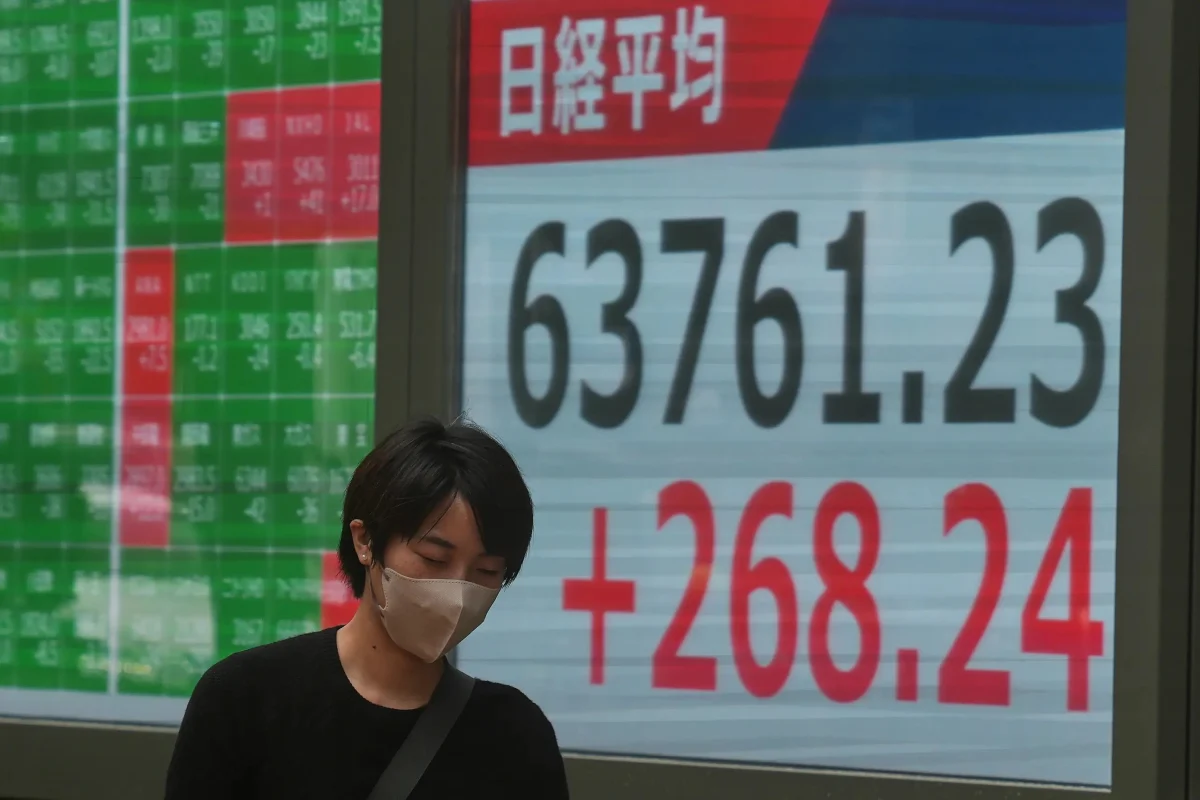

TOKYO — Asian equity markets surged during Monday’s trading session, kicking off a heavily anticipated week dominated by major U.S. macroeconomic releases. Investor sentiment received a significant boost from moderating inflation anxieties, a trend that market participants hope will stay the hand of the Federal Reserve regarding aggressive monetary tightening.
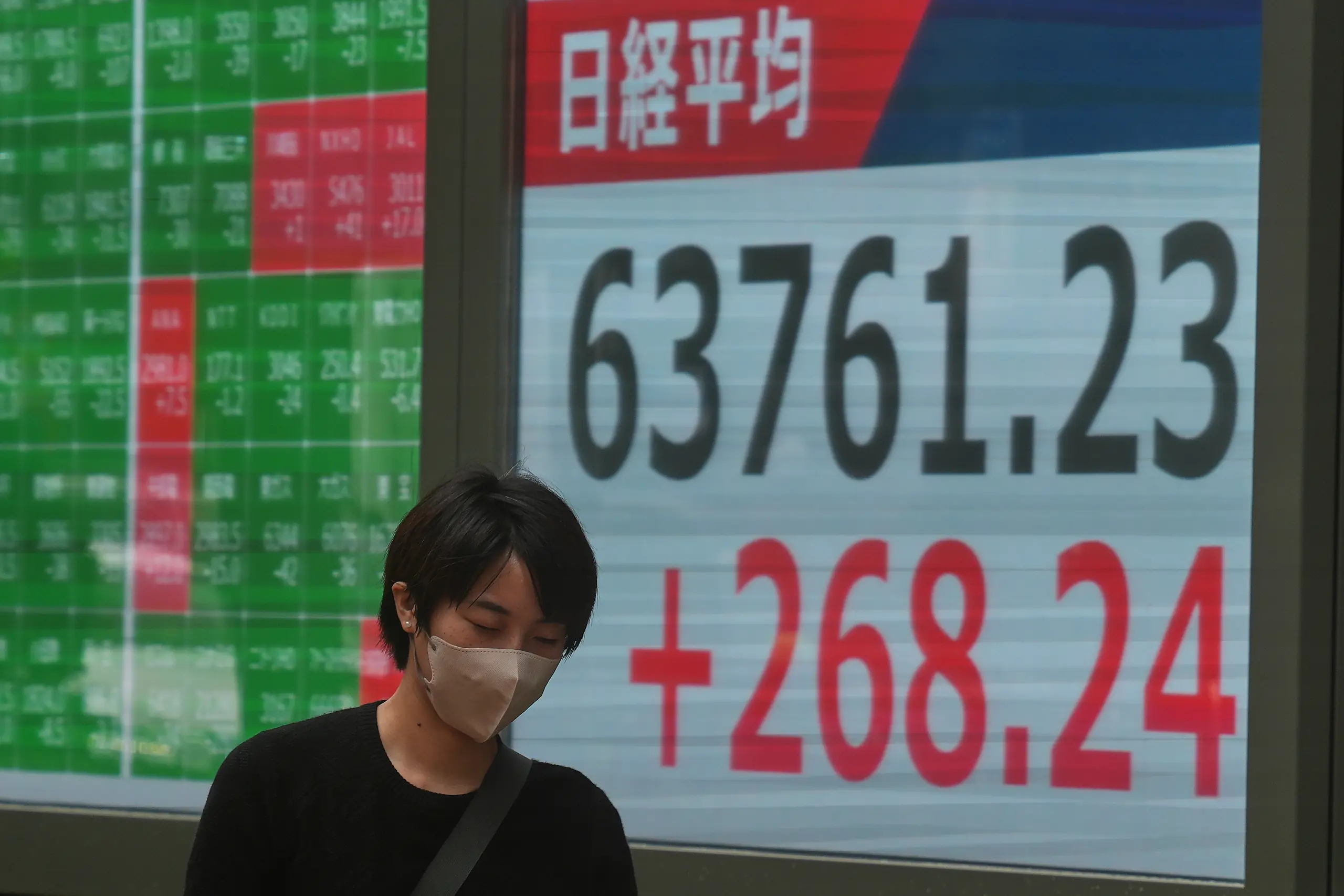
In Tokyo, the benchmark Nikkei 225 index captured international headlines by jumping 2.5% in morning trade to cross the coveted 70,000 threshold, resting at 70,037.61. This marked the index’s first decisive push above the 70,000-point milestone in three months, powered primarily by heavy buying in the technology and artificial intelligence sectors.
While the Japanese market led regional advances, elsewhere in the Asia-Pacific region, Australia’s S&P/ASX 200 edged up 0.1% to close at 8,691.90, and Hong Kong’s Hang Seng index remained largely unchanged, hovering at 23,971.55. Trading desks in Shanghai and South Korea were dark on Monday as national holidays kept domestic markets closed.
Executive Overview: A Delicate Global Balance
The early week momentum across Asian trading floors is closely tethered to evolving narratives on Wall Street, where the intersection of artificial intelligence, shifting labor metrics, and central bank policy continues to dictate market direction. Last week, U.S. indices finished near historic highs following the release of employment figures that pointed to a cooling labor market. To risk assets, cooler hiring means fewer inflationary pressures, easing fears that the Federal Reserve might feel compelled to implement additional outsized interest rate hikes.
However, beneath the surface of the equity rally lies palpable caution. Bond markets remain volatile as yields fluctuate in response to shifting rate expectations, while global energy markets continue to price in the geopolitical premium of ongoing conflicts in the Middle East. As global investors prepare for a deluge of U.S. economic updates—including key readings on inflation, consumer services, and unemployment—the central question remains whether current market valuations can withstand a complex economic landscape fraught with domestic policy adjustments and international friction.
Detailed Chronology: How Monday’s Trading Session Unfolded
Morning Rally in Tokyo Sets the Tone
As the opening bell rang across Asia-Pacific exchanges, attention immediately focused on Tokyo. Buoyed by late-week optimism carried over from Wall Street, the Nikkei 225 opened on a strong footing. Momentum quickly accelerated as institutional and retail investors poured capital into semiconductor manufacturers and AI-adjacent conglomerates.
Tokyo Electron emerged as one of the session’s primary beneficiaries, surging 5.5%. Technology investment powerhouse SoftBank Group mirrored the sentiment, registering a 3.3% gain. Meanwhile, across the sea, Taiwan Semiconductor Manufacturing Co. (TSMC) climbed 2.6%, underscoring a regional confidence loop tied directly to global hardware and artificial intelligence infrastructure demand.
Regional Divergence and Holiday Closures
While Tokyo enjoyed a stellar session, the broader region presented a mixed picture due to localized trading conditions and holidays.
- Australia: The S&P/ASX 200 clawed its way into positive territory, edging up 0.1% to 8,691.90, supported by steady performances in the financial and mining sectors despite lingering concerns over commodity demand.
- Hong Kong: The Hang Seng index displayed a flat trajectory, stabilizing at 23,971.55 as traders weighed mainland China’s economic outlook against mixed regional tech valuations.
- Mainland China & South Korea: Markets in Shanghai and Seoul remained shuttered in observance of national holidays, muting overall regional trading volume.
Foreign Exchange and Energy Adjustments
In currency markets during Monday’s Asian trading hours, the U.S. dollar clawed upward against major peers. The greenback strengthened to 157.97 Japanese yen, up slightly from 157.83 yen. Concurrently, the euro weakened, changing hands at $1.1179 compared to $1.1257 in previous sessions, reflecting ongoing shifts in capital flows toward dollar-denominated assets.
Energy markets experienced downward pressure as traders digested shifting risk profiles. Benchmark U.S. crude slipped 1.03% to $90.17 per barrel, while international standard Brent crude retreated 0.58% to $101.66 a barrel. Oil prices have exhibited extreme volatility ("yo-yoing") in recent weeks as energy traders attempt to price in the multifaceted impacts of the ongoing war with Iran on global crude supply chains.
Supporting Context & Metrics: The Wall Street Lead-In
To understand the catalysts driving Asian bourses, one must examine the dramatic finish to last week’s trading on Wall Street. Major U.S. indexes closed near all-time highs after the government released employment data that signaled a substantial deceleration in the American labor market.
According to the U.S. Department of Labor, employers nationwide added a net 29,000 jobs to their payrolls last month. This figure fell significantly short of economists’ consensus forecasts and represented a sharp slowdown from August’s net hiring rate of 133,000.
Rather than interpreting the deceleration as an immediate harbinger of recession, the market viewed the cooling labor market through a monetary policy lens: slower job growth reduces wage-push inflation, thereby lowering the probability of aggressive Federal Reserve tightening.
Market Responses Across U.S. Indices
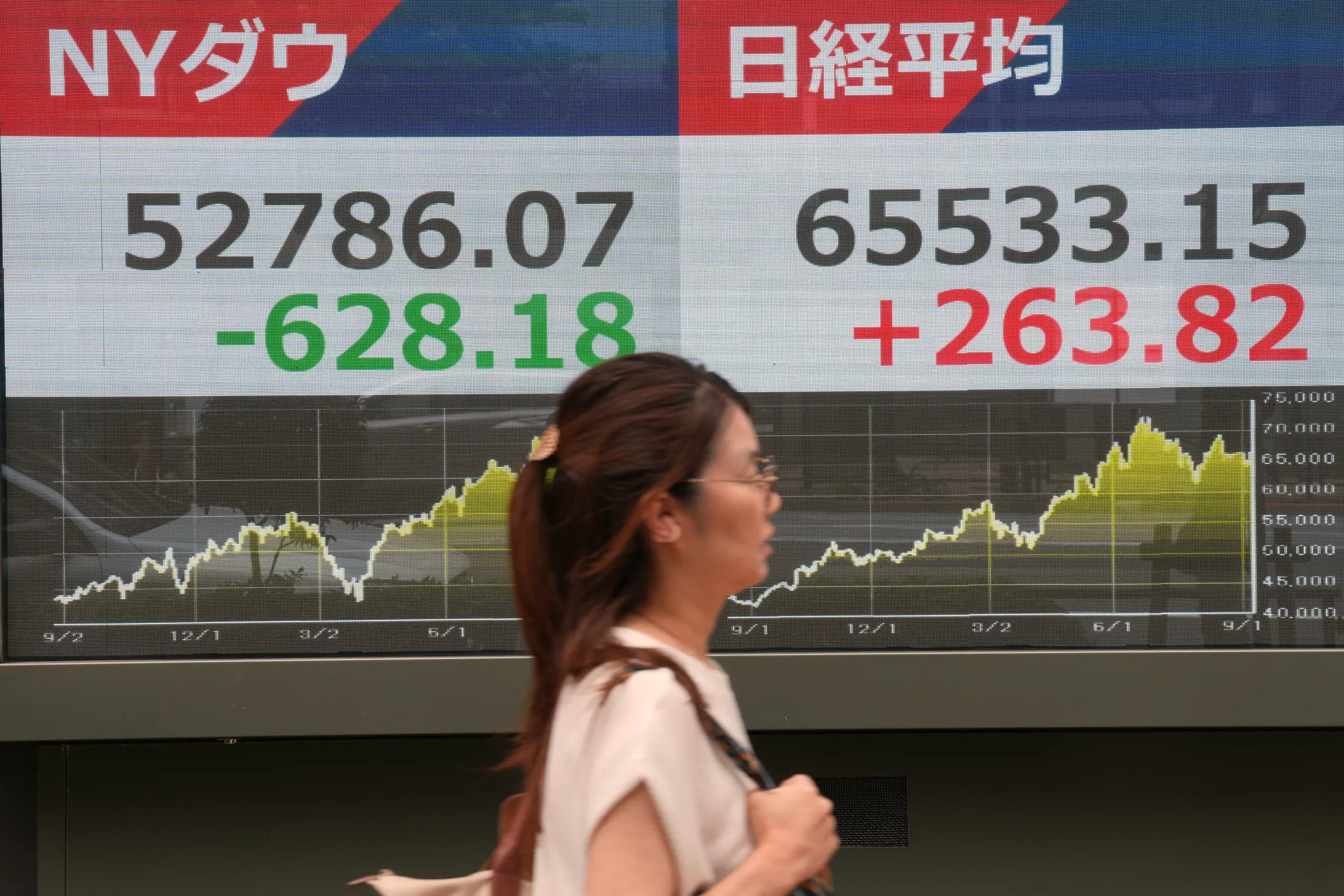
- S&P 500: Advanced 0.7%, pulling within 1% of its all-time record high established in August.
- Dow Jones Industrial Average: Added 0.5% in steady, broad-based trading.
- Nasdaq Composite: Outperformed its peers, gaining 1.2% on the back of renewed enthusiasm for mega-cap technology and semiconductor equities.
The Bond Market Rollercoaster
The shifting narrative surrounding Federal Reserve policy directly impacted the fixed-income market, triggering dramatic swings in Treasury yields.
Initially, the pullback in expectations for an aggressive October rate hike soothed the bond market. The yield on the benchmark 10-year Treasury note plunged below 5.17%, retreating sharply from a peak near 5.35% late last week—levels that had not been sustained in two decades.
However, this respite was short-lived. The 10-year Treasury yield subsequently bounced back to 5.28%, climbing more than 0.10 percentage points above its intraday low. This resurgence in yields served as a reality check for equities, prompting Wall Street to pare back some of its earlier gains as borrowing costs remained structurally elevated compared to historical averages.
Official Statements and Institutional Perspectives
Financial authorities and macroeconomic analysts have emphasized the precarious balance between cooling inflation and the lingering effects of the Federal Reserve’s recent monetary policy maneuvers.
The Federal Reserve recently implemented its first benchmark interest rate hike in three years, an aggressive step designed to rein in painful, persistent increases in the cost of living. Central bank officials have maintained a data-dependent stance, reiterating that future adjustments will hinge entirely on incoming labor and inflation metrics.
Market analysts note that the current environment is defined by a delicate psychological threshold. "Investors are walking a tightrope," noted one Tokyo-based strategist. "On one hand, softer economic indicators are welcomed as proof that the Fed’s medicine is working without triggering a hard landing. On the other hand, stubbornly high bond yields remind everyone that cheap capital is a thing of the past."
Corporate insiders within the technology and semiconductor sectors have echoed cautious optimism. Demand for AI hardware remains robust, providing a foundational floor for equity valuations in Tokyo, Taipei, and New York. However, supply chain vulnerabilities and macroeconomic headwinds—particularly in energy and foreign exchange—remain top-of-mind for corporate treasurers.

Future Outlook: Navigating a Data-Heavy Week
As the trading week progresses, market participants will shift their focus from regional optimism to a heavy calendar of U.S. economic data releases. Key reports covering retail sales, consumer price indices, and initial jobless claims will provide critical clues regarding the health of the American consumer and the trajectory of inflation.
Key Factors to Watch:
- U.S. Inflation Metrics: Subsequent reports will confirm whether consumer price pressures are continuing their downward trajectory or if sticky inflation will force the Federal Reserve’s hand.
- Geopolitical Developments in Energy: The trajectory of oil prices will remain heavily dependent on developments surrounding the conflict with Iran. Any escalation that threatens critical shipping lanes or production infrastructure could instantly reverse recent declines in crude and reignite global inflation fears.
- Treasury Yield Stability: The behavior of the 10-year Treasury yield will continue to act as a litmus test for equity market valuations. A sustained push back toward the 5.35% threshold could trigger renewed selling pressure across global stock exchanges.
- Corporate Earnings and Tech Resilience: With artificial intelligence continuing to drive market leadership, upcoming guidance from major technology firms will determine whether current high valuations are justified by fundamental earnings growth.
Ultimately, while Asian markets have demonstrated resilience and an appetite for risk at the start of the week, the global financial ecosystem remains highly sensitive to incoming data. Investors will need to maintain nimble strategies as the intersection of monetary policy, geopolitical tension, and corporate innovation continues to shape the economic landscape of late 2026.

0 Comments