

Executive Overview
As the 2026 midterm elections enter their critical final stretch, President Donald Trump has embarked on an aggressive, 32-day defensive campaign blitz. Rather than focusing exclusively on traditional swing states, the administration is deploying significant resources to solidify support in historically secure Republican territory. The strategic pivot highlights growing anxieties within the Republican National Committee (RNC) regarding a series of unconventional challenges from well-funded independent candidates backed by national Democratic strategists.
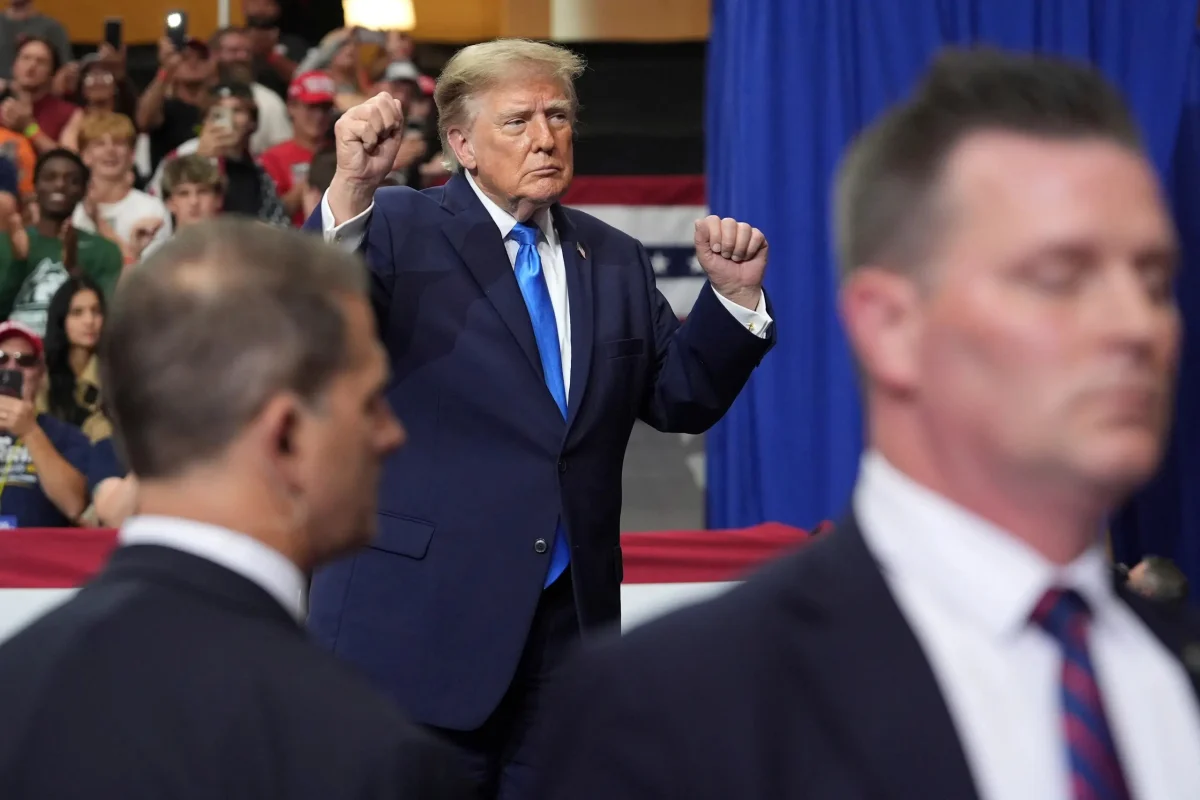
A primary focal point of this defensive strategy is Nebraska. On Monday, President Trump is scheduled to campaign in Grand Island alongside incumbent Republican Senator Pete Ricketts. Ricketts, a former two-term governor and heir to the TD Ameritrade fortune, is facing a unexpectedly competitive challenge from Dan Osborn, an independent labor leader who has successfully tapped into rural economic anxieties.
The race has evolved from a routine reelection bid into a high-stakes battleground. It reflects broader national frustrations over persistent inflation, rising fuel costs, and a controversial administration proposal to increase foreign beef imports—a policy that has deeply alienated Nebraska’s powerful agricultural sector. By examining the dynamics of the Nebraska race, this report analyzes the shifting electoral map, the viability of the "independent playbook" in deep-red states, and the economic policy rifts threatening the traditional GOP coalition.
Detailed Chronology: The Road to Grand Island
The political trajectory of Nebraska’s junior Senate seat has undergone a dramatic transformation over the past three years. Understanding the current crisis requires tracing the sequence of appointments, strategic withdrawals, and economic policy shifts that have brought President Trump to Grand Island.
[Jan 2023] Sen. Ben Sasse resigns -> Gov. Pillen appoints Pete Ricketts
       │
[Nov 2024] Dan Osborn challenges Sen. Deb Fischer, outperforming expectations (losing by only 7%)
       │
[Early 2026] Dem nominee Cindy Burbank withdraws to consolidate anti-GOP vote behind Osborn
       │
[Late Summer 2026] White House proposes foreign beef imports; local rancher backlash begins
       │
[Oct 2026] Trump launches 32-day "rescue mission" blitz (OK, AL, TX, NE)
The Transition of Power (2023–2024)
In early 2023, Republican Senator Ben Sasse resigned from the U.S. Senate to accept the presidency of the University of Florida. Newly inaugurated Nebraska Governor Jim Pillen appointed his predecessor, Pete Ricketts, to fill the vacancy. Ricketts subsequently won a special election to retain the seat, but the transition exposed lingering divisions within the state party between populist elements and the traditional corporate-conservative establishment represented by the Ricketts family.
The Rise of the Independent Challenge (2024–2025)
During the 2024 cycle, Dan Osborn, an industrial mechanic and former union leader who led a high-profile strike at a Kellogg’s plant in Omaha, ran an independent campaign against Nebraska’s senior Republican Senator, Deb Fischer. Despite receiving minimal initial support from national groups, Osborn finished within seven percentage points of Fischer. This surprisingly narrow margin demonstrated that an independent candidate without the "Democratic" label could appeal to working-class, populist-leaning Nebraskans who typically reject traditional Democratic candidates.
The 2026 Strategic Consolidation
Recognizing the viability of the Osborn model, national Democratic strategists sought to clear the field for the 2026 cycle. Earlier this year, Democratic primary voters selected Cindy Burbank as their nominee. However, Burbank ran on a platform explicitly designed to avoid splitting the anti-incumbent vote. Following her primary victory, Burbank formally withdrew from the race, leaving Osborn as the primary challenger to Ricketts.
The Beef Import Crisis and the October Blitz
In late summer 2026, the Trump administration announced a regulatory proposal to expand imports of foreign beef, aiming to lower grocery prices for urban consumers ahead of the midterms. The announcement triggered an immediate backlash from Nebraska’s cattle ranchers, throwing Ricketts onto the defensive.
In response to tightening internal poll numbers, President Trump launched a 32-day campaign tour designed to bolster GOP candidates in deep-red states, including stops in Oklahoma, Alabama, Texas, and ultimately, Grand Island, Nebraska.
Supporting Context & Metrics: Economic Friction and the Independent Playbook
The competitiveness of the Nebraska Senate race is driven by a combination of macroeconomic pressures and a deliberate, multi-state electoral strategy designed to bypass the traditional two-party dynamic.
The Agricultural Economy and the Beef Policy Rift
Nebraska’s economy remains deeply dependent on agriculture, particularly cattle ranching. The state consistently ranks among the top national producers of beef, making any policy affecting cattle prices a central political issue.
| Metric | Domestic Beef Sector Impact | Proposed Foreign Import Impact |
|---|---|---|
| Primary Objective | Protect local rancher margins, rebuild domestic herd sizes. | Lower retail grocery costs for urban consumers. |
| Political Alignment | Supported by Nebraska Cattlemen, rural populist base. | Driven by national consumer-inflation mitigation strategies. |
| Economic Risk | High feed/fuel costs are already compressing rancher margins. | Undercuts domestic prices, introducing lower-cost competition. |
The administration’s proposal to allow more foreign beef imports—primarily from South American and Australian markets—aims to lower retail beef prices, which have risen due to persistent inflation. However, Nebraska ranchers argue the policy undercuts domestic producers who are already dealing with high fuel prices, elevated fertilizer costs, and historically low herd sizes caused by multi-year droughts.
This policy has created a rare public disagreement between Senator Ricketts and the White House. It highlights the difficulty of balancing the interests of a national consumer base with those of localized agricultural economies.
The "Blue Dot" and Nebraska’s Electoral Split
Unlike most states, Nebraska allocates its electoral votes proportionally. The 2nd Congressional District, centered on Omaha, is a relatively moderate, urban-suburban district known as the "blue dot" for its tendency to vote for Democrats even as the rest of the state votes solidly Republican.
While Republican Representative Adrian Smith’s seat in the 3rd District (which includes Grand Island) remains safe, the competitive House race in the 2nd District has forced the GOP to play defense on multiple fronts. The suburban strength of the Democratic Party in Omaha, combined with populist dissatisfaction in rural counties, has created a challenging environment for Ricketts.
Replicating the Independent Strategy Across the Red Wall
The strategy of backing independent candidates in deep-red states is not unique to Nebraska. National strategists are increasingly using this model to challenge Republican incumbents in states where the Democratic brand is highly unpopular.
- South Dakota: Brian Bengs, a military veteran who previously ran as a Democrat, is challenging Republican Senator Mike Rounds as an independent.
- Idaho: Independent Todd Achilles is mounting a campaign against veteran Republican Senator Jim Risch.
- The Senate Model: These candidates seek to emulate the success of independent Senators like Angus King of Maine and Bernie Sanders of Vermont, who caucus with Democrats for committee assignments while maintaining independent branding to appeal to moderate and conservative voters.
Official Statements
The rhetoric surrounding the Grand Island rally reflects the competing narratives of national party unity versus localized, populist independence.
Senator Pete Ricketts emphasized his alignment with the President while acknowledging the policy differences on agricultural trade:
"The president’s coming to Nebraska to help me campaign, so I can get reelected. However, the plan to import low-quality foreign beef is not helping Nebraska ranchers. I would advise the White House to change that policy and look for longer-term things that will help us build the size of the herd and ultimately bring the price of beef down for consumers."
Dan Osborn has positioned his campaign as a direct challenge to the political establishment, focusing on Ricketts’ personal wealth and corporate ties:
"My opponent represents the billionaire class that has bought and paid for our political system. While Pete Ricketts uses his family fortune to hide from voters, I have been on the ground in all 93 counties, meeting with working Nebraskans who are tired of being ignored by career politicians in Washington."
White House officials, speaking on the condition of anonymity, defended the administration’s broader economic strategy ahead of the midterm swing:
"The President is committed to lowering the cost of living for all Americans. While we understand the concerns of local producers, we must use every tool available to combat inflation at the grocery store and the gas pump. The President’s tour is about reminding working-class families that this administration is fighting for their wallets."
Future Outlook: The Battle for the Senate Majority
The outcome of the Nebraska Senate race will have significant implications for the balance of power in Washington. If Ricketts secures reelection, it will validate the GOP’s defensive strategy of deploying President Trump to shore up his base in conservative strongholds. It would also suggest that the traditional Republican coalition of agricultural producers and fiscal conservatives remains intact, despite policy disagreements over trade and tariffs.
Conversely, an upset by Dan Osborn would provide a template for challenging the GOP in historically safe states. If Osborn wins and caucuses with the Democrats, it could shift the Senate majority, even if Republicans perform well in traditional swing states.
Furthermore, a victory for Osborn would likely encourage national strategists to run independent campaigns in other conservative states during the 2028 and 2030 cycles, fundamentally altering the two-party system in the American heartland.
As President Trump takes the stage in Grand Island, the immediate focus will be on projecting unity and turning out the base. However, the underlying economic tensions—particularly the debate over agricultural imports and inflation—will continue to test the strength of the Republican coalition long after the rally concludes.

0 Comments