

Executive Overview
For millions of young adults pursuing higher education across the United States, the traditional college experience conjures images of crowded libraries, late-night study sessions, and the accumulation of manageable—or, increasingly, insurmountable—student loan debt. Yet, an invisible line item lurks within tuition and fee statements at public universities nationwide, one that channels hard-earned educational capital away from academics and directly into the coffers of athletic departments.
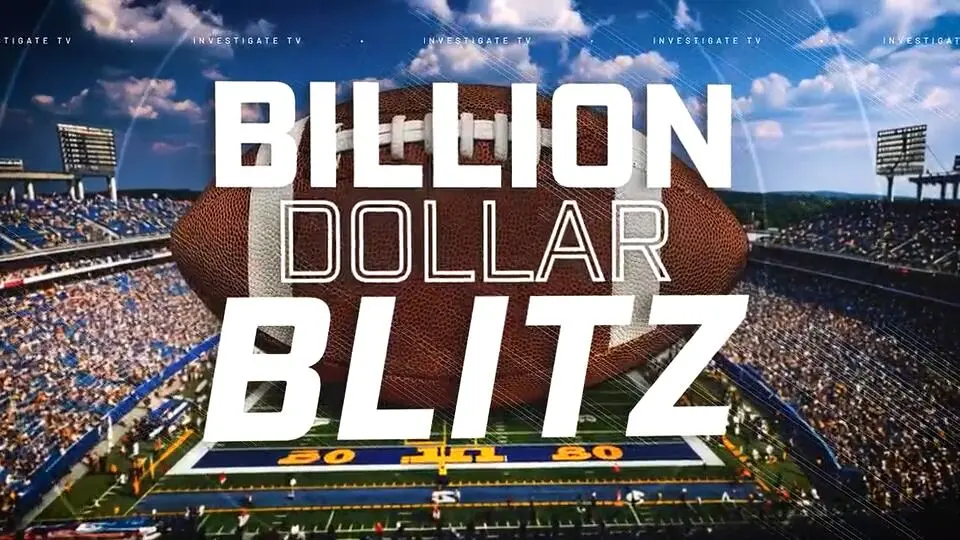
A comprehensive national investigation featured on Following Leads: The Podcast and spearheaded by InvestigateTV national reporter Chris Nakamoto reveals a staggering financial reality: out of 109 public Football Bowl Subdivision (FBS) universities analyzed, a mere 10 generate sufficient revenue through ticket sales, sponsorships, and broadcasting rights to cover their own operational costs.
The remaining 99 institutions operate in a perpetual state of fiscal deficit, relying heavily on life support from mandatory student fees and university general funds. Combined, these non-revenue-generating programs absorbed more than $2.1 billion in institutional subsidies. This dynamic exposes a profound structural irony in modern American higher education: everyday students, many of whom are financing their degrees through federal loans and part-time jobs, are subsidizing multimillion-dollar coaching salaries, lavish facility upgrades, and the high-stakes gamble of big-time college sports.
As Name, Image, and Likeness (NIL) valuations skyrocket, multi-million-dollar coaching buyouts become commonplace, and federal lawmakers grapple with potential legislative interventions, the question of who truly bears the financial burden of the collegiate sports complex has never been more urgent.
Detailed Chronology: The Evolution of the Collegiate Sports Financial Crisis
To understand how higher education arrived at this financial precipice, it is necessary to examine the historical trajectory of collegiate athletics. For decades, intercollegiate sports operated under a largely amateur model governed by the National Collegiate Athletic Association (NCAA). While major football and men’s basketball programs at storied institutions generated substantial revenues, these funds were generally understood to support broader athletic ecosystems and, theoretically, remain secondary to the academic mission of the university.
The Shift Toward Commercialization (Late 20th Century)
The landscape began to shift dramatically in the late 1980s and 1990s with the expansion of lucrative cable television contracts, conference-specific networks, and aggressive corporate merchandising. Athletic directors realized that athletic success was directly tied to institutional visibility, donor engagement, and student enrollment applications.
Universities began investing heavily in state-of-the-art training facilities, luxury suites, and hyper-competitive coaching salaries to attract top-tier talent. However, this arms race created an unsustainable economic model for the vast majority of institutions outside of the perennial power conferences. Rather than scaling back ambitions to match organic revenues, athletic departments increasingly turned to institutional subsidies—often masking the true cost of sports under opaque fee structures paid directly by the student body.
The Modern Era of Hyper-Inflation (2010s–Present)
In the years leading up to the mid-2020s, financial escalation accelerated exponentially. Conference realignments created mega-conferences boasting billion-dollar media rights deals. Concurrently, legal and cultural shifts dismantled the strict amateurism model. The advent of Name, Image, and Likeness (NIL) compensation in 2021 transformed collegiate athletes into earners, while the transfer portal introduced professional-style free agency.
To keep pace in this hyper-competitive ecosystem, athletic departments pushed spending to unprecedented heights. Coaching contracts ballooned, accompanied by staggering buyout clauses designed to secure commitments in an unstable market. When revenues from ticket sales and media deals fell short—exacerbated by shifting viewing habits among younger demographics—universities leaned even more heavily on student fees and academic general funds to balance the books. By 2026, this trajectory culminated in the nationwide financial exposure documented by InvestigateTV, revealing that over 90% of public FBS programs depend on non-athlete students to stay afloat.
Supporting Context & Metrics: The Numbers Behind the Game
The financial data uncovered in the InvestigateTV analysis paints a stark picture of modern collegiate athletics. The reliance on student-funded subsidies is not an isolated phenomenon confined to struggling programs; it is a systemic reality across nearly the entire landscape of public FBS institutions.
The 10-Percent Rule
Out of the 109 public FBS universities evaluated in the investigation, exactly 10 institutions generate enough organic revenue to be entirely self-sustaining. These athletic departments generate sufficient income through athletic ticket sales, conference distributions, corporate sponsorships, and private donations to cover all operational expenses, coaching salaries, and scholarship costs without drawing from student tuition or university general funds.
Conversely, the remaining 99 public universities operate at a deficit that is routinely plugged by institutional subsidies.
The $2.1 Billion Subsidy
In a single fiscal cycle, these 99 institutions collectively pulled in more than $2.1 billion in mandatory student fees and direct allocations from university general funds.
- Mandatory Student Fees: At many universities, every enrolled student pays a flat athletic fee each semester—regardless of whether they attend athletic events, utilize campus recreation facilities, or even support sports programs. These fees can range from a few hundred dollars to well over $1,500 per student annually.
- General Fund Transfers: When student fees are insufficient to cover athletic shortfalls, universities frequently tap into their general operating funds—monies derived from state appropriations, tuition payments, and academic endowments—to bail out the athletic department.
The Cost of Excess: Buyouts and NIL
The financial strain on universities is further compounded by astronomical expenditures at the top of the organizational chart. The investigation highlights cases such as Brian Kelly’s massive coaching buyout—reaching a staggering $54 million—illustrating the immense financial risks universities assume when signing long-term contracts.
When a coaching change occurs, the institution is often on the hook for millions of dollars in severance, all while continuing to fund facility debt service and operational overhead. Simultaneously, the proliferation of seven-figure NIL deals in high school and college sports has ratcheted up pressure on athletic boosters and institutional fundraising arms, diverting philanthropic capital that might otherwise have supported academic scholarships, research initiatives, or faculty retention.
Official Statements and Expert Insights
During his appearance on Following Leads: The Podcast, InvestigateTV national reporter Chris Nakamoto provided deep analytical insight into the mechanics of this financial transfer and its long-term implications for students.
"When you look at the numbers across 109 public FBS universities, a myth is immediately shattered," Nakamoto explained during the discussion. "We are conditioned to believe that college sports are massive economic engines that pay for themselves and even subsidize the academic side of the house. In reality, for over 90 percent of these schools, the exact opposite is true. Regular students taking out loans are effectively bankrolling athletic department deficits."
Nakamoto emphasized that the burden falls disproportionately on students who derive little to no personal benefit from the athletic enterprise.
- "You have nursing majors, engineering students, and humanities majors working part-time jobs and accumulating student debt, unaware that a portion of their mandatory fees is servicing multi-million-dollar athletic stadium debt or covering coaching buyouts," he noted.
Industry analysts and higher education advocates have echoed these concerns, pointing out that mandatory athletic fees represent a regressive tax on students. Unlike tuition, which directly correlates—at least theoretically—with classroom instruction and academic resources, athletic fees are often non-negotiable fixed costs embedded within the billing structure. Students have virtually no democratic recourse to opt out of funding programs that do not align with their educational goals or financial capacities.
Future Outlook: Legislative Reform and the Path Forward
As public awareness regarding the true cost of college athletics grows, pressure is mounting on institutional leaders, conference commissioners, and federal lawmakers to enact meaningful structural reforms. The current trajectory—defined by escalating expenditures, reliance on student subsidies, and the commercialization of collegiate sports—is widely viewed by economists as unsustainable.
Legislative Intervention on Capitol Hill
The debate has officially reached the halls of Congress, where lawmakers are weighing various legislative proposals to address the chaotic regulatory environment of modern college sports. Potential areas of federal focus include:
- Antitrust Exemptions and Governance: Establishing standardized rules regarding revenue sharing, athlete compensation, and transfer protocols to prevent an unchecked financial arms race.
- Financial Transparency Mandates: Requiring public and private universities to clearly disclose the exact volume of student fees and institutional subsidies directed toward athletics, ensuring total transparency for prospective students and their families.
- Title IX Compliance and Equity: Examining how funding shifts impact non-revenue men’s and women’s sports, ensuring that budgetary contractions do not disproportionately harm Olympic sports programs.
Institutional Reckoning
At the university level, administrators are facing difficult strategic choices. Institutions on the fringe of major conferences must evaluate whether maintaining an FBS football program—with its immense travel, coaching, and facility costs—makes economic sense when weighed against the financial strain placed on the broader campus community.
Some academic institutions have begun exploring models of athletic downsizing, capping facility expenditures, or decoupling athletic fees from baseline student tuition bills. However, cultural resistance from alumni donors, booster networks, and traditionalists remains a formidable barrier to reform.
Ultimately, the findings presented by InvestigateTV and Following Leads: The Podcast serve as a critical wake-up call for the American higher education system. Until structural changes are enacted to ensure financial accountability, the millions of non-athlete students navigating the collegiate landscape will continue to shoulder the hidden cost of the billion-dollar sports blitz—paying for a game they may never play, on a field they may never touch, long after they have left campus.

0 Comments