

Executive Overview
Cornell University stands at a critical juncture in its modern history. The Ivy League institution is currently weathering a profound institutional storm, sparked by intense student outrage and faculty rebellion over its handling of a 2024 fraternity-house gang rape allegation. As demonstrations echo across the Ithaca, New York campus, the pressure has concentrated squarely on President Michael Kotlikoff. Demonstrators, student organizations, and the university’s faculty senate are calling for structural accountability, sweeping reforms of Greek life, and, in many cases, Kotlikoff’s immediate resignation.
The crisis—exacerbated by a recent civil lawsuit filed by the survivor, independent scrutiny from New York Governor Kathy Hochul, and a history of compounding campus controversies—has laid bare the complexities and vulnerabilities of modern Title IX enforcement. While university defenders and legal scholars highlight the constraints imposed by federal due-process mandates and the specter of wrongful disciplinary actions, critics argue that institutional leaders bear ultimate responsibility for fostering an entrenched campus culture where sexual misconduct and hazing have historically found room to flourish. As Cornell struggles to restore its reputation, the unfolding situation serves as a stark reminder of the fragile compact between elite universities, their student bodies, and the public trust.
Detailed Chronology: From Allegation to Institutional Crisis
October 2024: The Incident and Initial Reports
The events precipitating the current crisis trace back to October 2024, during the early months of Michael Kotlikoff’s tenure as interim president. According to court filings submitted by the victim—identified legally as Jane Doe—she was pressured into consuming excessive amounts of alcohol and drugs before being sexually assaulted by multiple members of the Chi Phi fraternity house.
Three weeks after the assault, in November 2024, the survivor formally reported the incident to the Cornell University Police Department (CUPD). Campus investigators initiated an inquiry, compiling evidence and ultimately forwarding a summary of their findings to the local Tompkins County District Attorney’s office. Relying on the submitted materials, the DA’s office opted not to pursue criminal charges. Concurrently, the university launched an internal Title IX investigation to determine administrative violations of campus policy.
The Disciplinary Process and Administrative Fallout
As detailed in subsequent court records—unsealed after a punished student filed a lawsuit against the university—Cornell’s internal investigation was extensive. Over the course of the inquiry, investigators conducted roughly 50 interviews across 32 witnesses, amassing a substantial dossier of electronic communications, social media records, and eyewitness accounts. This process culminated in a grueling, 12-day disciplinary hearing.
Ultimately, Cornell shuttered the Chi Phi fraternity chapter, expelled several students, and suspended others. However, the accused men have consistently denied active participation or maintained that the sexual encounters were consensual.
Late 2024 to Early 2026: A Compounding String of Crises
President Kotlikoff, who transitioned from his long-standing role as provost to the permanent presidency last year, has faced a relentless series of administrative challenges since taking the helm:
- August 2024: Just weeks into his interim leadership, dining and custodial workers walked off the job over a contentious labor dispute that lasted approximately two weeks.
- Fall 2025: Faculty and students voiced sharp disapproval when Kotlikoff agreed to a $60 million settlement to resolve Trump administration civil rights investigations targeting the Ivy League institution.
- Early 2026: Kotlikoff faced severe accusations—which he vigorously denied, claiming he was the target of harassment—that he attempted to back his car into a crowd of demonstrators following a polarized debate over Israel and Palestinian rights.
- March 2026: The filing of Jane Doe’s explosive lawsuit brought the hidden details of the October 2024 Chi Phi assault back into the public eye, serving as the catalyst for the current campus revolt.
October 2026: Protests and the Threat of a No-Confidence Vote
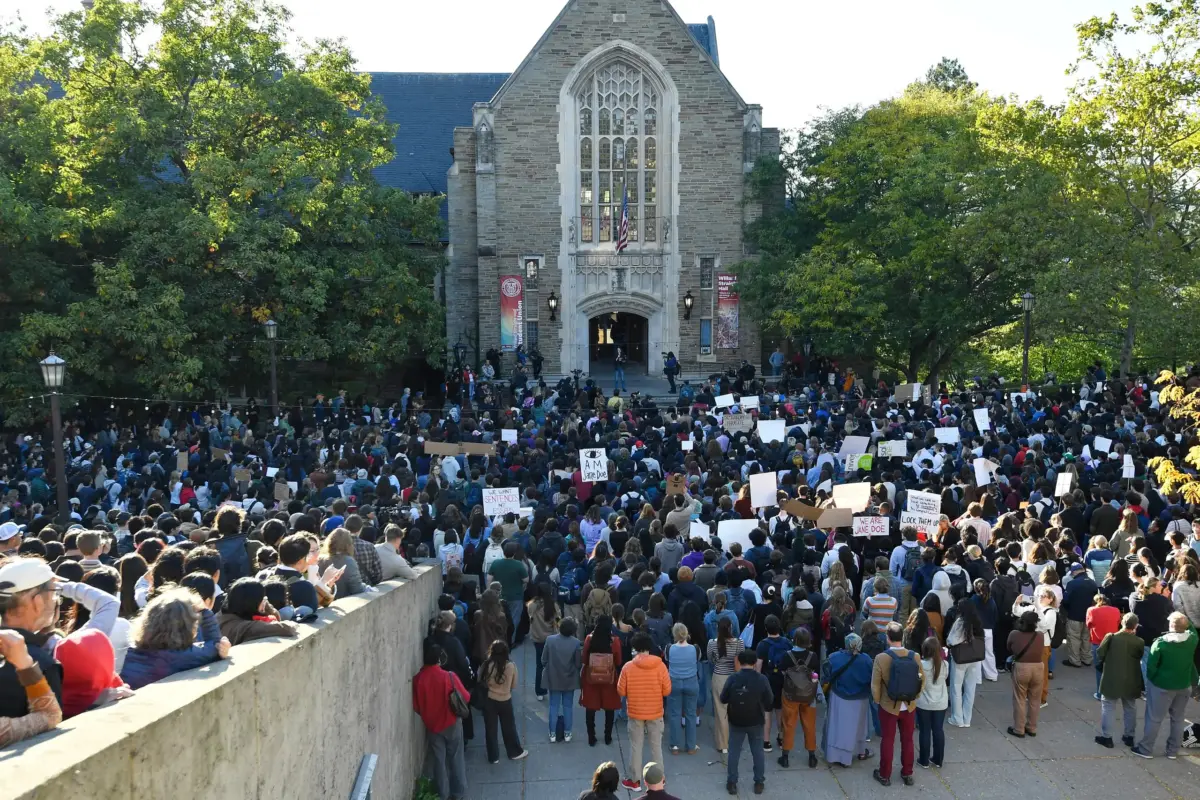
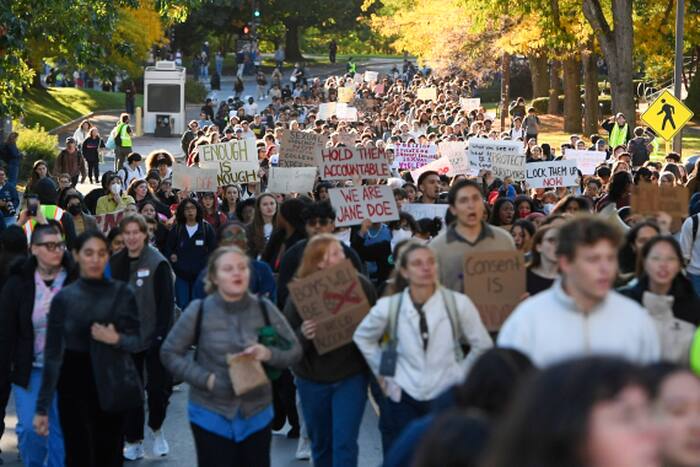
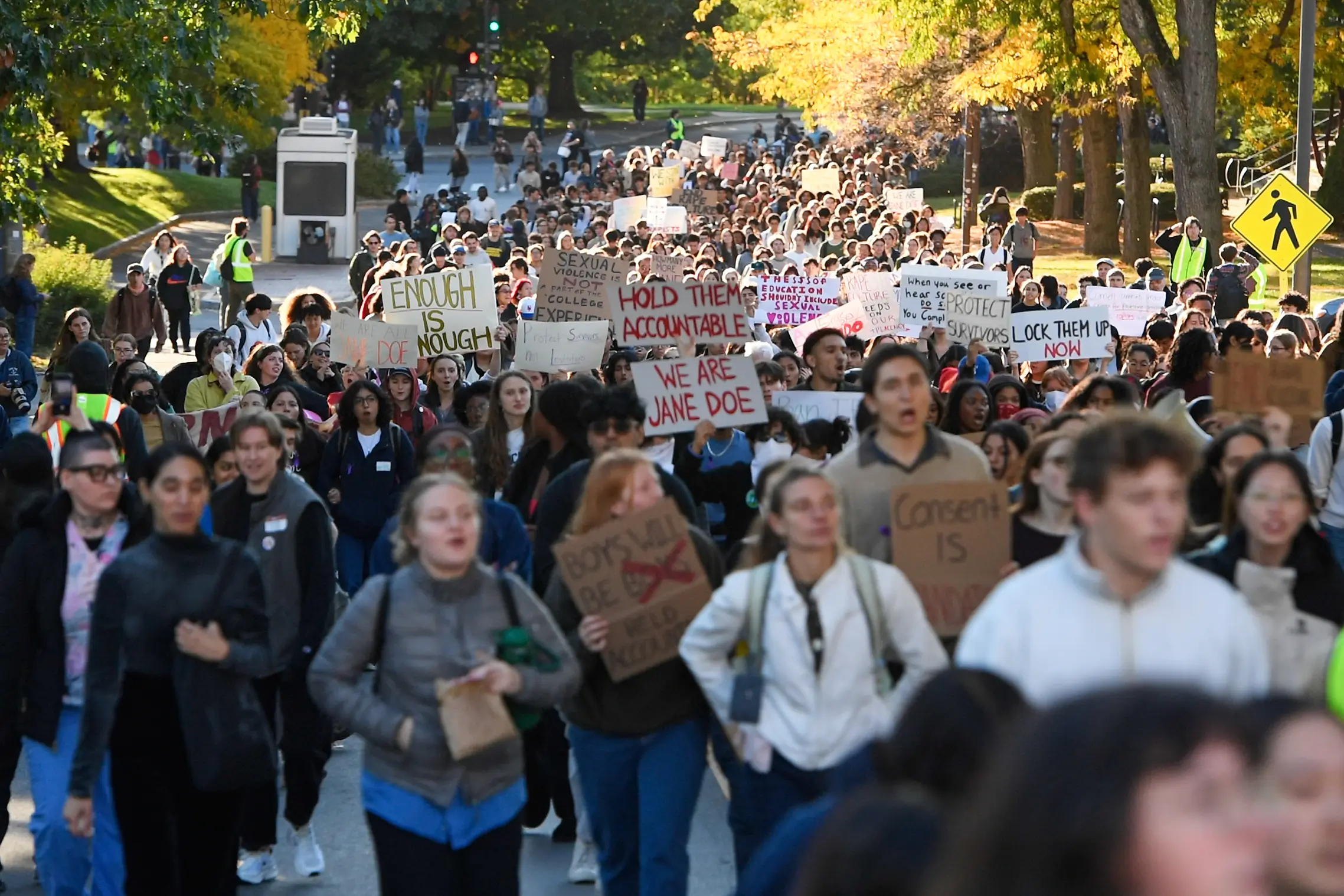
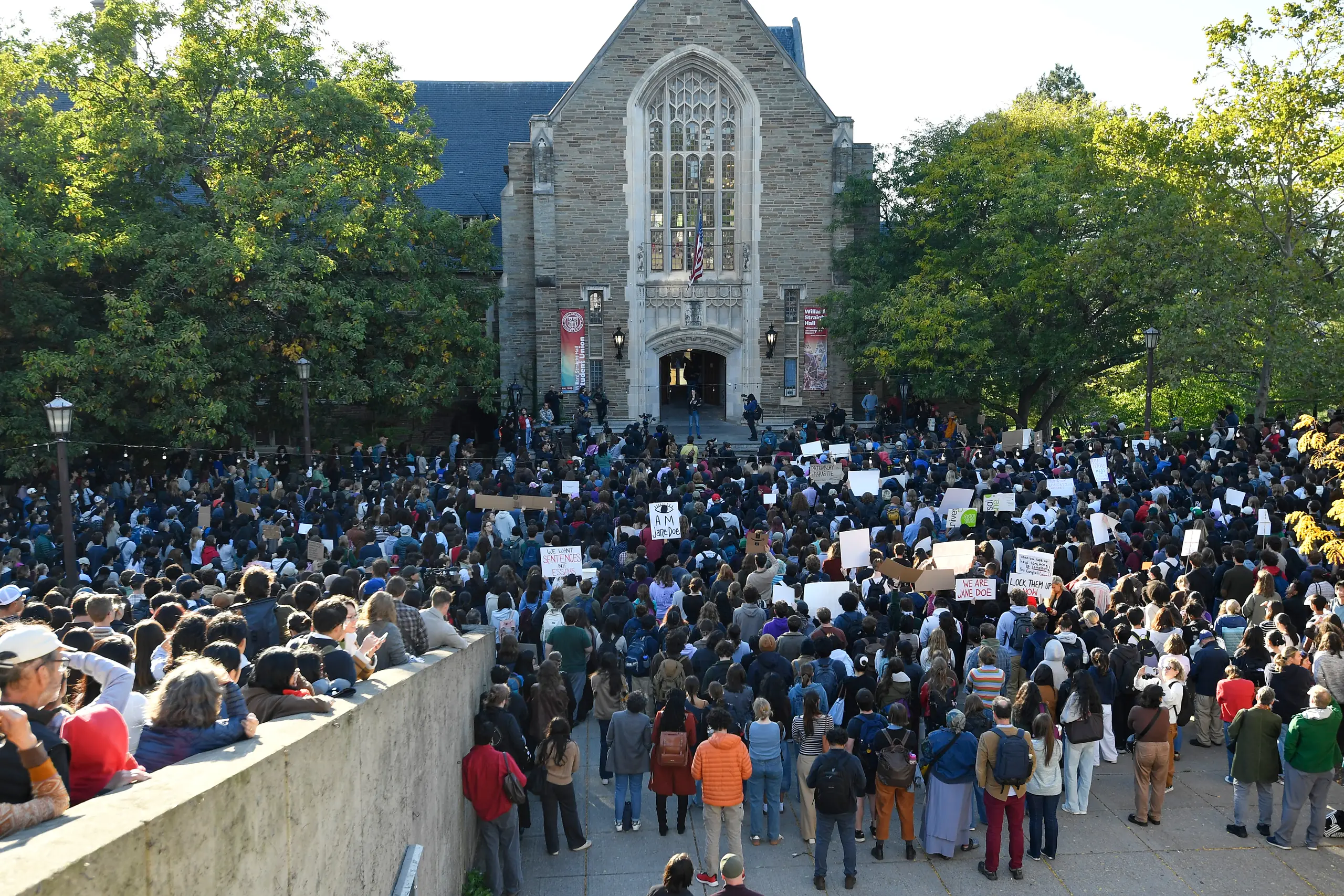
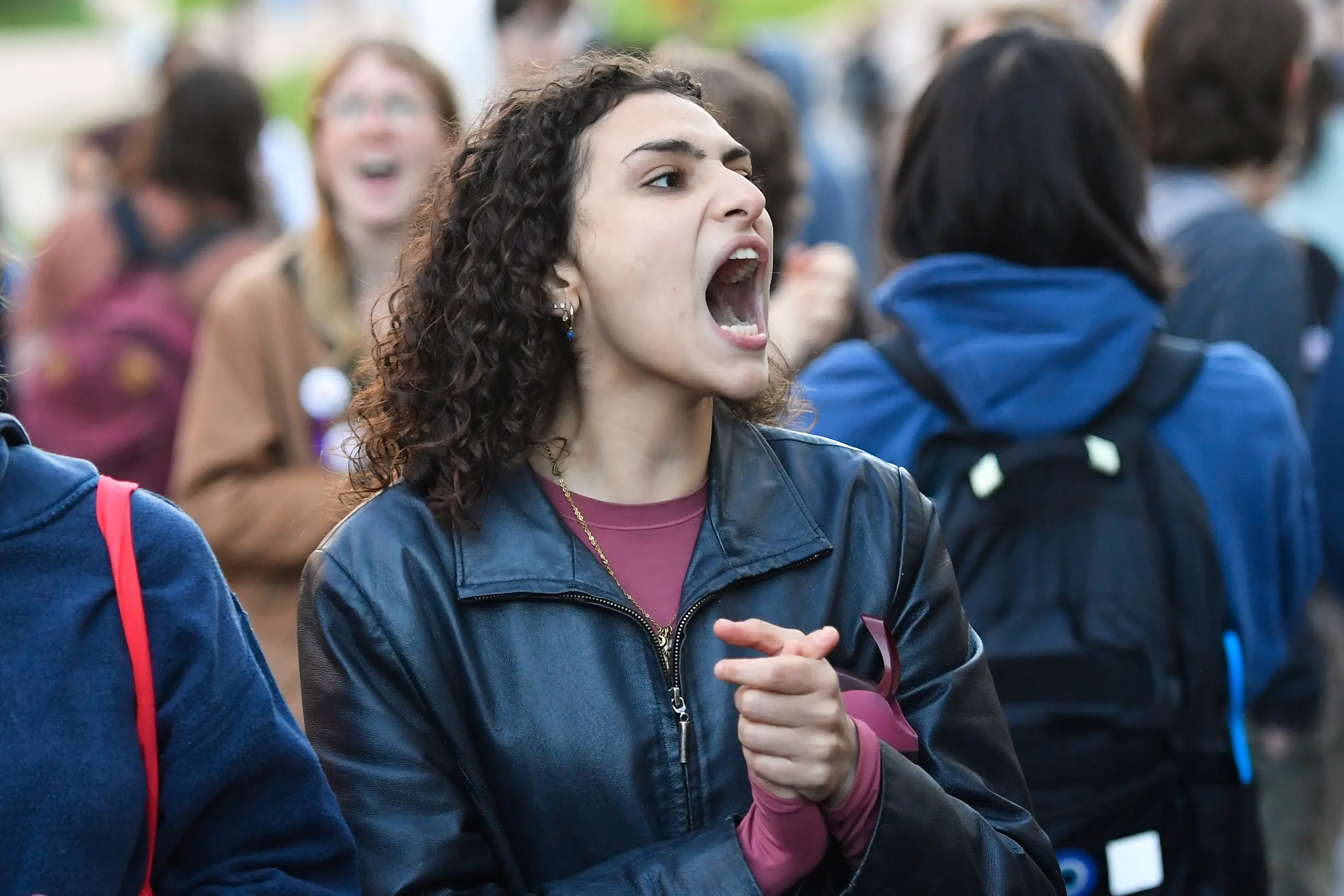
The release of court details regarding the police handling of the case ignited widespread fury. On Monday, Oct. 5, 2026, hundreds of students marched through the Ithaca campus, waving signs bearing slogans such as “WE ARE JANE DOE,” chanting for Kotlikoff’s ouster, and demanding the complete eradication of campus fraternities. Concurrently, the Cornell Faculty Senate announced plans to bring forward a formal resolution of no confidence in the administration, signaling a near-total collapse of faith among instructional staff.
Supporting Context & Metrics: The Scale of the Problem
The crisis at Cornell does not exist in a vacuum; it highlights broader, systemic issues regarding campus safety, gender equity, and the efficacy of Title IX structures across American higher education.
Empirical Insights into Campus Climate
Data compiled by Cornell’s own task force on sexual assault underscore the deep-seated nature of the problem. A comprehensive survey released in 2025 revealed alarming statistics:
- 35% of undergraduate women reported experiencing some form of sexual assault during their time at Cornell.
- 8% of undergraduate men reported similar experiences.
These metrics mirror national trends that have plagued elite residential campuses for decades, where high-density social networks, Greek organizations, and alcohol consumption intersect to create high-risk environments.
The Legal and Structural Tightrope of Title IX
Legal experts emphasize that university administrators operate within a heavily regulated and contentious framework when adjudicating sexual misconduct. Peter Lake, director of the Center for Excellence in Higher Education Law and Policy at Stetson University College of Law, points out that Title IX regulations—while designed to protect victims—are meticulously structured to safeguard the due-process rights of the accused. These include the right to legal representation and the provision for cross-examination during hearings.
Furthermore, university leaders must navigate the fine line between swift punitive action and institutional liability. Missteps can lead to catastrophic legal liabilities, reminiscent of the Duke University lacrosse case two decades ago, where administrators prematurely suspended players and canceled a season over allegations that were later proven false, resulting in substantial financial settlements and reputational damage.
Conversely, public health advocates and prevention experts argue that legal constraints should not absolve leadership from moral responsibility. Jane Stapleton, co-founder of the Prevention Innovations Research Center at the University of New Hampshire, notes that fraternity culture is inextricably linked to the broader campus ecosystem. When institutional leaders fail to proactively dismantle toxic subcultures, the safety and dignity of the entire student body are compromised.
Official Statements and Institutional Response
In the face of mounting external pressure and internal rebellion, university leadership has scrambled to mount a credible defense while acknowledging systemic shortcomings.
President Michael Kotlikoff’s Address
Over the weekend preceding the October protests, President Kotlikoff released an apologetic video message addressing the university community. He characterized the allegations as “deeply disturbing” and sought to reassure students and alumni of his dedication to reform.
"Throughout his administration, he’s refused to take accountability for anything that has happened," countered sophomore Sophia Kong during the Monday protests. "He does not represent us."
While Kotlikoff has acknowledged the urgent need to critically examine Greek life—initiating task force recommendations centered on improved Title IX education and the promotion of ethical “sexual citizenship”—he has stopped short of calling for an outright ban on fraternities. Instead, the administration intends to engage students, alumni, and stakeholders in a structured dialogue aimed at preserving the perceived networking benefits of Greek organizations while drastically increasing transparency and disciplinary accountability.
State Intervention: Governor Kathy Hochul’s Involvement
The controversy has also drawn sharp rebukes from New York State leadership. Governor Kathy Hochul launched a scathing critique of the Cornell University Police Department, accusing campus law enforcement of failing to fully and accurately convey the survivor’s comprehensive testimony to the Tompkins County District Attorney’s office. Governor Hochul mandated an independent review of the handling of the case, a measure that President Kotlikoff has publicly pledged to fully cooperate with.
Historical Precedents: Do University Presidents Survive Such Scandals?
Cornell’s current leadership crisis joins a growing lineage of high-profile university scandals that have claimed the positions of top academic executives across the United States.
- Baylor University (2016): Former President Ken Starr—internationally recognized for his role in the Clinton-era impeachment investigations—resigned under immense pressure following revelations that the university systematically mishandled sexual assault allegations leveled against members of the powerhouse football program.
- Oregon State University (2021): Trustees accepted the resignation of President F. King Alexander after investigations concluded he could not rebuild institutional trust, given his historical role in mishandling sexual misconduct cases during his prior tenure at Louisiana State University.
- Columbia University (2024): More recently, high-profile Ivy League leadership has proven increasingly vulnerable to rapid cultural shifts; former Columbia President Minouche Shafik stepped down under pressure following intense campus protests and congressional scrutiny regarding the administration’s management of geopolitical demonstrations on campus.
These precedents suggest that when a university executive loses the confidence of both the student body and the faculty senate, recovery is exceptionally difficult. As Cornell sophomore Soham Bera noted during the recent demonstrations, student faith in institutional leadership has reached an all-time low, creating an atmosphere where many believe genuine structural change is finally within reach.
Future Outlook
As October 2026 progresses, Cornell University faces a pivotal crossroads. The impending faculty senate vote on a resolution of no confidence will serve as a definitive barometer of internal administrative support for President Kotlikoff. Meanwhile, the independent review mandated by Governor Hochul promises to shine an uncompromising light on institutional procedures, police reporting protocols, and Title IX compliance.
Whether President Kotlikoff can weather this multi-front crisis remains to be seen. However, the broader message emanating from the brick pathways of Ithaca is unmistakable: the student generation of today is increasingly unwilling to accept procedural obfuscation or administrative inertia. For Cornell University, moving forward will require far more than apologies and task force reports—it demands a fundamental reckoning with institutional culture, restorative justice for survivors, and an uncompromising commitment to campus safety.

0 Comments