
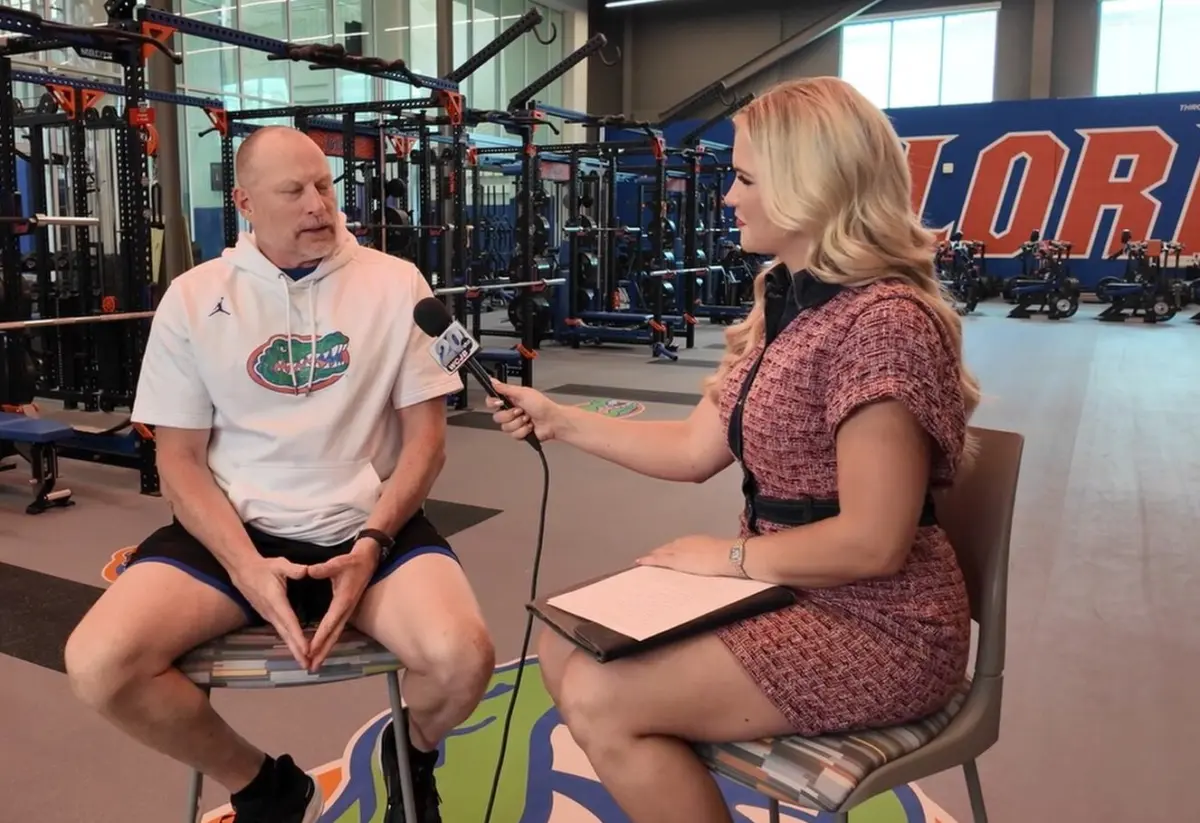

GAINESVILLE, Fla. — In the high-stakes, hyper-competitive landscape of modern collegiate athletics, the line separating victory from defeat is often forged long before a team ever steps onto the gridiron. It is built in the subterranean, iron-clad confines of the weight room, quantified in sweat, barbell velocity, and physiological recovery metrics. For the University of Florida Gators football program, the man tasked with hammering out that resilience is Rusty Whitt.
As he navigates his inaugural season as the program’s Director of Football Performance, Whitt brings to Gainesville far more than a standard certification in strength and conditioning. He carries a formidable pedigree forged across more than 30 years of elite collegiate coaching and a distinguished, combat-tested military career. It is a dual background defined by discipline, mental fortitude, and an uncompromising standard of excellence—traits that the Florida coaching staff hopes will translate into fourth-quarter dominance in the grueling Southeastern Conference (SEC).
Recently, Whitt sat down for an exclusive, wide-ranging interview with TV20’s Olivia Eisenhauer, offering a rare glimpse into the philosophy that drives his training regimens, his unique bond with Head Coach Jon Sumrall, and the seamless intersection of military tactics and athletic development.
Executive Overview: The Architecture of a New Era in Gainesville
The hiring of Rusty Whitt was not merely an administrative appointment; it was a foundational statement of intent. Under the leadership of Head Coach Jon Sumrall, the Gators recognized that returning to the pinnacle of college football required a cultural overhaul. Physical talent alone—no matter how highly rated out of high school—is insufficient to survive the week-in, week-out attrition of the SEC. It requires an industrial-grade physical infrastructure and a psychological armor that only a veteran leader like Whitt can construct.
Whitt’s resume reads like a masterclass in athletic preparation. Over three decades, he has operated at the highest levels of collegiate sports, navigating high-pressure environments where expectations are absolute and margins for error are razor-thin. Yet, what truly distinguishes Whitt is his time away from the collegiate sidelines, serving his country in the United States military. That chapter of his life instilled a framework of operational readiness, accountability under fire, and collective cohesion that he now imports directly into the Gators’ locker room.
This executive overview explores the convergence of Whitt’s military ethos and modern sports science. By examining his trajectory, his relationship with Sumrall, and the structural changes he has implemented within Florida’s strength and conditioning program, this report provides an authoritative look at the cultural shifts occurring behind the scenes in Gainesville. As the Gators prepare for the challenges of a grueling schedule, the imprint of Rusty Whitt is visible in every rep, every sprint, and every ounce of grit displayed on the practice fields.
Detailed Chronology: From the Armed Forces to the SEC Sidelines
To understand the methods Rusty Whitt employs today, one must trace the winding, disciplined path that brought him to the University of Florida. His journey is not a straight line from a graduate assistantship to an SEC director’s chair; rather, it is a mosaic of high-stress environments, elite athletic programs, and service to a higher calling.
The Formative Years and Early Coaching Stints
Whitt’s entry into the strength and conditioning profession began decades ago, during an era when sports science was still in its infancy and physical preparation was often dictated by brute force rather than data-driven methodologies. Long before GPS trackers, force plates, and real-time biometric monitoring became standard operating procedure, Whitt was in the trenches, studying human biomechanics, kinetic chains, and nutritional science.
His early career was characterized by an insatiable hunger for knowledge. He worked through the ranks of collegiate athletics, absorbing lessons from legendary mentors and learning how to communicate with diverse groups of elite athletes. Whether working with smaller programs or ascending to major-conference institutions, Whitt developed a reputation for demanding absolute accountability. He understood early on that a strength coach is often the first line of defense against injuries and the primary architect of a team’s mental toughness.
The Military Crucible: Service and Sacrifice
What separates Whitt from virtually every other director of football performance in the Football Bowl Subdivision (FBS) is his tenure in the United States military. Stepping away from the traditional collegiate coaching track, Whitt answered a call to service that would fundamentally alter his worldview and leadership style.
Serving in elite military units, Whitt operated in environments where complacency was fatal and communication was literal matters of life and death. The military stripped away the superficial trappings of modern athletics and replaced them with raw, unvarnished truths: the strength of the unit depends on the reliability of its weakest link; individual ego must be subordinated to the mission; and adversity is not an excuse to falter, but a catalyst for focus.
During his military service, Whitt managed physical conditioning programs for personnel operating under extreme stress. He witnessed firsthand how the human body and mind respond to sleep deprivation, extreme physical duress, and psychological pressure. These lessons could not be replicated in a standard collegiate weight room, but they could be—and are being—transferred back to the gridiron. When Whitt speaks to Florida players about pushing through fatigue in the fourth quarter of a tie game in November, he does so with the unshakeable credibility of someone who has managed high-stakes human performance under far graver circumstances.
Return to Elite College Football and Arrival in Gainesville
Following his military service, Whitt returned to collegiate athletics with a renewed perspective and an elevated toolkit. He brought back to the sideline a style of leadership that blended the empathetic mentorship required of modern coaches with the uncompromising discipline of a seasoned officer.
His subsequent stops at major programs cemented his status as one of the premier performance coaches in the country. He built a reputation for transforming raw, unpolished rosters into physically imposing, resilient units capable of withstanding the physical toll of a Power Four schedule.
When Jon Sumrall took the reins at Florida, identifying a director of football performance who could immediately command the respect of the locker room and modernize the program’s physical development was paramount. Sumrall didn’t just need a coach; he needed a cultural lieutenant. He needed Rusty Whitt. Since arriving in Gainesville, Whitt has wasted no time dismantling old habits, establishing rigorous benchmarks, and setting a tone that permeates every facet of the Gators’ preparation.
Supporting Context & Metrics: The Science and Philosophy of Modern Performance
In her exclusive interview on TV20, Olivia Eisenhauer pressed Whitt on the philosophy that bridges his military background with his day-to-day work in the Gators’ state-of-the-art training facilities. Far from being a mere "drill sergeant" archetype, Whitt’s approach is a sophisticated synthesis of cutting-edge sports science and timeless psychological principles.
Quantifying Excellence: The Data-Driven Gridiron
Modern college football is an arms race of technology and analytics. At Florida, Whitt oversees an operation where subjective evaluation is constantly cross-referenced with hard data.
- Biometric Monitoring: Every athlete’s workload is tracked via advanced GPS and inertial measurement units (IMUs) during practices. Whitt monitors metrics such as total distance covered, high-speed running yardage, acceleration/deceleration counts, and player load to ensure optimal loading and prevent non-contact soft-tissue injuries.
- Velocity-Based Training (VBT): In the weight room, barbell speed is monitored in real-time. This allows Whitt and his staff to measure power output precisely, adjusting loads dynamically based on an athlete’s daily neural readiness rather than rigidly adhering to a static spreadsheet.
- Recovery Protocols: Physical adaptation does not occur during the workout; it occurs during recovery. Whitt places immense emphasis on sleep hygiene, hydrotherapy, nutritional timing, and soft-tissue maintenance to accelerate turnaround times between grueling SEC contests.
The Mental Component: Cultivating Resilience
Yet, Whitt is the first to point out that numbers alone do not win football games. In his conversation with Eisenhauer, he emphasized that the most critical metric in sports is often the intangible one: how an athlete responds when things go wrong.
"The physical training is the baseline," Whitt has noted regarding his philosophy. "You have to be strong, you have to be fast, you have to be durable. But when the stadium is shaking, when you’re down by four points with two minutes on the clock, and your lungs are burning—that’s when the mental conditioning takes over. That’s where the military background comes into play. You don’t panic. You execute the standard."
This mindset has become the cultural bedrock of the Gators under Sumrall and Whitt. Players are no longer evaluated merely by their physical outputs in the weight room, but by their body language, their leadership under fatigue, and their ability to elevate their peers when adversity strikes.
Official Statements and Insights: Inside the Whitt-Sumrall Partnership
The success of any collegiate football program relies heavily on the synergy between the head coach and the director of football performance. At Florida, the alignment between Jon Sumrall and Rusty Whitt is absolute, built on a shared vision of toughness, accountability, and unrelenting competitive drive.
During his sit-down with TV20’s Olivia Eisenhauer, Whitt shed light on his dynamic relationship with Sumrall, painting a picture of a partnership forged in mutual respect and a singular focus on restoring the Gators to national prominence.
"When you work with a head coach like Jon Sumrall, there is zero ambiguity," Whitt explained to Eisenhauer. "We share the exact same vision for what a Florida Gator should look like, how he should act, and how he should prepare. He trusts my domain entirely, and in turn, I understand the ultimate mission he has for this football team on Saturdays. There’s a synergy there that allows us to push these players harder than they’ve ever been pushed, while making sure they know we’re doing it out of a commitment to their success."
Whitt also addressed the unique challenges of transitioning to a historic program like Florida, where the ghosts of past championships loom large over every practice session. Rather than viewing the legacy of Gator greats—such as Steve Spurrier, who recently sat down with TV20 for an exclusive season preview—as a burden, Whitt views it as a standard to be met.
"When you walk into our facilities every day, you are surrounded by the history of greatness," Whitt told Eisenhauer. "You see the names, you see the trophies, you see the standard that was set before you. My job is to make sure our guys are physically and mentally equipped to honor that history. You can’t just talk about being a championship program; you have to train like one, eat like one, sleep like one, and think like one 365 days a year."
Head Coach Jon Sumrall has frequently echoed these sentiments, praising Whitt’s ability to command the locker room without ever raising his voice unnecessarily. In Sumrall’s eyes, Whitt represents the adult in the room—a steady, unshakeable presence who ensures that the team’s physical preparation matches the strategic acumen of the coaching staff.
Future Outlook: Building a Sustainable Foundation for the Gators
As the college football landscape continues to evolve—marked by an expanded College Football Playoff, shifting conference realignments, and year-round roster management—the role of the director of football performance has never been more critical. Programs can no longer rely on sporadic bursts of talent; they require systematic, year-round durability to navigate a 16-to-17-game championship march.
For the University of Florida, the long-term investment in Rusty Whitt’s leadership is designed to yield dividends far beyond a single season. The structural changes he has introduced—from advanced nutritional counseling and sleep tracking to military-grade accountability metrics—are institutionalizing a culture of resilience that will outlast any individual roster class.
What Lies Ahead for Florida Football
- Roster Durability: By minimizing soft-tissue injuries and optimizing recovery times, Whitt aims to ensure that the Gators enter November—the traditional meat-grinder of the SEC schedule—healthier and deeper than their opponents.
- Cultural Permanence: The standard of accountability established by Whitt and Sumrall is trickling down from the veterans to the incoming freshman classes, ensuring that the culture is self-sustaining.
- Competitive Edge in the Fourth Quarter: The ultimate test of any strength program is performance when fatigue sets in. As the season progresses, the Gators are banking on Whitt’s conditioning regimens to provide that decisive late-game edge.
As fans and analysts look ahead to the remainder of the schedule, the daily coverage provided by TV20 Sports—featuring journalists Jake Rongholt, Olivia Eisenhauer, and Julianna Reichenbach during the 6 o’clock and 11 o’clock nightly newscasts—will continue to track these developments closely. From exclusive sit-downs with program legends like Steve Spurrier to deep-dive reports on behind-the-scenes architects like Rusty Whitt, TV20 remains the definitive source for everything Gator sports.
In the end, the story of Florida football in the Whitt era is still being written. But if the iron-clad discipline of the weight room is any indication, the modern Gator is being built to withstand anything the SEC can throw its way.

0 Comments