

Executive Overview
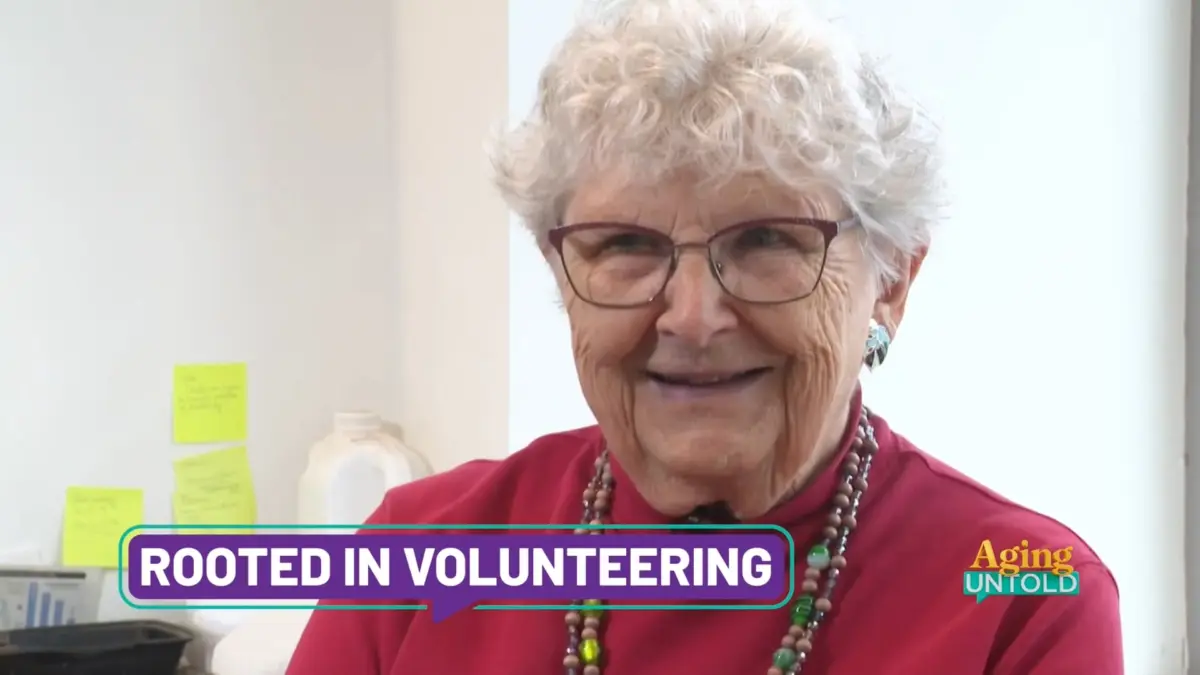
BURLINGTON, Vt. — For nearly three decades, the immaculate halls of the University of Vermont’s (UVM) Pringle Herbarium have quietly hummed with the rhythmic, deliberate movements of a woman engaged in an art form few outside the scientific community even know exists. Hilda White, a steadfast volunteer whose life bridges nearly a century of human history, has spent the last 28 years showing up week after week to perform the meticulous craft of mounting plant specimens. At 95 years old, White has personally preserved more than 50,000 botanical specimens, anchoring a vital biological archive that serves as an irreplaceable library for the natural world.
In an extraordinary convergence of gratitude and scientific discovery, White’s monumental contributions were recently immortalized in a way reserved for the titans of botany. For her 95th birthday, the herbarium presented her with a gift unlike any other in its storied history: a newly discovered species of fern, unearthed in the dense, mist-shrouded forests of Colombia in 2023, was officially named in her honor. Polystichum hildae—a striking member of the Christmas fern family—now cements White’s name in the permanent annals of taxonomic science.
This rare honor is more than a sentimental birthday gesture; it is a profound acknowledgment of an invisible labor force that underpins academic research. While botanists and evolutionary biologists often seize the spotlight for discovering new species in the wild, the longevity, accuracy, and accessibility of their research depend entirely on meticulous preservationists like White. Operating at the intersection of science and fine art, White carefully presses, arranges, and affixes fragile flora to acid-free archival paper, transforming ephemeral leaves and stems into historical artifacts meant to endure for centuries.
Yet, the story of Polystichum hildae and its namesake is also one of harrowing survival and unwavering dedication. From catastrophic blazes that threatened to reduce a century of botanical heritage to ash, to the quiet, daily triumphs of an indefatigable nonagenarian who refuses to retire, this is a chronicle of passion, resilience, and the enduring power of human legacy. As White looks toward the future with no intention of hanging up her mounting tools, her remarkable journey offers a compelling lens through which to examine the quiet heroes who protect our planet’s biodiversity, one specimen at a time.
Detailed Chronology: A Century of Life Meets Decades of Preservation
To fully comprehend the magnitude of Hilda White’s contribution to the University of Vermont, one must trace the timeline of a life dedicated to quiet persistence, as well as the modern history of the institution she serves.
Born nearly a century ago, White grew up in an era vastly different from the digital landscape of the twenty-first century. Long before she set foot in the Pringle Herbarium, she developed a deep appreciation for the natural world and a meticulous attention to detail. However, it wasn’t until she was well into her golden years—specifically 28 years ago—that she found her true calling at UVM. Walking through the doors of the herbarium for the first time, she discovered a specialized domain where her steady hands and creative impulses could merge.
"I can’t draw, but this is my artistic outlet," White frequently remarks, reflecting on her unique role. While traditional artists rely on canvas and paint, White works with dried fronds, delicate petals, and fibrous roots. Her canvas is archival-grade paper; her medium is a precise balance of glue, weights, and spatial arrangement. Each sheet must be laid out to showcase the plant’s diagnostic features—flowers, leaves, and roots—while ensuring it can withstand centuries of handling by researchers, students, and historians.
The chronology of White’s tenure at the herbarium reached a dramatic climax in 2023, thousands of miles away in the tropical Andes of Colombia. Dr. Wes Testo, a prominent plant evolutionary biologist and the current director of the Pringle Herbarium collection, was conducting fieldwork in South America. Navigating the dense, bio-diverse mountain forests, Testo encountered a fern unlike anything he had documented before.
"I was walking through the forest there, and I saw this just spectacular fern," Testo recalled. "I knew immediately it was something I hadn’t seen before."
That field discovery initiated a rigorous scientific process of collection, transport, microscopic examination, and DNA sequencing. By late 2025, as White approached her 95th milestone birthday, Testo and his colleagues finalized the formal description of the species. Recognizing the vital partnership between field discovery and indoor preservation, the research team made a unanimous decision: the new species would be christened Polystichum hildae.
When the news was broken to White, the stoic nonagenarian was overcome with emotion. "Oh, I was absolutely blown away," she confessed, remembering the moment. "You can’t imagine, I cried all afternoon."
Supporting Context & Metrics: The Science of the Herbarium
To understand why Hilda White’s work is so crucial to modern science, one must understand what an herbarium actually is. Far from being a simple storage room of dried weeds, a major herbarium like the Pringle Herbarium is a biological library of Alexandria for the plant kingdom. It houses millions of dried, pressed, and meticulously cataloged plant specimens that document the distribution, evolution, and historical ecology of plant life across the globe.
The Anatomy of an Archival Specimen
The process of creating a permanent herbarium voucher specimen is an exacting discipline. When a botanist collects a plant in the field, it is typically pressed flat and dried to halt decay. However, a raw dried plant is brittle, vulnerable to humidity, and susceptible to insect damage. This is where technicians and volunteers like White step in:
- Re-hydration and Layout: The dried plant is carefully arranged on archival, acid-free paper to display both upper and lower leaf surfaces, reproductive structures, and root systems.
- Securing: Using specialized archival glue, linen tape, and occasionally thread, every part of the plant is anchored to the paper.
- Labeling: A comprehensive data label is affixed to the bottom right corner, detailing the exact geographic coordinates where the plant was found, the elevation, soil type, associated species, date of collection, and the name of the collector.
- Freezing and Quarantine: Before entering the permanent collection cabinets, mounted specimens are frozen to eradicate any microscopic insect eggs or larvae that could devastate the archive.
Once processed, these specimens become immortalized data points. Scientists use herbarium sheets to track climate change by observing shifts in flowering times over centuries, to locate populations of rare or endangered species, and to study the geographical spread of invasive weeds.
By the Numbers: Hilda White’s Impact
- 50,000+: The estimated number of individual plant specimens personally mounted by White over her 28-year career.
- 28: The number of years White has dedicated to volunteering at the Pringle Herbarium.
- 95: White’s age, placing her in a rare demographic of active, highly skilled centenarian-track volunteers.
- 1: The number of newly discovered species (Polystichum hildae) permanently named in her honor.
Official Statements & The Trial by Fire
The bond between White, director Wes Testo, and the Pringle Herbarium was forged not only in the quiet peace of the laboratory but also in the crucible of disaster. The preservation of historical biodiversity is fraught with unforeseen perils, a reality that the UVM community experienced firsthand on a catastrophic scale in the summer of 2017.
At the time, the historic Pringle Herbarium collection was housed inside Torrey Hall, a landmark 19th-century building on the university campus. On a fateful day in August 2017, a devastating fire broke out in the building, severely compromising its roof and upper levels.
For Wes Testo, who was thousands of miles away in South America conducting field research at the time, the news arrived as an email notification that induced immediate panic.
"All I could see from an email in Colombia—the roof on fire," Testo recounted, visualizing the worst-case scenario. "I thought my whole Ph.D. was going up in flames along with the rest of the collection here."
The fire threatened to erase centuries of irreplaceable botanical history, including priceless type specimens collected by nineteenth-century botanist Cyrus Guernsey Pringle himself. Simultaneously, Hilda White was on her regular commute to work, unaware that her workplace was actively burning.
What followed was a heroic, community-wide rescue operation. Staff, faculty, students, and dedicated volunteers—led by the indomitable spirit of individuals like White—rallied to salvage what they could. Working tirelessly amidst water damage, soot, and structural instability, the team meticulously rescued, triaged, and relocated thousands of water-damaged specimens. Many of those saved plants required delicate restoration and re-mounting—a task that fell right back into the capable, practiced hands of Hilda White.
The survival of the Pringle Herbarium is a testament to this collective resilience. Neither White nor Testo takes the collection’s continued existence for granted, viewing every saved leaf and newly mounted specimen as a victory against entropy and disaster.
Future Outlook: A Living Legacy in Polystichum hildae
As science marches forward into an era dominated by genetic sequencing, digital imaging, and rapid global climate shifts, the fundamental value of physical herbarium specimens remains absolute. DNA extracted from centuries-old vouchers allows researchers to reconstruct the evolutionary history of plant lineages and model how ecosystems will respond to future environmental pressures.
Within this dynamic landscape, Polystichum hildae stands as a brilliant bridge between the tactile past and the molecular future. Discovered in the rich biodiversity hotspots of Colombia, this Christmas fern represents the ongoing, tireless quest of field botanists to document life on Earth before habitats are lost to deforestation and development. At the same time, its taxonomic designation ensures that Hilda White’s name will be cross-referenced in botanical databases, academic journals, and field guides for as long as science classifies the natural world.
When asked about her future, White dismisses any notion of slowing down. Her commitment to the Pringle Herbarium is as firm as the archival adhesive she applies to her mounting sheets.
"Oh no! I’ll be here as long as I can," she asserts with a smile.
In an age obsessed with instant gratification, rapid obsolescence, and hyper-digitalization, Hilda White’s 28-year labor of love at the University of Vermont offers a profound counter-narrative. It reminds us that monumental scientific achievements are built upon the quiet, patient, and methodical hands of ordinary people who choose to dedicate their time to something greater than themselves. Through every preserved frond, and now through the immortalized fronds of Polystichum hildae, Hilda White has woven her life’s story directly into the fabric of Earth’s botanical history—ensuring that her legacy will bloom, literally and figuratively, for centuries to come.

0 Comments