

Executive Overview
GRAND RAPIDS, Mich. — The battle for Michigan’s open U.S. Senate seat reaches a critical inflection point this week as Republican candidate Mike Rogers and Democratic nominee Abdul El-Sayed prepare to square off in their inaugural face-to-face debate. Set for Thursday evening in Grand Rapids, the high-stakes encounter marks the transition from weeks of aggressive digital jousting and television ad saturation to direct, unscripted confrontation. As one of the most closely watched contests of the 2026 midterm cycle, this Senate race holds immense national significance, potentially serving as a bellwether for the broader political landscape and the shifting balance of power in Washington, D.C.
For Rogers, a seasoned former congressman and the uncontested choice of his party following the August 4 primary, the evening offers his first major debate stage since his razor-thin loss to Democrat Elissa Slotkin two years prior—a contest decided by fewer than 20,000 votes. For El-Sayed, a progressive former public health official who emerged from a bruising and fiercely contested Democratic primary against U.S. Representative Haley Stevens by a margin of less than one percentage point, the debate provides an invaluable platform to project executive capability on a statewide stage.
The collision in Grand Rapids follows an increasingly combative stretch defined by starkly contrasting campaign strategies. While El-Sayed has maintained a grueling grassroots schedule, traversing the state and engaging with media outlets from conservative networks to long-form policy podcasts, Rogers has leaned heavily on substantial outside financial backing and a more measured public event calendar. With the November 3 general election rapidly approaching, both candidates face narrow, delicate paths to victory: El-Sayed must aggressively mend a fractured Democratic base while peeling away working-class independents and disaffected Republicans, whereas Rogers must energize conservative stalwarts in the absence of Donald Trump on the ballot while aggressively courting moderate suburbanites.
Detailed Chronology: Path to the Debate
The road to the October debate stage has been paved with intense political maneuvering, strategic repositioning, and escalating rhetoric that underscores the deep ideological divides within Michigan’s electorate.
The Primary Phase and Early Posturing
The early months of 2026 set the stage for what political analysts recognized would be an exceptionally competitive cycle. Following the retirement of long-serving incumbent leadership, both major parties scrambled to secure viable standard-bearers.
- August 4, 2026: Michigan held its high-stakes primary elections. Mike Rogers secured the Republican nomination without facing significant intra-party resistance, allowing him to preserve campaign capital and consolidate party infrastructure early. On the Democratic side, Abdul El-Sayed navigated a turbulent, multi-candidate primary field that included U.S. Rep. Haley Stevens and state-level leadership. El-Sayed’s progressive platform resonated deeply with the party’s left flank, ultimately propelling him to a narrow victory by less than a single percentage point.
- Mid-August to Early September 2026: Immediately following the primaries, the tone shifted from internal party consolidation to external bombardment. Outside political action committees (PACs) and independent expenditure groups flooded Michigan’s airwaves with millions of dollars in television and digital advertising. Data from media tracking firms revealed a profound spending disparity: El-Sayed trailed roughly 2-to-1 in direct advertising expenditures compared to the well-funded apparatus backing Rogers, compelling the Democrat to adopt an aggressive, media-saturated grassroots strategy.
Escalation and Strategic Divergence
As September progressed, the tactical divergence between the two campaigns became glaringly apparent.
- The Retail Campaign Trail: El-Sayed crisscrossed the state relentlessly, holding town halls in coffee shops, union halls, and community centers. He simultaneously sat for a wide array of media interviews—ranging in ideological scope from Fox News appearances to long-form discussions on policy-driven podcasts like The Ezra Klein Show. During these appearances, El-Sayed sought to sharpen his contrast with his opponent. In a Tuesday interview with The Associated Press, he succinctly summarized his campaign’s posture: "We are running to win the race. He’s running not to lose the race."
- The Conservative Balancing Act: Conversely, Rogers maintained a tightly managed public schedule with fewer open-access grassroots events, relying heavily on targeted messaging and surrogates. His campaign strategy aimed to project stability and executive experience. However, Rogers also executed several notable policy departures from orthodox party lines that caught political observers by surprise. In September, amidst escalating geopolitical tensions, Rogers publicly stated that the military conflict involving Iran needed to "end quickly," breaking with hawkish elements within his party.
The Tariff Flashpoint
The tension reached a new peak just 24 hours before the scheduled debate. On Wednesday, Rogers released a campaign television advertisement taking direct aim at Donald Trump’s proposed and enacted tariff policies concerning Canada.
In the ad, Rogers asserted that "we know that Canada is not our enemy" and demanded that policymakers "need to end this tariff war now." This calculated break with protectionist trade orthodoxy highlighted Rogers’ precarious balancing act: attempting to distance himself from economic measures that could harm Michigan’s manufacturing and automotive supply chains, while still maintaining his appeal to the broader conservative base.
Supporting Context & Metrics
To fully understand the dynamics governing the Michigan Senate race, one must examine the demographic, financial, and historical metrics framing the contest.
Financial Landscape and Resource Disparity
Campaign finance reports filed ahead of the debate underscore the financial asymmetry defining the race:
- Ad Spending Advantage: Conservative-aligned outside groups and Super PACs have heavily subsidized Rogers’ campaign, outspending progressive and Democratic-aligned independent expenditures nearly two-to-one in the critical late-summer window.
- Grassroots ROI: Despite facing a substantial monetary deficit in broadcast advertising, El-Sayed’s campaign has leveraged digital organizing, earned media, and direct voter contact to maximize visibility across key urban and suburban centers, including Wayne, Oakland, and Kent counties.
Historical Precedents in Michigan Politics
Michigan’s status as a premier battleground state is well-documented, characterized by razor-thin margins in federal elections:
- The 2024 Precedent: Rogers’ narrow loss to Democrat Elissa Slotkin in the 2024 cycle—settled by a margin of fewer than 20,000 votes—serves as a constant reminder of the state’s hyper-competitive nature. Both campaigns are treating every precinct as a potential margin-maker.
- Primary Fracture and Healing: El-Sayed’s narrow primary victory over Haley Stevens (won by less than 1%) left the Democratic primary electorate visibly divided between the party’s progressive wing and its institutional moderates. Healing these intra-party fissures remains El-Sayed’s most pressing structural challenge.
| Metric / Indicator | Mike Rogers (Republican) | Abdul El-Sayed (Democrat) |
|---|---|---|
| Primary Status | Uncontested (Aug. 4, 2026) | Won by <1% vs. Haley Stevens |
| Primary Debate History | N/A (General election focus) | Multiple primary debates vs. Stevens |
| Primary Campaign Strategy | Conservatism, institutional backing, outside PAC support | Progressive grassroots mobilization, multi-format media outreach |
| Key Recent Divergences | Criticized Trump’s Canada tariffs; called for swift end to Iran conflict | Unifying progressive base while courting moderates and independents |
Official Statements & Campaign Positions
With the debate looming, both campaigns have clarified their core messaging pillars, emphasizing distinct economic, foreign policy, and coalition-building priorities.
Abdul El-Sayed: The Progressive Populist Pitch
El-Sayed’s campaign has centered heavily on healthcare access, economic equity, and challenging corporate influence in politics. Drawing upon his background as a public health official and former executive director of the Detroit Health Department, El-Sayed has framed his candidacy around the material needs of working-class families.
- On Campaign Momentum: Reflecting on his strategy to counter Rogers’ financial advantage, El-Sayed emphasized active engagement across all corners of the state. "We are running to win the race. He’s running not to lose the race," El-Sayed remarked during his recent AP interview, casting his opponent as risk-averse and overly reliant on status-quo politics.
- Coalition Building: El-Sayed’s official platform stresses the necessity of uniting organized labor, urban progressive strongholds, and working-class families who felt overlooked by previous economic transitions. Furthermore, he has made deliberate overtures to independent voters and disillusioned Republicans by emphasizing pragmatic solutions to infrastructure, drug pricing, and environmental protection.
Mike Rogers: The Conservative Pragmatist Approach
Rogers’ campaign has focused on national security, economic competitiveness, fiscal conservatism, and restoring manufacturing dominance in the Midwest.
- Economic Independence & Trade: By publicly criticizing tariffs on Canada—Michigan’s largest international trading partner—Rogers sought to insulate himself from attacks regarding inflation and supply chain disruptions. His campaign argued that smart trade policy must protect Michigan’s vital auto industry and cross-border manufacturing symbiosis without engaging in protracted trade wars.
- Foreign Policy and Leadership: Drawing from his extensive background in national security and his tenure as a U.S. Representative, Rogers has positioned himself as a steady hand in an unstable geopolitical climate. His recent calls for a swift resolution to conflicts in the Middle East are framed as an assertion of prudent, strategic leadership rather than isolationism.
- The Turnout Equation: Rogers’ team has focused heavily on rural and suburban turnout operations, scheduling high-profile joint appearances with prominent national figures—such as upcoming events with U.S. Senator John Kennedy of Louisiana in Oakland County—to energize the conservative base.
Future Outlook: What to Watch on the Debate Stage and Beyond
Thursday night’s debate in Grand Rapids represents much more than a routine exchange of talking points; it is a high-stakes crucible that will likely define the final weeks of the 2026 midterm cycle.
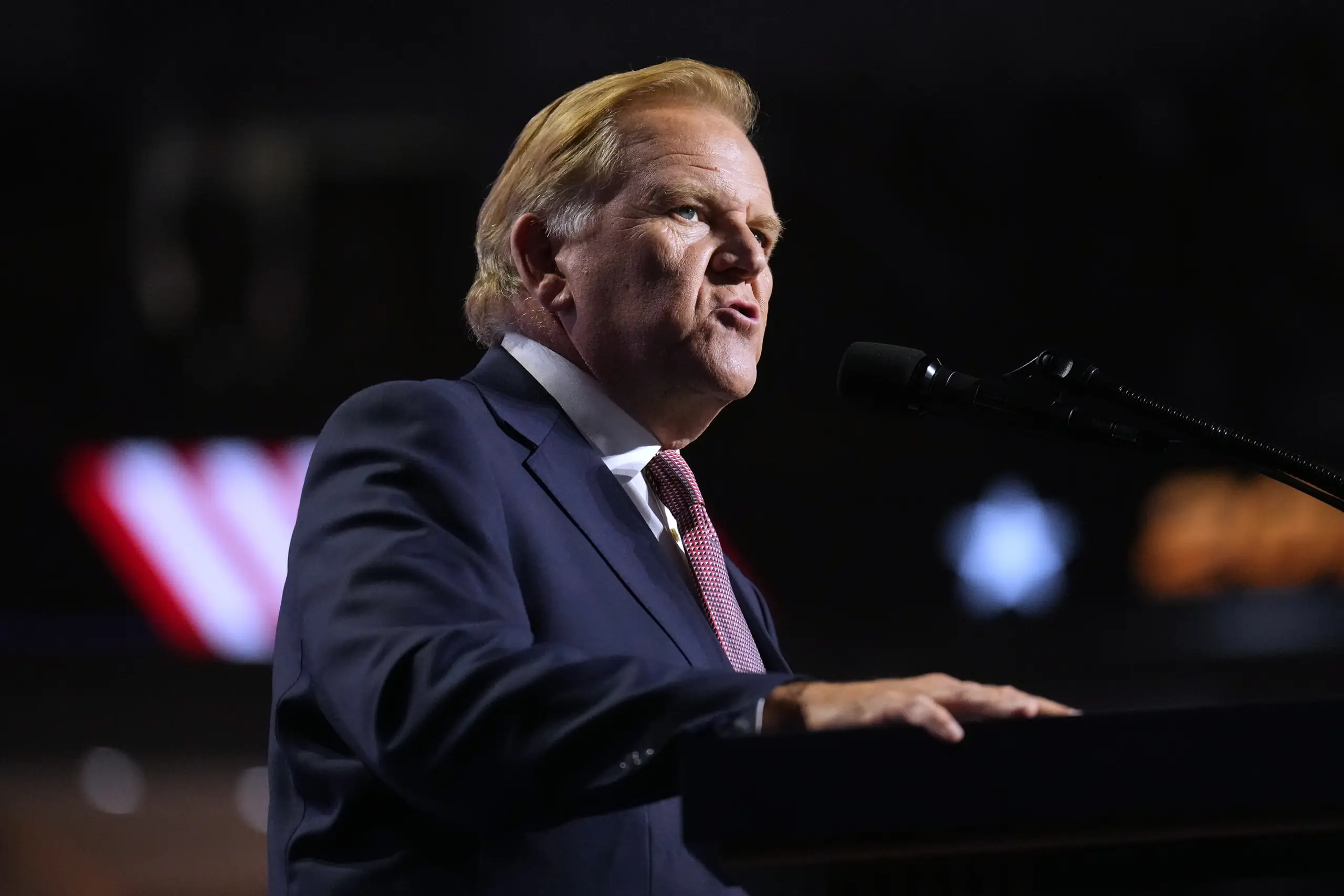
As Rogers and El-Sayed take the podium, political analysts and undecided voters alike will be watching closely for several critical developments:
- The Test of Composure: How Rogers handles direct, aggressive questioning from a challenger who has made questioning his tactical caution a central theme of the campaign will test his debate resilience. Conversely, how El-Sayed manages substantive pushes on economic policy and federal spending will determine his credibility with moderate suburbanites.
- Policy Nuance vs. Partisan Orthodoxy: Both candidates have demonstrated a willingness to break slightly with conventional party lines—Rogers on Canadian tariffs and Middle East conflict resolution, and El-Sayed on pragmatic economic outreach to disaffected independents. How deeply they lean into these independent streaks during the debate could sway the small slice of persuadable voters holding the balance of power.
- Post-Debate Momentum: In a race where every ad dollar and public appearance is scrutinized, the candidate who successfully frames the narrative on Thursday night will likely capture the momentum heading into the final stretch of early voting and the November 3 general election.
With Michigan once again occupying the epicenter of American political gravity, the Grand Rapids debate promises to be an unmissable preview of the choices facing voters in one of the nation’s defining senatorial contests.

0 Comments