

Executive Overview
In one of the most horrific acts of violence in recent Pennsylvania history, a quiet residential neighborhood in Erie became the site of a devastating murder-suicide that claimed nine lives, including an unborn child. On Friday, October 9, 2026, a 45-year-old gunman opened fire inside and outside a family residence, killing eight people before turning the weapon on himself.
Among the victims were seven relatives of the gunman—ranging from a 1-year-old toddler and a 5-year-old boy to their pregnant mother—as well as a close family friend. The gunman, described by family and neighbors as a grandfather who maintained a calm, smiling facade, executed the attack with disturbing precision, leaving investigators searching for answers to an inexplicable tragedy.
The tragedy has left Erie—a city of roughly 94,000 residents located 120 miles north of Pittsburgh—in a state of profound grief. As makeshift memorials grow outside the West Erie home, law enforcement officials, forensic specialists, and community leaders are attempting to reconstruct the sequence of events and understand the underlying factors that led to the violence. The incident mirrors historically tragic episodes of intra-familial mass murder, renewing national conversations surrounding hidden mental health crises, domestic violence indicators, and the psychological dynamics of family annihilation.
Detailed Chronology
 Friday, Oct 9, 2026 (~4:45 PM)
 ├─ Muffled gunshots detected inside Erie residence via recovered audio evidence.
 ├─ Two distressed women arrive at the scene and frantically knock on the front door.
 ├─ Gunman emerges from the residence and shoots both women as they move toward him.
 ├─ Gunman retreats back inside the home.
 │
 ~5:00 PM
 ├─ Emergency 911 calls report gunshots; Erie Police Department responds immediately.
 ├─ First responders find two women deceased outside the front entrance.
 │
 Post-Incident Entry Protocol
 ├─ Tactical officers deploy aerial drone and tactical ground robot to assess interior hazards.
 ├─ Officers execute tactical entry:
 │   ├─ 1st Floor: Bodies of 1-year-old girl and 5-year-old boy discovered.
 │   ├─ Stairwell: Bodies of two adult women and two young men discovered.
 │   └─ 2nd Floor: Body of the 45-year-old gunman found with a self-inflicted gunshot wound.
Initial Warning Signs and Pre-Incident Audio Evidence
The timeline established by the Erie Police Department indicates that the assault began shortly before 5:00 p.m. on Friday, October 9. Forensic analysis of digital media and surveillance footage recovered from nearby sources captured muffled gunshot sounds originating from deep within the multi-story home prior to any emergency calls being placed.
Investigators believe that the initial phase of the attack took place inside the home without immediate outside awareness. Moments after the initial shots echoed indoors, two women—described by police as visibly distressed—arrived at the property. Audio evidence reveals the women frantically pounding on the front door, attempting to gain access or check on the occupants inside, suggesting they may have received a frantic phone call or text message alerting them to ongoing danger.
The Attack and Tactical Police Response
As the two women stood outside the entryway, the 45-year-old gunman opened the door and stepped onto the porch. As the women moved toward him, the shooter discharged his firearm at close range, killing both instantly. The bodies of the two victims collapsed on the lawn near the front entrance as the gunman retreated into the residence.
Nearby neighbors, startled by the sudden volley of gunfire outdoors, alerted 911 dispatchers at approximately 5:00 p.m. Erie police units arrived within minutes, establishing a perimeter around the residence. Recognizing the possibility of an active barricade or ongoing hostage scenario, responding officers exercised tactical caution.
Uncovering the Scene Inside
To mitigate risk to personnel and locate potential survivors, tactical teams deployed an aerial drone and a remote-operated ground robot into the structure. Camera feeds maneuvered through the ground floor, confirming that the suspect was no longer actively firing.
Upon entering the residence, officers confronted a scene of catastrophic loss:
- First Floor: Tactical officers located the bodies of two young children—a 1-year-old girl, Amarianna, and her 5-year-old brother.
- Stairwell: In a tight stairwell leading to the upper level, officers discovered four more victims—two adult women and two young men. Among the deceased women was the pregnant mother of the two young children, whose unborn child also perished.
- Second Floor: On the second floor, law enforcement located the body of the 45-year-old perpetrator, dead from an apparent self-inflicted gunshot wound.
Supporting Context & Metrics
Casualties Breakdown
| Category | Details |
|---|---|
| Total Deceased | 9 (8 victims + 1 unborn child) + 1 Perpetrator |
| Inside the Residence | 1-year-old girl (Amarianna), 5-year-old boy, 2 adult women, 2 young men |
| Outside the Residence | 2 adult women |
| Relationship to Perpetrator | 7 family members, 1 close family friend |
| Perpetrator | 45-year-old male (Died of self-inflicted gunshot wound) |
The Heartbreak of a Devastated Father
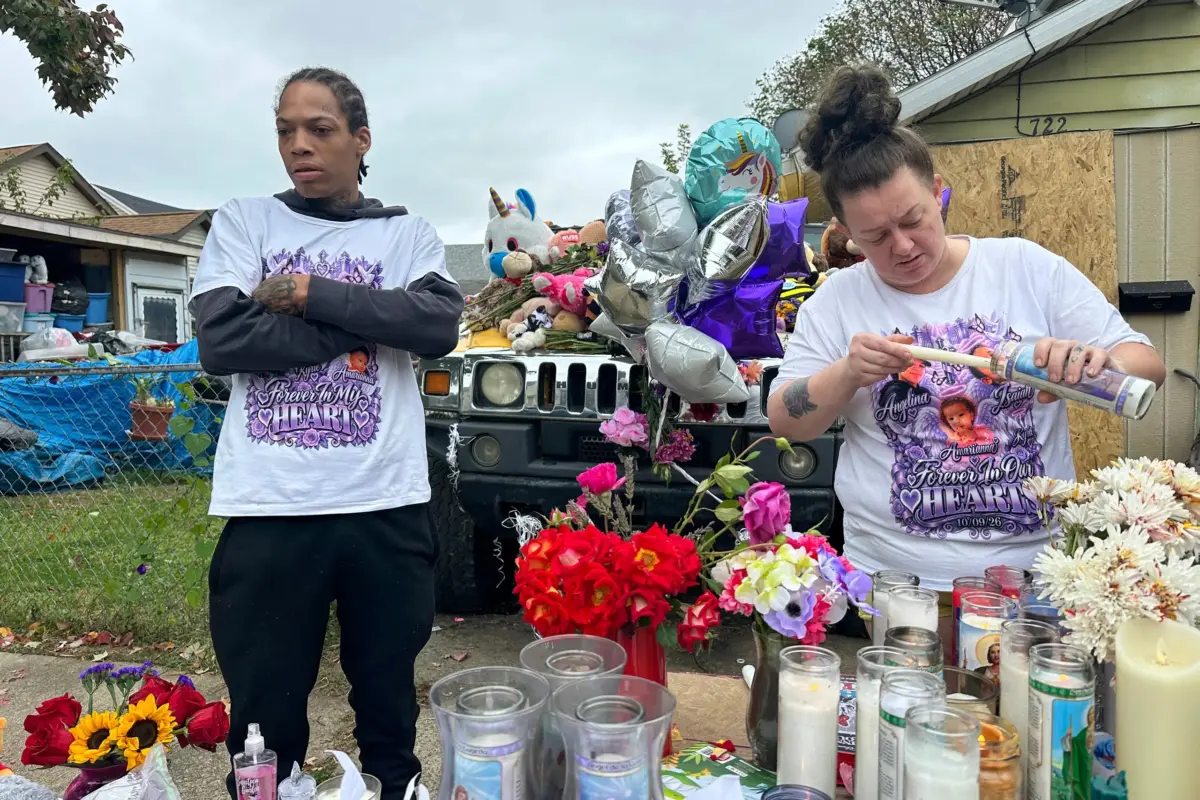
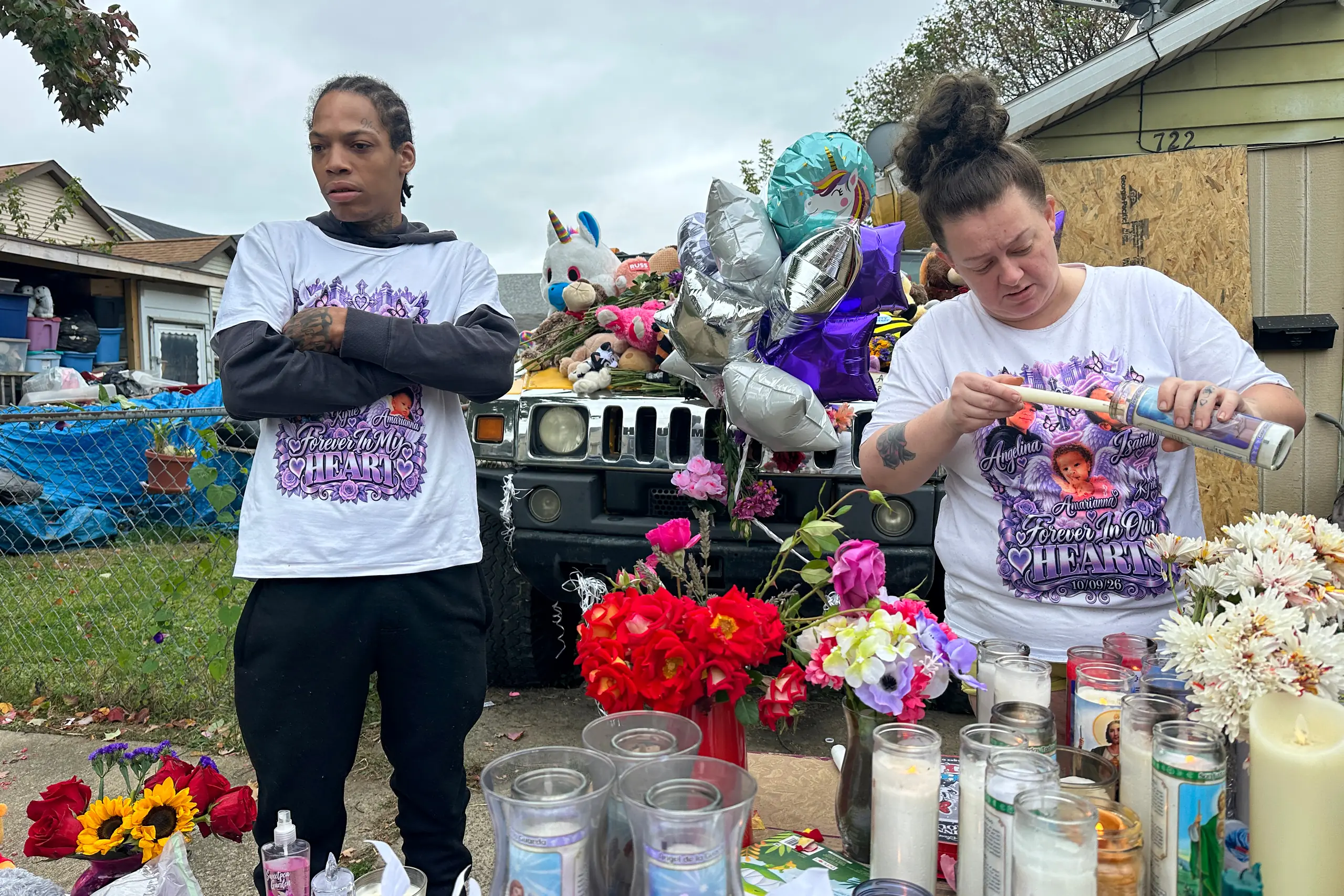
By Sunday, October 11, a growing memorial of candles, stuffed animals, and handwritten notes covered the lawn outside the crime scene. Among those gathering was Julius Windham, the grieving father of 1-year-old Amarianna. Windham also lost his partner—who was pregnant with their unborn child—and her 5-year-old son in the attack.
Wearing a custom T-shirt featuring photographs of his slain family emblazoned with the words "Forever In My Heart," Windham spoke openly about his shock. He described the perpetrator—the children’s grandfather—as a man who consistently projected warmth and stability.
"Him every day, him smiling and being just — you would think of nothing like that would happen," Windham stated. "I think that was a front for him. Words can’t even explain what I’m going through right now. But I gotta be strong for my community… My family, my daughters, my sons, everybody."
The Mask of Normality and Mental Health Decline
Longtime family friends echoed Windham’s sentiment, noting that while the perpetrator had historically been a dependable figure, subtle changes had occurred in recent times. Nicole and Debra Eller, who maintained a friendship with the family for over three decades, revealed that the gunman’s demeanor had deteriorated prior to the shooting.
"He was a good guy, and then he started going downhill with everything," Nicole Eller observed, highlighting how gradual psychological decline can remain unnoticed or unaddressed until a catastrophic threshold is crossed.
"They were a lovely family. Who would have thought this would ever happen?" added Debra Eller. "This should have never happened to her or the kids or anybody. His grandchildren, his kids, how can you do that?"
               HISTORICAL COMPARISON: PENNSYLVANIA MASS CASUALTY EVENTS
┌──────────────────────────────────────────────────────────────────────────────────┐
│ 1982 Wilkes-Barre Shooting (George Banks)                                       │
│ █ 13 Victims Killed (Including 5 of his own children)                            │
├──────────────────────────────────────────────────────────────────────────────────┤
│ 2026 Erie Family Annihilation                                                    │
│ █ 8 Victims Killed + 1 Unborn Child (7 family members, 1 close friend)           │
└──────────────────────────────────────────────────────────────────────────────────┘
Historical Parallels and Family Annihilation Metrics
The event in Erie bears tragic similarities to historic incidents of severe domestic mass casualty events in Pennsylvania. Criminologists and legal historians have pointed to the 1982 Wilkes-Barre massacre, in which George Banks killed 13 people—including five of his own children—in a calculated rampage that stunned the Commonwealth.
Researchers who study intra-familial homicide and mass violence refer to scenarios where a perpetrator kills multiple family members as "family annihilation." According to criminological metrics:
- Demographics: The majority of family annihilators are adult males who perceive a loss of control, severe financial stress, or domestic dispute resolution breakdown.
- The "Pseudocommando" or "Despondent" Archetype: Perpetrators often fall into categories where they either blame external forces for their decline or suffer from hidden despondency, masking their intent behind everyday social interactions until the moment of execution.
- High Casualty Rate: Because family annihilations occur within private residences where victims feel safe, the mortality rate in these incidents is disproportionately higher than in public mass shooting events.
Official Statements
Law Enforcement Briefings and Forensics
In a press conference held over the weekend, Erie Police Chief Rick Lorah addressed the media and community regarding the scale of the tragedy and the ongoing forensic investigation.
"Out of respect for the victims and the families, I will not discuss the details
of what our officers encountered inside that home. But I want our community to
understand the gravity of what happened and the profound impact this tragedy
has had on those involved and on our community as a whole."

— Chief Rick Lorah, Erie Police Department
Lorah confirmed that while the exact motive remains under investigation, mental health factors are considered a primary area of focus. He noted that digital evidence recovered from the scene, specifically the mobile devices belonging to the two women killed outside, will be vital to piecing together the events leading up to the ambush.
"They knew something was going on at that house," Chief Lorah explained, referring to the victimized women who rushed to the front door. "We have to figure out what that is."
Civic Leadership and Grief Support
Erie Mayor Daria Devlin expressed the profound grief felt across the municipal government and extended direct condolences to the surviving family members and neighbors affected by the violence.
"I am so deeply sorry," Mayor Devlin said during a news conference on Saturday, October 10. "What happened to you was horrific, and there is nothing that any of us can say today that will make this any easier… Our entire community is with you, we’re grieving with you. And we are here to support you."
City officials have coordinated with local behavioral health agencies to deploy grief counselors and crisis support teams to the neighborhood to assist residents, first responders, and extended family members traumatized by the event.
Future Outlook
Unraveling Motive Through Digital Forensics
As the investigation transitions from the physical crime scene to analytical processing, detective units and federal assistance teams are focusing heavily on digital forensics. Key steps in the coming weeks include:
- Cellular Data Extraction: Forensic technicians are conducting deep-data extractions on the cellphones of the perpetrator and the two women shot outside to reconstruct text messages, call logs, and location data in the hours leading up to the shooting.
- Psychological Autopsy: Federal and state behavioral analysts are working to compile a detailed psychological profile of the perpetrator, interviewing acquaintances, medical professionals, and distant relatives to identify missed red flags, financial strains, or unmanaged mental health diagnoses.
- Ballistics Assessment: State police crime labs are completing trace analysis on the firearm utilized in the killings to determine its origin, acquisition legality, and whether it was linked to any prior offenses.
Long-Term Community Recovery and Policy Reflections
The massacre in Erie has sparked broader discussions across Pennsylvania regarding domestic violence intervention strategies and community-level mental health support systems.
Local community leaders are calling for enhanced outreach programs designed to detect domestic distress before it escalates to extreme violence. While legal instruments such as protection-from-abuse orders and mental health warrants exist, experts point out that hidden behavioral shifts—such as the "smiling front" described by Julius Windham—often bypass traditional warning systems.
In the near term, the city of Erie remains focused on supporting the surviving relatives as they prepare for multiple funeral services. Memorial funds have been established to assist Julius Windham and other affected families with burial costs and trauma counseling. Though the physical evidence at the scene will soon be cleared, the psychological mark left on Erie by this act of violence will require years of collective healing.

0 Comments