
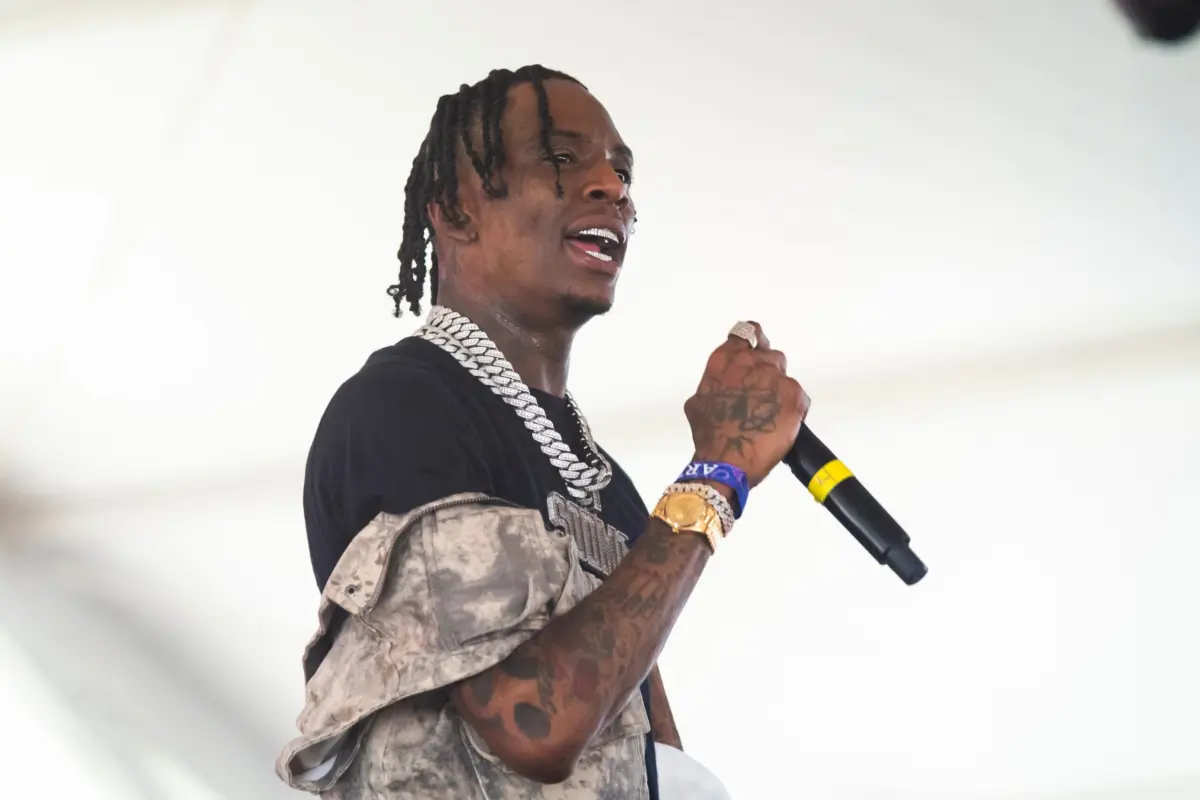

Executive Overview
In an era where the lines separating entertainment, digital influence, and traditional statecraft continue to blur, pioneering rapper and serial entrepreneur Soulja Boy has officially entered the speculative political discourse. On a Saturday that quickly set social media ablaze, the artist—born DeAndre Cortez Way—took to Instagram to tease a potential presidential bid for the 2028 election cycle. Characterizing the move as “a new chapter” and “a bigger vision,” the multi-platinum recording artist outlined a preliminary platform focused heavily on economic mobility, criminal justice reform, modern education, and the integration of artificial intelligence and emerging technologies.
While political analysts and seasoned campaign strategists immediately questioned the viability and seriousness of the announcement, the gesture highlights a broader, undeniable phenomenon: the democratization—and sometimes gamification—of political ambition in the digital age. Soulja Boy’s tentative leap into the national conversation is not an isolated incident, but rather the latest chapter in a long-standing American tradition of celebrity candidacies. From Ronald Reagan and Jesse Ventura to Donald Trump and Kanye West, high-profile figures from the entertainment and business spheres have frequently leveraged their pre-existing fame to disrupt standard political pipelines.
However, as Way transitions from the music studio and tech boardrooms to the theoretical campaign trail, he faces a rigorous gauntlet of legal, logistical, and public relations hurdles. Beyond his bold declarations on social media, the rapper offered few concrete policy proposals, leaving many to wonder whether the announcement is a genuine pivot toward public service, a brilliant marketing stunt, or an early-stage cultural experiment. This deep dive examines the anatomy of Soulja Boy’s unexpected announcement, the structural framework of his stated platform, the historical context of celebrity candidates in American politics, and the shifting dynamics of modern digital campaigns.
Detailed Chronology: From Internet Pioneer to Presidential Aspirant
To understand the weight—or lack thereof—behind Soulja Boy’s 2028 teaser, one must trace the extraordinary, unpredictable trajectory of DeAndre Cortez Way’s career. Long before he was contemplating the Oval Office, Way was rewriting the rules of the American music industry through sheer digital grit.
The Early Digital Disruption (2007–2010)
In 2007, a teenage Soulja Boy uploaded his self-produced track “Crank That (Soulja Boy)” alongside a synchronized instructional dance to a nascent video-sharing platform called YouTube, as well as the social networking site Myspace. Eschewing the traditional record label promotional machine, Way utilized the internet as a direct-to-consumer pipeline. The song became a runaway global phenomenon, topping the Billboard Hot 100 and cementing Way as one of the very first independent artists to achieve superstardom via viral digital marketing. This early mastery of internet culture established a lifelong pattern: Way understood how to capture and monetize the public’s attention span long before algorithmic social media became the dominant force in global politics.
The Business and Tech Pivot (2010–2020)
Over the next decade, Way’s career evolved from music into an eclectic array of entrepreneurial ventures. He launched clothing lines, shoe brands, and ventured aggressively into the consumer electronics market. While some of these ventures—such as branded video game consoles—drew skepticism and legal scrutiny, they demonstrated an unyielding appetite for risk and business diversification. Way branded himself not merely as an artist, but as a perpetual innovator willing to test the boundaries of commerce.
The 2028 Presidential Tease (Present Day)
The sequence of events leading to the Saturday announcement unfolded rapidly across digital channels. Without prior warning or leaked strategy memos, Way published a concise, high-impact post on Instagram. The message read:
"SOULJA BOY 2028. A new chapter. A bigger vision. A commitment to creating opportunities for the next generation."
Accompanied by performance footage and branding elements that leaned heavily into his multi-industry background, the post immediately commanded the attention of millions of followers. Within hours, entertainment blogs, financial news outlets, and political commentary channels were dissecting the viability of a "Soulja Boy 2028" ticket. Follow-up statements from the artist emphasized that he was exploring the transition from private-sector enterprise to public service, setting off a wave of national discourse that bridges pop culture and civic duty.
Supporting Context & Metrics: The Intersection of Fame and Electoral Politics
Soulja Boy’s entry into the conversation—even in an exploratory capacity—forces political scientists to examine the quantifiable impact of celebrity branding on voter behavior and campaign engagement.
The Digital Footprint
In modern politics, attention is currency. Way commands a massive, highly engaged cross-platform digital footprint:
- Instagram Followers: Millions of loyal followers spanning multiple demographic cohorts, particularly Gen Z and Millennials.
- Global Brand Recognition: A career spanning nearly two decades ensures that voters aged 18 to 40 immediately recognize his name, music, and entrepreneurial narrative.
- Viral Agility: Unlike traditional politicians who rely on tightly controlled, multi-million-dollar media rollouts, Way possesses the organic ability to trend globally within minutes of hitting publish on a smartphone.
The Historical Precedent of Celebrity Candidates
Way joins a storied lineage of American cultural icons who have tested the electoral waters:

- Ronald Reagan: Transitioned from Hollywood actor and president of the Screen Actors Guild to Governor of California and, ultimately, the 40th President of the United States.
- Jesse Ventura: Won the governorship of Minnesota in 1998 as an independent candidate, leveraging his fame as a professional wrestler and Navy veteran to upend the state’s traditional two-party system.
- Donald Trump: Transformed decades of real-name branding, real estate development, and reality television stardom into a successful presidential campaign in 2016.
- Kanye West: Mounted an independent presidential campaign in 2020, demonstrating both the immense logistical hurdles independent candidates face and the media frenzy that follows a pop culture titan onto the ballot.
While critics often dismiss celebrity runs as vanity projects or publicity stunts, political sociologists argue that these candidates often tap into a profound voter disillusionment with career politicians. For millions of Americans who feel alienated by institutional bureaucracy, an unfiltered outsider who speaks the language of popular culture can represent a refreshing—if unconventional—alternative.
Official Statements and Platform Breakdown
In his initial announcements, Soulja Boy delineated four core pillars that would theoretically form the foundation of his platform should he formalize a 2028 presidential campaign. While lacking the granular legislative text of a seasoned think-tank policy paper, the pillars offer a clear window into the issues Way believes resonate most deeply with the modern electorate.
+-------------------------------------------------------------------------+
|                        SOULJA BOY 2028 PLATFORM                         |
+-------------------------+-----------------------------------------------+
| Pillar 1                | Economic Opportunity                          |
| Pillar 2                | Criminal Justice Reform                       |
| Pillar 3                | Education                                     |
| Pillar 4                | The Future of Technology and AI               |
+-------------------------+-----------------------------------------------+
1. Economic Opportunity
Way’s emphasis on economic opportunity stems directly from his background as a self-made entrepreneur who rose from modest beginnings in Mississippi and Chicago. His rhetoric focuses heavily on wealth creation, lowering barriers to entry for small businesses, and fostering financial literacy among youth. In statements accompanying his announcement, he stressed the importance of creating pathways for the next generation to achieve financial independence outside of traditional corporate or institutional ladders.
2. Criminal Justice Reform
As a prominent figure in hip-hop culture—an industry that has historically borne the brunt of over-policing and systemic bias within the legal system—Way has signaled an interest in reforming punitive justice models. While specific legislative solutions were not detailed, a criminal justice platform from a candidate of his background typically aligns with arguments for sentencing reform, the decriminalization or legalization of non-violent offenses, and the rehabilitation of formerly incarcerated individuals entering the workforce.
3. Education
Modernizing educational frameworks to match the demands of a rapidly changing economy is a central theme of Way’s vision. Rather than focusing solely on legacy academic structures, his platform hints at integrating practical financial education, vocational training, and technological literacy into standard school curricula, ensuring young people are prepared for the jobs of the 21st century rather than the 20th.
4. The Future of Technology and AI
Perhaps the most distinct element of Way’s prospective platform is his focus on the intersection of artificial intelligence, digital assets, and governance. As someone who has spent his entire career adapting to technological shifts—from physical CDs to streaming, and from social media algorithms to consumer electronics—Way positions himself as a forward-thinking technologist. His campaign narrative suggests that America’s leaders must deeply understand AI, automation, and digital infrastructure to maintain global economic and geopolitical dominance.
Reflecting on his broader motivation, Way stated:
"From music to business to technology, I’ve always believed in thinking bigger and challenging what’s possible. Now I’m exploring what it means to bring that same vision to public service. The future starts with a conversation."
Future Outlook: Viability, Hurdles, and the Path to 2028
As the initial shock wave of the announcement settles, political analysts, legal scholars, and entertainment insiders are left looking toward the horizon. Will "Soulja Boy 2028" evolve from a viral Instagram post into a legally recognized, functioning political campaign, or will it fade into the annals of internet history alongside other high-profile celebrity teases?
Logistical and Legal Realities
Running for President of the United States is an extraordinarily complex undertaking. To mount a credible nationwide campaign by 2028, any candidate—musician or career politician—must navigate a labyrinth of federal and state regulations:
- Constitutional Requirements: Under Article II, Section 1 of the U.S. Constitution, a presidential candidate must be a natural-born citizen of the United States, at least 35 years old, and a resident within the United States for 14 years. (At age 35 and older by 2028, Way easily clears the age threshold).
- Federal Election Commission (FEC) Compliance: Formalizing a run requires establishing a political committee, filing exhaustive campaign finance reports, and adhering to strict contribution limits.
- Ballot Access Laws: Each of the 50 states and Washington, D.C., maintains vastly different, often stringent, ballot access requirements for independent and third-party candidates. Gathering hundreds of thousands of verified signatures across multiple states requires a massive, well-funded ground game.
The Verdict on Modern Campaigning
Regardless of whether DeAndre Cortez Way ever steps behind a presidential podium to debate policy minutiae, his announcement serves as a fascinating case study in modern attention economics. In an era where traditional media consumption is plummeting and social media rules the public square, a single post by a legendary artist can command national headlines, overshadow traditional policy rollouts, and force a re-evaluation of how political messages are delivered.
Whether Soulja Boy’s 2028 bid becomes a reality or remains an ambitious cultural provocation, one thing is certain: the boundary between pop culture and political power has once again been redrawn, proving that in the twenty-first century, anyone with a smartphone and a massive following can spark a national conversation about the future of the republic.

0 Comments