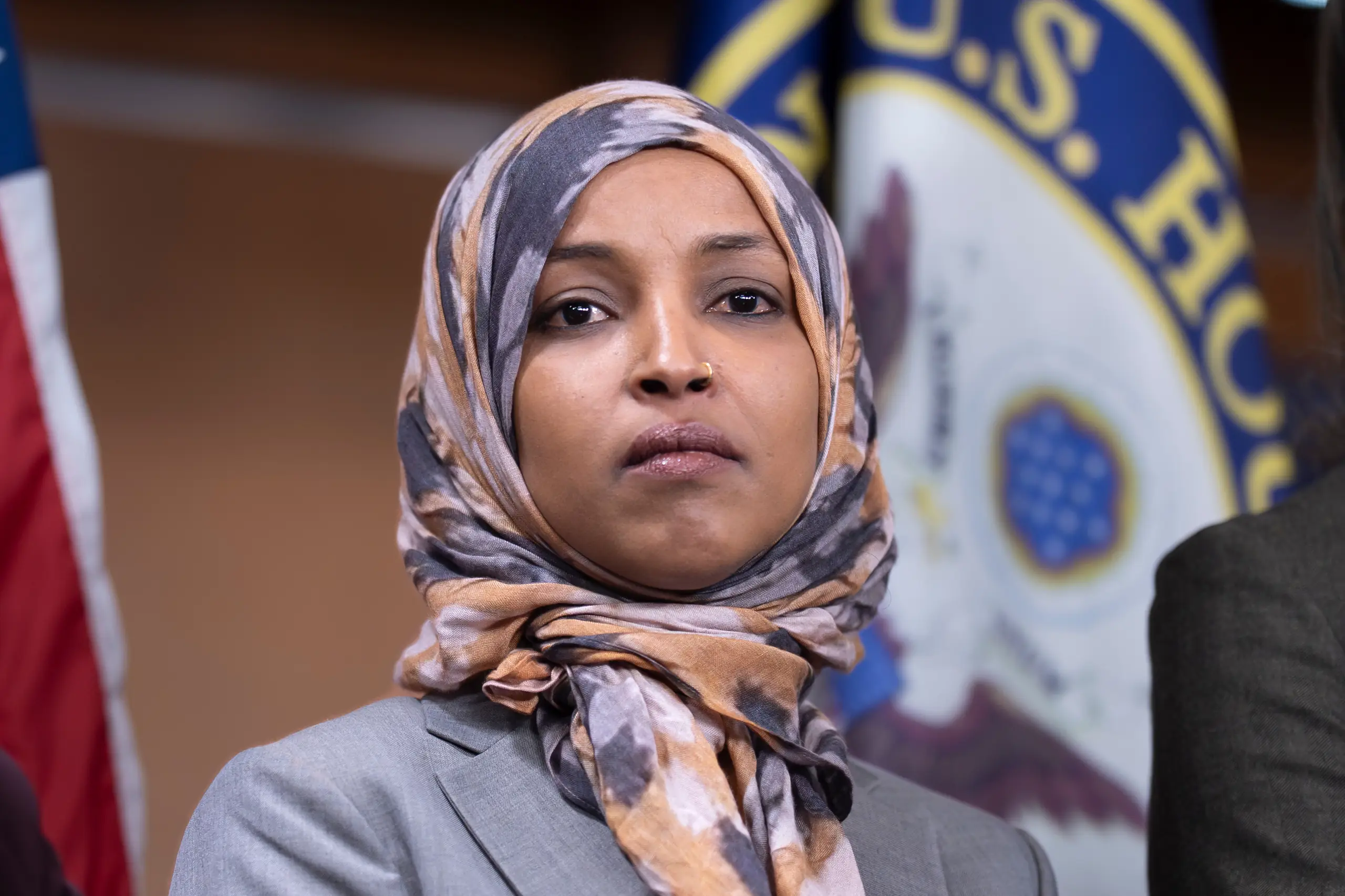
In a dramatic escalation of political tensions in the nation’s capital, Homeland Security investigators executed a federal search warrant on the Washington, D.C., residence of Representative Ilhan Omar (D-Minn.) on Monday. The raid occurred merely three weeks before the high-stakes midterm elections, placing the progressive lawmaker at the center of an intensifying national debate regarding the weaponization of federal law enforcement.
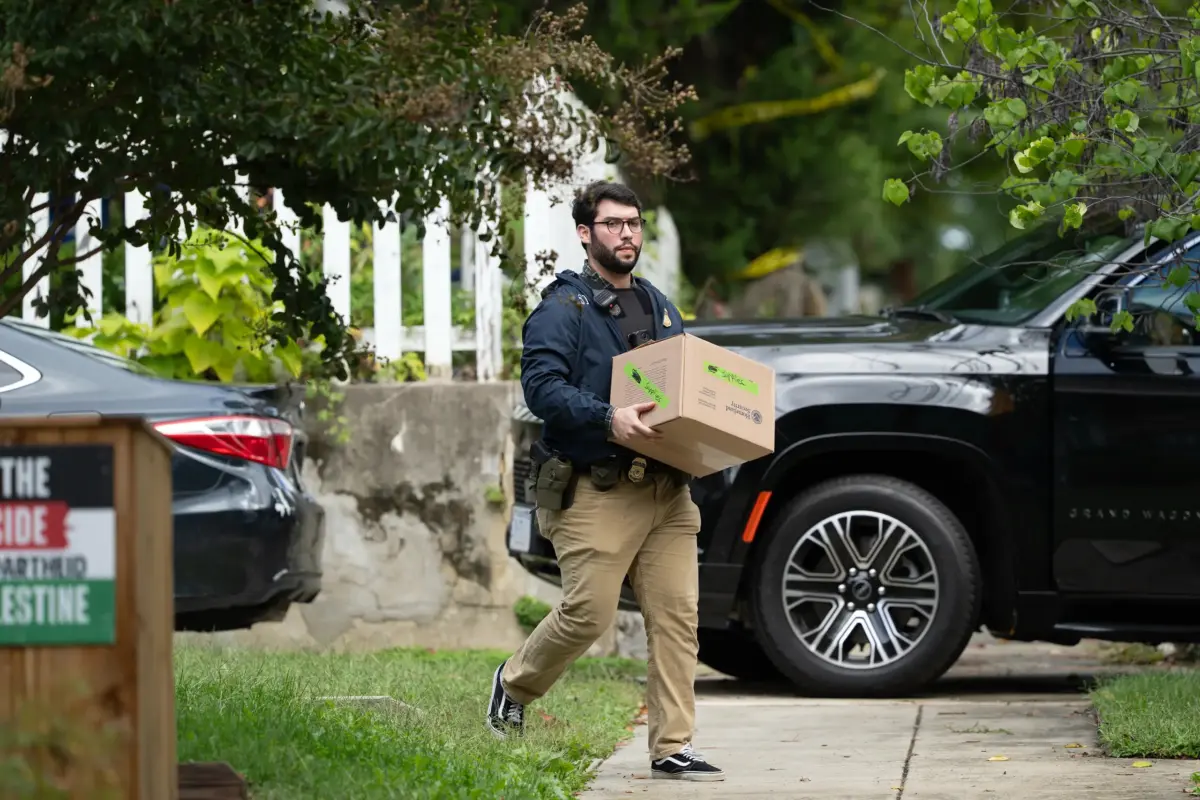
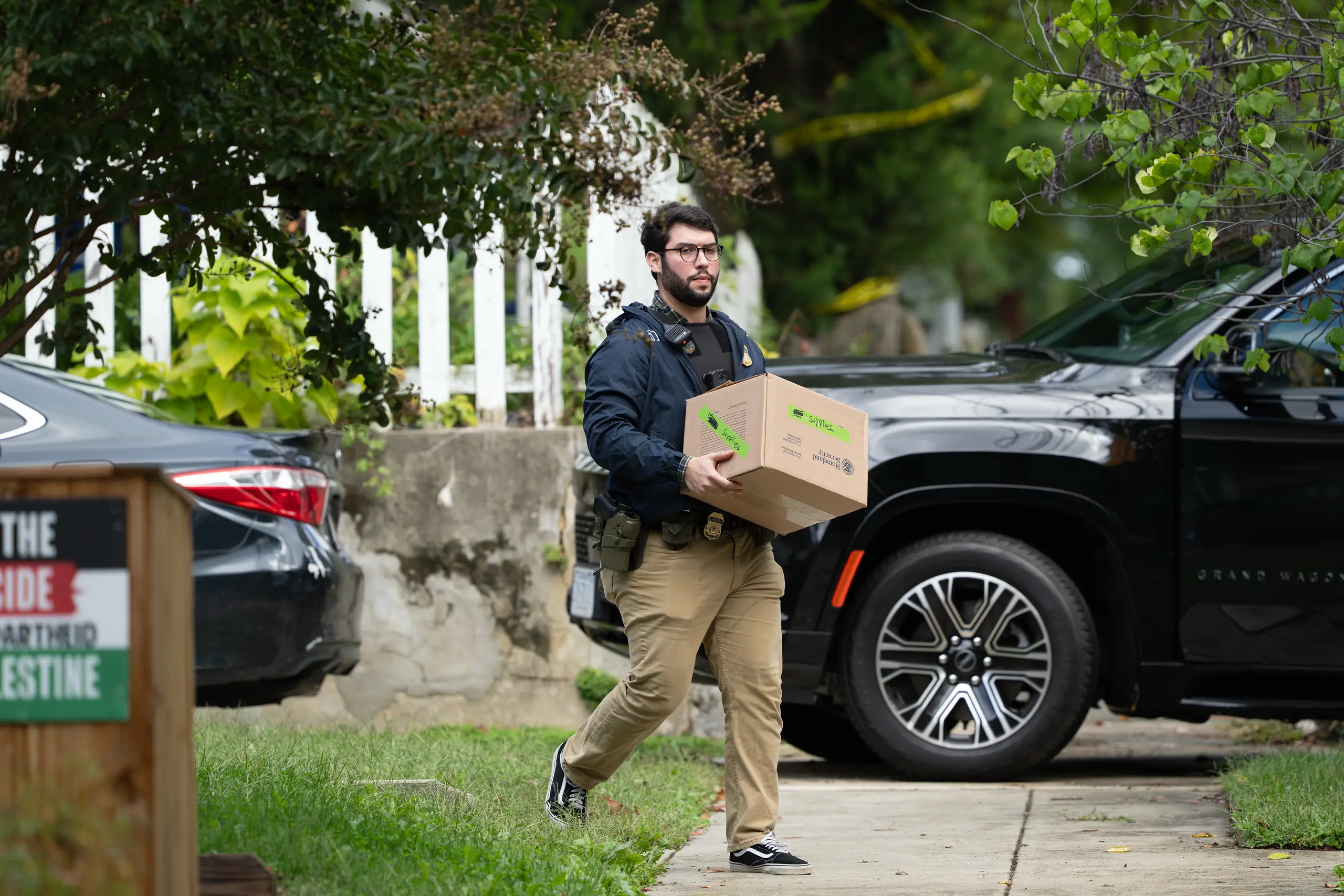
The search, conducted by armed agents who were seen carrying boxes and operating out of unmarked vehicles, marks an unprecedented move by the administration against a sitting member of Congress. The timing of the raid directly flouts longstanding Department of Justice (DOJ) protocols, which traditionally prohibit taking overt, high-profile legal actions against political figures in the immediate window preceding an election to avoid the appearance of partisan interference.
President Donald Trump, who has spent years locked in a bitter, highly personal feud with the Minnesota congresswoman, publicly deflected direct responsibility while simultaneously disparaging her character. The investigation, spearheaded by Homeland Security rather than standard DOJ channels, appears to focus on long-standing, unproven conservative allegations concerning historical immigration paperwork.
The raid has ignited a firestorm on Capitol Hill. House Democratic leadership forcefully condemned the action as a dictatorial abuse of power designed to intimidate political opponents and suppress voter enthusiasm among immigrant communities. Meanwhile, Republican allies of the administration defended the probe as a routine enforcement of immigration laws, setting the stage for a bitter constitutional and political showdown as voters prepare to head to the polls.
Detailed Chronology: The Raid and Its Immediate Aftermath
The operation unfolded quietly on Monday morning outside Rep. Omar’s Washington residence. Neighbors and media outlets reported the arrival of multiple unmarked vehicles carrying personnel from the Department of Homeland Security (DHS).
Photographs and eyewitness accounts captured federal officers securing the perimeter before entering the property. Several hours later, agents were documented carrying physical boxes and digital evidence containers out of the home and loading them into official vehicles. The presence of DHS investigators—rather than FBI agents or standard white-collar crime prosecutors—immediately signaled to legal experts that the investigation centers on immigration or naturalization matters.
The execution of the warrant followed a weekend of escalating rhetoric from the White House and conservative rallies. Just days prior, during a campaign stop in Tennessee on Saturday, President Trump explicitly referenced the Minnesota lawmaker in derogatory terms, linking her background to "crime and squalor" and publicly suggesting that Vice President JD Vance and administration investigators were actively examining her background.
For a decade, Rep. Omar has been a primary focal point of conservative criticism. As a Somali-American who arrived in the United States as a refugee before obtaining citizenship in 2000 at the age of 17, she has frequently challenged administration policies regarding immigration, foreign affairs, and civil rights. The convergence of a federal raid with the final, critical stretch of a congressional election cycle has raised profound questions across the legal and political spectrum regarding the independence of federal agencies.
Supporting Context & Metrics: History of Hostility and the Political Landscape
To fully understand the gravity of Monday’s raid, one must examine the years of mutual animosity between President Trump and Representative Omar, as well as the broader demographic and political dynamics in Minnesota.
A History of Personal and Political Clashes
The feud between Trump and Omar dates back to her historic election to the House of Representatives in 2018. As a member of the progressive wing of the Democratic Party—often informally known as "The Squad"—Omar has been a persistent critic of Trump’s populist agenda. In turn, Trump has repeatedly used nativist rhetoric against her, famously telling her and other minority congresswomen in 2019 to "go back and help fix the totally broken and crime infested places from which they came."
This hostility reached a fever pitch in recent weeks. Trump has increasingly focused his anti-immigrant rhetoric on the Somali diaspora in Minneapolis, a community that has faced intense scrutiny following several major federal fraud cases involving pandemic-era and state-administered non-profits. While federal prosecutors have secured numerous convictions in those regional fraud cases—many of which were initiated under the Biden administration—investigators have repeatedly confirmed that Rep. Omar has no connection to those illegal schemes. Nevertheless, political opponents have frequently sought to blur the lines between the broader community and the congresswoman.
Immigration Allegations and Legal Realities
The decision to utilize Homeland Security investigators rather than traditional DOJ prosecutors underscores the administration’s focus on immigration-related statutes. For months, Vice President JD Vance and Homeland Security Secretary Markwayne Mullin have publicly hinted at potential investigations into Omar’s family history and naturalization process.
Legal scholars, however, note the extreme rarity and legal complexity of attempting to denaturalize or retroactively penalize a naturalized citizen who completed the legal process decades ago. Omar arrived in the U.S. in 1995 after fleeing the Somali Civil War, spending four years in a refugee camp in Kenya before gaining asylum. She became a proud U.S. citizen in 2000 as a teenager. Under U.S. law, revoking citizenship requires proving material fraud in the original naturalization application—a notoriously difficult legal hurdle that is rarely pursued, and almost never against high-profile political figures without overwhelming, airtight evidence.
The Norm of Election-Year Restraint
For decades, the Department of Justice and associated federal agencies have adhered to a strict, unwritten "60-day rule." This convention dictates that law enforcement agencies should avoid taking overt, publicly visible investigative steps—such as executing search warrants or announcing indictments—against political candidates within the final weeks of an election cycle, precisely to prevent the machinery of the state from tilting the electoral balance. By shattering this norm three weeks before the midterms, the current administration has invited unprecedented scrutiny regarding the motivations behind the raid.
Official Statements and Reactions
The raid triggered an immediate, polarized reaction across the political landscape, reflecting a deeply divided nation.
Democratic Condemnations
House Minority Leader Hakeem Jeffries, alongside a coalition of top congressional Democrats, issued a fierce joint statement denouncing the raid as an authoritarian assault on American democratic institutions.
"For years, Donald Trump and far-right extremists have relentlessly targeted Congresswoman Omar with vile personal attacks and baseless accusations," the statement read. "Now, less than 30 days until the midterm election, his violent mass deportation machine has descended upon the home of a duly elected Member of Congress and her family. This is not justice; it is a blatant, tyrannical abuse of federal power designed to silence political dissent."
Representative Omar herself took to social media platform X shortly after the search concluded to rally her supporters and denounce the operation as a clear act of political intimidation.
"For ten years, Trump has targeted me with baseless lies and smear campaigns. This is just the latest escalation in his campaign of political intimidation and the weaponization of federal law enforcement," Omar wrote. "They want to silence us, but they do not know that we are seeds. I will not be silenced, and I will continue fighting for the people of Minnesota."
Administration and White House Response
When pressed by reporters about the timing and optics of the search, President Trump maintained plausible deniability while doubling down on his personal attacks against the lawmaker.
"That has nothing to do with me," Trump told reporters when asked if he ordered the raid. "I’ve always found her to be very crooked, personally. But the agencies have to do their jobs."
Homeland Security officials and White House spokespeople declined to comment extensively on the specifics of the ongoing criminal investigation, adhering to standard investigative secrecy policies—a contrast that critics argue rings hollow given the public leaks and presidential commentary preceding the warrant’s execution.
Future Outlook: Political Fallout and Electoral Impact
As the dust settles on the D.C. residence and investigators begin parsing the seized materials, the political and electoral ramifications are beginning to take shape.
The Immediate Electoral Horizon
With the midterm elections just 20 days away, the practical impact on Rep. Omar’s reelection bid in her deep-blue Minneapolis district is expected to be minimal in terms of local voter outcome. Her seat is widely considered safe, and her constituents have historically rallied behind her in the face of external attacks. However, the raid transforms the final weeks of her campaign into a national referendum on civil liberties, executive overreach, and the safety of immigrant communities under the current administration.
Long-Term Constitutional Questions
Beyond the immediate ballot box, the raid sets a dangerous and contentious precedent for future administrations. Legal analysts warn that lowering the threshold for utilizing federal law enforcement against sitting lawmakers during active electoral cycles opens a Pandora’s box of retaliatory politics, threatening the foundational separation of powers.
As Congress prepares to return to session, Democratic lawmakers are already demanding congressional hearings, subpoena power to investigate the origins of the DHS warrant, and a formal inquiry into whether political appointees pressured career law enforcement officials.
Ultimately, the raid on Rep. Ilhan Omar’s home transcends a routine criminal inquiry. It stands as a watershed moment in modern American politics—one that intensifies the debate over the limits of executive power, the independence of the justice system, and the state of democratic norms in an increasingly polarized era.



0 Comments