
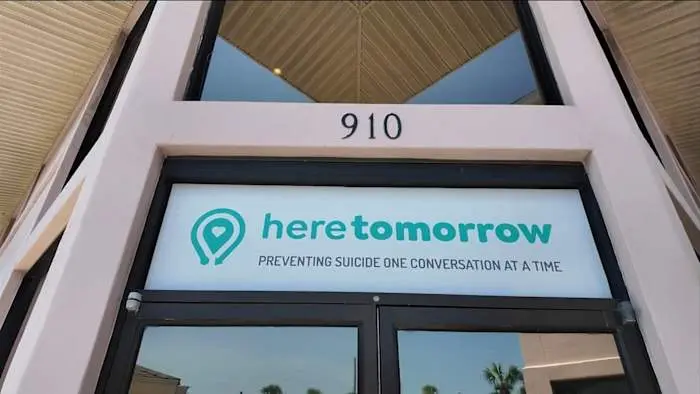

NEPTUNE BEACH, Fla. — In the quiet coastal community of Neptune Beach, far from the hurried pulse of downtown Jacksonville and the bustling thoroughfares of the First Coast, a quiet revolution in mental health intervention is taking place.
The statistics that anchor this intervention are sobering. In 2024 alone, the five-county region comprising Northeast Florida—Duval, St. Johns, Clay, Nassau, and Baker counties—lost approximately 278 residents to suicide. This figure places the region among the most heavily impacted areas in the entire state of Florida, trailing only three other counties statewide in total volume of self-inflicted deaths. Behind each of these numbers is a shattered family, a disrupted workplace, and a community searching for answers.
Enter Here Tomorrow, a frontline mental health organization headquartered right in Neptune Beach. Designed to bypass the bureaucratic red tape, financial barriers, and long waiting lists that traditionally plague the American mental healthcare system, Here Tomorrow offers immediate, walk-in, and entirely free suicide prevention counseling.
Recently, River City Live host Rance visited the Neptune Beach facility to pull back the curtain on this vital operation, shedding light on a resource that many local residents still do not know exists. This in-depth investigative report examines the architecture of Northeast Florida’s mental health crisis, the operational model of Here Tomorrow, the broader statistical realities of the region, and the path forward for a community striving to heal.
Executive Overview
Mental health crises rarely arrive with an advance warning. For individuals experiencing acute psychological distress, depression, or suicidal ideation, the traditional healthcare model—which often requires scheduling appointments weeks in advance, navigating complex insurance verifications, or paying high out-of-pocket copays—can represent an insurmountable wall.
Here Tomorrow was founded on a radically simple yet transformative premise: Help must be immediate, accessible, and free.
Operating out of Neptune Beach, the organization serves as an immediate bridge for individuals in crisis, offering peer support specialists and licensed mental health professionals who are ready to listen the moment a person walks through the door. There are no forms to fill out to prove financial need, no insurance cards required, and no waiting lists.
This executive overview explores the critical juncture at which Northeast Florida finds itself. With regional suicide rates remaining persistently high despite broader state-level initiatives, community-based interventions like Here Tomorrow have transitioned from being a supportive luxury to an absolute public health necessity. This report will analyze the structural roots of the local mental health crisis, detail the day-to-day operations of Here Tomorrow, evaluate the quantifiable impact of their walk-in model, and outline the future outlook for suicide prevention across the First Coast.
Detailed Chronology: The Genesis and Evolution of Here Tomorrow
To understand how Here Tomorrow became a cornerstone of Northeast Florida’s mental health infrastructure, it is necessary to examine the timeline of its development, the escalation of regional challenges, and the pivotal moments that shaped its current service delivery model.
Pre-2020: The Growing Void in Coastal Mental Healthcare
Long before the global disruptions of 2020, Northeast Florida faced a structural deficit in accessible mental healthcare providers. While major hospital systems in downtown Jacksonville maintained psychiatric emergency departments, suburban and coastal communities like Neptune Beach, Atlantic Beach, and Ponte Vedra lacked localized, walk-in stabilization centers. Individuals experiencing acute mental health distress typically had two choices: call 911 (frequently resulting in law enforcement intervention or an involuntary Baker Act commitment) or navigate a fragmented outpatient system characterized by months-long wait times.
2020–2022: The Post-Pandemic Mental Health Surge
The COVID-19 pandemic acted as an accelerant on an already smoldering mental health crisis. Isolation, economic uncertainty, and widespread grief caused a sharp spike in anxiety, depression, and substance abuse across the five-county Northeast Florida region. Local emergency rooms reported record numbers of psychiatric visits.
Recognizing that the traditional healthcare infrastructure was buckling under the strain, community advocates, mental health professionals, and philanthropic leaders began collaborating on a new model. The vision was clear: create a welcoming, non-clinical-feeling environment where individuals could walk in off the street and immediately connect with someone who understands lived experience with mental health struggles.
The Launch and Stabilization of the Neptune Beach Facility
Here Tomorrow established its physical presence in Neptune Beach to serve as an anchor for the eastern beaches communities while remaining accessible to the broader Jacksonville metropolitan area.
Unlike traditional clinical offices characterized by sterile waiting rooms and clinical detachment, Here Tomorrow was designed to mimic a living room environment—warm, inviting, and human-centric. The organization integrated Peer Support Specialists—individuals who have lived experience with mental health challenges and recovery—alongside licensed mental health counselors. This dual approach ensures that clients are met first with empathy and shared understanding, followed immediately by professional clinical intervention if required.
Present Day: Expanding Community Awareness
Despite saving countless lives since its inception, Here Tomorrow faces a persistent challenge familiar to many non-profit public health entities: public awareness. Many residents across Duval and surrounding counties remain unaware that free, walk-in counseling is available just minutes from the coast.
Media spotlights, such as Rance’s recent visit to the facility for River City Live, represent crucial milestones in bridging this awareness gap. By bringing cameras inside the facility and demystifying what a visit looks like, the organization is actively working to dismantle the lingering social stigma surrounding mental health treatment.
Supporting Context & Metrics: The Anatomy of Northeast Florida’s Crisis
To fully grasp the urgency behind Here Tomorrow’s mission, one must examine the hard data governing mental health outcomes in Northeast Florida. Public health metrics reveal a troubling narrative that demands sustained policy attention and community mobilization.
The 2024 Mortality Burden
According to public health data, the five-county region of Northeast Florida (Duval, St. Johns, Clay, Nassau, and Baker) recorded approximately 278 suicide deaths in the year 2024 alone.
To contextualize this figure, public health analysts point out that this raw volume is higher than all but three other counties in the entire state of Florida. Given that Florida is the third most populous state in the nation—with 67 counties encompassing massive urban centers like Miami-Dade, Broward, Hillsborough, and Orange—the disproportionately high concentration of suicide deaths in this five-county Northeast region highlights a localized public health emergency.
| County | Regional Context & Impact Factors |
|---|---|
| Duval County | As the urban core containing Jacksonville, Duval accounts for the largest share of raw numbers, driven by dense populations, economic disparities, and urban stressors. |
| St. Johns County | Rapid population growth and demographic shifts have brought unique pressures, including cost-of-living spikes and youth mental health challenges. |
| Clay County | A mix of suburban and rural communities facing localized shortages of psychiatric practitioners and geographic isolation. |
| Nassau County | Coastal and rural dynamics where access to specialized mental health infrastructure requires travel to urban centers. |
| Baker County | Highly rural setting characterized by limited public transit options and pronounced provider shortages. |
The Demographics of Vulnerability
Public health studies across Northeast Florida indicate that suicide does not discriminate by age, race, or socioeconomic status, though certain trends require targeted intervention:
- Middle-Aged Males: Historically, middle-aged white males represent a significant percentage of completed suicides in Florida, frequently driven by reluctance to seek help, economic stressors, and isolation.
- Youth and Young Adults: Local school districts and pediatric healthcare providers have raised alarms regarding rising rates of depression, anxiety, and suicidal ideation among teenagers and college-age young adults.
- Veterans and First Responders: Given the heavy military presence in Northeast Florida—anchored by Naval Station Mayport, NAS Jacksonville, and Blount Island Command—veterans and active-duty personnel face elevated risks of Post-Traumatic Stress Disorder (PTSD) and transition-related trauma.
The Economic and Social Toll
Beyond the immeasurable emotional devastation experienced by surviving family members and friends, the economic cost of suicide in Northeast Florida is staggering. According to Centers for Disease Control and Prevention (CDC) methodologies, the combined cost of medical care and lost work productivity associated with suicide in the region amounts to hundreds of millions of dollars annually. Yet, financial metrics pale in comparison to the fundamental loss of human potential.
Official Statements and Expert Perspectives
Mental health advocates, local journalists, and community leaders have increasingly united behind the philosophy that suicide prevention is a collective civic responsibility.
The Philosophy of Immediate Access
During his visit to the Neptune Beach facility, River City Live host Rance emphasized the critical importance of grassroots outreach. Speaking with staff members, the conversation continually circled back to a single core question: How do we reach the person sitting alone in their car, contemplating the end, who doesn’t know we are here?
"When someone reaches a breaking point, asking them to wait two weeks for an appointment is not healthcare—it’s an abandonment of care," noted a senior support specialist at Here Tomorrow during the broadcast segment. "Our doors are open because crisis doesn’t operate on a 9-to-5 schedule, and it certainly doesn’t wait for insurance approvals."
Clinical Perspectives on the Peer-Led Model
Medical directors and clinical psychologists across Northeast Florida have increasingly endorsed the hybrid model utilized by Here Tomorrow. By pairing licensed therapists with peer support specialists, the organization bridges the gap between clinical rigor and human empathy.
Dr. Elena Vance, a Jacksonville-based community psychiatrist not affiliated with the organization, remarked on the general efficacy of walk-in peer models:
"When individuals are in acute psychological pain, clinical jargon and formal intake paperwork can feel alienating and overwhelming. Peer support specialists disarm that fear. They communicate a simple, powerful message: ‘I have been where you are, and you can get through this.’ That human connection is often the catalyst that keeps someone safe long enough to engage with deeper therapeutic work."
Future Outlook: Building a Resilient Northeast Florida
As Here Tomorrow looks toward the future, its leadership is actively formulating strategic initiatives to expand its footprint, deepen its community partnerships, and ensure that no resident of Northeast Florida ever has to face a mental health crisis alone.
Expanding Physical and Digital Reach
While the Neptune Beach physical location remains a vital lighthouse for the coastal communities, plans are underway to enhance digital access and explore satellite intake points across the broader five-county region. Recognizing that transportation barriers often prevent rural residents in Baker or Nassau counties from reaching the coast, telehealth integration and mobile outreach units are key priorities for future growth.
Strengthening Community Partnerships
Suicide prevention cannot be achieved by any single organization operating in a vacuum. Here Tomorrow continues to forge robust partnerships with:
- Local Law Enforcement Agencies: Training officers in crisis intervention and establishing pathways to divert individuals away from the criminal justice system and into supportive care environments.
- Educational Institutions: Collaborating with Duval and St. Johns County public schools, as well as local colleges and universities, to destigmatize mental health discussions among youth and educate faculty on early warning signs.
- Healthcare Systems: Partnering with regional hospital networks (such as Baptist Health, Mayo Clinic, and UF Health Jacksonville) to ensure smooth transitions of care when patients are discharged from emergency departments following a suicide attempt.
How the Community Can Help
Public awareness remains the single greatest weapon against suicide. Community members can support these life-saving efforts in several concrete ways:
- Spread the Word: Share resources like Here Tomorrow’s website (www.heretomorrow.org) and social media handles (Instagram:
@heretomorrowjax) within personal and professional networks. Many lives are saved simply because a friend or family member knew where to point someone in crisis. - Support Local Non-Profits: Financial contributions and volunteer support ensure that services remain entirely free of charge for those who need them most.
- Break the Stigma: Foster open, honest conversations about mental health in the workplace, at home, and in social circles. Normalizing the struggle encourages individuals to seek help before a crisis becomes fatal.
Conclusion
The 278 lives lost to suicide in Northeast Florida in 2024 represent an urgent call to action. They are a reminder that beneath the scenic coastline, the bustling economy, and the vibrant culture of the First Coast, many of our neighbors are fighting silent battles.
In Neptune Beach, Here Tomorrow stands as a testament to what is possible when a community refuses to look away. By offering immediate, walk-in, cost-free counseling rooted in empathy and professional expertise, they are rewriting the narrative of mental healthcare in our region.
If you or someone you know is struggling with mental health challenges, depression, or thoughts of self-harm, remember that you do not have to carry the weight alone. Help is available right now, just down the road.
For immediate assistance, visit Here Tomorrow at their Neptune Beach location, explore their resources online at www.heretomorrow.org, or connect via Instagram at @heretomorrowjax. If you are experiencing an immediate, life-threatening emergency, please call 911 or dial the Suicide & Crisis Lifeline at 988.

0 Comments