

Executive Overview
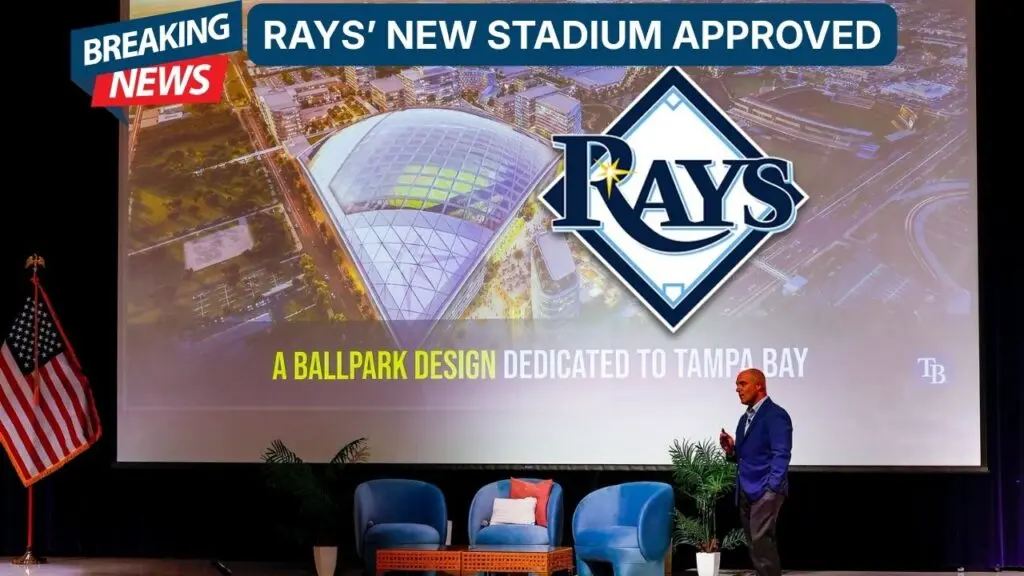
In a historic watershed moment for professional baseball in the Sunshine State, the Tampa Bay Rays are officially coming home to Tampa. Following a decisive and highly anticipated approval vote by the Tampa City Council, the Hillsborough County Commission delivered the final legislative green light for a massive $2.3 billion stadium and mixed-use development project. This landmark agreement brings the franchise within the Tampa city limits for the first time in its history, definitively ending decades of cross-bay stadium friction, geographic uncertainty, and contentious public debate that previously tied the team to St. Petersburg.
The ambitious multi-billion-dollar project is far more than just a new ballpark; it is designed as a transformative urban catalyst. The master plan features a state-of-the-art, privately financed mixed-use neighborhood, a comprehensive reinvention and modernization of the neighboring Hillsborough Community College campus, and a next-generation baseball stadium equipped to host Major League Baseball (MLB) for generations to come. By cementing a permanent foundation on the Tampa side of the bay, the franchise has signaled a definitive end to relocation rumors, casting a long shadow over competing regional sports bids—most notably dealing what could be a fatal blow to the Orlando Dreamers’ long-running campaign to secure an MLB franchise for Central Florida.
This comprehensive report examines the legislative trajectory of the stadium deal, the scope of the urban redevelopment project, the strategic reactions of key stakeholders, and the profound ripple effects this agreement creates across Florida’s evolving professional sports marketplace.
Detailed Chronology: How the $2.3 Billion Deal Crossed the Finish Line
The realization of a downtown Tampa ballpark was neither swift nor straightforward. It represents the culmination of years of tense negotiations, shifting political landscapes, revised financial models, and delicate compromises between municipal leaders, county commissioners, educational institutions, and private ownership.
The St. Petersburg Era and the Impasse
For the entirety of their existence, the Tampa Bay Rays played their home games at Tropicana Field in St. Petersburg, located across the bay in Pinellas County. While the franchise achieved remarkable on-field success under this banner—including multiple American League pennants and consistent postseason appearances—the location persistently plagued the team. Geographic isolation, traffic bottlenecks associated with crossing the Pinellas-to-Hillsborough bridges on weeknights, and dwindling attendance figures created an unsustainable business model for a modern MLB franchise.
For over a decade, team leadership explored various remedies, including a controversial and ultimately abandoned plan to split seasons between Tampa Bay and Montreal. As the expiration date of the team’s use agreement for Tropicana Field drew closer, the urgency to secure a permanent, centrally located home reached a fever pitch. Negotiations zeroed in on the historic Ybor City and Gas Plant District concepts before coalescing around the current site adjacent to the Hillsborough Community College campus.
The Legislative Breakthrough
The path to construction cleared rapidly over a decisive 48-hour legislative window. On Thursday, the Tampa City Council convened for a high-stakes session, debating the fiscal mechanics, infrastructure investments, and community benefits tied to the $2.3 billion initiative. Following rigorous scrutiny and public comment, the City Council voted to approve the comprehensive stadium deal, demonstrating a unified municipal commitment to anchoring the franchise in Tampa.
With the city’s endorsement secured, momentum shifted immediately to the county level. On Friday, the Hillsborough County Commission took up the measure. Following extensive presentations highlighting the projected economic output, tourism impacts, and educational partnerships, the commission voted in favor of the deal. This final county vote locked in the public-private partnership framework, authorizing the deployment of public investments alongside substantial private capital from the Rays organization to transform the designated district into a vibrant sports and cultural hub.
Supporting Context & Metrics: The Anatomy of a Transformative Development
The $2.3 billion price tag reflects a sprawling master-planned ecosystem rather than a standalone athletic venue. Urban planners and economists point out that modern stadium finance relies heavily on ancillary real estate development to generate year-round revenue streams, and the Tampa Bay project is a textbook example of this paradigm shift.

A Privately Financed Mixed-Use Neighborhood
At the heart of the initiative is the creation of a dynamic, pedestrian-friendly mixed-use neighborhood. Designed to integrate seamlessly into the existing urban fabric of Tampa, the development will feature:
- Residential Housing: High-density apartment complexes and condominiums designed to alleviate regional housing pressures while offering urban-core living options.
- Commercial and Office Spaces: Modern corporate facilities aimed at attracting employers, tech firms, and retail operations to the district.
- Hospitality and Entertainment: Hotels, restaurants, bars, and public plazas intended to transform the ballpark district into a 365-day-a-year destination, independent of the 81-game MLB home schedule.
The Hillsborough Community College Partnership
A unique and widely praised element of the agreement is its symbiotic relationship with higher education. The project incorporates a reinvented Hillsborough Community College (HCC) campus. Through collaborative planning with HCC President Dr. Ken Atwater and institutional leadership, the redevelopment will modernize academic facilities, integrate student housing opportunities with the broader mixed-use neighborhood, and create specialized workforce training pipelines tied to hospitality, sports management, urban planning, and construction trades. This integration ensures that the multi-billion-dollar investment yields direct educational and economic dividends for local students and the surrounding community.
Economic Impact and Long-Term Viability
Proponents of the deal emphasize that the financial structure minimizes direct tax burdens on local residents while leveraging tourism development taxes and private financing. Economists project that the construction phase alone will generate thousands of high-paying union and construction jobs, while the permanent mixed-use district is expected to inject hundreds of millions of dollars annually into the regional economy through consumer spending, property tax generation, and enhanced tourism appeal.
Official Statements: Leaders Applaud a Historic Milestone
The gravity of the commission’s vote elicited powerful reactions from the civic and athletic leaders who spearheaded the complex negotiations.
Tampa Bay Rays Chief Executive Officer Ken Babby released a glowing statement following the commission’s approval, emphasizing the collaborative nature of the achievement:
"The Tampa Bay Rays enthusiastically thank and applaud the Hillsborough County Board of County Commissioners for making history. By virtue of its approval of a county investment in partnership with the Rays and the City of Tampa, today our entire region can celebrate the coming of a privately financed and mixed-use neighborhood, a reinvented Hillsborough College campus, and a new ballpark that secures the long-term future of Major League Baseball here in Tampa Bay."
Babby went on to single out key architects of the agreement, praising local leadership and institutional partners:
"With deep gratitude, we commend Hillsborough County Chair Ken Hagan and his fellow elected officials for their vision and support. We are also grateful to Dr. Ken Atwater, President of Hillsborough College, who has been an inspiration throughout this journey. We all have more work ahead, but there is no question our partnership will ensure a cohesive and successful process."
County and municipal leaders echoed these sentiments, framing the vote not merely as a sports victory, but as a generational investment in Tampa’s urban identity, infrastructure capacity, and economic resilience.

Future Outlook: A Big Blow to Orlando’s MLB Hopes and Florida’s Sports Geography
While the mood in Tampa Bay is celebratory, the seismic shift in the state’s sports infrastructure has immediate and severe ramifications elsewhere in Florida—most notably for Central Florida’s aspirations to join the ranks of Major League Baseball.
The Orlando Dreamers’ Uphill Battle
For years, the advocacy group known as the Orlando Dreamers has waged an energetic, high-profile campaign to bring an MLB franchise to the greater Orlando market. The group’s leadership has consistently argued that Central Florida’s explosive population growth, booming international tourism industry, and expanding corporate footprint make it an ideal location for a major league team.
Historically, the Dreamers maintained two primary avenues for achieving this goal:
- Securing an MLB expansion franchise as the league looks beyond its current 30-team alignment.
- Capitalizing on the uncertainty surrounding the Tampa Bay Rays’ future in St. Petersburg by positioning Orlando as a viable relocation destination for an existing Florida-based franchise.
The decisive action taken by Tampa, Hillsborough County, and the Rays effectively closes off the second—and by far the most plausible—path. With CEO Ken Babby and franchise ownership explicitly locking in a permanent, multi-generational future within the Tampa Bay region, the threat or possibility of the franchise packing up and moving 85 miles east down Interstate 4 has evaporated.
The Hard Realities of Expansion
With relocation off the table, Orlando’s campaign is relegated entirely to the unpredictable and highly competitive arena of MLB expansion. However, industry analysts note that this route faces daunting structural hurdles:
- Market Saturation Concerns: Major League Baseball has historically been cautious about expanding the number of franchises within a single state. Securing a third franchise in Florida—alongside the Miami Marlins and the newly anchored Tampa Bay Rays—would require convincing league owners that the state can successfully support three separate MLB markets, a proposition complicated by the historical attendance challenges faced by both existing franchises.
- Financial Thresholds: Expansion fees in modern professional sports have skyrocketed. Any prospective Orlando ownership group would need to assemble billions of dollars in capital to cover the expansion fee, land acquisition, and state-of-the-art stadium construction costs without the benefit of an established team ready to relocate.
- Fierce Competition: Orlando is far from the only North American metropolitan area vying for an expansion team. Cities such as Salt Lake City, Nashville, Portland, and Montreal possess aggressive ownership groups, prepared stadium sites, and robust political backing, placing Orlando in a crowded field for a limited number of new slots.
While the Tampa stadium agreement does not legally dismantle or outlaw the Orlando Dreamers’ campaign, it undeniably strips the movement of its most realistic catalyst. The dream of Major League Baseball in Central Florida now rests on an arduous, long-shot gamble that MLB will choose to expand into a crowded Florida market ahead of numerous other hungry North American cities.
Conclusion
The approval of the $2.3 billion stadium deal by the Tampa City Council and the Hillsborough County Commission marks a definitive turning point in the history of the Tampa Bay Rays and the geography of professional sports in Florida. By bridging the bay and establishing a permanent, purpose-built home in Tampa proper, the franchise has guaranteed its long-term viability in the market while catalyzing a massive urban renewal project that integrates higher education, commercial enterprise, and residential living.
As shovels prepare to break ground on a development that will reshape the urban landscape, the shockwaves of the decision are already being felt across the state. Tampa Bay has secured its sporting future for generations to come, leaving neighboring regions to reckon with a dramatically altered competitive landscape in the race for major league prominence.

0 Comments