

Executive Overview
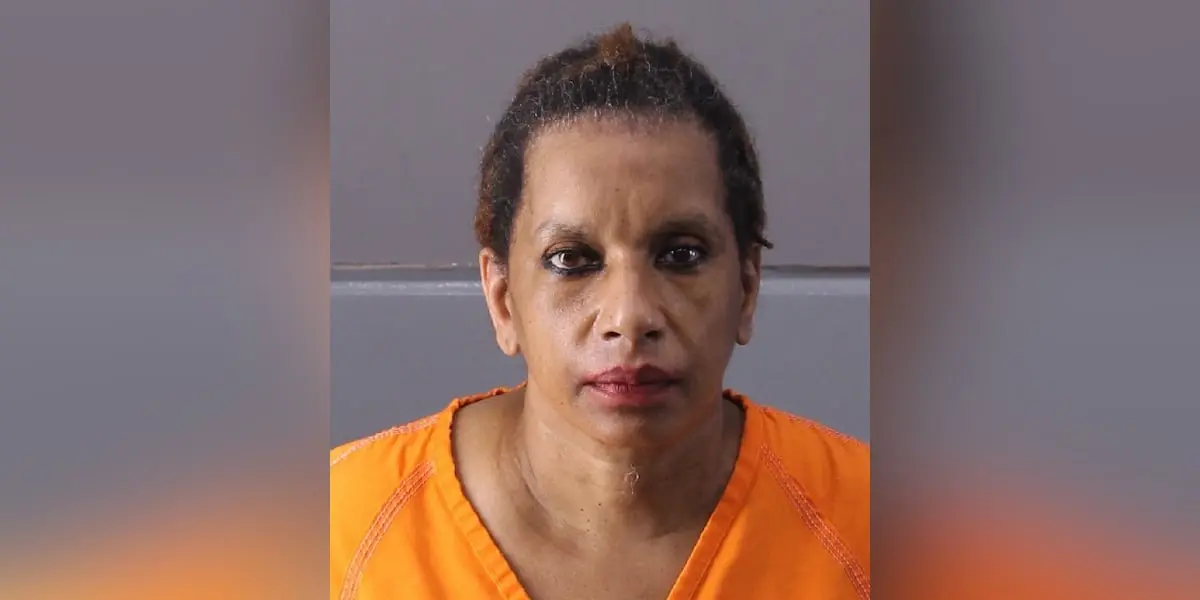
BIRMINGHAM, Ala. — In a case that has sent shockwaves through the local community, a Jefferson County grand jury has formally indicted 64-year-old Bonita Yvette Brown on a charge of murder. The indictment stems from the November 2025 shooting death of her romantic partner, 64-year-old Thomas Williams. According to Birmingham Police Department investigators and court records, the tragic incident unfolded after a late-night rendezvous at a municipal park, where Williams allegedly informed Brown that he was ending their relationship.
What began as a private domestic dispute swiftly escalated into extreme violence, culminating in Williams sustaining three fatal gunshot wounds. Investigators state that after shooting Williams, Brown attempted to conceal the crime by stripping the victim of his personal belongings—including his cell phone—before discarding the device near the perimeter of the Birmingham-Shuttlesworth International Airport. She then allegedly carried out routine errands, stopping at a local grocery store before returning to her residence.
The investigation into Williams’s homicide highlights the increasing efficacy of modern forensic technology in law enforcement. Lacking initial eyewitnesses or physical evidence at the gruesome scene, detectives relied heavily on digital footprints, smartwatch metrics, automated license plate recognition networks, and cellular data to connect Brown to the crime. Subsequent questioning yielded a full confession from Brown, who reportedly told investigators that she simply "snapped" upon hearing that the relationship was over.
The legal proceedings that followed have drawn significant public attention, particularly concerning the debate over pretrial detention under Alabama’s legal statutes. During a pivotal December 2025 bond hearing, prosecutors pressed for Brown to be held without bond under "Aniah’s Law," pointing to the gravity of the accusations and her emotional state following the arrest. However, defense counsel successfully argued for bond, citing her lack of prior criminal history, chronic health struggles, and familial responsibilities. Jefferson County District Judge Tiara Y. Hudson ultimately rejected the state’s request for indefinite detention, setting a $100,000 bond coupled with strict surveillance and weapon surrender mandates. As the case moves toward trial, it offers a stark examination of domestic conflict resolution, digital forensics in modern policing, and the complexities of pretrial jurisprudence in Alabama.
Detailed Chronology: From Park Rendezvous to Grand Jury Indictment
The Fatal Encounter: November 3, 2025
The sequence of events that led to the death of Thomas Williams began late in the evening on November 3, 2025. According to investigative filings, Brown and Williams arranged to meet at a public park in Birmingham for a tryst. Court documents indicate that the encounter began consensually, with the two engaging in a sexual meetup.
However, the mood shifted dramatically in the moments immediately following the encounter. According to Brown’s subsequent statements to law enforcement, Williams chose that exact moment to inform her that their relationship was irrevocably over. Confronted with the abrupt termination of their romance, Brown allegedly lost emotional control. Investigators state that she retrieved a firearm and shot Williams three times.
Discovery of the Body and Initial Response
The immediate aftermath of the shooting left few breadcrumbs for first responders. In the early morning hours of November 3, Birmingham police officers received an emergency call reporting an unresponsive individual lying in the roadway near a municipal intersection. Upon arrival, emergency personnel pronounced Thomas Williams dead at the scene.
Initial sweeps of the immediate area yielded puzzling anomalies for crime scene technicians. Investigators recovered no spent shell casings at the location where Williams’s body was found, nor did he possess a cell phone. The apparent absence of ballistic evidence and communication devices suggested to detectives from the outset that the crime scene might have been manipulated or that Williams had been targeted elsewhere and his body dumped, or that the perpetrator made a concerted effort to police the immediate perimeter for forensic artifacts.
The Digital Manhunt and Surveillance Integration
Stymied by the lack of physical clues at the intersection, Birmingham Police Department detectives turned to digital forensics and advanced surveillance infrastructure to reconstruct Williams’s final hours.
Investigators subpoenaed and analyzed cellular tower records alongside data retrieved from Williams’s smartwatch. This digital telemetry painted a clear timeline, placing Williams in direct, sustained contact with Bonita Brown immediately prior to his homicide. The smartwatch data, combined with phone logs, effectively closed the circumstantial gap regarding the victim’s movements and last known associations.
To corroborate the digital timeline, investigators utilized the city’s network of Flock Safety automated license plate reading (ALPR) cameras. The ALPR system captured imagery of Brown’s vehicle traversing the vicinity of the park and the eventual crime scene shortly before and after the estimated time of the shooting. This technological synergy—bridging mobile data, wearable tech metrics, and automated optical surveillance—provided detectives with the probable cause necessary to focus their investigative spotlight squarely on Brown.
The Confession and Recovery of Evidence
Armed with digital evidence and ALPR vehicle tracking, detectives detained Brown for formal questioning. During post-arrest interviews, Brown elected to cooperate with authorities, providing a detailed, step-by-step account of the evening’s tragic events.
Brown reportedly confirmed her romantic history with Williams and acknowledged the park meetup. She detailed how Williams’s declaration of a breakup triggered an overwhelming psychological reaction, telling detectives that she "snapped" before opening fire.
Furthermore, Brown walked investigators through her post-shooting actions. She admitted to stripping Williams of his cell phone to sever any immediate tracking capabilities or communications. She then drove toward the Birmingham-Shuttlesworth International Airport, where she discarded the device. Following this, records indicate she engaged in mundane tasks—stopping at a local grocery store to shop before driving home. Crucially, Brown aided investigators by identifying the location of the murder weapon and spent shell casings inside her residence, where officers subsequently executed a search warrant and recovered the physical evidence.
Supporting Context & Metrics: Technology, Legal Frameworks, and Demographics
The Role of Smartwatch Data and ALPR Networks in Modern Homicide Investigations
The indictment of Bonita Brown underscores a broader, nationwide shift in criminal investigations: the near-total reliance on digital footprints. In historical homicide investigations, the absence of physical evidence—such as shell casings or a missing victim’s phone—frequently hampered police work, leading to stalled cases or cold files.
In this case, however, wearable technology served as an unblinking witness. Modern smartwatches continuously log biometric data, spatial positioning, and connection states. When combined with cellular triangulation, investigators can reconstruct a victim’s final moments with second-by-second precision, long after traditional physical evidence has been removed or destroyed.
Concurrently, Flock Safety cameras and similar automated license plate reading systems have transformed municipal policing. By capturing timestamped photographs of vehicles entering and exiting specific geographic zones, law enforcement agencies can track suspect movements independently of human testimony. The integration of ALPR data with cellular records effectively neutralized any advantage Brown attempted to gain by removing the victim’s phone from the crime scene.
Aniah’s Law and Alabama Pretrial Detention Dynamics
The legal battle surrounding Brown’s pretrial detention brought "Aniah’s Law" into sharp focus within the Jefferson County courtroom. Named in memory of Aniah Blanchard—a 19-year-old college student who was kidnapped and murdered in Alabama in 2019—this constitutional amendment expanded the state’s legal framework to allow judges to deny bail to individuals accused of certain violent offenses.
During the December 3, 2025, hearing, prosecutors leveraged Aniah’s Law to argue that Brown posed an unacceptable risk to public safety. They highlighted the calculated nature of the post-shooting cover-up—disposing of the phone, running errands—and noted that she had been placed on suicide watch while in custody, implying a severe psychological crisis that could jeopardize court appearances or public safety.
Conversely, defense attorney Mike Shores countered the state’s narrative by emphasizing mitigating personal factors. Shores pointed out that Brown possessed zero prior criminal convictions, suffered from significant chronic health complications, and carried the heavy responsibility of serving as the primary caretaker for her daughter.
District Judge Tiara Y. Hudson’s eventual ruling—denying the state’s no-bond request and setting a $100,000 bond with strict stipulations—reflects the delicate judicial balancing act required under Aniah’s Law. Judges must weigh the statutory gravity of violent crimes against constitutional presumptions of innocence, the defendant’s community ties, and the enforceability of restrictive bail conditions, such as biweekly monitoring and total weapon surrender.
Official Statements and Legal Perspectives
While formal statements from the Birmingham Police Department have been measured, emphasizing the collaborative nature of the detective work and the utilization of cross-platform forensic data, the legal teams have staked out clear positions as the case moves toward trial.
Prosecution’s Stance
The Jefferson County District Attorney’s Office has framed the homicide as an intentional, calculated act of lethal violence driven by rejection. Prosecutors emphasize that regardless of the emotional turmoil Brown experienced upon hearing that the relationship was over, her subsequent actions—shooting an unarmed man three times, fleeing the scene, intentionally disposing of the victim’s phone near a major transportation hub to impede the investigation, and attempting to return to normalcy by visiting a grocery store—demonstrate consciousness of guilt and a profound disregard for human life. Their initial push for indefinite pretrial detention under Aniah’s Law signals their intent to pursue a rigorous prosecution focused on the severity of the offense and the perceived threat to community safety.
Defense Perspective
Represented by defense attorney Mike Shores, the legal team has focused on humanizing the defendant and contextualizing the tragic event within an acute psychological breakdown. Shores has underscored Brown’s clean record over six decades of life, her medical vulnerabilities, and her vital role within her family unit as a primary caregiver. By highlighting that Brown ultimately cooperated with law enforcement—leading them directly to the firearm and spent shell casings inside her home—the defense aims to establish remorse and accountability, which may factor heavily into future plea negotiations or trial strategy regarding the specific intent required for a murder conviction.
Future Outlook: Judicial Proceedings and Trial Trajectory
As the case of State v. Bonita Yvette Brown advances through the Jefferson County judicial system, several critical milestones remain on the horizon:
- Arraignment and Plea: Following the grand jury’s formal indictment, Brown will be formally arraigned, where she is expected to enter a plea. Given her previous statements to detectives admitting to the shooting, legal analysts anticipate complex pre-trial motions regarding the admissibility of her confession and statements made to law enforcement.
- Pretrial Motions and Evidentiary Hearings: The defense is expected to challenge various elements of the state’s digital and forensic evidence, including the extraction methods used on the victim’s smartwatch and cellular logs, as well as the search parameters surrounding the recovery of the firearm from her residence. Additionally, evaluations regarding Brown’s mental state at the time of the offense may pave the way for expert psychological testimony.
- Trial Preparation: If the case proceeds to a jury trial, prosecutors will rely heavily on the digital timeline, ALPR camera footage, and Brown’s own detailed confession to establish malice and premeditation. The defense, meanwhile, will likely focus on contextualizing the shooting as a sudden, heat-of-passion response to emotional trauma, potentially seeking lesser-included charges depending on the nuanced statutory definitions under Alabama law.
The trial of Bonita Yvette Brown will undoubtedly serve as a prominent test case in Alabama courts, illustrating the profound intersection of modern digital forensics, evolving domestic violence dynamics, and the application of Aniah’s Law in contemporary jurisprudence.

0 Comments