

Executive Overview
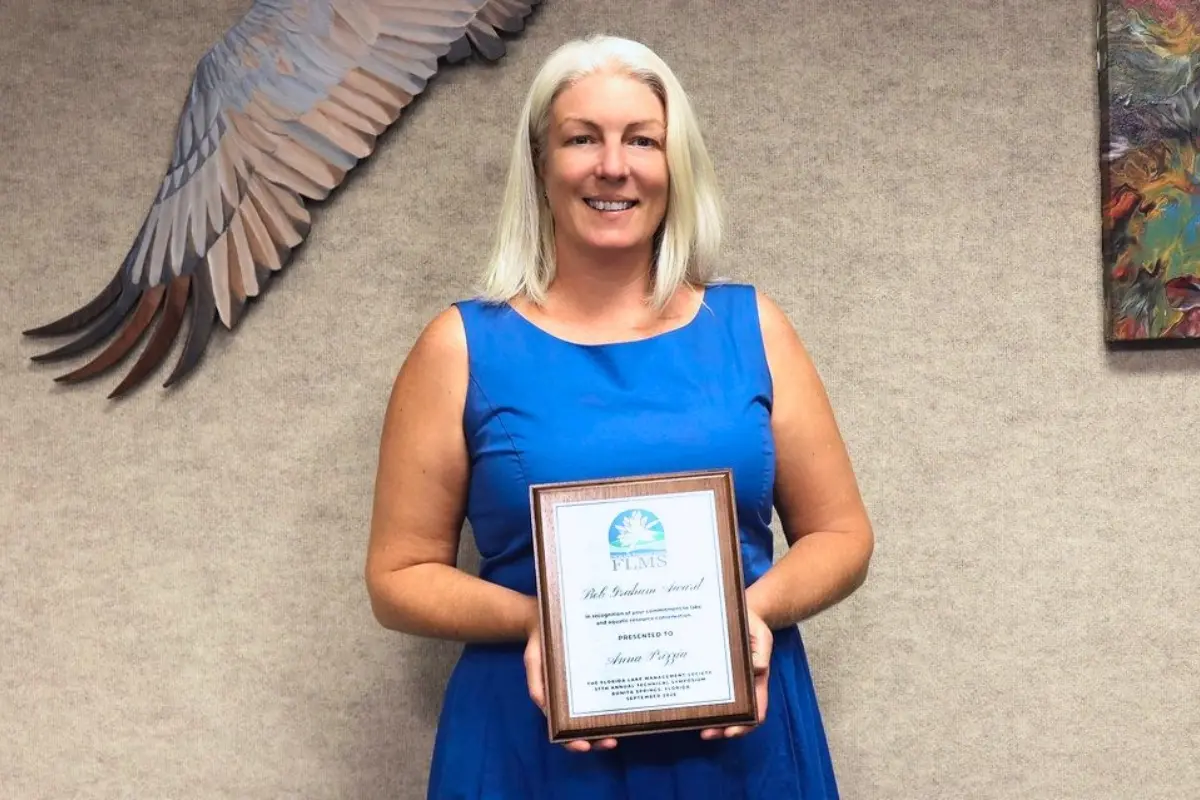
In recognition of sustained advocacy and legislative focus on freshwater conservation, Alachua County Commissioner Anna Prizzia has been awarded the prestigious Bob Graham Award by the Florida Lake Management Society (FLMS). The honor was conferred during the society’s annual statewide symposium in Bonita Springs, Florida, acknowledging Prizzia’s persistent efforts to protect, restore, and maintain the hydro-geological integrity of North Central Florida’s lakes, springs, and watersheds.
The Bob Graham Award represents one of the state’s highest marks of distinction for elected officials engaged in environmental policy. Named after the late Florida Governor and U.S. Senator Bob Graham—whose political career was defined by landmark environmental initiatives, including the historic "Save Our Everglades" program and extensive coastal wetland acquisitions—the award highlights leaders who bridge scientific research and public governance.
Prizzia’s selection underscores the growing national and regional emphasis on municipal and county-level water governance. As Florida faces acute ecological pressures from rapid population expansion, urban sprawl, agricultural runoff, and climate-induced hydrological variability, local leaders play an increasingly decisive role in mitigating nutrient pollution, preserving recharge basins, and upholding stringent land-use standards. Prizzia’s work in Alachua County serves as a case study in how local governance can successfully implement targeted environmental policies to protect fragile aquatic ecosystems.
Detailed Chronology
===================================================================================================
                                      MILESTONE CHRONOLOGY
===================================================================================================
• 1987            : Establishment of the Florida Lake Management Society (FLMS).
• 1980s–2000s     : Legislative legacy of Gov. Bob Graham establishes Florida water conservation standards.
• Nov 2020        : Anna Prizzia elected to the Alachua County Board of County Commissioners (District 3).
• 2020–Present    : Implementation of comprehensive water quality, wetland protection, and land conservation policies.
• Annual Symposium: FLMS convenes in Bonita Springs, FL; selects Prizzia for statewide environmental honors.
• Formal Release  : Alachua County issues public notification of Prizzia receiving the Bob Graham Award.
===================================================================================================
Phase I: The Policy Foundations in Alachua County
Since taking office on the Alachua County Board of County Commissioners, Anna Prizzia has prioritized environmental protection as a core tenet of county policy. Her legislative portfolio has focused on responsible growth management, land management programs like Alachua County Forever, and policies targeting non-point source pollution in local water bodies. These efforts reflect a proactive approach to land-use planning, designed to prevent toxic runoff and protect the primary recharge zones of the Floridan Aquifer before irreversible ecological degradation occurs.
Phase II: The FLMS Annual Symposium in Bonita Springs
The Florida Lake Management Society held its annual symposium in Bonita Springs, gathering environmental scientists, limnologists, water resource managers, engineers, and municipal policymakers. The conference serves as a primary forum for evaluating state water quality metrics, presenting peer-reviewed research, and examining sustainable management frameworks for Florida’s lakes, rivers, and estuaries.
Phase III: The Award Presentation and Ecological Context
During the symposium’s official ceremonies, FLMS leadership formally presented Commissioner Prizzia with the Bob Graham Award. The selection committee cited her consistency in advancing science-based policy, advocating for sustainable agricultural and urban development, and supporting local ordinances designed to curb nutrient enrichment in surface waters. The award presentation highlighted the vital link between informed political leadership and the real-world restoration of vulnerable aquatic habitats.
Supporting Context & Metrics
+--------------------------------------------------------------------------------------------------+
|                              FLORIDA WATER POLICY & CONTEXT MATRIX                               |
+------------------------------------+-------------------------------------------------------------+
| Metric / Context Category          | Significance & Historical Data                              |
+------------------------------------+-------------------------------------------------------------+
| Award Name                         | Bob Graham Award                                            |
| Conferring Body                    | Florida Lake Management Society (FLMS)                      |
| Society Foundation Year            | 1987                                                        |
| Key Regional Hydrological Features | Floridan Aquifer, Orange Lake, Lochloosa Lake, Santa Fe     |
| Main Environmental Pressures       | Nutrient loading (Nitrogen/Phosphorus), Urban Sprawl, HABs  |
| Core Legislative Focus             | Land acquisition, fertilizer ordinances, wetland protection |
+------------------------------------+-------------------------------------------------------------+
The Legacy of the Bob Graham Award
To understand the significance of the award, one must contextualize the legacy of its namesake. During his tenure as Governor of Florida (1979–1987) and later as a U.S. Senator (1987–2005), Bob Graham reshaped Florida’s environmental landscape. He spearheaded the acquisition of hundreds of thousands of acres of sensitive wetlands, championed the protection of the Gulf Coast shoreline, and established structural state mechanisms to oversee water management districts.
The FLMS Bob Graham Award was established to ensure that elected leaders who carry forward this standard of stewardship are recognized. Recipients are evaluated not merely on symbolic support for green initiatives, but on tangible legislative actions, voting records, and public advocacy that directly benefit Florida’s aquatic systems.
Hydro-Geological Profile of Alachua County
Alachua County occupies a unique and ecologically sensitive position within North Central Florida’s karst topography. Characterized by porous limestone, sinkholes, disappearing streams, and natural springs, the region’s surface waters are intimately linked to the underlying Floridan Aquifer—the primary source of drinking water for millions of residents.
Key water systems within the county include:
- Orange Lake and Lochloosa Lake: Designation as Outstanding Florida Waters (OFWs), these vast, shallow lakes support complex food webs, high biodiversity, and internationally recognized fisheries, yet remain highly vulnerable to nutrient enrichment and invasive vegetation.
- The Santa Fe River Watershed: A major tributary system heavily impacted by spring discharge, agricultural activities, and rural-residential developments.
- First-Magnitude Springs: Natural discharge points like Poe Springs, which serve as direct indicators of regional aquifer health, nitrate concentrations, and localized groundwater drawdowns.
Under Prizzia’s tenure, Alachua County has confronted challenges common across Florida: elevated nitrogen and phosphorus levels stemming from synthetic fertilizer usage, aging septic infrastructure, stormwater run-off, and land conversion. Mitigating these inputs requires balancing growth management with rigorous land-use restrictions, local fertilizer bans during wet seasons, and strategic acquisitions of natural buffer zones.
                    ┌──────────────────────────────────────────┐
                    │      Alachua County Water System         │
                    └────────────────────┬─────────────────────┘
                                         │
                 ┌───────────────────────┴───────────────────────┐
                 ▼                                               ▼
    ┌───────────────────────────┐                   ┌───────────────────────────┐
    │    Surface Water Bodies   │                   │    Floridan Aquifer &     │
    │  (Orange & Lochloosa Lk)  │                   │      Natural Springs      │
    └────────────┬──────────────┘                   └────────────┬──────────────┘
                 │                                               │
                 └───────────────────────┬───────────────────────┘
                                         │
                                         ▼
                    ┌──────────────────────────────────────────┐
                    │ Key Threats: Nutrient Runoff, Septic     │
                    │ Loadings, & Unregulated Urbanization     │
                    └────────────────────┬─────────────────────┘
                                         │
                                         ▼
                    ┌──────────────────────────────────────────┐
                    │ Policy Response: Land Conservation,      │
                    │ Growth Controls, & Structural Retrofits  │
                    └──────────────────────────────────────────┘
Institutional Profile: Florida Lake Management Society
Founded in 1987, the Florida Lake Management Society (FLMS) functions as a non-profit organization promoting the protection, enhancement, conservation, restoration, and management of Florida’s inland aquatic resources.
FLMS bridges the gap between technical science and actionable policy by bringing together:
- Limnologists and Aquatic Biologists: Scientists studying the physical, chemical, and biological features of inland waters.
- Water Resource Engineers: Specialists designing urban stormwater solutions and wetland restoration structures.
- Government Officials and Urban Planners: Policy decision-makers responsible for enacting zoning codes and environmental ordinances.
- Citizen Advocates and Lake Associations: Grassroots stakeholders monitoring local water clarity, submerged aquatic vegetation, and invasive species expansion.
Through its scientific conferences, educational workshops, and competitive grant programs, FLMS plays an active role in steering research priorities and promoting ecosystem-based management across Florida’s 67 counties.
Official Statements
In an official public release issued by Alachua County, Commissioner Anna Prizzia reflected on the significance of the award, linking the personal honor to systemic public responsibility and scientific collaboration:
"I am honored to receive an award named for Gov. Bob Graham and grateful to the Florida Lake Management Society for this recognition. Protecting our water resources is a responsibility we all share, and I am proud to work with residents, environmental organizations, scientists and fellow elected officials to protect the lakes, springs and waterways that make Alachua County such a special place."
— Anna Prizzia, Alachua County Commissioner
Analysis of Commissioner Prizzia’s Address
Prizzia’s remarks emphasize four core elements of contemporary environmental governance:
- Shared Responsibility: Framing water resource protection not as a top-down mandate, but as a collective civic duty involving public, private, and municipal stakeholders.
- Inter-Agency Collaboration: Acknowledging that effective watershed management requires coordination across municipal borders, water management districts, state environmental agencies, and scientific institutions.
- Science-Informed Policy: Recognizing the role of the scientific community in supplying data-driven metrics to shape effective environmental policies.
- Place-Based Stewardship: Connecting localized natural assets—such as Alachua County’s iconic springs and shallow lake networks—to regional community identity and economic vitality.
Organizational Rationale and Public Reception
Representatives from the Florida Lake Management Society emphasized that Prizzia’s selection reflects her active involvement in local environmental policy. Rather than viewing ecological conservation as separate from economic development, Prizzia has consistently advocated for integrated growth management plans that treat clean water as a fundamental economic infrastructure necessity.
Environmental advocates across North Central Florida welcomed the recognition, pointing to Alachua County’s regulatory posture as a blueprint for surrounding jurisdictions facing similar urbanization and agricultural pressures.
Future Outlook
Regulatory Challenges and Legislative Horizon
Looking ahead, local environmental policy in Florida faces a complex regulatory environment. Counties and municipalities increasingly operate within structural constraints imposed by state-level preemption laws, which can limit the scope of local environmental regulations, such as fertilizer bans, building codes, and tree protection measures.
For Alachua County, navigating these statutory limits while maintaining rigorous protections for vulnerable watersheds requires creative policy design. Priority areas over the next decade will likely include:
- Septic-to-Sewer Conversions: Accelerating the transition of high-density residential areas off legacy septic systems, which remain significant contributors of nitrate pollution to the Floridan Aquifer.
- Stormwater Retrofits: Modernizing infrastructure to capture, filter, and retain urban stormwater before it discharges into regional surface waters.
- Enhanced Land Acquisition: Expanding programs like Alachua County Forever to secure strategic conservation easements, creating continuous biological and hydrological corridors.
===================================================================================================
                               FUTURE ENVIRONMENTAL POLICY PRIORITIES
===================================================================================================
1. Aquifer Protection      : Expanding setback rules around sinkholes and natural spring vents.
2. Infrastructure Upgrades : Funding septic-to-sewer programs near Outstanding Florida Waters.
3. Advanced Monitoring     : Integrating real-time sensor networks for continuous water quality tracking.
4. Preemption Navigation   : Aligning local ordinances with evolving state legislative mandates.
===================================================================================================
Sustainable Water Infrastructure and Resource Protection
As climate patterns shift—bringing alternating periods of prolonged drought and intense, high-volume rainfall events—the structural resilience of lakes and wetlands will become vital for flood attenuation and aquifer recharge.
Commissioner Prizzia’s recognition by the Florida Lake Management Society underscores the critical nature of proactive local leadership. By keeping environmental health at the center of municipal governance, local leaders can help ensure that fragile ecosystems are preserved for future generations, continuing the legacy of environmental stewardship exemplified by Bob Graham.

0 Comments