

Executive Overview
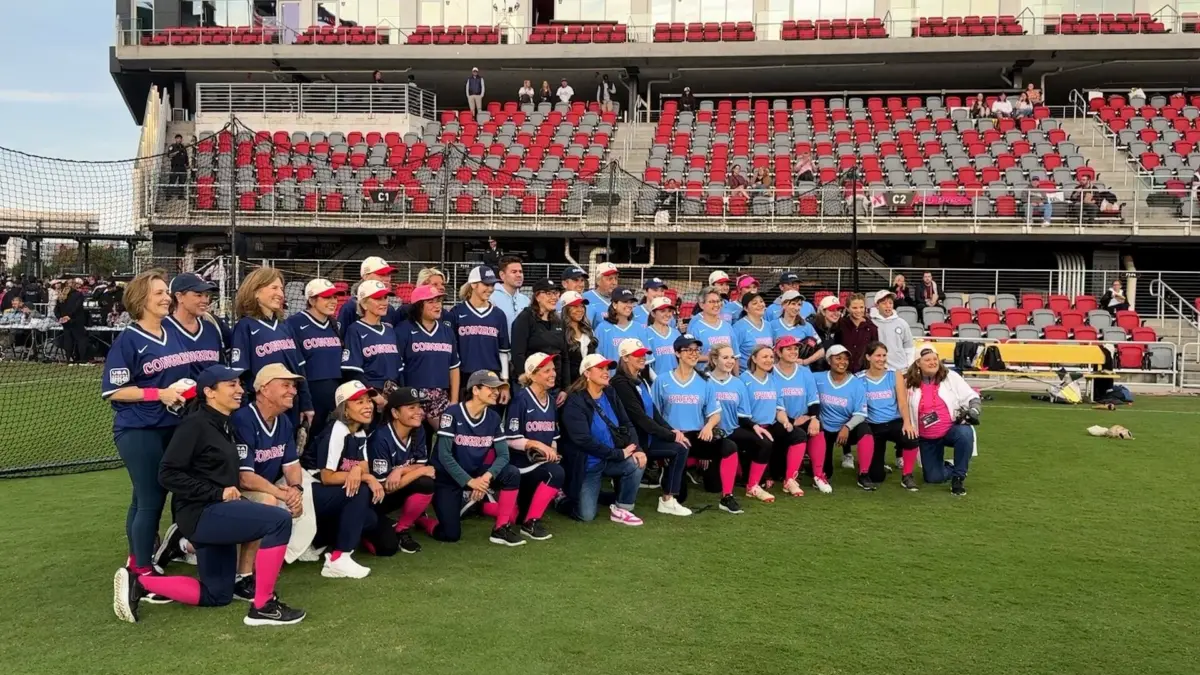
WASHINGTON — In an era defined by deep-seated political polarization, legislative gridlock, and relentless partisan friction, Capitol Hill offered a rare and refreshing display of unity on Wednesday evening. Stepping away from the relentless churn of committee hearings, floor votes, and cable news shouting matches, female lawmakers from across the political spectrum laid down their ideological armor to take to the diamond for the annual Congressional Women’s Softball Game.
Hosted at Audi Field in the heart of the nation’s capital, this year’s matchup pitted a bipartisan coalition of congresswomen against the fierce competitors of the Washington press corps—affectionately and infamously known as the "Bad News Babes." While the final scoreboard favored the journalists, who clinched a hard-fought 22-16 victory, the runs scored and errors committed were ultimately secondary to the overarching mission of the evening.
Established in 2009, the annual event has evolved far beyond a mere recreational diversion. Over nearly two decades, it has transformed into a powerhouse of philanthropic impact, raising vital funds for the Young Survival Coalition—a premier national organization dedicated to supporting young women diagnosed with breast cancer. What began as an informal gathering of athletic legislators has blossomed into a marquee Washington tradition that leverages political platforms for public good, generating $5.8 million to date for breast cancer advocacy, research, and support systems.
Beyond the vital fundraising efforts, the game serves as a crucial social experiment in Washington politics. In a city where interpersonal trust is frequently eroded by the demands of hyper-partisanship, the softball diamond acts as an equalizer. Here, Republican and Democratic lawmakers share dugouts, high-five after scoring plays, and forge genuine personal bonds. According to participants, these cross-aisle relationships transcend the playing field, bleeding back into legislative chambers and committee rooms to foster a more functional, collaborative, and human approach to governance.
This comprehensive report examines the history, impact, and evolving cultural significance of the Congressional Women’s Softball Game, drawing on participant reflections, institutional metrics, and a detailed look at how sweat and sportsmanship are helping to mend a fractured legislature.
Detailed Chronology of the 18th Annual Matchup
The path to Wednesday night’s showdown at Audi Field was paved with months of early-morning practices, strategic planning, and friendly trash-talk between Capitol Hill offices and Washington newsrooms. As the sun beat down on the professional soccer stadium, anticipation reached a fever pitch among the hundreds of staffers, family members, lobbyists, and political enthusiasts who packed the stands.
Pre-Game Atmosphere and Opening Ceremonies
The evening commenced with a vibrant, high-energy atmosphere that sharply contrasted with the typically sterile and tense environment of the U.S. Capitol. Players from both sides warmed up on the pristine turf, trading jokes and sharing stories. Yet, beneath the joviality lay a fierce competitive spirit.
Crucially, the game maintained a deeply personal and solemn core. In alignment with tradition, each member of the congressional team played not just for victory, but in honor of a specific breast cancer survivor. Jerseys bore the invisible weight of real-world battles, grounding the athletic spectacle in profound human empathy.
The Game Unfolds: Offense Dominates
From the opening pitch, it was clear that defense would have to work overtime. The Washington press corps—the "Bad News Babes"—came out swinging with an aggressive offensive strategy that caught the lawmakers on their heels. Capitalizing on early pitching changes and aggressive base-running, the journalists mounted a series of multi-run innings that put immense pressure on the congressional squad.
Not to be outdone, the congresswomen mounted several spirited comebacks, fueled by clutch hitting and enthusiastic dugout chants. Lawmakers from opposing parties cheered each other on blindly, erasing the invisible boundaries of the House and Senate floors.
Despite a late-game rally by the congressional team that showcased their resilience and determination, the press corps maintained their offensive momentum. When the final out was recorded, the scoreboard read 22-16 in favor of the "Bad News Babes," securing yet another victory for the Fourth Estate in their ongoing athletic rivalry with the legislative branch.
Post-Game Camaraderie
True to the spirit of the event, the final out did not mark the end of the evening, but rather the beginning of the celebration. Win or lose, players from both teams gathered near home plate for photographs, embraces, and heartfelt reflections. The competitive fire instantly melted back into camaraderie, with journalists and politicians exchanging pleasantries and reflecting on the shared physical and emotional labor of the evening.
For the spectators in attendance, the scene offered a poignant reminder of what American politics can look like when stripped of political calculus and media coaching.
Supporting Context & Metrics: A History of Impact
To fully understand the significance of the Congressional Women’s Softball Game, one must examine its origins and the impressive financial and social footprint it has carved out over the past eighteen years.
The Genesis of a Movement
The event was originally conceived in 2009 by Florida Congresswoman Debbie Wasserman Schultz. The inspiration was deeply personal: Wasserman Schultz had been diagnosed with breast cancer at the young age of 41. Navigating the disease while serving in the high-stress environment of the United States Congress opened her eyes to the unique challenges faced by young women confronting the diagnosis—a demographic often overlooked by traditional screening guidelines and support networks.
Seeking a way to raise awareness and critical funds, Wasserman Schultz helped launch the softball game as a low-stakes, high-impact fundraiser. Over the years, the event gained institutional momentum, eventually moving to major professional venues like Audi Field to accommodate growing crowds and surging media interest.
Financial Milestones and the Young Survival Coalition
The primary beneficiary of the game’s proceeds is the Young Survival Coalition (YSC). YSC is widely recognized as the premier organization dedicated to addressing the critical issues unique to young women diagnosed with breast cancer. Through peer support networks, educational resources, and advocacy, the coalition ensures that no young woman has to face the disease alone.
The financial impact of the Congressional Women’s Softball Game has grown exponentially since its inception:
- Total Funds Raised: Over its 18-year history, the event has generated a cumulative total of $5.8 million for the Young Survival Coalition.
- Annual Contributions: In recent years, ticket sales, corporate sponsorships, and individual donations associated with the game have consistently yielded hundreds of thousands of dollars annually, directly funding support programs and research initiatives.
- Visibility and Advocacy: Beyond direct monetary contributions, the event provides the YSC with an unparalleled national platform, drawing media attention to the realities of early-onset breast cancer and the importance of early detection.
The "Bad News Babes" vs. Congress Rivalry
The athletic dynamic of the game is rooted in a fascinating cross-industry rivalry. The "Bad News Babes"—comprising female journalists, reporters, anchors, and producers from major Washington news outlets—take their preparation just as seriously as the lawmakers. This mutual dedication to athletic excellence has elevated the quality of play over the years, turning the fixture into a genuinely entertaining sporting event that commands the attention of Washington’s elite.
Official Statements and Perspectives
The true essence of the Congressional Women’s Softball Game is perhaps best captured through the words of the women who lace up their cleats and step onto the field year after year. Their reflections highlight a deep yearning for connection in a hyper-polarized political climate.
Rep. Becca Balint (D-VT) on Joy and Trust-Building
Representative Becca Balint emphasized the psychological necessity of the event during a time of profound public disillusionment with government institutions.
"In this incredible time of anger and frustration at politics, all of us need to dive into doing things that we love to do and having some fun," Balint remarked.
She went on to elaborate on how the game bridges the gap between policy and personal humanity, noting the profound impact of playing on behalf of cancer survivors:
"Everybody on the team is playing for a particular person, a particular survivor. It gives them a lot of hope knowing that those of us in Congress aren’t just thinking about it in terms of the legislation we need to pass, but to raise the attention and to use our platforms in order to raise money for a good cause."
Balint also underscored how physical collaboration translates directly into legislative efficacy:
"It’s really important, even in these really divided times, that we make an effort to do things together. That’s how you build trust, is doing stuff together. It does translate when you are on a team with somebody in the morning, and then you’re in committee with them, and you already have something that you did together that day."
Sen. Shelley Moore Capito (R-WV) on Evolution and Relationships
Senator Shelley Moore Capito, a veteran participant, reflected on how the event has matured since its early days while maintaining its core mission.
"It started out fun, and it’s just continued to be fun, but now we’re really making a meaningful difference, raising money for a really great cause," Capito said.
Furthermore, Capito pointed out the long-term professional and personal networks forged through the event—networks that span political parties, branches of government, and time:
"Some people move on, some people become governors and other officeholders, so it really forms great relationships. It’s nice to meet other women leaders."
Rep. Maxine Dexter (D-OR) on Bipartisan Camaraderie
For newer members of Congress, stepping onto the field offers an immediate antidote to the siloed nature of Capitol Hill politics. Representative Maxine Dexter praised the unique atmosphere of the event:
"The camaraderie is really exceptional. In this time where there’s so much partisanship, like getting out and playing softball, the women can put all that other stuff aside and actually just have a little bit of fun."
Future Outlook: Can the Spirit of the Diamond Infect Capitol Hill?
As the 18th annual Congressional Women’s Softball Game draws to a close and the equipment is packed away until next season, observers are left to ponder a persistent question: Can the bipartisan harmony witnessed at Audi Field be scaled up and applied to the monumental policy challenges facing the United States?
The political landscape outside the stadium remains intensely contested. Divided control of Congress, looming fiscal deadlines, foreign policy crises, and the approaching white-hot intensity of the election cycle ensure that partisan battles will quickly resume on Capitol Hill. Accusations will fly, committee rooms will echo with partisan cross-examinations, and the machinery of government will continue to experience friction.
Yet, participants argue that events like the softball game are not merely symbolic gestures; they are foundational building blocks. By stripping away staff advisors, teleprompters, and formal committee rules, the game forces lawmakers to view one another as human beings with shared vulnerabilities, families, and passions.
When a Republican senator and a Democratic representative share a dugout, strategize over a batting order, or console one another after a dropped fly ball, an invisible bridge is constructed. When those same individuals walk into a markup session or a closed-door negotiation the following morning, that bridge does not instantly vanish. It alters the tenor of the debate, softens the edges of disagreement, and occasionally opens the door to bipartisan compromises that might otherwise have been deemed impossible.
As the event looks toward its second decade, its legacy is already secure. It has raised millions of dollars for breast cancer research, provided an invaluable platform for the Young Survival Coalition, and offered Washington spectators a glimpse of a healthier political culture. Whether the lessons learned on the diamond can permanently permeate the marble halls of Congress remains to be seen, but for one evening a year, Capitol Hill remembers how to play together.

0 Comments