

Executive Overview
MYRTLE BEACH, S.C. — What began as a routine, leisurely mid-week excursion along the sun-drenched coastline of South Carolina swiftly escalated into a breathless, once-in-a-lifetime natural spectacle. For local residents Kimberly Malibu-Grove and her husband, a Wednesday afternoon jet ski outing off the remote shores of Waties Island transformed into an immersive, high-energy wildlife encounter when they found themselves entirely surrounded by a massive pod of approximately 50 Atlantic bottlenose dolphins.
The episode, which was partially captured on mobile and action-camera video by Malibu-Grove, featured rare, high-intensity behaviors, including synchronized leaps, heavy bow-riding, and a hair-raising moment where a juvenile dolphin launched itself dangerously close to the couple’s watercraft. While marine experts frequently warn recreational boaters and personal watercraft (PWC) operators to maintain a safe and legal distance from marine mammals, this spontaneous, high-velocity intersection highlights both the magic and the inherent unpredictability of coastal ecosystems along the Grand Strand.
This comprehensive report examines the chronology of the event, the behavior of marine mammal pods in local South Carolina waters, the legal and safety protocols surrounding wildlife interactions, and the broader implications for recreational tourism along the borderlands of South Carolina and North Carolina.
Detailed Chronology of the Event
The events unfolded under clear skies and favorable sea conditions last Wednesday afternoon. Seeking to take advantage of late-summer coastal warmth, Kimberly Malibu-Grove and her husband launched their personal watercraft, aiming for the less-traveled waters surrounding Waties Island—an isolated, barrier island situated near the border dividing South Carolina and North Carolina.
Setting Sail Near Waties Island
Waties Island is well-known among local mariners and conservationists as a largely undeveloped, pristine barrier island characterized by shifting tidal creeks, salt marshes, and relatively undisturbed ocean frontage. Because the area sees less heavy commercial boat traffic than the bustling hubs of downtown Myrtle Beach or North Myrtle Beach, it serves as a haven for various marine life, including sea turtles, shorebirds, and pods of resident and migratory bottlenose dolphins.
Operating their jet ski at a moderate cruising speed, the couple initially noticed ripples and surface disturbances in the distance. What first appeared to be choppy water or a school of baitfish rapidly revealed itself as a massive aggregation of marine life. Within moments, the Malibu-Groves were no longer just observers; they were completely integrated into a dynamic, moving pod of marine mammals.
The Arrival of the Pod
According to Malibu-Grove’s subsequent accounts, the pod swelled rapidly until an estimated 50 dolphins enveloped their watercraft on all sides. Dolphins are highly social, intelligent cetaceans that frequently travel in pods ranging from a few individuals to dozens—and occasionally hundreds—depending on social structures, feeding opportunities, and environmental triggers.
As the jet ski slowed to a near-stop to prevent startling the animals, the pod’s demeanor shifted from casual travel to energetic socialization. Dolphins began surging alongside the hull, drafting in the wake, and slicing through the emerald-green waves. For a couple with a profound, preexisting affinity for marine life, the sheer scale of the gathering was overwhelming.
The Near-Collision and Climax
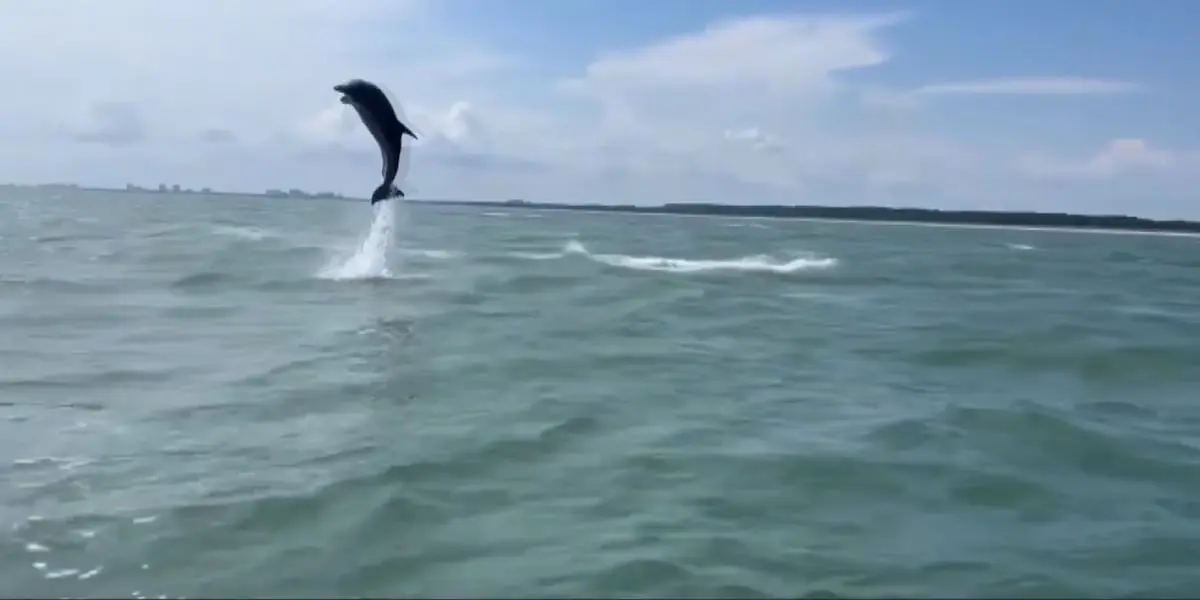
The apex of the encounter occurred when the dynamic activity of the pod reached a fever pitch. Several individuals began breaching—propelling their entire bodies clear of the water in powerful, acrobatic arcs. While dolphin breaches are universally celebrated by whale-watching tourists, their proximity to a small, motorized watercraft introduced a sudden element of risk.
As Malibu-Grove filmed the spectacle, a sleek dolphin launched from the surface just feet away from their bow, generating a heavy splash and executing a trajectory that threatened a direct impact with the vessel. Quick reflexes proved vital. Reacting instantly to the incoming animal, Mr. Malibu-Grove wrenched the handlebars, executing an emergency evasion maneuver to steer clear of the airborne mammal.
"If he wouldn’t have moved the jet ski out of the way from that last one, he would have hit us," Malibu-Grove recounted later, reflecting on the razor-thin margin between an awe-inspiring wildlife moment and a potentially dangerous collision.
Despite the adrenaline-fueled scare, the close encounter did not dampen the mood. Instead, it cemented the outing as an unforgettable chapter in their lives—a pristine manifestation of untamed nature meeting human recreation on the open water.
Supporting Context & Metrics: Understanding Grand Strand Marine Life
To fully appreciate the magnitude of the Malibu-Grove encounter, it is essential to examine the ecological profile of the region, the biological characteristics of local dolphin populations, and the statistical reality of human-wildlife interactions along the South Carolina coast.
The Atlantic Bottlenose Dolphin (Tursiops truncatus)
The star of Wednesday’s encounter was unquestionably the common bottlenose dolphin (Tursiops truncatus). Easily recognized by their curved dorsal fins and short, well-defined rostrums (snouts), these intelligent marine mammals are year-round residents of the South Carolina coastline, inhabiting everything from shallow estuarine salt marshes and tidal rivers to the open Atlantic surf zone.
- Pod Dynamics: While coastal bottlenose dolphins typically form smaller pods of 2 to 15 individuals to facilitate cooperative foraging, they frequently aggregate into larger "super-pods" numbering 50 or more. These temporary mega-gatherings are usually driven by abundant schooling fish resources—such as menhaden, mullet, and spot—or by complex social and mating behaviors.
- Speed and Agility: Bottlenose dolphins are built for hydrodynamic efficiency. Cruising speeds typically range between 3 to 7 miles per hour, but they are fully capable of burst speeds exceeding 20 to 30 miles per hour. Their ability to leap up to 15 to 20 feet into the air makes them formidable acrobats, though it also explains why an unexpected breach near a moving watercraft can catch operators entirely off-guard.
Jet Skis, Watercraft, and Wildlife Interference
The Grand Strand region—stretching from Georgetown, South Carolina, up past Little River and across the state line into Calabash and Brunswick County, North Carolina—sees millions of tourists and local recreationists take to the water every year. Personal watercraft (PWCs) like jet skis, wave runners, and sea-doos are immensely popular due to their high maneuverability and shallow draft.
However, the intersection of high-speed PWCs and marine wildlife presents distinct management challenges:
- Acoustic Disturbance: Jet ski engines, particularly two-stroke and older four-stroke models, emit high-frequency underwater noise that can interfere with dolphin echolocation and communication systems.
- Vessel Strike Risks: Because dolphins frequently engage in "bow-riding" (surfing the pressure wave created by the bow of a moving boat or PWC), they routinely place themselves directly in the path of oncoming watercraft. While dolphins possess remarkable agility, high-speed collisions with propellers or rigid hulls can result in severe lacerations, blunt-force trauma, or mortality.
Official Statements & Regulatory Frameworks
In the wake of viral local media coverage and widespread interest in the Malibu-Grove encounter, federal and state wildlife authorities have stepped forward to reiterate the laws, guidelines, and safety principles governing human interactions with marine mammals in U.S. waters.
The Marine Mammal Protection Act (MMPA)
Under the federal Marine Mammal Protection Act of 1972 (MMPA), all marine mammals—including dolphins, whales, porpoises, seals, and manatees—are strictly protected. The law prohibits the "take" of marine mammals, a legal term defined broadly to include harassing, hunting, capturing, collecting, or killing, as well as any attempt at these activities.
Federal guidelines enforced by the National Oceanic and Atmospheric Administration (NOAA) Fisheries explicitly mandate specific safety buffers for individuals on the water:
- The 50-Yard Rule: Watercraft operators, boaters, paddleboarders, and swimmers are legally required to maintain a minimum distance of 50 yards (150 feet) from dolphins in the wild.
- Prohibition of Feeding and Touching: Feeding, attempting to feed, or swimming with wild dolphins is strictly illegal. Provisioning wild animals alters their natural foraging behaviors, conditions them to associate humans and boats with food sources, and dramatically increases their vulnerability to boat strikes and fishing gear entanglements.
- Passive Observation: If dolphins approach a vessel, operators are advised to place their engines in neutral, idle, or turn them off entirely, allowing the animals to control the interaction rather than actively pursuing, circling, or cutting them off.
Local Conservation and Outfitter Perspectives
Marine conservation groups along the South Carolina coast have used the viral nature of the Malibu-Grove story as a public education opportunity. While acknowledging the genuine emotional resonance of swimming or riding alongside wild dolphins, local charter captains and naturalists stress the importance of responsible stewardship.
"Encounters like the one near Waties Island remind us how vibrant our coastal ecosystem truly is," noted a regional marine biologist speaking on condition of anonymity regarding local ecotourism practices. "However, when 50 dolphins decide to surround a jet ski, the responsibility shifts entirely to the human operator. Maintaining composure, cutting the throttle, and giving wildlife the space they need is paramount to ensuring that neither human nor animal is injured."
Future Outlook: Coexistence on a Crowded Coastline
As the coastal populations of both South Carolina and North Carolina continue to surge, the pressures on marine ecosystems will inevitably mount. The influx of new residents, combined with a thriving tourism economy, means that coastal waters like those around Myrtle Beach, Murrells Inlet, and Little River are busier now than at any point in history.
Balancing Tourism and Marine Conservation
The local economy depends heavily on marine recreation, ecotourism, and water sports. Jet ski rentals, dolphin-watch boat tours, and private charters form a cornerstone of the coastal tourism portfolio. Moving forward, municipal leaders, tourism boards, and environmental agencies face the delicate task of balancing economic vitality with rigorous wildlife protection.
Key initiatives gaining traction among coastal stakeholders include:
- Enhanced Public Outreach: Distributing educational pamphlets and digital safety reminders at jet ski rental counters and boat ramps regarding NOAA’s marine mammal guidelines.
- Responsible Ecotourism Certification: Encouraging commercial tour operators to adopt low-impact viewing protocols, ensuring that wildlife is not harassed for the sake of passenger entertainment.
- Habitat Preservation: Protecting undeveloped sanctuaries like Waties Island from overdevelopment, ensuring that critical estuarine nurseries and feeding grounds remain pristine for generations of marine life to come.
A Lasting Legacy on the Water
For Kimberly Malibu-Grove and her husband, the memory of that Wednesday afternoon off Waties Island will remain crystal clear for the rest of their lives. In an era dominated by digital distractions and urban stress, a spontaneous encounter with 50 wild dolphins offers a powerful reconnective anchor to the natural world.
As Malibu-Grove reflected after catching her breath from the near-miss with the leaping cetacean: "This was such an amazing experience. We have such a love for dolphins."
It is a sentiment shared by millions who visit the South Carolina coast each year. Yet, as the ripples fade across the waters of the Grand Strand, this remarkable event serves as both a celebration of coastal biodiversity and a timely reminder of the respect owed to the magnificent, wild creatures that call the Atlantic surf their home.

0 Comments