
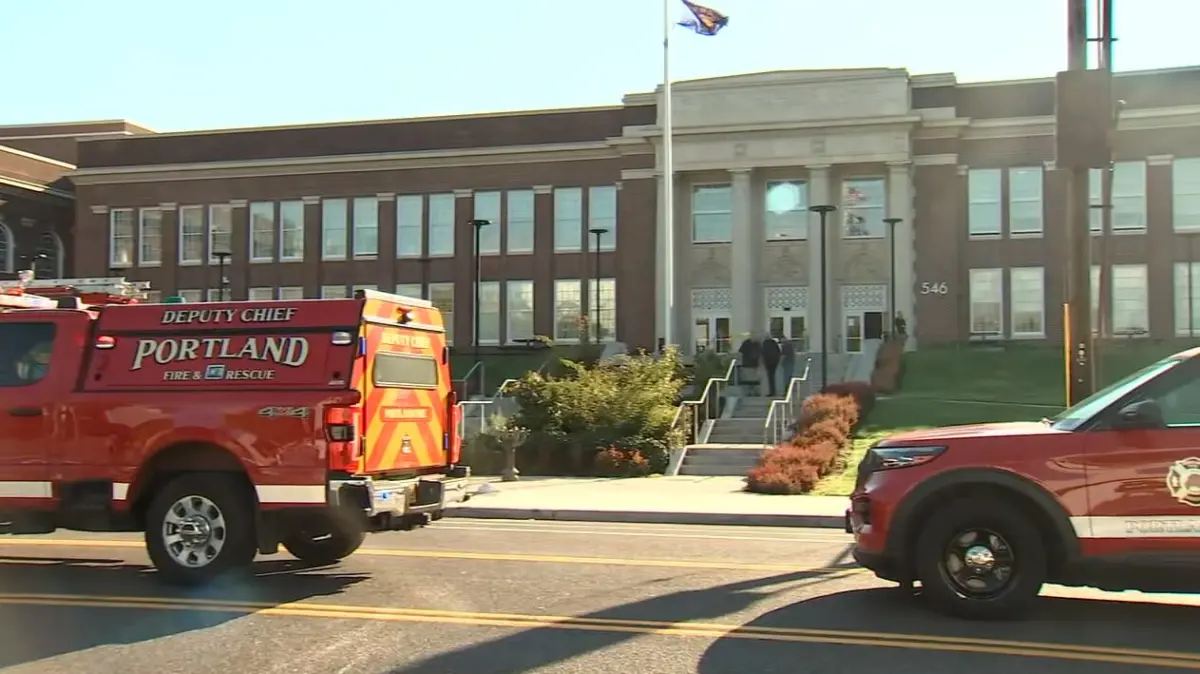

PORTLAND, Ore. — A devastating hazardous materials emergency unfolded inside a local high school cafeteria on Tuesday morning, leaving a 15-year-old student hospitalized in critical condition and forcing the emergency evacuation of more than a thousand individuals. The incident, which triggered a massive multi-agency response involving hazmat specialists, local fire rescue, and specialized police units, has left the Portland educational community reeling.
According to preliminary findings released by local authorities, the crisis began when a sophomore student brought a cache of toxic chemicals from home into the school, mixed the substances inside the crowded cafeteria, and subsequently ingested the mixture. The resulting chemical reaction and subsequent spill not only gravely endangered the student’s life but also released potential toxic vapors that required a specialized respiratory response from emergency personnel and forced the mass evaluation of over a hundred students.
As investigators comb through physical evidence, digital footprints, and a cryptic social media post allegedly linked to the event, school administrators, emergency services, and law enforcement agencies have launched a joint, comprehensive inquiry. The incident has raised urgent questions regarding campus safety protocols, student mental health, and the accessibility of dangerous chemical agents within residential environments.
Executive Overview
The crisis at Benson Polytechnic High School materialized during normal morning operational hours on a Tuesday that quickly escalated into a catastrophic public safety event. Emergency communication centers received frantic calls reporting a student in acute medical distress within the school’s central dining commons. Upon arrival, first responders found school staff members, including the campus nurse, heroically performing cardiopulmonary resuscitation (CPR) and administering immediate lifesaving interventions to the unresponsive 15-year-old boy.
The severity of the chemical exposure quickly became apparent, prompting an immediate escalation of emergency protocols. Hazardous materials (hazmat) teams were dispatched not only to the school campus but also placed on standby at the receiving local hospital to safely process the incoming patient without contaminating medical staff or facilities. Simultaneously, the accidental spillage of the chemical concoction onto the cafeteria floor released noxious fumes, mandating the immediate, orderly evacuation of the entire student body and faculty.
The operational footprint of the response was immense. Portland Fire & Rescue units deployed specialized self-contained breathing apparatuses (SCBA) to mitigate gas exposure risks inside the building. Meanwhile, triage teams evaluated between 100 and 150 students on-site who reported varying symptoms, ranging from acute anxiety and panic to respiratory irritation.
In the wake of the immediate medical crisis, the scope of the investigation expanded rapidly. The Portland Police Bureau deployed multiple specialized divisions—including the Explosive Disposal Unit (EDU) to sweep suspicious bags and containers, and the Homicide Unit to investigate potential criminal elements or coercion—underscoring the gravity and uncertainty of the unfolding situation.
Portland Public Schools (PPS) Superintendent Kimberlee Armstrong addressed the media and the broader community, labeling the event as "devastating, stressful and scary," while emphasizing that institutional resources are being mobilized to support traumatized students and staff.
Detailed Chronology of the Emergency Response
Morning Hours: The Incident Unfolds
The sequence of events began shortly before the peak of morning activities at Benson Polytechnic High School. Investigators believe the 15-year-old student concealed multiple toxic chemical compounds within his personal belongings while entering the campus. Sometime during the morning hours, the student accessed the school cafeteria—a high-density communal area typically populated by hundreds of adolescents—and proceeded to combine the hazardous substances.
Shortly after consuming the mixture, the teenager experienced rapid physiological collapse. Witnesses reported that the student suddenly fell ill, losing consciousness and displaying symptoms consistent with severe poisoning. School staff members were alerted immediately and rushed to the scene. Demonstrating exceptional calm and bravery under extreme pressure, the campus nurse and school employees initiated emergency CPR and deployed automated external defibrillator (AED) protocols while dispatchers were simultaneously routing emergency services to the address.
The Emergency Arrival and Hazmat Mobilization
At approximately mid-morning, units from Portland Fire & Rescue and emergency medical services (EMS) arrived at the campus. Recognizing the distinct chemical odors and the potential for a broader atmospheric hazard, first responders immediately upgraded the call to a hazardous materials incident.
Paramedics relieved school staff and continued advanced life-support measures on the juvenile. Due to the high risk of secondary contamination from the chemicals absorbed into the patient’s clothing and skin, specialized hazmat protocols were activated. The teenager was swiftly transported via ambulance to a designated regional hospital. Crucially, hospital administrators had been given advanced notice, allowing specialized hazmat decontamination teams to establish a secure containment perimeter at the emergency department receiving bay to handle the patient safely. Upon arrival, the boy was admitted directly to the intensive care unit, where medical personnel categorized his condition as critical.
Evacuation and On-Site Triage
Inside the school, the situation required immediate population management. Because a portion of the chemical mixture had spilled onto the cafeteria floor, volatile compounds began vaporizing into the indoor air. Portland Fire & Rescue teams donned full personal protective equipment (PPE), including specialized respiratory gear, to enter the hot zone, identify the spilled substances, and neutralize the immediate environmental threat.
Concurrently, administrators ordered a full-scale evacuation of the campus. Thousands of students and faculty members were directed away from the main building and assembled in designated outdoor safe zones. Recognizing that ambient fumes and psychological distress could impact a wide radius of individuals, EMS established an on-site triage sector. Medical personnel systematically evaluated between 100 and 150 students who exhibited physical complaints, ranging from throat irritation and coughing to acute panic attacks induced by the chaotic environment.
As the situation stabilized outdoors, police and fire officials coordinated the safe reunification of students with their families or authorized the orderly release of youth to travel home. By mid-afternoon, the physical campus was entirely sealed off, transitioning from an active rescue scene to a forensic crime and environmental investigation zone.
Supporting Context & Operational Metrics
To fully understand the magnitude of the Benson Polytechnic High School incident, it is necessary to examine the quantitative and qualitative metrics defining the response:
- Patient Status: One 15-year-old male student confirmed to be in critical condition, currently receiving round-the-clock intensive medical care.
- Medical Triage Volume: Between 100 and 150 students evaluated on-site by emergency medical personnel for physical symptoms, chemical exposure concerns, or acute stress reactions.
- First Responder Deployment: Dozens of personnel from Portland Fire & Rescue, Portland Police Bureau, regional EMS, and specialized county hazmat response units.
- Specialized Units Engaged:
- Portland Fire & Rescue Hazmat Teams (utilizing SCBA and chemical neutralization gear).
- Portland Police Bureau Explosive Disposal Unit (EDU) (conducting sweeps of backpacks, lockers, and environmental containers for secondary hazards).
- Portland Police Bureau Homicide Unit (assigned to investigate potential criminal culpability, coercion, or external incitement).
- Digital Forensics: One specific social media post identified prior to or immediately following the incident, currently undergoing forensic extraction and linguistic analysis by cybercrime investigators.
The involvement of the Homicide Unit frequently startles members of the public during school-related medical emergencies; however, law enforcement officials clarified that standard protocol mandates the deployment of specialized investigative divisions when an incident involves severe, life-threatening trauma of an unverified origin, ensuring that all possibilities—ranging from self-harm and accidental exposure to third-party involvement or online challenges—are rigorously explored.
Official Statements and Community Impact
The psychological and institutional fallout of the crisis has reverberated throughout the Portland Public Schools district and local government offices. Leaders have stepped forward to offer transparency, solace, and structural support to a deeply shaken community.
In an official address, Portland Public Schools Superintendent Kimberlee Armstrong expressed profound sorrow and solidarity with those affected:
"Our thoughts are with our students and those impacted. This is devastating, stressful and scary."
Superintendent Armstrong further emphasized the absolute cooperation of school administrators with municipal safety agencies. She noted that institutional reopening timelines will strictly depend on the complete clearance of the facility by environmental safety engineers, hazardous materials technicians, and law enforcement detectives.
Local emergency response commanders highlighted the professionalism demonstrated by school personnel during the golden hours of the crisis. The immediate initiation of CPR by the school nurse and staff was cited by medical professionals as a critical factor in preserving the student’s vital functions before advanced medical units could breach the contaminated environment.
Parents and community advocates, meanwhile, have begun raising pressing questions regarding campus access control, the oversight of personal belongings, and the broader societal pressures facing adolescents. Mental health professionals have pointed to the rising tide of youth isolation and the disturbing prevalence of dangerous trends propagated through digital platforms, prompting calls for enhanced mental health resource allocation across all district campuses.
Future Outlook & Ongoing Investigation
As Benson Polytechnic High School remains temporarily closed, a multi-faceted investigation continues to unfold behind the police tape. The path forward involves several distinct operational phases:
1. Environmental Remediation and Clearance
Before students and educators are permitted to return to the facility, environmental safety teams must certify that the cafeteria and surrounding ventilation systems are entirely free of toxic residues or lingering gas pockets. Comprehensive air-quality testing will be conducted to ensure zero residual risk.
2. Forensic and Digital Analysis
Investigators from the Portland Police Bureau are executing a deep dive into the digital ecosystem surrounding the incident. The social media post discovered during the initial response is being subjected to metadata analysis to determine when it was published, whether it was geolocated to the campus, and if other individuals were aware of or complicit in the teenager’s actions. Additionally, interviews with peers, educators, and family members will seek to establish a timeline of intent and psychological state.
3. District-Wide Policy Review
Portland Public Schools is expected to face mounting scrutiny regarding safety audits. Stakeholders will likely demand reviews of preventative measures, including the potential implementation of enhanced security screening, improved mental health intervention pathways, and educational programs warning adolescents of the extreme dangers associated with chemical experimentation and online challenges.
4. Community Healing and Support Services
In the immediate aftermath of the reopening, the district has announced plans to deploy crisis counseling teams, trauma-informed educators, and mental health specialists to Benson Polytechnic High School. These resources will be made freely available to students, faculty members, and families struggling with the emotional residue of the tragedy.
The community of Portland now waits anxiously for updates regarding the health of the hospitalized teenager, hoping for a medical recovery while demanding clear answers as to how such an unprecedented chemical crisis could penetrate the sanctuary of a high school campus.

0 Comments