

Executive Overview
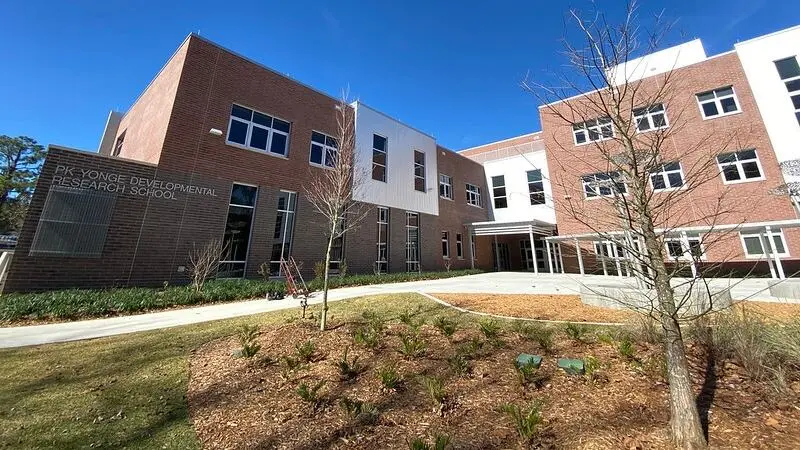
On a Tuesday afternoon that began with routine campus operations, the P.K. Yonge Developmental Research School in Gainesville, Florida, became the center of an urgent emergency response. The campus gymnasium, located at 1200 SW 6th St., was abruptly evacuated following reports of a persistent, unidentifiable chemical-like odor permeating the indoor athletic facility. Given the inherent risks associated with potential utility failures in educational institutions, local emergency services initiated a high-priority response protocol, treating the incident with the utmost caution.
Authorities temporarily cordoned off the immediate perimeter, advising community members and motorists to steer clear of the area, while students and faculty inside neighboring buildings were directed to shelter in place. Speculation regarding a structural or municipal natural gas line failure quickly mounted as hazmat-trained personnel and specialized monitoring equipment were deployed to sweep the premises.
However, following a meticulous multi-agency investigation involving air quality sampling and infrastructure inspections, Gainesville Fire Rescue confirmed that the hazard was a false alarm. The noxious smell, which had raised immediate red flags among school administrators and safety officers, was traced not to a volatile hydrocarbon gas leak, but rather to a localized sewer gas venting issue.
With the source identified and mitigated, the safety perimeter was swiftly dismantled, allowing normal educational and athletic activities to resume before the end of the academic day. While the incident ultimately concluded without injury, structural damage, or long-term disruption, it serves as a critical case study in modern school emergency preparedness, inter-agency communication, and the intricate challenges of maintaining aging municipal and institutional utility infrastructures.
Detailed Chronology of Events
Phase 1: The Initial Discovery and Internal Alert
The sequence of events began during normal midday operations at the P.K. Yonge Developmental Research School athletic complex. Faculty members and physical education staff inside the gymnasium first detected an unusual, unpleasant odor lingering near the facility’s locker rooms and utility corridors. Recognizing that modern indoor athletic facilities house various mechanical systems—including HVAC units, chemical storage closets, and domestic water heaters—staff members immediately notified the school’s administration and facilities management team.
As the scent grew progressively stronger and began to drift toward adjacent instructional areas, school administrators faced a critical decision-making threshold. Adhering to strict safety protocols designed to prioritize life safety over operational continuity, the administration chose to trigger the emergency evacuation alarm for the gymnasium. Hundreds of students and staff members present in the facility evacuated in an orderly fashion, assembling at designated pre-planned muster stations outside the hazard zone. Concurrently, school safety officers placed neighboring buildings on a precautionary shelter-in-place status to prevent pedestrian traffic from moving near the affected zone while the exact nature of the hazard remained unknown.
Phase 2: Emergency Response Deployment
At approximately the time of the internal alarm, emergency dispatchers received a priority call requesting hazardous materials and structural safety assessment teams at the 1200 SW 6th St. campus. Gainesville Fire Rescue (GFR) units, accompanied by local emergency medical services and municipal utility technicians, mobilized immediately.
Upon arrival, incident commanders established a formal command post and perimeter around the gymnasium. First responders donned specialized personal protective equipment (PPE) and deployed portable multi-gas detection monitors designed to screen the atmosphere for explosive hydrocarbons, carbon monoxide, hydrogen sulfide, and oxygen depletion.
Traffic control units worked in tandem with campus security to seal off surrounding roadways, redirecting local vehicular traffic and advising pedestrians to avoid the immediate vicinity. The rapid deployment of personnel underscored the zero-tolerance policy emergency agencies maintain regarding potential gas leaks in high-occupancy public buildings, particularly schools.
Phase 3: Investigation, Air Monitoring, and Resolution
With the perimeter secured, specialized GFR hazmat technicians initiated a systematic sweep of the gymnasium, starting from the subterranean utility spaces and working their way up through the main athletic floor and ventilation returns. Air samples were drawn at multiple elevations to determine whether a heavy gas was pooling near the floor or if lighter vapors were collecting near the ceiling rafters.
Initial readings from the electronic gas detectors showed negative results for natural gas (methane) and propane, confounding early hypotheses. However, technicians tracking the olfactory trail noted that the intensity of the odor concentrated heavily near floor drains and plumbing fixtures within the gymnasium’s locker room facilities.
Subsequent inspections of the building’s sanitary sewer system and exterior municipal connections revealed the true culprit: a dry plumbing trap within the drainage system had allowed sewer gases—primarily a mixture of hydrogen sulfide, methane, and ammonia—to vent directly into the indoor environment.
With the issue isolated and atmospheric readings confirmed safe across all tested zones, Gainesville Fire Rescue gave the all-clear signal. Emergency vehicles began departing the scene, perimeter tape was rolled up, and the shelter-in-place directives were lifted, allowing the campus to transition back to its regular afternoon schedule without further incident.
Supporting Context & Metrics
Institutional Profile: P.K. Yonge Developmental Research School
Understanding the scope of Tuesday’s evacuation requires examining the operational landscape of the P.K. Yonge Developmental Research School. Affiliated with the University of Florida, P.K. Yonge is a unique public K-12 laboratory school designed to study, develop, and implement innovative educational practices. Spanning a sprawling campus on SW 6th Street, the institution serves an extensive population of students, faculty, and administrative staff daily.
Because the school hosts diverse age groups—ranging from elementary school children to high school seniors—its safety protocols must account for varying cognitive and physical response capabilities during an emergency. The swift, orderly evacuation of the gymnasium is a testament to the rigorous, routine safety drills mandated by the school district and executed by P.K. Yonge’s administration.
The Science of Sewer Gas vs. Natural Gas Leaks
The public panic associated with "gas leaks" is well-founded, given the catastrophic potential of utility line ruptures. Natural gas, in its native state, is entirely odorless. Utility companies artificially infuse it with an odorant called mercaptan—which smells distinctly of rotten eggs—to ensure that even minute concentrations (as low as one part per million) can be detected by human smell.
Sewer gas, conversely, is a complex mixture of toxic and non-toxic gases produced by the breakdown of organic household and industrial waste. It frequently contains hydrogen sulfide, which possesses the exact same signature "rotten egg" odor profile as mercaptan-infused natural gas. This chemical mimicry is the primary reason why sewer gas issues are frequently misidentified as natural gas leaks by the general public and even seasoned facility managers.
Key technical differences include:
- Source: Natural gas enters the building via pressurized utility mains for heating or cooking; sewer gas emanates from the municipal or on-site sanitary drainage system due to unsealed pipes or dry plumbing traps.
- Flammability Risk: While natural gas poses an immediate, highly volatile explosion risk at certain concentrations, sewer gas contains lower levels of volatile hydrocarbons unless mixed with industrial chemical runoff.
- Health Hazards: Prolonged exposure to concentrated sewer gas (specifically hydrogen sulfide) can cause headaches, dizziness, nausea, and respiratory irritation, necessitating prompt ventilation even when explosion risks are absent.
Gainesville Infrastructure and Emergency Statistics
Gainesville Fire Rescue handles thousands of hazard and odor complaints annually across Alachua County. The city’s dense network of older municipal utility lines, combined with seasonal weather shifts, frequently impacts plumbing infrastructure. Prolonged dry spells can cause water in structural P-traps to evaporate, breaking the water seal that normally prevents sewer gases from escaping into conditioned indoor spaces. This technical vulnerability is a known risk factor for institutional buildings with expansive, intermittently used athletic complexes.
Official Statements and Institutional Response
In the wake of the incident, school administrators and emergency service representatives released coordinated statements to reassure parents, students, and the broader Gainesville community.
A spokesperson for Gainesville Fire Rescue emphasized the critical importance of treating every unverified odor as a genuine emergency until proven otherwise:
"When emergency calls come in regarding chemical or gas-like odors in a school environment, our protocol requires us to deploy full mitigation assets immediately. We cannot afford to assume an odor is benign when hundreds of children are under roof. In this case, the proactive and swift evacuation by P.K. Yonge staff ensured that, had this been a true hazardous materials emergency, everyone was already out of harm’s way. We commend the administration for their decisive action."
P.K. Yonge school leadership issued an informational bulletin to parents and guardians detailing the nature of the event and praising the calm demeanor of the student body:
"The safety and security of our students and staff remain our absolute highest priority. Following the detection of an unusual odor in the gymnasium, our emergency action plan was immediately activated. Emergency responders conducted a comprehensive sweep and verified that the odor originated from the building’s sewer system, completely ruling out any natural gas leak. We are deeply grateful to Gainesville Fire Rescue for their rapid response and thorough investigation, and we are proud of our students and faculty for executing our evacuation protocols flawlessly."
Facilities management officials also announced that plumbing contractors would conduct a comprehensive inspection of all floor drains, traps, and venting stacks across the athletic complex to ensure that dry traps are properly reprimed and that backflow preventers are fully operational, mitigating the likelihood of a recurrence.
Future Outlook: Prevention, Preparedness, and Infrastructure Resilience
While the P.K. Yonge gas leak scare ultimately concluded as a false alarm, it provides valuable lessons for educational facilities management and emergency preparedness frameworks moving forward. Incidents of this nature highlight the intersection between building maintenance, public perception, and emergency response efficiency.
1. Enhancing Facilities Maintenance Protocols
To prevent future sewer gas infiltrations, educational institutions must implement proactive facilities management strategies. Standard operating procedures should include:
- Routine Trap Priming: Establishing a scheduled maintenance program to flush and prime rarely used floor drains and plumbing traps, particularly in athletic facilities, locker rooms, and mechanical spaces subject to seasonal evaporation.
- Venting Stack Inspections: Regularly clearing rooftop plumbing vents of leaves, bird nests, and debris that can cause back-pressure and force sewer gases downward into building interiors.
2. Upgrading Sensor Technology
The integration of smart building management systems (BMS) equipped with continuous air quality monitors is becoming the gold standard for modern educational facilities. Installing digital sensors capable of distinguishing between hydrogen sulfide, methane, and volatile organic compounds (VOCs) can provide early warnings to facilities teams before odors reach human detection thresholds, preventing unnecessary campus-wide evacuations.
3. Refining Emergency Communication
In an era of instant digital communication, false alarms can rapidly spawn misinformation on social media, causing undue panic among parents. Incidents like the P.K. Yonge evacuation underscore the necessity for schools to maintain robust, real-time mass notification systems. Providing clear, verified updates from official sources within minutes of an evacuation helps maintain public trust and ensures community alignment during critical incidents.
Conclusion
The Tuesday afternoon event at P.K. Yonge Developmental Research School stands as a model of effective emergency coordination. Through the swift execution of school safety protocols, the immediate deployment of specialized municipal emergency responders, and a transparent communication strategy, a potentially disruptive situation was managed safely and efficiently. As schools continue to balance aging infrastructure with high standards of public safety, incidents like this reinforce the reality that vigilance, preparedness, and inter-agency cooperation remain the cornerstones of a secure learning environment.

0 Comments