

Executive Overview
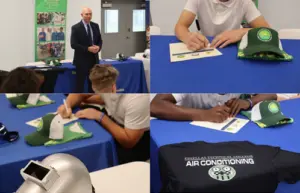
In a powerful display of community collaboration, second chances, and transformative education, the Florida Department of Juvenile Justice (DJJ) recently joined forces with Pinellas Technical College (PTC) and key regional stakeholders to host a landmark Signing Day event in St. Petersburg, Florida. The event celebrated students served through the Florida Youth College—an innovative workforce education and credentialing initiative formerly known as Project Anchor.
Designed specifically to bridge the gap between institutional care and sustainable, gainful employment, this unique partnership allows youth residing at the Britt Technical Youth Academy—a specialized career and technical education (CTE) residential commitment program—to enroll directly in courses at Pinellas Technical College. The ultimate objective is clear: equip these young individuals with high-value workforce credentials, specialized technical training, and a direct pathway to meaningful careers that can break cycles of recidivism and poverty.
As the state of Florida continues to pivot toward holistic, rehabilitative models within its juvenile justice infrastructure, programs like the Florida Youth College represent a paradigm shift. Rather than relying solely on punitive measures, state agencies and educational institutions are investing in human capital, transforming correctional spaces into incubators of professional potential. With nearly 500 youth admitted to the program since its inception in August 2022, this collaborative signing day serves as both a celebration of individual triumph and a testament to the profound impact of strategic, community-integrated educational reform.
Detailed Chronology and Event Highlights
The atmosphere inside the St. Petersburg campus during the signing day ceremony was charged with anticipation, resilience, and hope. Students, proud family members, educators, state officials, and community leaders gathered to mark a pivotal turning point in the academic and professional lives of the participating youth.
The event mirrored traditional collegiate signing days typically reserved for star athletes, but with a profound twist: instead of signing letters of intent for sports franchises or universities, these students signed commitments to their own futures, enrolling in rigorous career and technical certificate programs that promise real-world economic mobility.
The Mechanics of the Signing Day
The ceremony began with opening remarks from local educational leaders who underscored the gravity of the occasion. For many of the attending students at the Britt Technical Youth Academy, secondary education has historically been fraught with interruptions, setbacks, and systemic hurdles. The signing day acted as a public declaration of a fresh start.
As each student was called forward to sign their enrollment documents, they were met with applause from mentors who had watched them navigate the rigorous academic and behavioral requirements necessary to qualify for the program. The event featured:
- Official Enrollment Ceremonies: Students signed formal institutional paperwork locking in their academic tracks in high-demand fields.
- Keynote Addresses: Leaders from the DJJ, PTC, and the Florida Legislature shared insights on the long-term vision of the program.
- Testimonial Panels: Space was intentionally carved out for students and their families to voice their personal journeys, offering an emotional and grounding perspective on the realities of institutional rehabilitation.
The transition from the Britt Technical Youth Academy classroom to the technical college labs signifies a breaking down of physical and psychological barriers. By stepping onto a collegiate campus—even virtually or under specialized supervision—students are socialized into a professional environment that demands accountability, collaboration, and high-level skill acquisition.
Supporting Context and Metrics: The Evolution of Project Anchor into the Florida Youth College
To fully understand the weight of the St. Petersburg signing day, one must examine the broader evolutionary trajectory of the initiative itself. The program’s roots trace back to August 2022, when the Florida Department of Juvenile Justice officially launched Project Anchor.
The Genesis: Project Anchor
Originally conceived as a pioneering partnership with Tallahassee State College (TSC), Project Anchor was designed to address a glaring systemic deficiency: the lack of robust, post-secondary vocational pathways for youth housed within residential commitment facilities. Historically, juvenile justice systems across the United States struggled to maintain educational continuity. Youth would often fall behind grade levels, earn general educational development (GED) certificates without clear vocational direction, or leave facilities with zero marketable job skills, significantly elevating their risk of rearrest.
Project Anchor sought to change this narrative by introducing college-level workforce education directly into the juvenile justice continuum. The program focused not only on youth currently residing in residential facilities but also on providing seamless continuity of care and education as these individuals transitioned back into their home communities.
Rebranding and Scaling: The Florida Youth College
Recognizing the expansive scope, scalability, and collegiate nature of the initiative, state leadership formally rebranded Project Anchor as the Florida Youth College. This rebranding was more than cosmetic; it reflected an elevated standard of education that matches the rigor, expectations, and professional environment of traditional higher education institutions.
Key Program Metrics to Date:
- Total Enrollment: Nearly 500 youth have been admitted to the Florida Youth College since its inception.
- Institutional Partnerships: Expanded from initial pilots with Tallahassee State College to include robust regional collaborations like the current partnership with Pinellas Technical College.
- Curricular Focus: Ranging from construction and culinary arts to information technology and automotive repair, tailored specifically to regional labor market demands.
By embedding vocational credentialing directly into commitment facilities like the Britt Technical Youth Academy, the Florida Youth College ensures that time spent in the juvenile justice system is utilized constructively, transforming lost time into a head start on a stable career.
Official Statements and Leadership Perspectives
The success and momentum of the Florida Youth College are driven by a unified coalition of state policymakers, department leaders, and vocational educators who view workforce development as the ultimate form of crime prevention.
State Leadership
DJJ Secretary Eric Hall emphasized the philosophical underpinning of the partnership, noting that true rehabilitation requires tangible, life-altering opportunities.
"DJJ is proud to partner with Pinellas Technical College in providing transformative opportunities for Britt Technical Youth Academy students to pursue a college education," stated Secretary Hall. "This partnership underscores DJJ’s commitment to accelerating academic achievement for the students we serve and helping them create lasting and meaningful change in their lives."
Legislative support has been equally vital in securing resources, visibility, and policy backing for vocational initiatives within the juvenile justice sector. State Representative Berny Jacques, a vocal advocate for educational innovation in Florida, praised the collaborative effort during the event.
"The educational opportunities at Pinellas Technical College that will be made available to these youth who have completed their secondary education will cultivate a foundation for their successful futures," said Representative Jacques. "I applaud the partnership between the Department of Juvenile Justice and Pinellas Technical College to find innovative ways to best serve the youth in the department’s care."
Educational Administration
On the ground level, institutional leadership is what turns legislative vision into daily reality. Sylester “Boe” Norwood, Pinellas Technical College St. Petersburg Campus Director, highlighted the mutual benefit such programs offer to both the individual students and the broader community fabric of Pinellas County.
"The partnership between Pinellas Technical College and DJJ will result in success not only for the students but for our community," Norwood explained. "Our partnership will help students gain a competitive edge and give them a second chance at a better life and to make their families proud."
Personal Impact: Voices from Students and Families
While policy statements and administrative metrics provide a macro-level view of the program’s success, the true measure of the Florida Youth College is found in the personal narratives of the participants and their families.
For a participating student at the Britt Technical Youth Academy, the program represents a psychological and financial lifeline.
"This program will benefit me in the future by helping me to provide for myself and my family," the student shared candidly. "It will help me make better decisions and become a positive role model."
Echoing this sentiment of redemption and generational healing, the parent of a Britt Technical Youth Academy student offered a moving testament to the behavioral and intellectual transformation they witnessed in their son since entering the program:
"My son was doing stuff he shouldn’t have been doing, but he’s witty and wise. When he came to the program, I could see that he was learning and changing," the parent expressed. "I know he’s in good hands. I’m thankful he’s getting another chance, and I hope he continues doing the same when he comes back home."
Future Outlook: Building a Sustainable Ecosystem of Second Chances
As the Florida Youth College continues to expand its footprint across the state, the signing event at Pinellas Technical College serves as a blueprint for future developments in juvenile justice reform. The intersection of technical education and residential commitment programs addresses two critical societal needs:
- Workforce Demand: Florida—like much of the nation—faces a critical shortage of skilled trade professionals, technicians, and certified specialists. Integrating system-impacted youth into these pipelines helps close vital labor gaps.
- Recidivism Reduction: Decades of criminological research demonstrate that stable employment and educational attainment are among the strongest deterrents against reoffending. By providing a credible path to financial independence, programs like this drastically lower the likelihood of return to the justice system.
Looking Ahead
Moving forward, the Florida Department of Juvenile Justice aims to deepen its relationships with technical colleges and state colleges throughout all of Florida’s judicial circuits. Plans are already underway to evaluate the post-graduation employment rates and wage trajectories of Florida Youth College alumni, ensuring that the curriculum remains aligned with emerging industrial trends and high-wage employment sectors.
Ultimately, the collaborative success between the DJJ, Pinellas Technical College, and community stakeholders sends an unmistakable message: past mistakes do not define a young person’s entire life trajectory. Through structured support, high-expectations education, and unconditional community investment, Florida is proving that every young person deserves the tools to build a secure, prosperous, and meaningful future.

0 Comments