
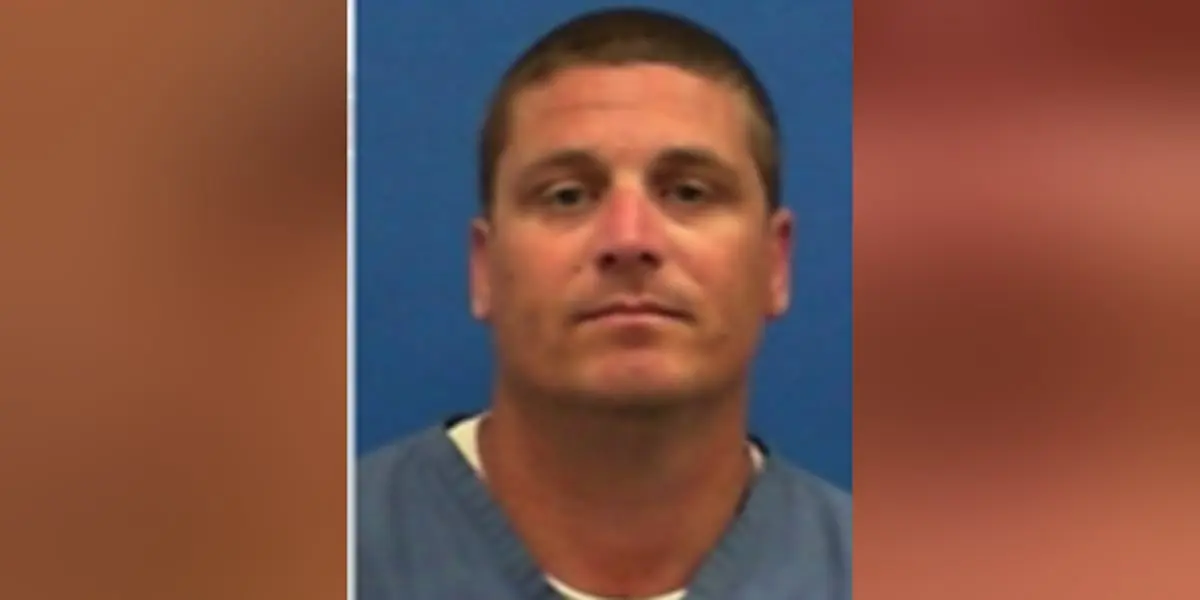

DUNNELLON, Fla. — A dramatic, high-speed pursuit spanning multiple jurisdictions ended in gunfire on Tuesday night, September 8, 2026, leaving a wanted felon hospitalized and thrusting the Levy County Sheriff’s Office (LCSO) into the spotlight for the second time in less than a fortnight.
The suspect, identified as 35-year-old Nicholas Dellatorre, was shot by a Levy County deputy after brandishing a firearm at the conclusion of a cross-county chase. The incident, which terminated in the city limits of Dunnellon, has ignited fresh discussions surrounding police pursuit policies, the challenges of cross-jurisdictional law enforcement coordination, and the rising frequency of officer-involved shootings in North Central Florida.
Executive Overview
The violent confrontation unfolded late Tuesday evening when Levy County deputies attempted to apprehend Dellatorre, who was wanted on an active felony warrant out of Pinellas County. Rather than submitting to the authority of the law, Dellatorre fled, initiating a high-speed pursuit that traversed rural highways before spilling into the tri-county hub of Dunnellon.
The pursuit reached a critical climax when deputies successfully forced the suspect’s vehicle to a halt. According to official reports from the Levy County Sheriff’s Office, Dellatorre exited or remained in his vehicle and produced a firearm, presenting an immediate, lethal threat to the pursuing deputies. A deputy on the scene discharged their service weapon, striking Dellatorre. The suspect was subsequently transported to a regional trauma center under heavy guard, where he remains hospitalized.
This shooting represents a significant escalation in regional law enforcement encounters and marks the second deputy-involved shooting involving the Levy County Sheriff’s Office in a span of just two weeks. As standard operating procedure dictates, the Florida Department of Law Enforcement (FDLE) has been called in to conduct an independent investigation into the use of lethal force.
Detailed Chronology of the Pursuit and Shooting
The events of Tuesday night began in rural Levy County, a sparsely populated region characterized by vast timberlands and intersecting state roads. The following timeline reconstructs the incident based on preliminary law enforcement briefings, dispatch logs, and eyewitness accounts.
[Tuesday Night - Sept 8, 2026]
       │
       ├─► 21:15 PM: LCSO deputies identify Dellatorre's vehicle; suspect flees.
       │
       ├─► 21:30 PM: High-speed pursuit crosses the Levy-Marion county line.
       │
       ├─► 21:42 PM: Pursuit terminates near Dunnellon city limits.
       │
       ├─► 21:45 PM: Confrontation occurs; suspect draws weapon; deputy fires.
       │
       └─► 21:55 PM: Medical triage initiated; suspect transported to trauma center.
The Initiation of the Stop
At approximately 9:15 PM, a Levy County Sheriff’s deputy spotted a vehicle associated with Nicholas Dellatorre. A routine database query through the Florida Crime Information Center (FCIC) revealed that Dellatorre was the subject of an outstanding, extraditable felony warrant issued by Pinellas County authorities.
When the deputy attempted to initiate a traffic stop using emergency lights and sirens, Dellatorre accelerated, refusing to pull over. Recognizing the severity of the underlying felony warrant, the initiating deputy requested backup and authorization from supervisors to pursue the fleeing vehicle.
The Cross-County Flight
The pursuit quickly escalated as Dellatorre navigated through the dark, winding corridors of southeastern Levy County toward the Marion County line. Traveling at speeds well exceeding legal limits, the suspect demonstrated a reckless disregard for public safety, prompting law enforcement to coordinate with neighboring agencies.
As the chase neared Dunnellon—a city uniquely positioned where the borders of Levy, Marion, and Citrus counties converge—dispatchers alerted the Dunnellon Police Department and the Marion County Sheriff’s Office to prepare for tactical intervention.
The Termination and Gunfire
The chase concluded near the city limits of Dunnellon. Utilizing tactical vehicle intervention techniques—potentially including a Precision Immobilization Technique (PIT) maneuver or tire deflation devices—deputies managed to box in and disable Dellatorre’s vehicle.
The physical stop, however, did not signal the end of the threat. As deputies converged on the disabled vehicle with firearms drawn, issuing loud verbal commands, Dellatorre refused to comply. According to investigators, Dellatorre produced a handgun, pointing it toward the officers. Faced with an imminent threat of death or great bodily harm, a Levy County deputy fired multiple rounds, striking Dellatorre and neutralizing the threat.
Emergency Medical Response
Following the shooting, deputies immediately transitioned from a tactical posture to life-saving mode, administering first aid and applying tourniquets to stabilize Dellatorre. Emergency Medical Services (EMS) personnel from Marion County arrived shortly thereafter, transporting the suspect to a nearby trauma center. No deputies or bystanders sustained physical injuries during the encounter.
Supporting Context & Regional Metrics
To understand the gravity of Tuesday night’s shooting, it must be viewed within the broader context of regional law enforcement trends and the unique logistical challenges faced by agencies in North Central Florida.
The Challenge of Multi-Jurisdictional Pursuits
The city of Dunnellon is situated at a complex geographic crossroads. Because municipal and county boundaries overlap closely in this region, high-speed pursuits frequently cross from one jurisdiction to another within minutes. This geographic reality presents significant operational challenges, including:
- Radio Interoperability: Communicating seamlessly across different county dispatch systems (Levy, Marion, and Citrus) requires rapid patch-linking by dispatchers.
- Varying Pursuit Policies: Different agencies maintain distinct thresholds for when a pursuit must be terminated to protect public safety. Levy County’s policy allows for pursuits under specific high-risk conditions, such as when a suspect is wanted for an active felony.
- Tactical Coordination: Deploying spike strips or setting up roadblocks requires precise, real-time coordination between agencies that may not share the same tactical training protocols.
A Concerning Trend: Two Shootings in Two Weeks
For a mid-sized agency like the Levy County Sheriff’s Office, deputy-involved shootings are historically rare. However, the incident involving Nicholas Dellatorre marks the second time in a fortnight that an LCSO pursuit has ended in gunfire.
| Date | Location | Suspect | Outcome | Agency Involved |
|---|---|---|---|---|
| Late August 2026 | Dunnellon Area | Undisclosed | Suspect Injured / Arrested | Levy County Sheriff’s Office |
| Sept 8, 2026 | Dunnellon | Nicholas Dellatorre | Suspect Hospitalized | Levy County Sheriff’s Office |
This cluster of high-stakes incidents has drawn intense scrutiny from local community advocates and criminal justice experts, who are questioning whether tactical approach methods or pursuit termination thresholds need to be reevaluated to mitigate violence at the end of chases.
Official Statements and Investigative Protocol
In accordance with standard protocol throughout the state of Florida, any use of deadly force by a law enforcement officer triggers an immediate, independent investigation by an outside agency.
The Florida Department of Law Enforcement (FDLE) Role
The FDLE has assumed lead investigative authority over the shooting scene. Special agents spent the early hours of Wednesday morning processing forensic evidence, mapping the trajectory of the gunfire, and interviewing witness deputies.
The primary objective of the FDLE investigation is to determine the objective reasonableness of the deputy’s decision to use lethal force, evaluating whether the deputy reasonably believed that their life or the lives of others were in jeopardy.
Statement from the Levy County Sheriff’s Office
While the LCSO has deferred detailed questions regarding the active shooting investigation to the FDLE, officials released a brief statement confirming the identity of the suspect and expressing relief that no law enforcement personnel were harmed.
"Our deputies face unpredictable and highly dangerous situations every single day. When a suspect with an active felony warrant chooses to flee, they place the entire community at risk. When that suspect escalates the situation by drawing a firearm, our deputies must make split-second decisions to protect themselves and the public. We are fully cooperating with the Florida Department of Law Enforcement as they conduct their independent review of this incident."
The deputy who fired the service weapon has been placed on administrative leave with pay, which is standard procedure during use-of-force investigations.
Future Outlook and Legal Proceedings
As Nicholas Dellatorre recovers from his gunshot wounds under armed guard at an undisclosed hospital, regional prosecutors are preparing a battery of charges that will be leveled against him upon his discharge.
Impending Legal Battles
In addition to the outstanding Pinellas County felony warrant that initiated the pursuit, Dellatorre faces severe new charges in the local judicial circuit, which may include:
- Fleeing and Eluding Law Enforcement with Utter Disregard for Safety (a high-degree felony in Florida).
- Assault or Attempted Murder of a Law Enforcement Officer stemming from the brandishing of the firearm.
- Possession of a Firearm by a Convicted Felon, depending on his prior criminal history.
Once medically cleared, Dellatorre will be booked into a regional detention facility, where he will await his first appearance before a judge.
Policy Implications and Community Dialogue
The rapid succession of two deputy-involved shootings is expected to prompt internal administrative reviews within the Levy County Sheriff’s Office. Law enforcement experts suggest that Sheriff’s command staff will likely conduct a comprehensive review of their pursuit policies and de-escalation training modules.
Simultaneously, the FDLE’s investigative findings will eventually be forwarded to the State Attorney’s Office. The State Attorney will make the final determination on whether the deputy’s use of force was legally justified under Florida law. This process typically takes several months, during which dashcam footage, body-worn camera recordings, and ballistic reports will remain confidential under Florida’s active criminal investigation exemptions.
For the residents of Dunnellon and the surrounding tri-county area, the incident serves as a stark reminder of the volatile nature of police work and the creeping reach of violent crime across county lines. As the community awaits the final investigative reports, local leaders are calling for transparency, patience, and a continued commitment to public safety.

0 Comments