
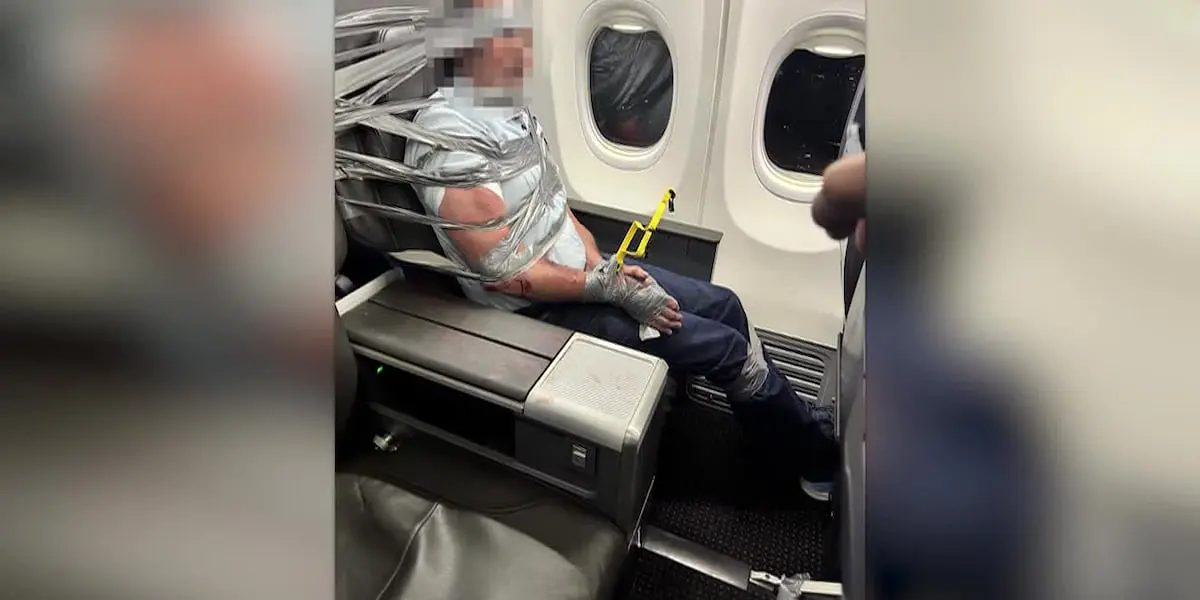

TUCSON, Ariz. — The fallout from a turbulent, viral incident aboard a commercial airliner has claimed the professional career of a longtime Southern Arizona real estate professional. Layne Arthur Lundeen, a 67-year-old resident of Tucson whose disruptive mid-air behavior forced law enforcement intervention and made national headlines, has been officially terminated from his position at Long Realty Company.
The episode, which unfolded thousands of feet above the ground, captured the attention of millions across social media platforms and news outlets alike. It highlights the increasingly zero-tolerance approach corporate America—and particularly consumer-facing industries—is taking toward public misconduct by employees. For Lundeen, a man who spent years building a reputation within the competitive Southern Arizona housing market, the high-altitude outburst has yielded immediate, catastrophic consequences for his livelihood.
Executive Overview
In an era defined by instantaneous digital documentation and viral accountability, the boundaries separating private conduct from professional standing have grown vanishingly thin. Layne Arthur Lundeen learned this harsh reality following a chaotic flight that necessitated physical restraint by flight crew members and fellow passengers before the aircraft could even reach its destination.
According to initial reports from law enforcement and aviation authorities, Lundeen’s behavior on the American Airlines flight quickly escalated from ordinary passenger friction into a barrage of severe, targeted verbal abuse. Eyewitness accounts and subsequent investigations revealed that the 67-year-old launched into a series of explicit misogynistic comments and racial slurs directed at fellow travelers and flight personnel. The escalation grew so severe that crew members, prioritizing the safety and security of everyone on board, were forced to take extraordinary measures, ultimately subduing Lundeen and securing him to his seat using aviation-grade duct tape.
The incident instantly transformed from a localized in-flight disturbance into a national talking point, amplified by cellphone footage and firsthand accounts shared across social media. As details of the arrest emerged, corporate leadership at Long Realty—Lundeen’s longtime employer—acted with swift and definitive precision. Facing a public relations crisis and an obvious violation of core corporate values, the firm severed all ties with the agent, issuing a public statement to distance the agency from his actions.
This comprehensive report examines the anatomy of the incident, the swift corporate and legal fallout, the broader metrics surrounding the alarming rise in unruly airline passenger behavior, and the long-term implications for professionals whose off-duty or public conduct runs afoul of societal and corporate standards.
Detailed Chronology: From Cabin Conflict to Corporate Termination
To understand the severity of the repercussions facing Layne Arthur Lundeen, it is necessary to examine the timeline of events that transformed a routine commercial flight into a high-profile criminal and professional crisis.
The Build-Up In-Flight
While federal law enforcement agencies and commercial airline officials continue to parse the precise sequence of events, the incident began innocuously enough as a standard domestic flight. However, as the flight progressed, fellow passengers noticed an escalating pattern of erratic and aggressive behavior from Lundeen. Witnesses reported that the 67-year-old appeared heavily agitated, directing hostile language toward individuals seated near him.
What began as general belligerence rapidly deteriorated into targeted harassment. According to multiple reports verified by law enforcement, Lundeen began shouting a series of explicit misogynistic remarks directed at female passengers and flight attendants. As flight crew members attempted to intervene and de-escalate the situation, the verbal abuse reportedly escalated further, incorporating overt racial slurs directed at individuals within the cabin.
Intervention and Restraint
Commercial aviation protocols regarding unruly passengers leave little room for ambiguity when safety is compromised. Federal regulations grant aircraft commanders and trained flight crews broad authority to take necessary steps to protect passengers and maintain order.
As Lundeen allegedly refused to comply with direct crew instructions to quiet down and remain seated, the situation reached a critical juncture. Recognizing that verbal warnings were ineffective against an escalating threat, the flight crew—with the assistance of capable passengers—intervened physically. To prevent Lundeen from moving about the cabin, assaulting others, or attempting to breach restricted areas (such as the cockpit door), crew members utilized heavy-duty airline restraint tape. Lundeen was securely taped to his seat for the remainder of the flight, effectively neutralizing the physical threat he posed to the cabin environment.
Law Enforcement Action and Arrest
Upon the aircraft’s landing, local law enforcement and federal security personnel were waiting on the tarmac. Officers boarded the plane immediately, taking custody of Lundeen while he remained restrained. He was escorted off the aircraft in handcuffs, facing an immediate barrage of media attention as smartphone cameras captured his removal.
The arrest set off a cascading series of legal challenges for the 67-year-old. Disorderly conduct, interference with flight crew members, and potential federal charges under aviation security statutes loomed large. But while the legal system began its slow-moving machinery, the professional penalties were applied almost instantaneously.
The Firing and Corporate Severance
Within days of the incident making national news, Long Realty Company recognized the profound mismatch between Lundeen’s public conduct and the agency’s professional code of conduct. As real estate professionals operate primarily on trust, reputation, and community standing, the association with an individual captured on video hurling racial and misogynistic slurs became untenable.
Long Realty administration initiated internal reviews, confirming Lundeen’s employment status and moving swiftly to terminate his contract. By severing ties, the firm sought to protect its brand integrity and signal to its client base that discriminatory and abusive behavior has no home within its organization.
Supporting Context & Metrics: The Epidemic of Unruly Airline Passengers
Layne Arthur Lundeen’s arrest is far from an isolated incident. Over the past several years, commercial aviation has witnessed a staggering, unprecedented surge in unruly passenger incidents, transforming the friendly skies into frequent flashpoints for hostility, violence, and harassment.
Federal Air Marshals and FAA Data
The Federal Aviation Administration (FAA) adopted a strict "zero-tolerance" policy toward unruly passengers in early 2021, a stance that has remained aggressively enforced under subsequent administrations. Prior to this policy shift, the FAA typically relied on warning letters or civil penalties for disruptive behavior. Today, cases involving physical assault, threats, or severe harassment are routinely referred directly to the Federal Bureau of Investigation (FBI) for criminal prosecution.
According to FAA tracking metrics:
- The Pandemic Surge: In 2021, the agency logged an all-time high of nearly 6,000 unruly passenger reports, the vast majority of which were tied to mask mandates, alcohol consumption, and general pandemic-related friction.
- Post-Pandemic Realities: While overall numbers have declined slightly from their 2021 peaks, the frequency of severe incidents—those involving physical assaults, crew interference, and severe verbal harassment—remains stubbornly elevated compared to pre-2019 baselines.
- Criminal Referrals: Since the zero-tolerance policy was enacted, the FAA has referred hundreds of cases to federal law enforcement for criminal investigation, resulting in significant prison sentences, heavy fines, and lifetime bans from commercial air carriers.
The Intersection of Public Conduct and Employment
Lundeen’s case underscores a broader modern phenomenon: the weaponization of viral accountability against an individual’s professional life. In the digital age, anonymity during public outbursts is virtually non-existent. When passengers film incidents on their smartphones and upload them to platforms like TikTok, X (formerly Twitter), or Instagram, corporations are no longer shielded by the traditional walls that once separated an employee’s private life from their corporate identity.
Employment law experts note that "at-will" employment structures in states like Arizona give companies wide latitude to terminate employees whose public actions damage corporate reputation, violate morality clauses, or create toxic associations. For high-trust professions—such as real estate, financial services, healthcare, and law—where client relationships form the bedrock of business success, public displays of racism, misogyny, or violence are viewed by executives as an immediate and irrecoverable breach of the employment compact.
Official Statements
The gravity of the situation prompted immediate public responses from the corporate entities involved, signaling an absolute unwillingness to tolerate the behavior exhibited by Lundeen.
Long Realty Company’s Official Position
Following days of mounting public inquiry and social media scrutiny, Long Realty Company released an unequivocal statement regarding Lundeen’s employment status. The company utilized its official social media channels to ensure maximum transparency and clarity for its clients, agents, and the broader community.
The statement, published to the company’s verified Facebook page, read as follows:
"Long Realty Company is aware of the recent media reports concerning Layne Arthur Lundeen. We want to make it unequivocally clear that Mr. Lundeen is no longer associated with our firm in any capacity. Long Realty holds all its affiliated agents and employees to the highest standards of professional conduct, ethics, and mutual respect. Behavior that promotes discrimination, harassment, or hatred of any kind is entirely contrary to our core values and will not be tolerated. Effective immediately, Mr. Lundeen has been let go from his position as a real estate agent with our company."
The swiftness of the statement was praised by industry observers who noted that modern corporations must act decisively to insulate their brands from the toxic fallout of individual employee misconduct.
Industry and Community Reaction
Within the Tucson real estate community, the reaction was a mixture of shock, disappointment, and validation regarding the firm’s quick response. Real estate is an inherently hyper-local industry built on personal referrals, neighborhood trust, and community goodwill. Agents rely on their ability to work harmoniously with clients from all walks of life, cultural backgrounds, and demographic profiles.
Local colleagues and industry associations expressed concern that high-profile incidents involving individuals within their ranks cast an unfair shadow over the broader profession, making the firm’s immediate public distancing a necessary step to restore consumer confidence.
Future Outlook: Legal Ramifications and Professional Rehabilitation
As the dust settles on the immediate public relations crisis, Layne Arthur Lundeen faces a deeply uncertain future defined by profound legal, financial, and professional challenges.
Legal and Aviation Penalties
While the immediate professional consequence—his termination from Long Realty—has already been realized, the legal ramifications of his in-flight behavior are only beginning to unfold. Federal authorities take disruptions aboard commercial aircraft extremely seriously.
Depending on the final determinations made by the U.S. Attorney’s Office and federal investigators, Lundeen could face severe legal penalties, including:
- Federal Criminal Charges: Interfering with a flight crew is a federal felony offense under Title 49 of the United States Code, carrying potential prison sentences of up to 20 years for severe violations involving threats or physical force.
- Substantial Civil Fines: The FAA routinely levies civil penalties against unruly passengers, often running into tens of thousands of dollars depending on the severity of the disruption and the cost impacts to the airline.
- No-Fly Status: Major commercial airlines maintain internal no-fly lists, and federal transportation security agencies can coordinate cross-carrier bans to prevent individuals who pose a demonstrated safety risk from boarding commercial flights in the future.
The End of a Real Estate Career
Professionally, the road back for a 67-year-old real estate agent is virtually non-existent in the current market. Real estate licensing boards monitor criminal proceedings and professional ethics violations closely. Furthermore, in an era where background checks and Google searches precede nearly every major consumer transaction, a widely publicized arrest featuring racist and misogynistic tirades creates an insurmountable digital footprint.
Clients seeking to buy or sell homes naturally gravitate toward professionals who project trustworthiness, stability, and inclusivity. For Lundeen, the public nature of his actions has effectively closed the door on his decades-long career in property sales, serving as a cautionary tale of how quickly a life’s work can be undone by a single episode of uncontrolled public rage at 35,000 feet.
Conclusion
The arrest and subsequent firing of Layne Arthur Lundeen serve as a stark reminder of the realities of modern public accountability. As commercial aviation grapples with ongoing behavioral challenges among travelers, and as corporations face intense pressure to align their public values with their internal rosters, the tolerance for abuse, bigotry, and disruption has evaporated. For Lundeen, the flight to Tucson marked not only a physical journey home, but the definitive end of his professional standing—a stark illustration that actions taken in public spaces carry enduring, inescapable consequences.

0 Comments