

EXECUTIVE OVERVIEW
As the Gulf of Mexico churns under the atmospheric pressure of an intensifying weather system, the administrative machinery of the Florida state government has begun taking preemptive defensive measures. On September 24, 2024, Senate President Kathleen Passidomo issued an official memorandum to all senators and legislative staff announcing the immediate, precautionary closure of all Florida Senate offices located in Tallahassee. The shutdown is scheduled to span three business days, beginning Wednesday, September 25, and extending through Friday, September 27, 2024.
The decision underscores the severe threat posed by the storm—subsequently designated Hurricane Helene—which forecasters warned would undergo rapid intensification over the remarkably warm waters of the Gulf. With the storm’s ultimate trajectory carrying implications for widespread coastal inundation, destructive wind velocities, and torrential inland rainfall, legislative leadership prioritized the safety of public servants, allowing personnel adequate time to secure their households, heed local evacuation warnings, and prepare for potential extended power outages.
While Tallahassee headquarters are slated to shutter, the directive grants individual senators discretionary authority over the operation of their respective local district offices, many of which are situated directly within the crosshairs of the anticipated impact zones along the state’s Gulf shoreline. Furthermore, the memorandum addresses the administrative vulnerabilities inherent in severe weather events, specifically anticipating compromised telecommunications infrastructure and advising personnel on protocol for post-storm reporting. This comprehensive overview examines the chronology of the closure announcement, the meteorological context driving the state’s emergency posture, the logistical ripple effects across the capital region, and the broader outlook for regional recovery in the wake of the storm.
DETAILED CHRONOLOGY: THE LEAD-UP TO THE MEMORANDUM
The timeline leading to the suspension of legislative operations in Tallahassee reflects the rapid pace at which modern tropical cyclones can evolve from disorganized disturbances into major weather disasters.
Early Warnings and Meteorological Triggers
By the weekend preceding the memorandum, meteorologists at the National Hurricane Center (NHC) and local weather forecasting offices began tracking a broad area of low pressure developing in the western Caribbean Sea. Initial computer models indicated favorable atmospheric and oceanic conditions—chiefly unprecedented sea surface temperatures—that suggested the disturbance would coalesce and track northward into the Gulf of Mexico.
As the system organized on Monday, September 23, state emergency management officials in Tallahassee began holding continuous briefing sessions. Governor Ron DeSantis declared a state of emergency for an expanding list of Florida counties, mobilizing the State Emergency Response Team. Within the Capitol complex, leadership closely monitored the National Hurricane Center’s cone of uncertainty, which at the time spanned a broad swath of the eastern Gulf, suggesting a potential landfall anywhere from the Florida Panhandle down through the Nature Coast and the Tampa Bay region.
The Decision-Making Window
By Tuesday morning, September 24, the trajectory models began to narrow, and forecasters grew increasingly confident that the system would achieve major hurricane status (Category 3 or higher) prior to landfall. Recognizing the compounding challenges of personal storm preparation—such as securing property, purchasing emergency supplies, and managing family logistics—coupled with widespread local school district closures that forced parents to stay home with children, Senate administrative leaders recognized that normal business operations could no longer be sustained.
At some point mid-day on September 24, Senate President Kathleen Passidomo authorized the drafting and immediate distribution of the official memorandum. The communication was transmitted electronically to all senators and legislative aides across the state, setting a hard stop for normal operations in the capital by the close of business Tuesday or early Wednesday morning.
Implementation and Operational Wind-Down
The closure window of September 25 through September 27 effectively provided staff with a four-to-five-day operational pause when factoring in the upcoming weekend. Legislative aides tasked with managing constituent services, policy research, and administrative duties quickly shifted their focus from legislative business to personal and family survival preparations.
In Tallahassee, the closure manifested as a sudden quiet settling over the Capitol complex. State agencies, universities, and K-12 public school systems similarly announced suspensions of normal operations. Grocery stores experienced long queues, gas stations faced intermittent supply strains as residents rushed to fill tanks and portable generators, and hardware stores sold out of plywood, sandbags, and hurricane straps within hours.
SUPPORTING CONTEXT & METRICS: THE THREAT PROFILE OF HURRICANE HELENE
To fully understand the gravity of President Passidomo’s memorandum, one must examine the unique meteorological and geographical metrics that made Hurricane Helene an existential threat to Florida’s infrastructure and population centers.
The Physics of Rapid Intensification
Hurricane Helene developed in an environment characterized by historically high ocean heat content in the Caribbean Sea and the eastern Gulf of Mexico. Water temperatures frequently exceeded 88°F (31°C), acting as high-octane fuel for the developing tropical cyclone. When combined with low vertical wind shear, these conditions fostered an environment prone to explosive deepening—a meteorological phenomenon where a storm’s central barometric pressure drops precipitously over a short duration, accompanied by an immediate surge in maximum sustained wind speeds.
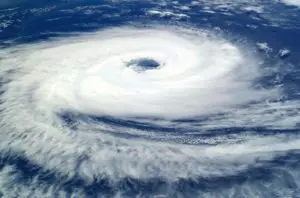
Forecasters noted that as Helene tracked northward, its expansive wind field grew significantly. Unlike compact, "pinhole" hurricanes that inflict severe damage only near their immediate centers, Helene evolved into a massive, sprawling storm system. This structural characteristic carried severe implications:
- Extended Gale-Force Winds: Tropical-storm-force winds were projected to extend hundreds of miles outward from the center, meaning that even communities far removed from the eventual eye-wall would experience sustained hazardous gusts, downed trees, and localized power grid failures.
- Catastrophic Storm Surge: Because of the shallow bathymetry of the eastern Gulf of Mexico and the broad nature of the storm, the potential for destructive storm surge was identified as a primary life-safety threat. Low-lying coastal communities from the Big Bend region southward through the Nature Coast faced the prospect of water levels rising several feet above normal ground level, pushing inland and inundating coastal roadways, residential structures, and commercial districts.
- Inland Flooding: As the storm pushed rapidly inland, its forward speed meant that torrential rainfall would be carried deep into the Florida interior, as well as into parts of Georgia, Alabama, and the Carolinas, triggering riverine flooding and urban flash floods far from the coast.
Infrastructure Vulnerabilities in the Capital Region
While Tallahassee is situated in North Florida’s red hills—elevated significantly above sea level compared to coastal barrier islands—it is uniquely susceptible to wind-driven damage due to its dense, mature tree canopy. The city’s power grid, managed by both municipal utilities and rural electric cooperatives, is notoriously vulnerable to falling pine and oak trees during severe weather events.
During past storms, widespread tree damage has severed transmission lines, leading to prolonged multi-day or multi-week power outages across Leon County. Furthermore, transportation corridors leading into and out of Tallahassee—including Interstate 10, U.S. Highway 27, and regional state roads—frequently experience temporary blockages due to fallen timber and localized debris, justifying the legislature’s decision to keep staff off the roads during the height of the storm.
OFFICIAL STATEMENTS & DIRECTIVES
The internal memo issued by Senate President Kathleen Passidomo outlines clear boundaries regarding accountability, communication protocols, and the delegation of authority during regional emergencies. An analytical breakdown of the memorandum’s key provisions highlights the administrative strategy employed by state leadership.
1. The Call to Personal Preparedness
The memorandum opens with an urgent reminder regarding the uncertainty of the storm’s path and intensity:
"The storm that is anticipated to become Hurricane Helene is strengthening as she approaches Florida, and the exact path remains uncertain. It is important that everyone take the time to make preparations for your home and family."
This phrasing reflects a modern understanding of emergency management: public officials cannot effectively execute their public duties if their personal lives and families are compromised by an approaching disaster. By explicitly granting permission and time for preparation, leadership legitimized the human element of disaster response.
2. Blanket Closure for Tallahassee Headquarters
The operational core of the directive dictates the specific timeline for the capital offices:
"Taking into account storm preparations and anticipated school closures, out of an abundance of caution, Senate Offices in Tallahassee will be closed on Wednesday, September 25 – Friday, September 27."
By tying the closure decision to local school system shutdowns, the memorandum acknowledged the socio-economic reality faced by working parents on the legislative staff. When school districts shutter, workforce availability drops precipitously; incorporating this metric into the closure calculus ensured a comprehensive and equitable policy rollout.
3. Decentralized District Office Authority
Recognizing that Florida is a geographically diverse state with distinct regional microclimates and varying levels of direct storm exposure, the memorandum established a decentralized command structure for local operations:
"Senators maintain discretion regarding the closure of any district office in the impacted areas."
This provision empowered individual senators—who maintain a deeper, boots-on-the-ground understanding of their specific municipal and county conditions—to determine whether their local constituent service centers should remain open, scale back operations, or close entirely based on local evacuation orders and municipal risk assessments.
4. Telecommunications Realities and Post-Storm Reporting
Perhaps the most pragmatic section of the memorandum addresses the inevitable breakdown of modern communication infrastructure during a major natural disaster:
"As we all know, wireless service can be limited in storm-impacted areas, making cell phone and email communications difficult. To the extent possible, please notify your immediate supervisor of any severe impacts following the storm. Please stay safe and cautious during this uncertain time."
Cellular tower destruction, fiber-optic line cuts, and widespread commercial power outages routinely render smartphones and internet routers useless in the immediate aftermath of a hurricane. By lowering expectations for immediate check-ins while still establishing a baseline expectation for communication ("to the extent possible"), leadership struck a balance between operational accountability and realistic crisis management.
FUTURE OUTLOOK: RECOVERY, ASSESSMENT, AND THE RETURN TO LEGISLATIVE BUSINESS
As Hurricane Helene makes landfall and subsequently tracks northward, the focus of the Florida Senate—and the state government at large—will shift from pre-storm preparations to post-storm damage assessment, search and rescue support, and infrastructure reconstruction.
Immediate Post-Landfall Priorities
Once the storm-force winds subside and rain bands clear the capital region, the initial priority for legislative leadership will be accounting for the safety and welfare of all senators and staff. Supervisors will work through the communication bottlenecks anticipated by President Passidomo’s memo, utilizing satellite communications, emergency radio networks, and boots-on-the-ground checks to verify the well-being of personnel residing in heavily impacted sectors.
Simultaneously, state agencies including the Florida Division of Emergency Management (FDEM), the Florida National Guard, and the Florida Department of Transportation (FDOT) will execute search and rescue operations, clear primary evacuation routes, and begin the arduous task of restoring electrical grids and municipal water systems.
Resumption of Legislative Business
The closure of the Tallahassee Senate offices through Friday, September 27, sets up a critical juncture for the following week. Assuming infrastructure within Leon County does not suffer catastrophic, long-term damage, legislative operations are expected to resume on a phased basis beginning Monday, September 30.
However, the psychological and physical toll of the storm will likely reverberate throughout the Capitol for weeks. Committee weeks leading up to the upcoming legislative session may require schedule adjustments, remote participation protocols, or virtual hearings to accommodate members and staff whose personal residences or district offices sustained severe wind or water damage.
Furthermore, the fiscal implications of Hurricane Helene will inevitably dominate the future legislative agenda. Lawmakers will likely be called back to Tallahassee for a special legislative session in the coming months to appropriate emergency relief funds, replenish the state’s Emergency Preparedness Trust Fund, provide disaster tax relief for affected property owners, and address structural infrastructure vulnerabilities exposed by the storm’s fury.
Conclusion
President Kathleen Passidomo’s memorandum regarding the Hurricane Helene closures serves as a case study in proactive institutional crisis management. By balancing the necessity of continuous public service with the paramount priority of human life and safety, legislative leadership demonstrated a clear-eyed understanding of the perils posed by modern, rapidly intensifying tropical systems. As Florida navigates the turbulent aftermath of Hurricane Helene, the resilience of its public institutions—tested and preserved through measured administrative decisions—will form the bedrock of the state’s long-term recovery.

0 Comments