
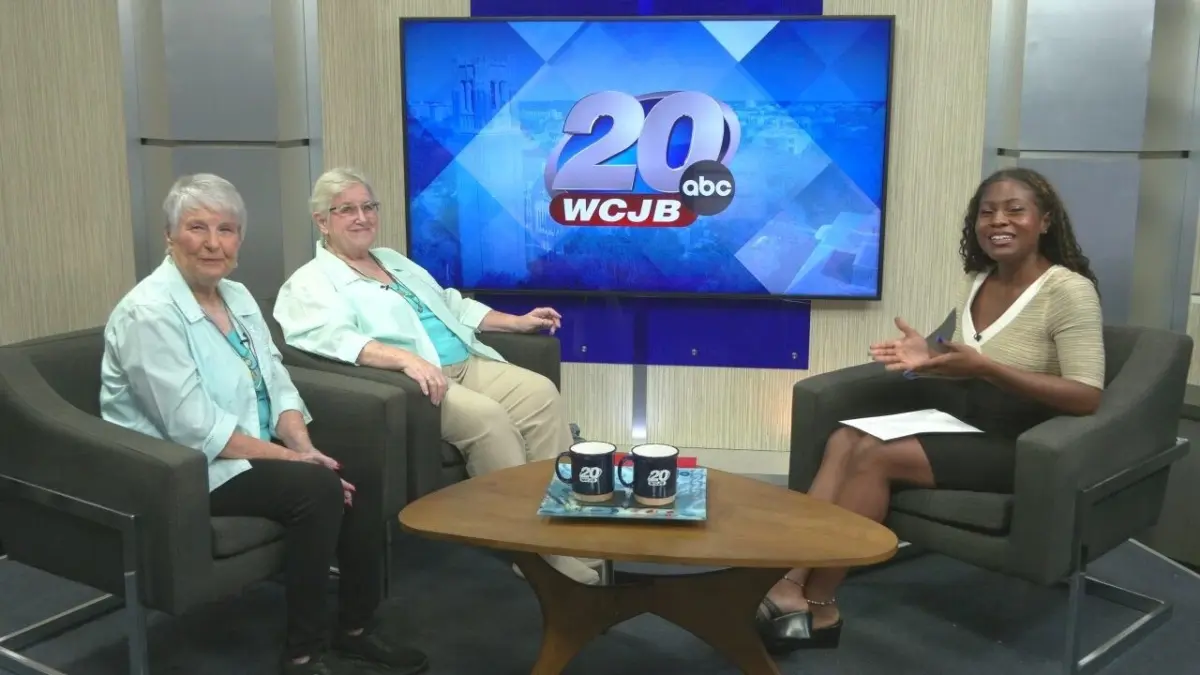

GAINESVILLE, Fla. — As September marks the observance of National Citizenship Month across the United States, the solemn and joyous rituals of naturalization take center stage in courthouses, community centers, and civic auditoriums. For more than a decade, one distinct, melodic fixture has remained a constant backdrop to these life-altering ceremonies in North Central Florida: the Gainesville Harmony Show Chorus.
Blending four-part a cappella harmony with a profound sense of civic devotion, this dedicated ensemble has transformed the bureaucratic threshold of citizenship into an emotional, resonant celebration. In a special broadcast feature, TV20’s Hawah Ezell sat down with members of the chorus to explore the deeply personal significance of their decade-long tradition, shedding light on the intersection of community music-making and the immigrant journey.
Executive Overview
National Citizenship Month serves as a nationwide reflection on the rights, responsibilities, and shared values that define American identity. While political debates often frame immigration through the lens of policy, economics, and border security, the grassroots reality at naturalization ceremonies is defined by human triumph, relief, and belonging.
For the past ten years, the Gainesville Harmony Show Chorus has served as the musical heartbeat of these ceremonies throughout North Central Florida (NCFL). Comprising women from diverse professional and personal backgrounds, the chorus operates under the umbrella of Sweet Adelines International, a worldwide organization dedicated to barbershop harmony. However, their local footprint extends far beyond musical performance; they act as unofficial ambassadors of welcome, using the universal language of song to bridge cultural divides and validate the struggles of newly minted Americans.
This comprehensive report examines the intersection of community choral performance and civic ritual. Drawing on interviews from the recent WCJB broadcast, historical context of naturalization music, and broader demographic trends in Florida, this article explores how a localized chorus became an indispensable institution of civic integration.
Detailed Chronology: A Decade of Song and Ceremony
The relationship between the Gainesville Harmony Show Chorus and the federal naturalization process did not happen overnight. It evolved through a gradual alignment of artistic mission and civic need, marked by key milestones over the last ten years.
The Formative Years (Pre-2016)
Before establishing a formal presence at federal naturalization proceedings, the Gainesville Harmony Show Chorus functioned primarily as a competitive and performance-oriented ensemble within Region 9 of Sweet Adelines International. Known for their intricate arrangements, glittering costumes, and precise vocal tuning, the chorus frequently performed at local charity events, holiday galas, and regional competitions.
However, individual members often felt a pull toward more service-oriented performances. The turning point occurred in the early 2010s, when local federal judges and immigration officials sought ways to inject more dignity, warmth, and memorability into administrative swearing-in ceremonies. Traditional ceremonies often lacked emotional resonance, reduced to rapid-fire paperwork processing in sterile courtrooms.
Institutional Integration (2016–2020)
By the mid-2010s, the chorus had formalized an ongoing partnership with federal organizers overseeing naturalization courts in the U.S. District Court for the Northern District of Florida. What began as an occasional invitation to sing "The Star-Spangled Banner" transformed into a regular commitment.
Chorus members began structuring their rehearsal schedules around the unpredictable timelines of federal dockets. They learned to adapt their repertoire, shifting from complex secular show tunes to patriotic standards specifically arranged for barbershop a cappella: "God Bless America," "America the Beautiful," and Lee Greenwood’s "God Bless the U.S.A."
During this period, the chorus witnessed thousands of candidates take the Oath of Allegiance. Members noted a distinct shift in the atmosphere of the ceremonies whenever they performed; nervous tension would dissipate, replaced by collective weeping, smiling, and rhythmic applause.
Pandemic Resilience and Adaptation (2020–2022)
The COVID-19 pandemic presented unprecedented challenges to choral ensembles nationwide, widely identified as high-risk transmission environments. Naturalization ceremonies were similarly disrupted, pivoting to drive-through swearing-ins, small socially distanced gatherings, or virtual formats.
Undeterred, the Gainesville Harmony Show Chorus leveraged digital technology. Members recorded individual vocal tracks from their homes, which audio engineers stitched together into virtual choruses for online naturalization streams. When live ceremonies slowly resumed under strict health protocols, the chorus was among the first community groups invited back, masked and distanced, to restore the human element to a profoundly isolated bureaucratic process.
The Modern Era and National Recognition (2023–Present)
Today, as the chorus celebrates over a decade of continuous service, their role has expanded. They are no longer just performers; they are recognized community stakeholders in the civic fabric of North Central Florida. Their work during National Citizenship Month highlights a broader movement to humanize the immigration system through community arts. As featured in the recent WCJB segment with Hawah Ezell, current chorus members continue to reflect on how bearing witness to these ceremonies has fundamentally altered their own perceptions of patriotism and national identity.
Supporting Context & Metrics: The Demographic and Cultural Landscape
To understand the impact of the Gainesville Harmony Show Chorus, one must examine the broader demographic reality of immigration in Florida and the psychological mechanics of musical ritual.
Immigration in North Central Florida
While major metropolitan hubs like Miami, Orlando, and Tampa capture national headlines regarding immigration, North Central Florida—anchored by Alachua County and Gainesville—boasts a vibrant, highly diverse foreign-born population. Driven largely by the University of Florida, healthcare systems, and regional agriculture, Gainesville attracts students, researchers, physicians, and laborers from across the globe.
According to data from the U.S. Census Bureau and the Office of Immigration Statistics, tens of thousands of lawful permanent residents in the region become eligible for naturalization each decade. Naturalization ceremonies in the Northern District of Florida regularly induct hundreds of candidates at a single sitting, representing dozens of countries of origin spanning every continent.
The Neurobiology and Sociology of Group Singing
Musicologists and sociologists have long studied the power of communal singing in rites of passage. Anthropologist Ellen Dissanayake posits that "arting"—behavior that makes things special—is a fundamental human drive used to reinforce social bonds during critical transitions.
When the Gainesville Harmony Show Chorus performs at a naturalization ceremony, several psychological mechanisms are at play:
- Emotional Synchronization: A cappella barbershop harmony relies on "lock and ring"—acoustic overtones produced when chords are tuned with absolute mathematical precision. This physical vibration creates a shared sensory experience that bypasses language barriers.
- Validation of Struggle: For an immigrant who may have spent years navigating complex legal frameworks, facing xenophobia, or enduring economic hardship, hearing a local community choir sing in their honor acts as formal societal validation. It translates legal status into cultural belonging.
- Collective Memory: Rituals require markers to make them unforgettable. While the certificate of naturalization provides legal permanence, the music provides the emotional bookmark.
Official Statements and Member Perspectives
During her sit-down with the Gainesville Harmony Show Chorus for TV20, Hawah Ezell captured the intimate motivations driving these women to dedicate their time, talent, and energy to federal ceremonies.
"When you stand up there and look out at that room, you see the entire world sitting in those chairs," shared one long-time chorus member during the interview segment. "You see elderly couples who have waited forty years to become citizens, and young professionals who just arrived a few years ago. When we hit that final chord of ‘America the Beautiful,’ and you see the tears start falling down their faces, you realize that music is doing something legislation and paperwork can’t quite touch."
Chorus leadership emphasized that the experience transforms their own understanding of citizenship. In a political climate often dominated by polarization, participating in naturalization ceremonies offers a grounding reminder of what people are willing to sacrifice to attain American citizenship.
"People take their citizenship for granted if they were born here," another chorus member noted in the WCJB feature. "When you sing for people who chose this country—who studied the Constitution, passed the tests, and stood up to take a solemn oath—it forces you to remember the immense value of what we hold by accident of birth."
Federal judges presiding over these courts have frequently echoed these sentiments, expressing deep gratitude to the chorus for elevating administrative proceedings into profound civic celebrations. For the judiciary, the music provides an essential bridge between the stern authority of the law and the warm embrace of the community.
Future Outlook: Sustaining the Tradition
As the Gainesville Harmony Show Chorus looks toward the next decade, leadership is actively working to ensure the longevity and expansion of their civic outreach.
Youth Engagement and Mentorship
One of the primary challenges facing traditional choral arts, particularly barbershop harmony, is generational replenishment. To secure the future of both the chorus and their naturalization performances, members are partnering with local high school and university music programs in Alachua County. By introducing younger vocalists to the power of a cappella service work, the chorus hopes to instill a lifelong commitment to community arts and civic engagement.
Expanding Geographic Reach
While the core of their work remains focused on Gainesville and the surrounding Northern District federal court venues, the chorus is exploring collaborative opportunities with civic organizations in neighboring counties. As migration patterns shift northward from South and Central Florida, rural and semi-urban communities are hosting an increasing number of localized naturalization ceremonies, creating a heightened demand for volunteer cultural programming.
Research and Documentation
There is also a growing push to formally document the chorus’s history. Academic researchers in ethnomusicology and sociology at the University of Florida have expressed interest in partnering with the ensemble to archive oral histories of naturalized citizens alongside the musical repertoire performed at their ceremonies. Such an archive would provide future historians with a unique qualitative window into the immigrant experience in 21st-century Florida.
Conclusion
National Citizenship Month is more than a calendar designation; it is an annual pause to evaluate the health and inclusivity of the American experiment. Through the dedication of the Gainesville Harmony Show Chorus, this evaluation is elevated from abstract political theory to lived, melodic reality.
For over ten years, their voices have welcomed thousands of new citizens across North Central Florida, transforming legal proceedings into emotional homecomings. As highlighted in Hawah Ezell’s report for WCJB, the true power of the chorus lies not merely in their vocal precision, but in their capacity to embody the most generous spirit of community. In a fractured world, the Gainesville Harmony Show Chorus continues to prove that harmony—both musical and civic—is an intentional, beautiful achievement worth singing about.

0 Comments