

Executive Overview
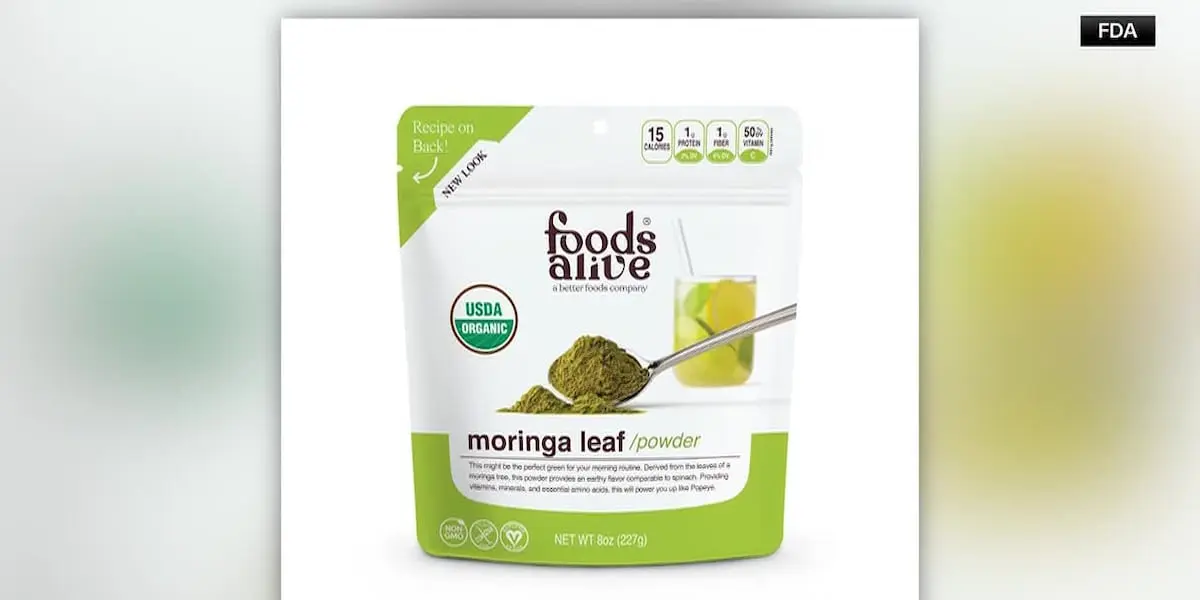
In an era where the global wellness industry is expanding at an unprecedented rate, the intersection of health-conscious consumer demand and supply chain integrity has once again come under intense scrutiny. Foods Alive, a prominent player in the organic superfood market, has initiated a voluntary recall of its Organic Moringa Leaf Powder. The recall was prompted by the potential presence of Salmonella, a pathogenic bacterium capable of causing severe gastrointestinal illness and, in vulnerable populations, life-threatening systemic infections.
The recall specifically impacts eight-ounce packages of the company’s Organic Moringa Leaf Powder distributed nationwide. The affected batch carries a "freshest date" of 110127 (representing November 1, 2027) and the lot identification number 02726 printed directly below the date. According to company records and regulatory filings, the compromised product was actively distributed to brick-and-mortar retail locations and online consumers between January 27 and August 7, 2026.
+-------------------------------------------------------------------------+
|                      RECALLED PRODUCT QUICK REFERENCE                   |
+----------------------+--------------------------------------------------+
| Product Name         | Foods Alive Organic Moringa Leaf Powder          |
| Package Size         | 8-Ounce Pouches                                  |
| Best-By/Freshest Date| 110127 (November 1, 2027)                        |
| Lot/Batch Number     | 02726                                            |
| Distribution Period  | January 27, 2026 – August 7, 2026                |
| Distribution Channels| Nationwide Retailers & Foodsalive.com            |
+----------------------+--------------------------------------------------+
The potential contamination was identified during routine ingredient testing conducted by one of the brand’s upstream suppliers. While no illnesses or adverse events have been reported to date, Foods Alive has taken the precautionary step of halting all production of the moringa line. This suspension remains in place as the U.S. Food and Drug Administration (FDA) conducts a thorough investigation into the source of the pathogen and the adequacy of preventive controls within the supply chain.
This incident highlights the persistent vulnerability of raw, low-moisture agricultural products to microbial contamination. It also emphasizes the critical role that robust supplier verification programs play under modern food safety regulations.
Detailed Chronology
The pathway from agricultural harvesting to consumer ingestion is long and complex, particularly for imported botanical powders. Understanding the timeline of this recall requires tracing the flow of the product through the supply chain and examining the point of failure.
Origin and Distribution Window
The raw moringa leaves utilized by Foods Alive are sourced from agricultural partners, dried, milled into a fine powder, and packaged for distribution. The specific batch under investigation (Lot 02726) was packaged and prepared for market in early 2026.
For over six months—from January 27 to August 7, 2026—this lot was shipped to retail partners across the United States and sold directly to consumers via the Foods Alive e-commerce platform. Because moringa powder is typically consumed in small daily doses (often added to smoothies, teas, or wellness bowls), an eight-ounce package can remain in a consumer’s pantry for several months, prolonging the window of potential exposure.
   [Jan 27, 2026]         [Aug 7, 2026]          [August 2026]          [Late August 2026]
         |                      |                      |                        |
  Distribution Begins   Distribution Ceases    Supplier Test Detects   Foods Alive Suspends
  to Retail & Online     After Inventory       Salmonella; FDA         Production & Issues
  Channels Nationwide    Exhaustion/Alert      Notified                Voluntary Recall
Detection and Escalation
The contamination was not initially detected by Foods Alive’s internal quality control protocols, but rather by an upstream supplier during subsequent testing of a shared raw material lot. Upon obtaining a presumptive positive result for Salmonella in a sample of the "super green powder mix," the supplier immediately notified Foods Alive and regulatory authorities.
Upon receiving the supplier’s notification, Foods Alive initiated its emergency recall plan:
- Inventory Hold: Immediate halting of any remaining warehouse stock of Lot 02726.
- Distribution Halt: Electronic blocks were placed on the product SKU to prevent further online sales.
- Retailer Notification: Urgent recall notices were dispatched to distributors and retail partners nationwide, instructing them to pull the affected inventory from shelves immediately.
- FDA Collaboration: The company coordinated with the FDA to draft and distribute the public recall notice, which was published on the FDA’s safety alert portal.
- Operational Suspension: Production of all moringa-based products was suspended pending a comprehensive root-cause analysis.
Supporting Context & Metrics
The Microbiology of Salmonella in Low-Moisture Foods
For decades, food safety protocols focused primarily on high-moisture foods, such as raw meats, dairy, and fresh produce, as the primary vectors for Salmonella. However, modern food safety science recognizes that low-moisture foods—including spices, nuts, seeds, and botanical powders like moringa—present unique hazards.
Salmonella is a genus of rod-shaped, Gram-negative bacteria. While it requires moisture to actively multiply, it can enter a state of dormancy in dry environments. In low-moisture matrices like moringa powder, the water activity ($a_w$) is too low to support bacterial growth, but the pathogen can survive for years. Once consumed, the rehydrated bacteria can easily survive the acidic environment of the stomach, colonize the intestinal tract, and cause salmonellosis.
+--------------------------------------------------------------------------+
|                     SALMONELLOSIS: CLINICAL PROFILE                      |
+-------------------+------------------------------------------------------+
| Incubation Period | 6 hours to 6 days after ingestion                    |
| Common Symptoms   | Diarrhea, fever, abdominal cramps, nausea, vomiting  |
| Duration          | Typically 4 to 7 days; most recover without drugs    |
| Severe Risks      | Arterial infections, endocarditis, reactive arthritis|
| High-Risk Groups  | Infants, elderly, pregnant women, immunocompromised  |
+-------------------+------------------------------------------------------+
In the United States, Salmonella is responsible for an estimated 1.35 million infections, 26,500 hospitalizations, and 420 deaths annually, according to Centers for Disease Control and Prevention (CDC) metrics.
The Moringa Market Boom and Supply Chain Complexity
Moringa oleifera, often referred to as the "drumstick tree" or "miracle tree," has seen a dramatic surge in global demand. Valued for its high concentration of antioxidants, vitamins, and proteins, the global moringa market has grown rapidly, driven by the plant’s reputation as a premier superfood.
Global Moringa Market Projected Growth (Est. USD Billions)

  2023:  $9.5B  ■■■■■■■■■■■
  2026: $12.1B  ■■■■■■■■■■■■■■
  2030: $16.8B  ■■■■■■■■■■■■■■■■■■■■
Most moringa is cultivated in tropical and subtropical regions, with India producing roughly 80% of the world’s supply. Other growing regions include parts of Africa and Central/South America.
This highly fragmented, international supply chain presents significant regulatory challenges:
- Agricultural Runoff: In developing agricultural regions, irrigation water can easily become contaminated with animal feces containing Salmonella.
- Drying Methods: Traditional open-air sun drying of moringa leaves exposes the raw botanical material to wild birds, rodents, and pests, which are common vectors for pathogens.
- Milling and Processing: If milling facilities do not maintain strict environmental controls, cross-contamination can occur between raw agricultural inputs and finished powders.
Official Statements
Foods Alive Corporate Response
In its official communication, Foods Alive emphasized its commitment to consumer safety and food quality. A spokesperson for the company stated:
"Foods Alive has always prioritized the health and trust of our consumers above all else. Upon learning of a potential contamination issue from our supplier, we immediately initiated a voluntary recall of the affected moringa leaf powder batch. We are working closely with the FDA and our supply chain partners to investigate this matter thoroughly. Out of an abundance of caution, we have suspended production of this product until we are completely satisfied that our strict safety standards are met."
The company has urged consumers who purchased the affected 8-ounce packages (Lot 02726, Freshest Date 110127) to discontinue use immediately. Consumers are instructed to return the product to the original place of purchase for a full refund or discard the package safely.
Regulatory Oversight: The FDA’s Mandate
The FDA’s involvement in this recall is governed by the Food Safety Modernization Act (FSMA). Under FSMA’s Preventive Controls for Human Food rule, registered food facilities must implement a written food safety plan. This plan must identify potential biological hazards and establish preventive controls to mitigate those risks.
An FDA official, speaking on the condition of anonymity regarding the ongoing investigation, noted:
"Voluntary recalls are an essential tool in protecting public health. When a company or its supplier identifies a potential pathogen in the food supply, rapid action is critical to prevent outbreaks. Our investigators are currently examining the manufacturing and distribution logs of Foods Alive and its suppliers to determine where the breakdown in preventive controls occurred and to ensure that corrective actions are fully implemented before production resumes."
Future Outlook
Regulatory and Industry Pressures
This incident is likely to intensify scrutiny of raw botanical powders and dietary supplements. Unlike pharmaceutical products, dietary supplements and raw superfood powders do not undergo pre-market approval by the FDA. Instead, the onus is on the manufacturer to ensure product safety and compliance with Current Good Manufacturing Practices (cGMPs).
Industry analysts predict that the FDA will increasingly target botanical importers for Foreign Supplier Verification Program (FSVP) audits. Under the FSVP, U.S. importers must verify that their foreign suppliers produce food in a manner that provides the same level of public health protection as U.S. law.
+--------------------------------------------------------------------------+
|                 FUTURE FOOD SAFETY MITIGATION STRATEGIES                 |
+-------------------+------------------------------------------------------+
| Pathogen Reduction| Wider adoption of non-thermal sterilization, such as |
| Technologies      | ethylene oxide (EtO), steam treatment, or            |
|                   | irradiation

 to sanitize raw botanicals.              |
+-------------------+------------------------------------------------------+
| Blockchain &      | Implementing end-to-end digital ledgers to trace     |
| Traceability      | single batches back to the specific farm of origin.  |
+-------------------+------------------------------------------------------+
| Increased Testing | Transitioning from periodic lot testing to continuous|
| Frequency         | environmental and batch testing at every node of the |
|                   | supply chain.                                        |
+-------------------+------------------------------------------------------+
Rebuilding Consumer Trust
For Foods Alive, a brand built on the promise of pure, raw, and organic ingredients, a recall of this nature poses a significant brand reputation risk. The company’s quick, transparent response and voluntary suspension of production are standard practices for mitigating long-term brand damage.
To prevent future incidents, the company will likely need to re-evaluate its supplier network. It may also need to implement more rigorous testing protocols, such as requiring a Certificate of Analysis (COA) showing negative pathogen results for every single incoming lot of raw materials before they enter the production facility.
Conclusion
The recall of Foods Alive Organic Moringa Leaf Powder serves as a reminder of the biological risks inherent in raw, globally sourced agricultural products. As the demand for superfoods grows, the industry must continue to strengthen its supply chains. Only through rigorous testing, strict adherence to preventive controls, and transparent communication can brands protect both public health and consumer confidence.

0 Comments