

Executive Overview
Urban planning is fundamentally an exercise in connectivity, resource allocation, and practical engineering. Sidewalks, when integrated into a cohesive master plan, serve as the vital arteries of pedestrian mobility, connecting residential neighborhoods to schools, parks, commercial centers, and public transit. However, when municipal regulations are applied mechanically without regard for physical reality or economic common sense, they can transform from instruments of public good into vectors of regulatory excess.
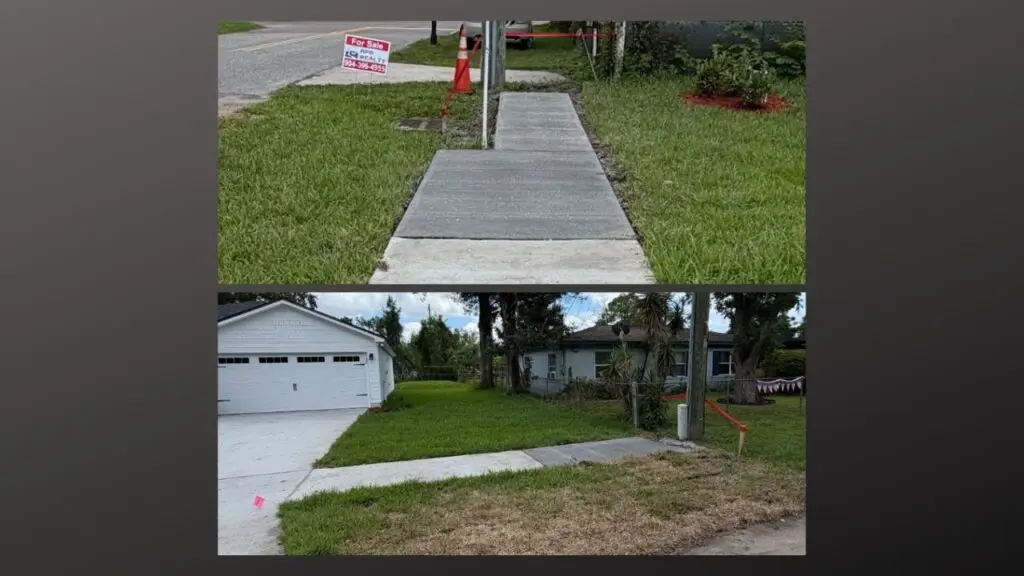
This tension is currently playing out in Jacksonville, Florida, where an impending appeal before the City Council has brought the limits of inflexible municipal policies into sharp relief. At the center of the controversy is a local homebuilder seeking to construct single-family residences across 19 vacant properties situated on the city’s Northside. While the developer is prepared to invest in much-needed housing stock within an established community, municipal planning mandates have introduced a costly stumbling block: a requirement to install isolated, disconnected stretches of sidewalk.
These proposed concrete segments would link to nothing. The properties in question are part of a mid-20th-century platting where the immediate surrounding area features scattered residences, heavily wooded and vacant lots, roadside drainage ditches, and narrow streets that the city itself refuses to maintain. There are no existing sidewalks for these new segments to tie into, nor has the city identified any future pedestrian destination they would serve. Furthermore, physical obstacles—including open drainage ditches and utility poles—occupy the precise right-of-way where sidewalks would normally be constructed. The absence of conventional curb-and-gutter infrastructure further compounds the issue, rendering a coordinated drainage and pedestrian system technically unfeasible.
Despite these self-evident physical and logistical barriers, municipal bureaucrats have insisted on enforcing the sidewalk mandate under a strict, one-size-fits-all interpretation of city code. The result is a classic case study in regulatory drift: driving up the cost of housing construction to satisfy a bureaucratic checklist while delivering zero tangible pedestrian benefit to the community. As the Jacksonville City Council prepares to hear the appeal, the case has evolved into a bellwether for broader discussions regarding regulatory reform, the economics of housing affordability, and the necessity of applying common-sense oversight to municipal governance.
Detailed Chronology
To understand how a routine infill housing development became a focal point for a municipal policy showdown, it is necessary to examine the historical and chronological sequence of events governing the subject properties.
The 1950s Platting and Legacy Infrastructure
The roots of the current controversy stretch back more than half a century. The 19-property portfolio in question on Jacksonville’s Northside was originally platted during the 1950s—an era of post-war suburban expansion characterized by different engineering standards, looser master-planning integration, and a reliance on rural cross-section roadway designs. Unlike modern master-planned communities designed from scratch with comprehensive stormwater management systems and dedicated utility corridors, these historical plats relied on roadside ditches for stormwater drainage and gravel or minimal asphalt paving for vehicular access.
Over the decades, these neighborhoods evolved piecemeal. Some lots were built upon, while others remained vacant, wooded, and neglected. Crucially, the municipal government assumed limited maintenance responsibilities for the local rights-of-way, leaving the streets in a state of infrastructural limbo. Over time, utility poles were installed within the rights-of-way, and natural drainage patterns carved out open ditches alongside the uncurbed roadways.

The Modern Infill Proposal
Fast forward to the present day: a local homebuilder recognized an opportunity to bring much-needed single-family housing stock to the Northside through infill development. Infill housing is widely championed by urban planners and housing advocates alike because it utilizes existing infrastructure footprints, revitalizes dormant parcels, and curbs the sprawling outward expansion of metropolitan areas.
The developer prepared plans to construct modern, energy-efficient single-family homes on the 19 scattered lots. These homes would add value to the tax base, clean up overgrown vacant parcels, and provide homeownership opportunities in an established community. However, as the project moved through the preliminary review stages, it collided with modern land development regulations that mandate sidewalk installation for any new residential construction, regardless of the surrounding context.
The Bureaucratic Stalemate
When the developer pointed out that the surrounding area possessed no existing sidewalk network for the new segments to connect to, municipal reviewers stood firm on the letter of the code. Subsequent reviews highlighted the physical impossibilities of the site: open drainage ditches and utility poles lining the uncurbed streets left virtually no safe or accessible space for standard sidewalk construction.
Faced with a regulatory impasse—where complying with the sidewalk mandate would incur substantial engineering and construction costs without creating a single foot of functional pedestrian pathway—the developer refused to accept the edict without a fight. The dispute escalated through administrative channels, culminating in a formal appeal slated for the Jacksonville City Council. This pivotal moment forces elected officials to adjudicate between rigid bureaucratic adherence and pragmatic, context-sensitive urban planning.
Supporting Context & Metrics
The Jacksonville dispute is not an isolated local quirk; it touches upon critical macroeconomic and structural challenges currently facing the American housing market. Analyzing the interplay between regulatory mandates and housing affordability provides essential context for the City Council’s upcoming decision.
The Economics of Regulatory Drag
In recent years, economists and housing policy experts have increasingly focused on "regulatory tax"—the cumulative financial burden that building codes, zoning restrictions, and municipal mandates impose on new construction. According to data from the National Association of Home Builders (NAHB), government regulations account for nearly 25% of the final cost of a single-family home built for sale.
When a municipality requires developers to install unneeded infrastructure, such as orphaned sidewalks, those costs are inevitably passed down to the homebuyer. In a market where median home prices have risen precipitously relative to median incomes, every thousand-dollar increment added to construction costs prices out hundreds of potential buyers.

To quantify the impact:
- Direct Construction Costs: Pouring concrete sidewalks involves excavation, grading, sub-base preparation, concrete pouring, ADA-compliant handicap ramps, and localized stormwater adjustments.
- Engineering and Surveying Expenses: Designing sidewalks around pre-existing utility poles and open drainage ditches requires specialized engineering, topographic surveys, and potential utility relocation.
- Opportunity Costs: Capital tied up in mandated, non-functional infrastructure cannot be deployed toward improving the interior quality, energy efficiency, or square footage of the homes themselves.
[Regulatory Mandate] ──> [Forced Non-Functional Construction] ──> [Inflated Development Costs] ──> [Reduced Housing Affordability]The Physical Reality of Infrastructure Integration
From an engineering perspective, sidewalks cannot exist in a vacuum. A functional pedestrian network relies on several interdependent components:
- Continuity: Sidewalks must link origins (homes) to destinations (schools, stores, parks). Isolated segments fail this fundamental test.
- Drainage Integration: Standard urban roadways utilize curbs and gutters to channel stormwater into subsurface closed-pipe systems, running parallel to elevated sidewalks. Without curbs and gutters, roadside swales and open ditches absorb surface runoff. Inserting a sidewalk directly into an open-ditch drainage system disrupts stormwater flow, creates erosion hazards, and forces pedestrians dangerously close to vehicular traffic without a physical buffer.
- Utility Coordination: Overhead and underground utilities must be coordinated to ensure ADA compliance and pedestrian clearance. Placing concrete over utility corridors without proper relocation invites costly future disruptions whenever utility providers need to service water, gas, or electrical lines.
Official Statements and Stakeholder Perspectives
As the Jacksonville City Council appeal draws near, the controversy has galvanized various stakeholders, each offering distinct viewpoints on the balance between municipal enforcement and common-sense governance.
The Developer’s Perspective
Speaking on condition of anonymity pending the formal council proceedings, representatives for the homebuilder have expressed profound frustration with the lack of administrative flexibility.
"We are eager to invest in Jacksonville’s Northside, clean up vacant land, and deliver quality homes for working families," a project representative noted. "However, forcing us to pour concrete into drainage ditches where there are no connecting sidewalks, no curbs, and no pedestrian destinations defies logic. It drives up the cost of homeownership for no public benefit whatsoever. Bureaucrats are treating a housing development as a blank slate when it is an infill project in a 1950s neighborhood."
The Urban Planning and Policy Critique
Independent urban planners who have reviewed the site plans point out that this case illustrates a dangerous administrative reflex: prioritizing bureaucratic compliance over actual urban outcomes.
Policy analysts argue that modern zoning codes often suffer from a lack of "contextual discretion." When planning departments are stripped of—or unwilling to use—common-sense discretion, they impose suburban subdivision standards onto historical urban infill parcels. The result is a fractured built environment where orphaned infrastructure litters the landscape, serving neither pedestrians nor drivers effectively.

The Municipal Bureaucracy’s Stance
While city planners have defended the general importance of sidewalk expansion in promoting pedestrian safety and accessibility under the Jacksonville 2045 Comprehensive Plan, critics note that municipal representatives have struggled to articulate a coherent rationale for enforcing the mandate in this specific, physically constrained location. The prevailing justification—often amounting to little more than a rigid "because the code says so"—has drawn sharp criticism from property rights advocates and fiscal conservatives alike.
Future Outlook
The outcome of the pending Jacksonville City Council appeal will resonate far beyond the 19 Northside properties at the center of the dispute. It establishes a critical precedent for how the city handles infill development, regulatory compliance, and economic competitiveness in the years ahead.
Potential Scenarios and Implications
1. The Common-Sense Ruling (The Appellant Prevails)
If the City Council votes to grant the appeal and waive the sidewalk requirement for these specific parcels, it would signal a welcome willingness among elected officials to prioritize housing affordability and practical engineering over rigid bureaucratic dogma. Such a decision could prompt a broader review of Jacksonville’s land development code, encouraging the city to adopt contextual exemption criteria for infill projects in older, unmaintained neighborhoods. This would reduce unnecessary development costs, stimulate private investment in underserved areas, and streamline the pipeline for new single-family housing.
2. The Status Quo Enforcement (The Appeal is Denied)
Should the City Council uphold the bureaucratic mandate, the immediate consequence will be increased construction costs for the 19 homes, further straining affordability in a tight market. More broadly, it would send a discouraging signal to infill developers across Jacksonville. If builders face arbitrary, costly mandates that yield zero public utility, private capital may increasingly bypass older urban neighborhoods in favor of easier, greenfield developments outside municipal limits—counteracting the city’s stated goals of urban revitalization and efficient land use.
Conclusion
The Jacksonville sidewalk dispute serves as a cautionary tale about the perils of unyielding administrative oversight. Sidewalks are undeniably vital tools for community safety and connectivity, but their value is derived from integration, continuity, and purpose. When municipal authorities demand the construction of isolated concrete strips that connect to nothing across drainage ditches that accommodate no pedestrians, they achieve only one definitive outcome: driving up the cost of housing. As the City Council prepares to weigh in, the decision offers a clear choice between enforcing blind bureaucratic compliance and embracing pragmatic, results-oriented urban governance.

0 Comments