

Executive Overview
Urban planning is theoretically designed to harmonize growth, infrastructure, and community needs, ensuring that taxpayer funds and private investments work together to create livable, accessible spaces. However, when rigid regulatory mandates collide with the messy realities of older, established neighborhoods, the results can often be counterproductive, expensive, and absurd.
This tension is currently taking center stage in Jacksonville, Florida, where a pending administrative appeal before the City Council has spotlighted a glaring disconnect between municipal rulemaking and on-the-ground reality. At the heart of the controversy is a local homebuilder’s modest proposal to construct single-family homes on 19 infill properties situated along a street on Jacksonville’s Northside. These lots, originally platted during the post-World War II housing boom of the 1950s, exist within a patchwork community characterized by scattered housing, heavily wooded and vacant parcels, open roadside drainage ditches, and an absolute absence of any unified pedestrian infrastructure.
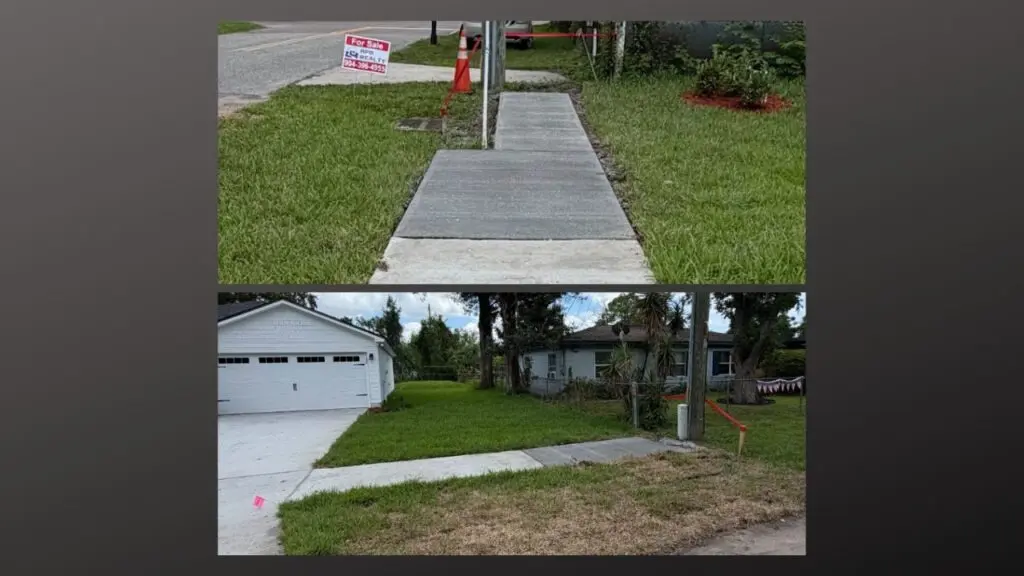
Despite these physical realities, municipal planning requirements have triggered a mandate that the developer install new sidewalk segments along the property frontages. The core of the dispute is deceptively simple yet carries profound implications for housing affordability and municipal governance: Should a private developer be forced to finance expensive, isolated stretches of concrete that connect to nothing, serve no pedestrians, and are physically obstructed by open drainage ditches and utility poles?
While sidewalks are universally recognized as vital public assets when they successfully integrate schools, parks, commercial centers, and residential neighborhoods into a cohesive transportation web, "sidewalks to nowhere" achieve none of these goals. Instead, they function purely as a regulatory tax on new construction. By inflating development costs without delivering a corresponding public benefit, these mandates exacerbate the ongoing housing affordability crisis.
This investigative report examines the Jacksonville Northside dispute, exploring the historical context of 1950s platting, the engineering and geographical hurdles facing the subject properties, the economics of modern infill development, and the urgent need for municipal policy reform that balances pedestrian safety with practical urban planning.
Detailed Chronology: The Road to the Jacksonville City Council
To understand how a routine infill housing proposal devolved into a high-stakes municipal showdown, it is necessary to trace the chronology of the project and the administrative hurdles that have stalled its progress.
The 1950s Platting Legacy
The roots of this controversy extend back more than seven decades. During the 1950s, Jacksonville—like many American cities experiencing rapid suburbanization—saw vast tracts of land platted into grid systems or linear subdivisions. Many of these historical plats were approved under regulatory standards vastly different from those enforced today. Streets were often laid out without conventional modern infrastructure, such as integrated curb-and-gutter drainage systems, dedicated utility corridors, or pedestrian pathways.

Over the decades, development in these areas occurred sporadically. Some lots were built upon immediately, while others remained vacant, changing hands multiple times or becoming overgrown woodlots. The subject properties on Jacksonville’s Northside represent a classic example of this historical legacy. They are situated within an established neighborhood where the street grid is discontinuous, and municipal services—including road maintenance—have historically been piecemeal or entirely absent. In fact, local municipal records indicate that the City of Jacksonville refuses to routinely maintain the very streets upon which these homes are proposed to be built, leaving property owners to manage local upkeep or navigate deteriorating infrastructure conditions independently.
The Infill Proposal and the Mandate Trigger
Recently, a local homebuilder identified these 19 vacant, long-forgotten parcels as prime opportunities for infill development. Infill housing—the practice of building on vacant or underutilized lots within existing built-up areas—is widely praised by urban planners, environmentalists, and economists. It utilizes existing utility connections, revitalizes declining streetscapes, and helps curb urban sprawl by making efficient use of land that already sits within the urban core.
The builder set out to construct single-family homes designed to meet contemporary building codes and market demands, injecting fresh investment into the Northside community. However, as the project wound its way through the preliminary development review process, it collided head-on with Jacksonville’s sweeping Land Development Procedures and subdivision regulations.
Under current municipal interpretations, any new residential construction or major subdivision platting triggers mandatory infrastructure improvements, including the installation of concrete sidewalks along the property frontages. City planning bureaucrats applied this rule uniformly, refusing to grant exemptions or variances despite the unique physical constraints of the site.
The Administrative Appeal
Faced with what it viewed as an arbitrary and economically punitive requirement, the development team pursued administrative relief through the city’s established review channels. When lower-level planning boards and administrative officers upheld the mandate, the builder escalated the matter, bringing a formal appeal directly before the Jacksonville City Council.
This appeal transforms a localized zoning disagreement into a referendum on administrative overreach. It forces the City Council to weigh the rigid application of standard bureaucratic checklists against the nuanced, common-sense realities of infill development in historical Jacksonville neighborhoods. The Council’s impending decision will not only determine the fate of these 19 Northside homes but could also establish a vital legal and policy precedent for how Jacksonville handles similar infill projects across the city.
Supporting Context & Metrics: The Engineering, Economic, and Planning Realities
An objective analysis of the Jacksonville Northside dispute requires examining the physical, geographical, and financial data underpinning the controversy. When subjected to rigorous scrutiny, the city’s sidewalk mandate fails on multiple fronts: engineering feasibility, transportation utility, and economic common sense.

The Physical Impossibility: Where Geography Defies Bureaucracy
Walking the site of the proposed development reveals the absurdity of the sidewalk mandate. Sidewalks are not standalone entities; they are functional components of an integrated transportation and drainage ecosystem. In a standard modern subdivision, a sidewalk runs parallel to a paved street, bounded by a concrete curb and gutter system that channels rainwater into underground storm sewers.
On the subject Northside properties, none of these foundational elements exist:
- Open Drainage Ditches: Instead of subsurface storm pipes and engineered curbs, the streetscapes feature deep, open roadside drainage ditches designed to capture and hold stormwater runoff. These ditches run directly along the right-of-way where sidewalks would normally be poured. To install a sidewalk here would require piping the ditches, re-grading the easements, and fundamentally altering the neighborhood’s drainage hydrology—projects costing tens of thousands of dollars that far exceed the scope of a minor infill housing project.
- Utility Obstructions: Wooden utility poles, electrical transformers, and communication lines are haphazardly positioned within the very strips of land designated for pedestrian pathways. Moving these utility poles requires extensive coordination, utility shutdowns, and exorbitant relocation fees paid to utility providers.
- The "Destination Void": Most critically, there are zero existing sidewalks in the immediate area. If the builder pours these required concrete segments, they will begin abruptly in front of the new homes and terminate just as abruptly at the property lines, connecting to nothing. There are no schools, parks, commercial storefronts, or transit stops within a safe walking radius that these segments would serve. They form an isolated concrete island in a sea of roadside ditches and wooded acreage.
The Economics of Infill Development and Housing Affordability
At a time when municipalities nationwide are grappling with severe housing affordability crises, the financial mechanics of homebuilding deserve intense scrutiny. Every mandatory regulatory cost imposed on a developer is ultimately passed along to the end consumer—the homebuyer.
Constructing concrete sidewalks involves significant capital expenditure: excavation, sub-base preparation, pouring, finishing, ADA-compliant handicap ramp installations at intersections, and potential utility relocations. When these costs are forced onto a small-scale infill project involving only 19 homes, the per-unit cost inflation is substantial.
For working-class families looking to purchase a newly constructed home on Jacksonville’s Northside, an extra few thousand dollars in regulatory infrastructure costs can be the difference between homeownership and being priced out of the market entirely. From a purely economic standpoint, the question remains unanswered by municipal planners: Why should a private builder and future homeowners be forced to subsidize expensive concrete infrastructure that provides zero pedestrian utility and delivers no public benefit?
Official Perspectives and Bureaucratic Inertia
The conflict between the Jacksonville homebuilder and the city planning apparatus highlights a classic bureaucratic phenomenon: adherence to process over purpose.
The Administrative Stance
Representatives for the City of Jacksonville’s planning and development departments have historically defended blanket sidewalk mandates through the lens of long-range vision and legal uniformity. The bureaucratic rationale typically relies on several core arguments:

- Future-Proofing: Planners argue that even if a sidewalk connects to nothing today, cumulative infill development over the coming decades will eventually bridge the gaps, resulting in a continuous pedestrian network.
- Standardization: Bureaucrats favor rigid, rules-based enforcement because it eliminates subjective decision-making, protects the city from legal challenges of favoritism, and ensures that every developer meets identical baseline standards.
- Policy Compliance: Under current municipal codes, the written text of the ordinance dictates that residential development requires frontage improvements. Administrative officers view their role as strictly enforcement-oriented, leaving policy changes exclusively to the elected City Council.
The Criticisms of Arbitrary Enforcement
Critics, urban planning reformers, and housing advocates argue that this "because we said so" methodology represents a failure of governance. When rules are applied blindly without regard for physical context, they cease to be useful tools of urban design and instead morph into bureaucratic roadblocks.
Local stakeholders point out the profound hypocrisy of a municipal government that refuses to pave or maintain the local streets, yet aggressively demands that private builders construct costly sidewalks alongside those same unmaintained roads. If the city cannot or will not invest in the foundational infrastructure of the neighborhood (such as roads and drainage), it is unreasonable to penalize private capital for declining to build disconnected luxury amenities that nobody can safely use.
Future Outlook: Implications for Jacksonville and Beyond
As the Jacksonville City Council prepares to deliberate on this Northside appeal, the outcome will resonate far beyond the boundaries of the 19 subject properties.
Potential Scenarios and Outcomes
- The Appeal is Sustained (Common-Sense Victory): If the City Council votes to overturn the administrative requirement, it will signal a willingness by elected leaders to inject pragmatism into local land use decisions. This outcome would validate the builder’s position, reduce unnecessary housing costs, and establish a clear precedent that waivers can be granted where physical conditions (like open ditches and absent networks) make sidewalk installation impracticable.
- The Appeal is Denied (Bureaucratic Status Quo): Should the Council uphold the mandate, it will reinforce a rigid regulatory environment where rules supersede reason. Developers undertaking infill projects in older Jacksonville neighborhoods will face continued financial uncertainty, and consumers will continue to absorb the costs of uncoordinated, disconnected infrastructure.
Broader Policy Recommendations
Regardless of the Council’s specific ruling on this case, the controversy underscores the urgent need for comprehensive regulatory reform in Jacksonville’s land development code. To foster sustainable growth and housing affordability, the city should consider implementing the following structural reforms:
- Context-Sensitive Design Standards: Modify development codes to include exemptions or alternative compliance methods for infill projects in historical plats where surrounding infrastructure is fundamentally lacking.
- In-Lieu Fee Alternatives: Rather than forcing builders to pour isolated slabs of concrete in areas where sidewalks make no sense, establish an "in-lieu" fee program where developers contribute funds to a municipal pool dedicated to completing actually connected sidewalk networks in high-priority pedestrian zones (such as school zones and major transit corridors).
- Holistic Infrastructure Planning: Require municipal planning agencies to coordinate private development mandates with public capital improvement programs. If the city wants sidewalks in a neighborhood, the city should first ensure that roads, drainage, and connecting pathways are in place.
Conclusion
The Jacksonville Northside sidewalk dispute is more than a localized zoning skirmish; it is a microcosm of the challenges facing modern American cities as they attempt to balance rigid regulatory frameworks with the messy realities of historical development. By approaching this appeal with an eye toward economic common sense, physical reality, and true community benefit, the Jacksonville City Council has a golden opportunity to chart a more pragmatic, pro-growth course for the city’s future.

0 Comments