


Executive Overview
In an era defined by increasingly volatile weather patterns and the compounding threats of severe meteorological events, the role of national forecasting infrastructure has never been more critical. At the forefront of this continuous atmospheric watch stands the Storm Prediction Center (SPC)—a specialized branch of the National Centers for Environmental Prediction (NCEP), operating under the umbrella of the National Oceanic and Atmospheric Administration (NOAA) and the National Weather Service (NWS). Headquartered in Norman, Oklahoma, the SPC serves as the nation’s preeminent authority on hazardous convective weather, tasked with issuing real-time watches, mesoscale discussions, and convective outlooks that safeguard millions of lives and billions of dollars in infrastructure.
The operational rhythm of the SPC is relentless. Meteorology is a discipline where hours, minutes, and even seconds can mean the difference between proactive community preparation and catastrophic failure. Central to this mission is the continuous issuance and evaluation of Mesoscale Discussions (MDs)—short-notice, high-resolution operational updates that detail rapidly evolving atmospheric conditions over localized areas. As of the latest operational updates for August 28, 2026, the center maintains a posture of vigilant readiness, utilizing advanced telemetry, dual-polarization radar networks, and cutting-edge numerical weather prediction models to parse the subtleties of the lower atmosphere.
This report provides an exhaustive, authoritative examination of the SPC’s current operational framework, institutional history, inter-agency responsibilities, and the technological evolution driving modern severe weather forecasting. By analyzing the structural mechanisms behind products like Mesoscale Discussion #2161, the administrative transition of heavy rain monitoring to the Weather Prediction Center (WPC), and the broader scope of meteorological research conducted out of the National Weather Center in Oklahoma, we gain a comprehensive view of how the United States tracks and responds to the fury of the skies.
Detailed Chronology: The Real-Time Pulse of Severe Weather Operations
The operational day at the Storm Prediction Center does not follow a traditional clock; it is dictated entirely by the thermodynamics and kinematics of the troposphere. Meteorological data flows into the Norman facility at staggering volumes, demanding a seamless synthesis of human expertise and automated computation.

The Lifespan of a Mesoscale Discussion
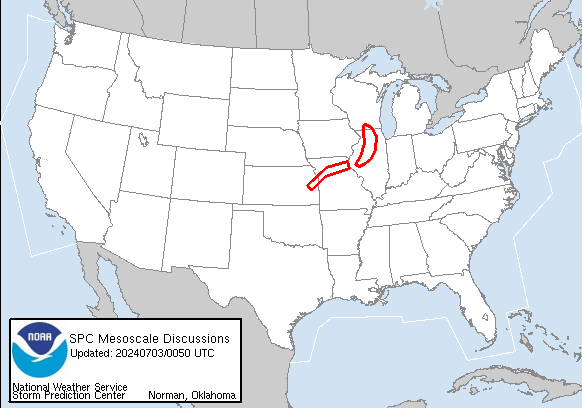
To understand the operational tempo of the SPC, one must examine the lifecycle of a Mesoscale Discussion. MDs bridge the temporal and spatial gap between broad, long-range Convective Outlooks—which may cover large geographic regions up to several days in advance—and immediate, localized Severe Thunderstorm or Tornado Warnings issued by local NWS Weather Forecast Offices (WFOs).
- Detection and Initialization: Forecasters continuously monitor regional radar loops, satellite vapor channels, surface observation stations, and high-resolution rapid refresh (HRRR) model outputs. When signatures emerge indicating an impending escalation in storm severity—such as rapidly dropping surface pressures, surging dew points, or accelerating wind shear vectors—forecasters initiate an MD draft.
- Analysis and Delimitation: The forecaster delineates the precise geographic polygon most at risk. This involves synthesizing thermodynamic indices, such as Convective Available Potential Energy (CAPE) and Storm-Relative Helicity (SRH).
- Issuance and Dissemination: Published instantaneously to the public and emergency management networks, the MD outlines the expected evolution of the weather, providing critical lead time—often 1 to 3 hours—before formal watches or warnings are finalized.
On days when atmospheric stability suppresses convective activity, the absence of active bulletins is itself a notable data point. For instance, operational logs from late August 2026 reflect periods where no Mesoscale Discussions were in active effect, underscoring a temporary lull in regional severe weather. However, the system’s focus immediately shifts backward and forward through archives—such as reviewing the mechanics of the most recently issued product, Mesoscale Discussion #2161—to verify model performance, calibrate future algorithms, and maintain institutional readiness.
Administrative Evolution: The WPC Transition
A significant milestone in the administrative chronology of NOAA’s severe weather operations occurred on April 9, 2013. Prior to this date, the SPC shared responsibilities for evaluating and issuing Mesoscale Discussions specifically related to excessive rainfall and flash flooding.
However, recognizing the distinct hydrometeorological expertise required for heavy precipitation events versus wind-shear-driven convective storms, NOAA executed a formal Service Change Notice (SCN 13-14). Under this directive, the responsibility for Heavy Rain Mesoscale Discussions was officially transferred to the Weather Prediction Center (WPC).

This structural division allowed the SPC to hyper-focus on convective hazards—tornadoes, damaging straight-line winds, and large hail—while enabling the WPC to integrate hydrologic forecasting models, soil moisture data, and river basin dynamics more cohesively into heavy rain advisories. This operational bifurcation has dramatically streamlined the warning pipeline, reducing cognitive load on forecasters during high-stress weather events and ensuring that emergency managers receive targeted, unambiguous guidance.
Supporting Context & Metrics: Infrastructure and Research
The efficacy of the Storm Prediction Center relies on an intricate foundation of physical infrastructure, academic collaboration, and open-source data distribution. Operating out of the state-of-the-art National Weather Center building on the campus of the University of Oklahoma in Norman, the SPC is uniquely positioned at the nexus of operational meteorology and academic research.
The Norman Hub and Collaborative Research
The co-location of the SPC with the NOAA National Severe Storms Laboratory (NSSL) and the University of Oklahoma’s School of Meteorology creates an unparalleled intellectual ecosystem. Within this environment, researchers and operational forecasters work side by side in initiatives like the NOAA Hazardous Weather Testbed (HWT).
The HWT serves as an experimental bridge, testing non-operational products, visualization tools, and convection-allowing model ensembles before they are integrated into daily forecasting routines. This iterative testing ensures that the tools utilized by SPC forecasters represent the absolute vanguard of meteorological science.

Comprehensive Product Suite
The SPC’s public-facing and emergency-management product suite is vast, categorized into several distinct operational domains:
- Watches: Alerts indicating that atmospheric conditions are favorable for the development of severe thunderstorms or tornadoes in and close to a designated area.
- Mesoscale Discussions: Technical advisories detailing short-term trends in severe weather and convective potential.
- Convective Outlooks: Probabilistic forecasts issued multiple times daily, categorizing severe weather risk on a scale from Marginal (Level 1) to High (Level 5).
- Fire Weather Outlooks: Critical assessments of meteorological conditions conducive to the ignition and rapid spread of wildfires, factoring in relative humidity, wind speeds, and fuel dryness.
- Storm Reports: Comprehensive daily logs cataloging verified tornado, wind, and hail reports submitted by storm spotters, law enforcement, and emergency management personnel.
Public Access and Data Distribution
In alignment with federal transparency and public safety mandates, the SPC maintains robust open-data pipelines. Through RSS feeds, automated email alerts, and programmatic XML integrations, emergency services, media outlets, and private-sector meteorological firms can ingest real-time warning data instantaneously. This democratization of meteorological data ensures that local communities possess the exact same baseline of atmospheric intelligence as federal researchers.
Official Statements and Institutional Frameworks
Operating under the legislative and administrative mandates of the United States federal government, the Storm Prediction Center adheres to strict institutional standards regarding data quality, public dissemination, and inter-agency cooperation.
NOAA and NWS Mission Integration
As a component of the National Centers for Environmental Prediction—which itself operates under the National Weather Service and the National Oceanic and Atmospheric Administration—the SPC’s foundational mission is codified around the protection of life and property. Institutional statements consistently emphasize three core pillars:

- Accuracy: Utilizing advanced numerical models and empirical observational data to minimize false alarm rates while maximizing lead time.
- Timeliness: Maintaining a 24/7/365 operational posture to ensure that no atmospheric shift goes unnoticed or unanalyzed.
- Accessibility: Ensuring that meteorological information is universally accessible to government officials, commercial enterprises, and the general public without bureaucratic friction.
Compliance, Privacy, and Federal Governance
As an official federal entity, all digital assets and web resources associated with the SPC comply with rigorous federal guidelines. These include adherence to the Freedom of Information Act (FOIA), strict Privacy Policies governing user data interaction on NOAA web portals, and adherence to the Information Quality Act, which mandates that all disseminated meteorological data meet high standards of utility, objectivity, and integrity. Furthermore, linkages to portals such as USA.gov reinforce the center’s status as a trusted, accountable pillar of the federal executive branch.
Future Outlook: The Next Generation of Severe Weather Forecasting
Looking toward the horizon, the Storm Prediction Center is poised to undergo a profound technological and operational transformation. The convergence of artificial intelligence (AI), machine learning (ML), and unprecedented computational power is reshaping how forecasters anticipate severe weather.
Artificial Intelligence in Convection-Allowing Models
Traditional numerical weather prediction relies on solving complex fluid dynamics equations across global and regional grids—a process that demands massive supercomputing resources and hours of processing time. However, recent advancements in AI-driven weather prediction models (such as graph neural networks and transformer-based architectures) have demonstrated the capability to generate high-resolution forecasts in mere seconds.
The SPC is actively exploring the integration of AI models into its operational workflow. While human forecasters will remain the ultimate arbiters of official watches and outlooks—bringing critical contextual judgment that algorithms currently lack—AI tools will increasingly serve as powerful triage mechanisms, rapidly identifying subtle thermodynamic precursors to severe storms long before they manifest on traditional radar.
Upgrading Observation Networks and Radar Technology
The future of mesoscale forecasting also depends on expanding observational density. Initiatives to enhance phased-array radar technology promise to reduce volumetric scan times from minutes down to seconds, providing forecasters with a continuous, three-dimensional look inside developing supercells. When combined with dense surface mesonets, high-altitude radiosonde networks, and crowdsourced mobile weather reporting, the resolution of atmospheric monitoring will approach near-continuous spatial continuity.
Educational Outreach and Community Resilience
Beyond technological upgrades, the SPC places significant emphasis on long-term societal resilience. Through comprehensive educational resources—such as the Enhanced Fujita (EF) Scale documentation, detailed lecture series on derecho formation, and FAQs regarding tornado genesis—the center actively works to demystify severe weather for the public. By fostering a scientifically literate populace, the SPC ensures that advanced warnings are met not with confusion, but with decisive, life-saving action.
As atmospheric volatility continues to evolve in response to changing global climate dynamics, institutions like the Storm Prediction Center will remain the bedrock of American meteorological defense. Through an unwavering commitment to operational excellence, rigorous scientific research, and transparent public communication, the SPC stands ready to navigate the atmospheric challenges of the 21st century and beyond.

0 Comments