

Executive Overview
As families across the Sunshine State brace for the annual autumn transition back to the classroom, households are met with a familiar, high-stakes ritual: fulfilling exhaustive school supply checklists. Amid the flurry of purchasing binders, writing utensils, and backpacks, parents often face significant financial strain. Simultaneously, this seasonal pivot serves as a critical juncture for ensuring that children are medically prepared to learn, socialize, and thrive in academic environments.
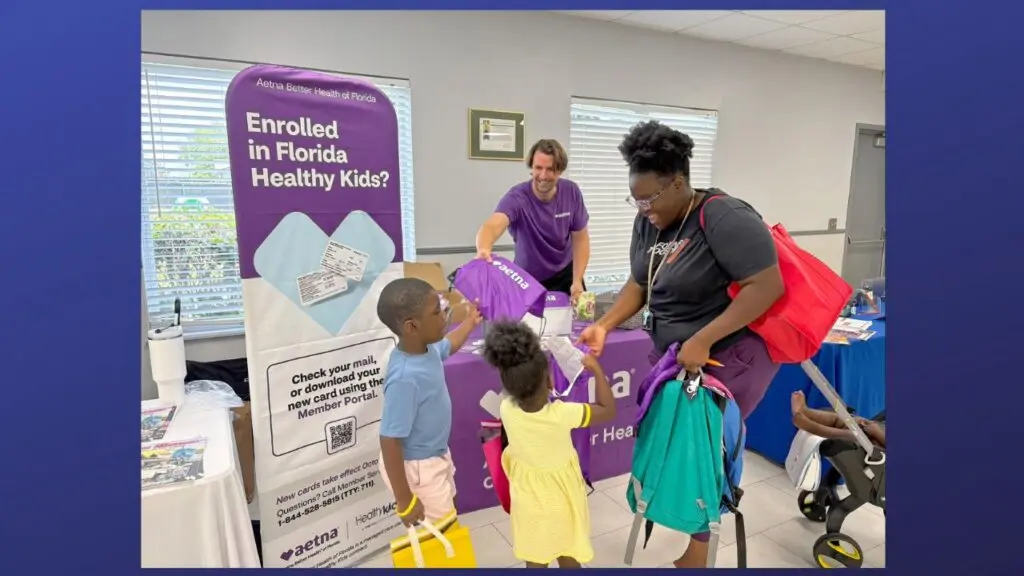
Recognizing the intersection of educational readiness and pediatric wellness, Aetna Better Health of Florida has stepped forward with a comprehensive state-wide outreach initiative. Teams from the managed care organization have mobilized across multiple counties, participating in targeted back-to-school community events designed to lighten the logistical and financial load for working families. By distributing essential school supplies and linking underserved populations directly to local community resources, Aetna is actively reinforcing the social determinants of health that underpin academic success.
However, the organization’s recent deployment carries a secondary, equally vital mission: spearheading the informational rollout for the new Florida Healthy Kids member ID cards. Navigating the state’s subsidized health insurance programs can often present administrative hurdles for busy parents. By leveraging these high-traffic community gatherings, Aetna teams are delivering direct, face-to-face education regarding the updated credentials. This proactive engagement ensures that families are fully equipped to access pediatric medical, dental, and behavioral health coverage with absolute confidence as the academic year begins.
Detailed Chronology: Mobilizing Statewide Outreach
The execution of Aetna Better Health of Florida’s back-to-school campaign required meticulous planning and a phased logistical rollout timed precisely with the opening of the academic calendar.
Phase 1: Pre-Season Logistics and Resource Allocation (Late June – Early July)
Months prior to the first school bell, administrative teams at Aetna Better Health of Florida began coordinating with local school districts, community centers, and municipal leaders. Recognizing that educational readiness directly impacts childhood development and long-term health outcomes, the organization allocated substantial resources to procure bulk quantities of standard-compliant school supplies. Concurrently, internal health plan liaisons reviewed state directives regarding the transition to the updated Florida Healthy Kids member ID cards, designing collateral materials that translate complex insurance updates into accessible, parent-friendly formats.
Phase 2: On-the-Ground Deployment and Community Integration (Mid-July – August)
As communities geared up for the new school year, Aetna’s community outreach teams deployed to high-visibility back-to-school fairs, health expos, and municipal supply drives across diverse geographic regions—ranging from South Florida’s densely populated urban centers to rural counties in the state’s central and northern tiers.
Operating booths equipped with educational resources, health navigation tools, and physical supplies, representatives engaged directly with thousands of parents and guardians. Rather than relying solely on passive digital communication, the teams engaged in direct conversations to demystify health plan changes. They specifically addressed the rollout of the new Florida Healthy Kids member ID cards, demonstrating to parents how to identify the updated credentials, verify active coverage status, and utilize the cards for upcoming pediatric checkups, immunizations, and sports physicals.
Phase 3: Post-Event Follow-Up and Continuous Support (Ongoing)
Following the initial wave of community events, Aetna’s outreach apparatus transitioned into a sustained support model. Families who connected with representatives at these fairs were entered into tracking frameworks designed to ensure ongoing access to health services. Digital and print resources regarding the new ID cards continue to be distributed via member portals and direct mailers, ensuring that parents who missed the in-person events retain clear pathways to updating their family’s health administration documents.
Supporting Context & Metrics: The Intersection of Health and Education
To fully understand the gravity of Aetna’s initiative, one must examine the broader socio-economic landscape of Florida’s public education and healthcare systems. The back-to-school season is notoriously expensive for American households. According to national retail federations, the average family spends hundreds of dollars per child on supplies alone, a financial pressure point that disproportionately affects low-to-moderate-income households. When families are forced to choose between purchasing basic educational tools and managing other household essentials, preventative healthcare measures—such as routine pediatric visits—can occasionally be deferred.
The Role of Florida Healthy Kids
The Florida Healthy Kids Corporation provides comprehensive, low-cost health insurance coverage under the federal Children’s Health Insurance Program (CHIP) and Title XXI. Serving hundreds of thousands of children statewide, the program ensures that families who earn too much to qualify for traditional Medicaid, yet cannot afford commercial employer-sponsored or private insurance, still have access to vital medical services.

However, administrative transitions—such as the issuance of redesigned member ID cards—historically pose a risk of disruption in care if members fail to recognize the new documentation or mistakenly discard updated materials as junk mail. The introduction of new ID cards requires a massive educational campaign to prevent gaps in service utilization. By embedding card education directly into popular back-to-school events, Aetna has engineered a preventative strategy that mitigates administrative churn and safeguards continuous healthcare access.
Social Determinants of Health (SDOH)
Public health researchers increasingly emphasize the concept of Social Determinants of Health—the non-medical factors that influence health outcomes, including economic stability, education access and quality, healthcare access, and neighborhood environments.
- Educational Achievement: Children who possess adequate school supplies experience lower levels of classroom anxiety, higher engagement, and better academic retention.
- Preventative Healthcare: Access to a primary care medical home ensures that chronic conditions (such as asthma, which frequently flares up during the autumn return to school) are managed effectively, reducing absenteeism.
By addressing both supply deficits and health insurance literacy simultaneously, initiatives like those led by Aetna Better Health of Florida bridge the gap between social welfare and clinical medicine.
Official Statements and Stakeholder Perspectives
The multi-faceted campaign has drawn praise from community advocates, healthcare administrators, and local educational partners who recognize the value of public-private cooperation during high-stress seasonal transitions.
"The transition back to school is a time of immense hope, but it also brings undeniable stress for families navigating tight budgets and complex administrative requirements," noted a spokesperson for Aetna Better Health of Florida during the rollout. "Our goal is to act as a stabilizing force in the community. By meeting families where they are—at local back-to-school fairs—we can alleviate the financial strain of purchasing supplies while simultaneously providing the clarity and reassurance they need regarding their children’s health coverage."
Community leaders and event organizers have echoed these sentiments, highlighting the efficacy of combining educational aid with healthcare navigation. Many parents attending the state-wide events expressed relief upon learning how to seamlessly utilize their new Florida Healthy Kids member ID cards.
"When a parent walks up to a back-to-school table, their primary concern is often simply making sure their child has a backpack and notebooks," observed a regional community center coordinator who partnered with Aetna during the August events. "When our teams can hand them those supplies and also help them verify that their child’s health insurance is active, up-to-date, and ready for sports physicals or routine immunizations, we remove a massive mental and logistical burden. It transforms a stressful weekend into an empowering experience for the whole family."
Future Outlook: Sustaining Momentum in Pediatric Wellness
As the initial rush of the back-to-school season settles and classrooms transition into full academic operation, the implications of Aetna Better Health of Florida’s outreach campaign will continue to resonate throughout the state. The success of this year’s multi-agency approach provides a replicable blueprint for future seasonal health and education interventions.
Key Focus Areas Moving Forward:
- Digital Integration and Omnichannel Communication: While face-to-face community events remain irreplaceable for building trust and delivering tangible goods like school supplies, health plans are increasingly pairing these efforts with robust digital platforms. Future phases of the Florida Healthy Kids card rollout will leverage mobile applications, SMS notifications, and user-friendly digital ID card access to ensure that parents can pull up coverage information instantly on their smartphones during doctor visits or pharmacy pickups.
- Expanding Preventative Health Campaigns: Capitalizing on the momentum generated at back-to-school fairs, managed care organizations are shifting their focus toward autumn health observances, including upcoming influenza vaccination drives. Ensuring that children not only have their member ID cards in hand but are actively utilizing them for preventative immunizations will remain a top priority for healthcare providers as winter approaches.
- Strengthening Community Partnerships: The collaborative model demonstrated across Florida this season—uniting managed care entities, local non-profits, schools, and municipal governments—serves as an effective framework for addressing broader community needs. Maintaining these active communication channels will allow stakeholders to rapidly deploy support systems whenever systemic challenges arise for working families.
Ultimately, Aetna Better Health of Florida’s back-to-school initiative illustrates the profound impact of proactive, community-centric engagement. By addressing the immediate physical tools required for academic success alongside the administrative necessities of pediatric healthcare coverage, the organization has reinforced its commitment to building healthier, more resilient communities across the Sunshine State—one backpack, one supply checklist, and one member ID card at a time.

0 Comments