

Executive Overview
In a sweeping enforcement action that underscores the state’s zero-tolerance policy toward environmental crime, Florida Attorney General James Uthmeier, alongside the Florida Fish and Wildlife Conservation Commission (FWC) and local law enforcement partners, has announced criminal charges against 10 individuals implicated in a sophisticated, multi-year illegal commercial fishing operation.
The takedown is the culmination of a rigorous, four-year undercover investigation led by FWC detectives and the Office of Statewide Prosecution. The operation targeted a robust underground network operating primarily within the Gulf of Mexico and Florida’s coastal ecosystems. According to state investigators, the ring systematically bypassed state and federal catch quotas, harvesting staggering quantities of protected marine life and conducting illicit black-market sales via clandestine dockside exchanges, residential distribution points, and on-the-water handoffs.
Authorities report that the defendants collectively poached approximately 23,000 pounds of fish and illicitly trafficked more than $150,000 worth of marine resources, including reef fish, shrimp, and critically vulnerable sea turtles. The scope of the operation not only threatened the ecological stability of Florida’s fragile marine habitats but also dealt an unfair economic blow to lawful commercial fishers and recreational anglers who strictly adhere to conservation regulations.
With charges ranging from racketeering and commercial wildlife trafficking to the unlawful harvesting of protected species, the accused face substantial prison sentences—with potential maximum terms stretching up to 75 years for the primary architects of the scheme. This landmark case serves as a stern warning that Florida’s natural resources are heavily guarded by cross-agency task forces equipped to dismantle organized environmental crime syndicates.
Detailed Chronology and Investigation
The Genesis of an Undercover Operation: May 2022
The intricate web of criminal activity began to unravel in May 2022. At the time, FWC investigators were responding to persistent community complaints and intelligence regarding rampant reef fish poaching in the Gulf of Mexico. What started as localized surveillance quickly broadened into a comprehensive statewide investigation when one of the primary suspects unknowingly approached undercover detectives, offering to sell illicitly caught fish outside of established commercial channels.
Recognizing the potential scale of the operation, law enforcement established a long-term undercover sting. Over the next four years, FWC investigators embedded themselves within or adjacent to the illicit networks, gathering vital intelligence, documenting transactions, and tracing the supply chain from the open waters of the Gulf to clandestine buyers across the region.
Modus Operandi: Bypassing the System
Investigators revealed that the criminal syndicate operated with a high degree of premeditation to evade regulatory oversight. The group routinely overfished managed species—most notably red snapper and gag grouper—shattering daily bag limits and seasonal closures designed to maintain sustainable fish populations.
To monetize their illicit catch without triggering mandatory reporting requirements, electronic trip ticketing, or catch-share account deductions, the suspects employed a variety of deceptive distribution methods:
- Nighttime Dockside Sales: Offloading catches under the cover of darkness at unmonitored or private docks to avoid the scrutiny of port inspectors and fisheries managers.
- Residential Distribution Networks: Moving product directly out of private residences, transforming suburban homes into unregulated fish markets.
- On-the-Water Handoffs: Transferring catches between vessels at sea to obscure the origin of the fish and complicate the tracking of individual vessel quotas.
Escalation into Protected Wildlife
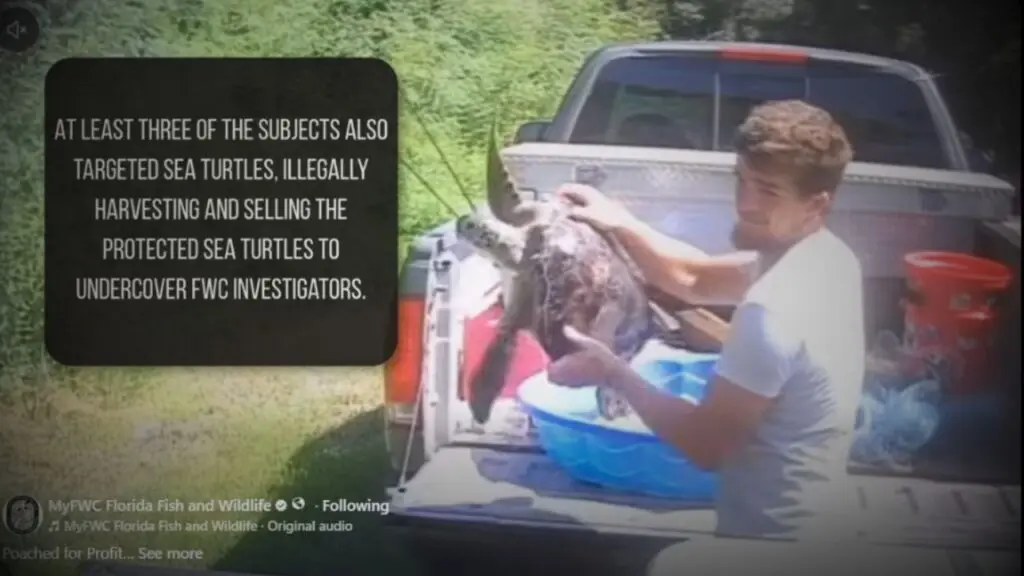
As the undercover operation deepened, investigators uncovered an even more alarming dimension to the ring’s activities. Beyond overharvesting finfish and commercial shrimp, three of the primary suspects—identified as Terry Carrington, Anthony Folsom, and Jordan Neylan—expanded their illicit trade into protected wildlife.

The trio reportedly targeted sea turtles, a strictly protected species under both state and federal law. During the course of the sting, undercover officers successfully documented the sale of five sea turtles—comprising three adults and two hatchlings—directly to operatives. This brazen disregard for endangered species laws elevated the gravity of the investigation, shifting the focus from standard fisheries violations to severe wildlife trafficking and environmental degradation.
The Takedown and Indictments
By mid-2026, the accumulated evidence was sufficient for the Office of Statewide Prosecution to secure formal multi-count indictments against all 10 suspects. The sweeping charges reflect the organized nature of the enterprise, encompassing conspiracy, racketeering, illegal commercial harvesting, and the unlawful sale of protected marine species.
The suspects now face prosecution in state court, where prosecutors intend to leverage Florida’s stringent environmental protection statutes to secure maximum penalties.
Supporting Context & Metrics: The Human and Ecological Toll
The Hard Numbers
The sheer volume of resources extracted by the 10 defendants highlights the severe economic and ecological impact of black-market fishing:
- 23,000 Pounds: The estimated total weight of fish illegally poached by the ring over the course of the multi-year operation.
- $150,000+: The estimated street value of illegally trafficked fish, shrimp, and turtles funneled into the underground economy.
- 5 Sea Turtles: The number of endangered and protected marine reptiles—including three adults and two juveniles—directly sold to undercover operatives by suspects Carrington, Folsom, and Neylan.
- Up to 75 Years: The maximum potential prison sentences facing the principal architects of the poaching ring within the Florida Department of Corrections.
Ecological Implications for the Gulf of Mexico
Florida’s marine ecosystems, particularly the Gulf of Mexico, support some of the most economically and ecologically valuable fisheries in the United States. Species like the red snapper and gag grouper are subject to strict catch limits, seasonal closures, and regional quotas managed by both the state and federal governments. These science-based regulations are vital for preventing overfishing, rebuilding depleted stocks, and ensuring that marine populations remain resilient in the face of climate change, red tide events, and coastal development.
When poachers bypass these limits, they disrupt the delicate biological balance of the marine environment. Unregulated extraction skews stock assessments, leading regulatory bodies to make inaccurate assumptions about fish populations. This, in turn, can result in prematurely shortened seasons or tighter restrictions for honest, law-abiding commercial and recreational fishers who play by the rules.
Economic Fallout for the Legitimate Industry
The impact of illegal commercial fishing extends far beyond ecological concerns; it inflicts direct economic harm on Florida’s multi-billion-dollar fishing industry. Legitimate commercial fishermen operate under heavy regulatory burdens, including expensive permits, mandatory vessel monitoring systems, limited entry licenses, and stringent reporting requirements. These measures, while necessary, incur significant operational costs.
Poachers who sell fish on the black market completely bypass these overhead expenses, allowing them to undercut market prices and gain an unfair competitive advantage over honest operators. By flooding local markets with cheap, untraced seafood, criminal syndicates depress prices and threaten the livelihoods of hardworking fishers who rely on a sustainable, well-managed marine economy.
Official Statements and Leadership Perspectives
The successful dismantling of the poaching ring drew strong reactions from across Florida’s legal, conservation, and law enforcement leadership, highlighting a unified front against environmental crime.

State Leadership
Florida Attorney General James Uthmeier emphasized the state’s unwavering commitment to protecting its natural heritage:
"We plan to leave Florida better to God than how we found it, and poachers abusing our natural resources will be prosecuted to the fullest extent. Those who abuse our waters and wildlife will find out how tough our laws are. The Office of Statewide Prosecution, FWC, and our local law enforcement officers will ensure criminals are caught and punished."
FWC Governance
Rodney Barreto, FWC Chairman, pointed to the importance of public trust and regulatory compliance:
"Florida’s fisheries belong to all of us, and the rules exist to protect these resources and the fishermen who play by them. I’m proud of the hard work and dedication of our undercover officers over the past four years. We need thorough enforcement, accurate reporting, and accountability to ensure Florida’s fisheries remain healthy and sustainable for everyone."
Col. Alberto Maza, Director of the FWC Division of Law Enforcement, underscored the betrayal felt within the broader fishing community:
"Commercial fisherman are an integral part of our communities and Florida’s economy. The actions of these poachers undermine Florida’s resources, the livelihoods of law-abiding fisherman, and the interests of all Floridians. I’m incredibly proud of our investigators’ commitment to protecting Florida’s fisheries and fishing industry and their tireless work to bring these poaching fraudsters to justice."
Local and Regional Partners
Local law enforcement played a crucial role in supporting the statewide operation, particularly in coastal counties heavily reliant on marine resources. Franklin County Sheriff AJ “Tony” Smith voiced strong support for the prosecution:
"The natural resources found in our waters are so very important to our county and the livelihood of so many. The fish and turtles are more than part of our landscape; they are part of our way of life. When they are exploited and stolen, we take this personally. Our partnership with the Attorney General and FWC enables us to bring these people who do this justice. If you steal from Franklin County’s resources, you are stealing from our community!"
Advocacy groups representing recreational anglers also lauded the enforcement action. Trip Aukeman, CCA Florida Director of Government Relations, noted:

"CCA Florida recognizes that the recreational anglers we advocate for are required to follow harvest limits. We appreciate this operation’s impact to hold [violators] accountable so that everyone enjoys Florida’s fisheries."
Future Outlook and Legal Ramifications
With the 10 suspects now facing formal indictments, the case moves into the judicial phase. The severity of the charges reflects a growing trend among Florida prosecutors to treat large-scale environmental crimes not merely as minor regulatory infractions, but as serious felonies carrying significant prison time.
Potential Sentences and Legal Exposure
The statutory maximum penalties vary depending on the specific charges and the degree of involvement attributed to each defendant:
- Terry Carrington, Anthony Folsom, and Jordan Neylan: Face a maximum potential sentence of up to 75 years in the Florida Department of Corrections, driven by additional charges related to the unlawful harvesting and trafficking of protected sea turtles alongside commercial fisheries violations.
- Five Unnamed/Co-Defendant Suspects (Echterling, Hawley, Register, Tessa, and Whitlock): Face maximum potential sentences of up to 70 years.
- Boak and Morse: Face maximum potential sentences of up to 65 years.
Legal analysts note that while maximum sentences are rarely handed down in their entirety for first-time offenders without prior records, the sheer scale of the racketeering and wildlife trafficking charges ensures that the defendants face substantial prison time and steep financial restitution orders.
Long-Term Impact on Enforcement Strategy
The success of Operation Dark Waters is expected to serve as a blueprint for future environmental investigations in Florida. By leveraging long-term undercover assets, cross-jurisdictional task forces, and the specialized resources of the Office of Statewide Prosecution, state authorities have demonstrated that they can successfully penetrate secretive, decentralized criminal networks that span multiple coastal communities.
Furthermore, state officials hope that the public exposure of this ring will deter other illicit operators and encourage commercial and recreational fishers to report suspicious dockside activities. As Florida’s population continues to grow, placing increased recreational and commercial pressure on coastal ecosystems, state agencies have signaled that rigorous enforcement, transparency, and uncompromising accountability will remain the cornerstones of Florida’s marine conservation strategy for years to come.

0 Comments