

Executive Overview
In an evolving public health landscape marked by acute challenges in mental health and addiction management, Alachua County, Florida, has emerged as a key focal point for innovative, peer-led recovery strategies. At the center of this movement is The Nehemiah Project, an organization founded in 2014 by two individuals maintaining their own recovery, which has spent the past decade developing grassroots interventions aimed at dismantling the systemic barriers surrounding substance use disorder (SUD).
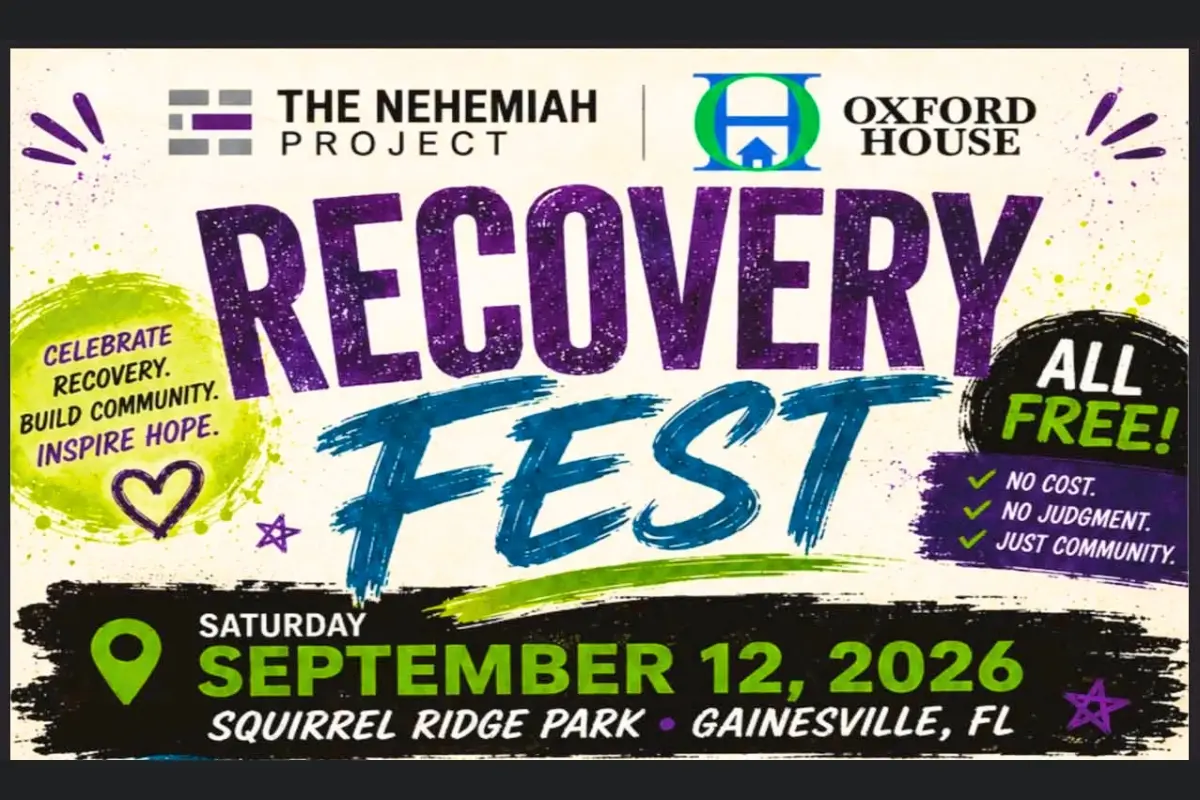
On Saturday, September 12, The Nehemiah Project will host its inaugural "Recovery Fest" at Squirrel Ridge Park in Gainesville, Florida. Designed as both a community rally and an educational immersion, the event centers around an interactive recovery obstacle course. Unlike traditional physical fitness challenges, this obstacle course is engineered to simulate the structural, legal, administrative, and social hurdles that individuals encounter when attempting to rebuild their lives following active addiction.
The event comes at a pivotal juncture for Florida. As mortality rates linked to synthetic opioids and polysubstance abuse continue to challenge public health infrastructure statewide, grassroots organizations are shifting the strategy from isolated clinical treatment to continuous, community-integrated peer support systems. Executive Director Melissa Rea—a U.S. Army veteran who leads The Nehemiah Project alongside community partners—views Recovery Fest not merely as a single day of awareness, but as the culmination of a orchestrated multi-month mobilization campaign across Alachua County.
By uniting municipal leaders, healthcare networks, law enforcement agencies, faith communities, and residents with lived experience, The Nehemiah Project is advancing a comprehensive framework aimed at expanding local "recovery capital"—the total pool of personal, social, and structural resources available to an individual pursuing long-term sobriety.
Detailed Chronology: A Multi-Phase Strategy for Community Action
The launch of the inaugural Recovery Fest represents the fourth phase of a structured, multi-month campaign executed by The Nehemiah Project throughout the summer and early fall. Each stage of this initiative was purposefully constructed to address a distinct dimension of the recovery continuum: community integration, academic and policy dialogue, collective mourning, and public education.
+-----------------------------------------------------------------------------------+
|                        THE NEHEMIAH PROJECT 2024 CAMPAIGN                         |
+-------------------+---------------------------------------------------------------+
| Month             | Strategic Focus & Key Milestones                              |
+-------------------+---------------------------------------------------------------+
| June              | Community Building & First Anniversary in Alachua County      |
| July (July 31)    | Academic & Policy Integration: "Data to Dialogue" Forum       |
| August (Aug 31)   | Memorial & Mobilization: "Taking Strides to End Overdose"     |
| September (Sept 12| Public Education & Action: Inaugural "Recovery Fest"          |
| Post-September    | Direct Service & Resource Allocation: Annual "Day of Caring"  |
+-------------------+---------------------------------------------------------------+
June: Establishing Grassroots Roots and Local Presence
In June, The Nehemiah Project marked its first full year of dedicated service within Alachua County through a weeklong series of events centered on community trust-building. Having operated since 2014, the organization’s expanded focus on Alachua County aimed to bridge gaps between rural outskirts and urban centers like Gainesville. The June anniversary activities established foundational relationships with local neighborhoods, civic leaders, and regional service providers, setting the operational stage for subsequent policy and public health initiatives.
July 31: "Data to Dialogue" Academic and Municipal Forum
On July 31, the organization convened local leaders, public health officials, municipal decision-makers, and researchers for an expert panel titled "Data to Dialogue." The forum served as an analytical bridge between statewide research on peer recovery outcomes and local administrative frameworks.
Participants evaluated empirical data regarding the efficacy of certified peer support specialists within healthcare systems, emergency departments, and criminal justice diversion programs. The primary objective of the dialogue was identifying systemic friction points within Alachua County’s existing continuum of care and formulating strategies to systematically embed individuals with lived experience into formal intervention pathways.
August 31: Memorialization and the 5,501-Step March
The campaign’s focus shifted toward memorialization and public awareness on August 31, aligning with International Overdose Awareness Day. Partnering with municipal leaders from the City of Gainesville and Alachua County government, The Nehemiah Project organized "Taking Strides to End Overdose."
During this event, participants completed a symbolic walk of exactly 5,501 steps. Each step represented one of the 5,501 individuals who lost their lives to drug overdoses across the state of Florida in 2024. The walk served a dual purpose: providing a space for grieving families and highlighting the urgent need for expanded harm reduction, treatment access, and peer-led recovery infrastructure.
September 12: Inaugural Recovery Fest
The summer mobilization efforts culminate on Saturday, September 12, with the inaugural Recovery Fest at Squirrel Ridge Park, located at 1603 SW Williston Rd., Gainesville.
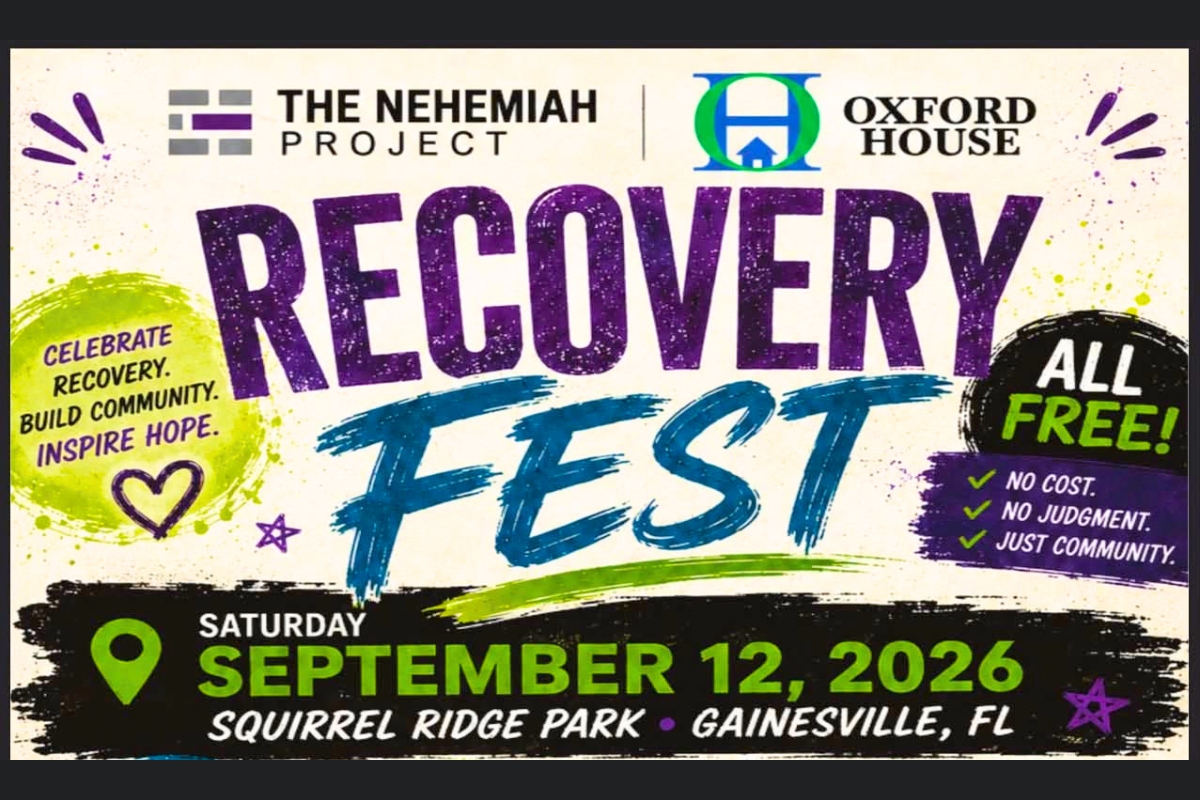
- Check-in: 8:00 AM
- Program Duration: 9:00 AM to 12:00 PM
- Core Feature: Interactive Recovery Obstacle Course
The event features an interactive recovery obstacle course designed to visually and physically demonstrate the non-linear path of addiction recovery. Participants navigate simulated systemic hurdles—such as securing stable housing without a background clear of non-violent convictions, accessing healthcare without insurance, securing reliable transportation, and overcoming pervasive social stigma.
Beyond September: The Annual "Day of Caring"
The momentum generated through Recovery Month will directly transition into action through The Nehemiah Project’s second annual Day of Caring. This upcoming phase shifts the focus from public awareness to direct service delivery, bringing together corporate partners, regional non-profits, and grassroots volunteers to provide physical resources, medical screenings, job placement assistance, and essential support services to vulnerable community members.
Supporting Context & Metrics: The Science and Sociology of Peer Recovery Support
To understand the operational model promoted by The Nehemiah Project, it is necessary to examine the broader epidemiological landscape of substance use disorder in Florida, as well as the scientific literature supporting peer-led recovery interventions.
Florida’s Overdose Landscape and the Metric of Loss
The figure commemorated during August’s walk—5,501 fatal overdoses in Florida in 2024—underlines a critical public health crisis. While state and national trends have shown occasional plateaus in illicit drug mortality, the emergence of highly potent synthetic opioids, such as illicitly manufactured fentanyl and novel synthetic analogues combined with adulterants like xylazine, has heightened overdose risks.
Florida Substance Use Crisis Impact Metrics:
---------------------------------------------------------------------------------
[Annual Fatal Overdoses (2024)] : 5,501 Individuals
[Symbolic Steps Walked]        : 5,501 Steps (1 step per life lost)
[Primary Structural Barriers]  : Housing access, employment background checks,
                                 healthcare gaps, transportation, social isolation.
---------------------------------------------------------------------------------
Traditional clinical frameworks frequently struggle to maintain touchpoints with individuals post-discharge or post-incarceration. This transition period represents the highest risk window for non-fatal and fatal overdoses.
The Mechanism of Peer Recovery Support
Peer recovery support relies on non-clinical, peer-led interventions delivered by Certified Recovery Peer Specialists (CRPS)—individuals who possess official credentials combined with personal experience navigating addiction, recovery, and the associated institutional systems.
Research published in public health literature demonstrates that integrating peer recovery specialists into crisis response and ongoing recovery maintenance yields distinct quantifiable benefits:
- Reduced Recidivism and Rehospitalization: Individuals engaged by peer specialists demonstrate lower rates of emergency room utilization and reduced criminal justice re-entry compared to those receiving standard care alone.
- Enhanced Recovery Capital: Peer specialists assist clients in building "recovery capital," which is categorized into four primary domains:
- Human Capital: Personal health, skills, employment capability, and educational attainment.
- Social Capital: Supportive family dynamics, healthy peer networks, and community ties.
- Physical/Financial Capital: Safe housing, financial stability, clothing, and food security.
- Cultural Capital: Connection to identity, purpose, and community resources.
- Stigma Reduction: By operating openly as individuals in long-term recovery, peer specialists dismantle internal and social stigma, facilitating earlier entry into care pathways.
The Recovery Obstacle Course as an Educational Vehicle
The interactive obstacle course at Recovery Fest functions as a pedagogical tool designed to bridge the gap between abstract policy discussions and live experience. Civic leaders, family members, and community participants physically navigate stations representing common administrative and structural roadblocks:
- Station 1: Housing Barriers: Navigating tenant screening processes with past justice involvement or poor credit history resulting from active addiction.
- Station 2: Healthcare & Treatment Access: Experiencing long waitlists, insurance pre-authorizations, or lack of financial resources for residential care.
- Station 3: Employment Identification Hurdles: Securing stable employment while managing strict court schedules, probation check-ins, and mandatory clinical appointments without private transportation.
- Station 4: Social Isolation & Stigma: Overcoming community ostracization and establishing a new social network completely decoupled from substance-using environments.
By translating these institutional complexities into a tangible physical experience, The Nehemiah Project aims to build informed advocacy among voters, local business owners, and municipal decision-makers.
Official Statements and Strategic Framework
The strategic doctrine guiding The Nehemiah Project’s activities relies heavily on military organizational concepts, reflecting the background of its executive leadership. Executive Director Melissa Rea, a U.S. Army veteran, frames the public health response to substance use disorder through a coordinated, multi-theater strategic lens.
       +-------------------------------------------------------+
       |         STRATEGIC MILITARY FRAMEWORK FOR RECOVERY     |
       +-------------------------------------------------------+
       | BATTALION LEVEL  | State of Florida Policy & Funding  |
       | COMPANY LEVEL    | Alachua County Operations & Care   |
       | FORCE MULTIPLIERS| Peer Specialists with Lived Exp.   |
       | THE TARGET       | Systems, Stigma, Isolation, SUD    |
       +-------------------------------------------------------+
The Strategic Metaphor: A Unified Front
In addressing the community during the campaign rollout, Rea emphasized that combating substance use disorder requires moving away from fragmented, siloed efforts toward an offensive, synchronized strategy.
"We are at war, but the enemy isn’t the person struggling with addiction," said Melissa Rea, Executive Director of The Nehemiah Project. "It’s substance use disorder, overdose, stigma, isolation, and the barriers that prevent people from getting well. We have to attack those problems strategically, collectively, and offensively."
Rea elaborates on this concept by constructing a structural parallel between military theater operations and municipal public health administration:
- The State Level (The Battalion): Provides overall operational policy, legislative support, and macro-level funding allocation across Florida.
- The County Level (The Company): Manages tactical, ground-level execution adapted to the specific demographics, resources, and geography of Alachua County.
- Multi-Sector Integration: Ensures that law enforcement, healthcare networks, faith communities, municipal agencies, local businesses, and private families operate under a shared mission statement rather than in isolation.
Lived Experience as an Operational Asset
Central to Rea’s leadership philosophy is the assertion that individuals in recovery represent essential strategic assets in solving the public health crisis, rather than passive recipients of government aid.
"People with lived experience aren’t simply recipients of services—we are part of the solution," Rea noted. "My husband and I aren’t exceptions. We’re examples of what can happen when people have enough recovery capital, opportunity, and a community willing to walk beside them."
This perspective highlights a core tenet of the peer movement: individuals who have successfully navigated judicial, clinical, and administrative obstacles possess domain-specific insights critical for refining systemic responses.
Future Outlook: Institutionalizing Peer Support and Policy Scaling
As Recovery Fest concludes, the focus for Alachua County’s behavioral health advocates shifts toward long-term policy integration, sustainable funding mechanisms, and direct service expansion. The trajectory established by The Nehemiah Project over the summer of 2024 outlines a potential blueprint for other medium-sized Florida counties facing similar public health pressures.
Long-Term Strategic Objectives for Alachua County Peer Support:
===================================================================================
1. Emergency Department Integration : Placing Certified Peer Specialists in local
                                      trauma centers for immediate overdose response.
2. Judicial Diversion Expansion     : Partnering with drug courts to substitute
                                      punitive sentencing with peer-supported care.
3. Recovery Housing Capital         : Expanding access to certified, high-quality
                                      peer-run sober living environments.
4. Employer Partnership Networks     : Establishing 'recovery-friendly' business
                                      coalitions across Alachua County.
===================================================================================
Expanding the Local Continuum of Care
The insights gathered during July’s "Data to Dialogue" forum and September’s "Recovery Fest" are slated for integration into policy recommendations for Alachua County commissioners and healthcare executives. Key areas for potential development include:
- Hospital Emergency Department Peer Deployment: Standardizing the placement of Certified Recovery Peer Specialists in emergency departments throughout Gainesville. Immediate peer intervention following an overdose reversal significantly increases the likelihood that a patient will consent to direct transition into evidence-based treatment programs.
- Judicial Diversion & Pre-Arrest Deflection: Expanding pre-arrest deflection programs in collaboration with local law enforcement agencies. By routing non-violent individuals straight to community-based recovery centers staffed by peers, the county can reduce correctional expenditures while addressing the root causes of justice involvement.
- Capitalizing Recovery Housing: Addressing the critical shortage of certified, high-quality recovery residences within Alachua County. Safe, substance-free housing is a primary pillar of physical recovery capital without which long-term stability remains elusive.
Scaling the Blueprint Statewide
The sequential progression modeled by The Nehemiah Project—moving systematically from community celebration to policy dialogue, memorialization, public engagement, and direct service—presents a repeatable framework for rural and suburban counties across Florida.
By positioning recovery support not as a charitable luxury, but as an essential component of public safety and health infrastructure, Alachua County is helping redefine how Florida addresses substance use disorders. Through sustained community involvement, cross-sector integration, and the strategic deployment of lived experience, the movement aims to transform isolated efforts into a unified, sustainable defense against addiction.

0 Comments