

Executive Overview
For decades, the American criminal justice system has operated as a revolving door, characterized by high rates of recidivism and systemic barriers to reintegration. Upon release, justice-impacted individuals face a daunting economic landscape. An estimated 70 to 100 million Americans—approximately one in three adults—possess a criminal record. This label carries a lifelong stigma, acting as a structural barrier to stable housing, higher education, and, most critically, meaningful employment.
Historically, corporate America viewed individuals with criminal records through a lens of risk and liability. However, a compounding labor shortage—driven by the retirement of the Baby Boomer generation and shifting demographic trends—has forced a macroeconomic reckoning. Today, a growing coalition of policymakers, advocacy groups, and major corporations are championing "second-chance hiring" not merely as a moral or philanthropic initiative, but as an economic necessity.
This investigative report examines the structural barriers facing formerly incarcerated individuals as they attempt to enter the workforce, the strategic interventions proven to facilitate successful reentry, and the personal trajectories of individuals who have successfully navigated this transition. Through empirical data, expert testimony, and corporate case studies, we analyze how education, corporate policy reform, and systemic shifts are transforming former inmates from economic liabilities into vital assets for the modern workforce.
Detailed Chronology: Pathways from Confinement to Career
The journey from a prison cell to a sustainable career is rarely linear. It requires a complex alignment of personal resolve, institutional support, and employers willing to overlook a applicant’s worst moments. The following case studies illustrate the diverse pathways individuals take to rebuild their lives.
[Incarceration] ──> [Skill Acquisition / Education] ──> [Strategic Disclosure] ──> [Career Stabilization]Case Study 1: Don Christian – From a 23-Year Sentence to Corporate Mentorship
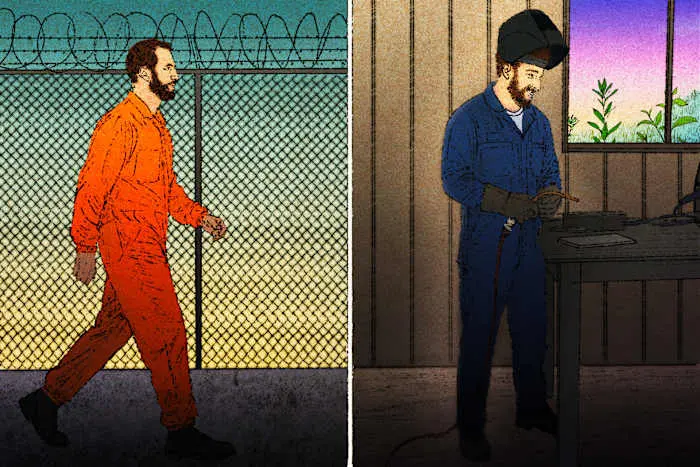
In the early 1990s, nineteen-year-old Don Christian was convicted of selling drugs. The conviction carried a heavy sentence that stripped him of his young adulthood, keeping him behind bars through his twenties, thirties, and into his early forties. When Christian was finally released after 23 years of continuous confinement, he faced an unfamiliar world with a completely blank professional resume.
"I had to start from the bottom. The very, very bottom," Christian recalled. "I was willing to work anywhere. I just wanted to change my life."
Don Christian's Journey:
┌──────────────────────────────┐     ┌──────────────────────────────┐
│ Incarceration (23 Years)     │ ──> │ Released at Age 42           │
└──────────────────────────────┘     └──────────────────────────────┘
                                                     │
                                                     ▼
┌──────────────────────────────┐     ┌──────────────────────────────┐
│ Mentorship & Social Work     │ <── │ Welding Job at Toyotetsu     │
└──────────────────────────────┘     └──────────────────────────────┘
While incarcerated, Christian had acquired basic welding skills, but translating that training into a job in the private sector was a significant hurdle. His turning point came when his parole officer recommended he apply to Toyotetsu, a major automotive parts manufacturer with a dedicated second-chance employment program.
Toyotetsu hired Christian as a welder. The transition was physically and mentally grueling; Christian had to adapt to demanding twelve-hour shifts that alternated between day and night schedules. "I had to learn on the go, on the fly," he said. "I already had my mind set—I wasn’t going to fail."
Nine years later, Christian, now 53, remains a valued employee at Toyotetsu, where he serves as a mentor to newly hired employees, many of whom are navigating the same reentry challenges he once faced. To further his impact, Christian is currently taking college-level social work classes with the goal of earning an associate degree to formalize his mentorship role.
Case Study 2: Ryan Cuellar – Leveraging Education to Erase the Stigma
Ryan Cuellar’s encounter with the justice system began at age 18 when he was sent to jail. Recognizing that his conviction would serve as a permanent bottleneck to his ambitions, Cuellar focused on education as his primary mechanism for upward mobility.
Following his release, Cuellar secured federal financial aid to pursue paralegal studies. He systematically applied his newly acquired legal knowledge to navigate the complex bureaucratic process of getting his criminal record sealed. By legally shielding his past from public background checks, Cuellar unlocked corporate opportunities that would have otherwise been closed to him.
Cuellar did not stop at a paralegal certificate; he went on to earn a master’s degree. Today, he works as a sales consultant for a prominent tutoring company, advising clients and driving revenue. Reflecting on his journey, Cuellar emphasizes the psychological grit required to overcome systemic rejection: "I can’t drive home enough how much determination you need to have for yourself."
Case Study 3: Joe Anderson – Radical Honesty in the Trade Industries
For Joe Anderson, 34, the path to rehabilitation was paved by radical transparency. Upon completing a prison sentence followed by a period of house arrest, Anderson learned through a personal connection that a local welding plant was searching for a dock manager to oversee incoming and outgoing deliveries.
Rather than attempting to obscure his past or wait for a background check to flag his record, Anderson chose to address the issue directly. He walked into the facility, requested an interview with the hiring manager, and laid bare his circumstances.
"I got out of prison, I really need a job, and I will show up for work because I need this job to stay out of jail," Anderson recalled telling the manager.
The manager appreciated his honesty, offering him the position on the spot. Anderson held the role for four years, navigating the occasionally awkward realities of parole supervision, which included parole officers conducting unannounced compliance checks at his workplace.
"It’s embarrassing, but at the same time, it got done," Anderson said. "They’d show up, just see that I was working, and then just wander off."
Using his stable employment as a springboard, Anderson transitioned into commercial plumbing. Today, he is a licensed commercial plumber, earning a competitive salary complete with comprehensive health insurance, a pension, and a 401(k) retirement plan.
Supporting Context & Metrics: The Macroeconomics of Reentry
To understand why second-chance hiring is gaining traction, one must examine the underlying socioeconomic data. The barriers to reentry carry a heavy toll not only for individuals but also for municipal, state, and federal budgets.
The Recidivism-Education Correlation
The most effective deterrent to recidivism is stable, gainful employment, which is directly correlated with educational attainment during incarceration. According to comprehensive research compiled by the Vera Institute of Justice, incarcerated individuals who participate in postsecondary education programs have 48% lower odds of returning to prison than those who do not.
Recidivism Rates based on Education Participation:
┌────────────────────────────────────────────────────────┐
│ Participating in Postsecondary Education (52%)         │
├────────────────────────────────────────────────────────┤
│ No Postsecondary Education (100% - Baseline)            │
└────────────────────────────────────────────────────────┘
▲ Participating reduces the likelihood of reincarceration by nearly half (48% reduction).
Furthermore, every dollar invested in prison education programs is estimated to save taxpayers four to five dollars in reincarceration costs during the first three years post-release.
The Pell Grant Policy Shift
For nearly three decades, incarcerated students were locked out of the federal financial aid system. The Violent Crime Control and Law Enforcement Act of 1994 stripped incarcerated individuals of their eligibility for Pell Grants, effectively decimating higher education programs within American prisons.
Following years of targeted advocacy by policy think tanks, civil rights organizations, and the Vera Institute of Justice, Congress fully restored access to Pell Grants for incarcerated students in 2023. This policy shift opened federal financial aid to hundreds of thousands of incarcerated individuals, allowing them to pursue associate and bachelor’s degrees from accredited colleges and universities while serving their sentences.
| Policy Era | Pell Grant Eligibility for Incarcerated Students | Impact on Prison Education Programs |
|---|---|---|
| Pre-1994 | Eligible | Diverse college-in-prison programs nationwide. |
| 1994 – 2023 | Banned (Violent Crime Control Act) | Over 90% of prison college programs shut down. |
| 2023 – Present | Restored (FAFSA Simplification Act) | Rapid expansion of accredited degree programs. |
The Cost of Exclusionary Hiring
Excluding justice-impacted individuals from the workforce carries a significant macroeconomic cost. Research indicates that blocking formerly incarcerated people from employment deprives the U.S. economy of roughly $78 billion to $87 billion in annual Gross Domestic Product (GDP).
When individuals are locked out of the formal economy, they are frequently pushed into the informal or underground economy, which increases public safety expenditures and reduces the municipal tax base.
Official Statements & Expert Analysis
The Advocacy Perspective: Reframing the Narrative
Reentry experts emphasize that securing employment requires both structural policy changes and a shift in how justice-impacted individuals present themselves to employers. Laura Rivero, an instructor at Leap for Ladies—a Florida-based nonprofit that teaches employment, entrepreneurship, and life skills to incarcerated women—advises her students to take control of their professional narratives.
One of Rivero’s key strategies is teaching students how to translate prison labor into corporate-friendly terms on their resumes. For example, rather than listing a correctional facility as a past employer, Rivero advises students to list the state as the employer and use industry-standard terminology to describe their duties:
[Prison Kitchen Worker] ──> Resumé Translation ──> [State of Florida: Food Service Specialist]
* "Operated commercial dishwashing machinery in high-volume environments"
* "Managed inventory and prepared foods under strict health and safety guidelines"
"Some of my students have a lot of shame about their conviction," Rivero said. "I tell them, ‘Look, you’re not your conviction, you’re not the worst day of your life. You can frame the narrative if you bring it up.’"
Ruth Delaney, who directs the higher education initiative at the Vera Institute of Justice, points out that even when formerly incarcerated individuals acquire advanced credentials, they still face steep systemic hurdles.
"Even when they come home with skills and credentials, they see fewer job opportunities and they earn less money than people who don’t have convictions," Delaney noted. "People who go home and are able to get living-wage jobs do better during reentry. They’re able to get jobs that can support themselves and their families."
The Corporate Alignment: Addressing Labor Shortages
This advocacy aligns with a growing consensus within corporate leadership. Major business associations, including the Business Roundtable (an association of CEOs from America’s leading companies) and the U.S. Chamber of Commerce, have launched initiatives promoting second-chance hiring.
With Baby Boomers retiring and birth rates declining, employers face persistent talent shortages in sectors like manufacturing, logistics, hospitality, and healthcare. Corporate leaders increasingly view the justice-impacted population as an untapped talent pool of loyal, motivated workers.
Major corporations like JPMorgan Chase and Virgin Atlantic have formalized second-chance hiring pipelines, removing arbitrary exclusionary questions from initial job applications—a policy trend known as "Ban the Box."
Future Outlook: Systemic Reforms and Economic Integration
As the United States grapples with both workforce shortages and the legacy of mass incarceration, the trajectory of second-chance hiring points toward deeper structural changes.
┌────────────────────────────────────────────────────────┐
│             FUTURE REENTRY INFRASTRUCTURE              │
├────────────────────────────────────────────────────────┤
│  1. Expansion of accredited degree programs in prisons │
│  2. Legislative push for "Clean Slate" record sealing  │
│  3. Reform of state-level occupational licensing laws  │
└────────────────────────────────────────────────────────┘
1. The Expansion of Prison Education
With federal Pell Grant eligibility restored, the number of accredited colleges offering degrees inside correctional facilities is projected to grow significantly. This expansion will allow more incarcerated individuals to earn credentials in high-demand fields—such as cybersecurity, business administration, and advanced manufacturing—before they step foot outside a correctional facility.
2. Legislative and Regulatory Reforms
While individual corporate initiatives are valuable, systemic change requires legislative action. There is a growing, bipartisan push for "Clean Slate" laws, which automate the sealing of certain eligible criminal records after an individual has remained crime-free in the community for a set period.
By automating this process, states can eliminate the costly, bureaucratic hurdles that prevent individuals like Ryan Cuellar from clearing their records.
3. Occupational Licensing Reform
A key battleground for second-chance employment is occupational licensing. In many states, individuals with criminal convictions are barred from obtaining professional licenses in fields ranging from cosmetology and plumbing to commercial driving and nursing—regardless of their qualifications or rehabilitation.
Advocacy groups are targeting these restrictions, urging state legislatures to eliminate blanket bans and implement individualized assessments instead.
Conclusion
The stories of Don Christian, Ryan Cuellar, and Joe Anderson demonstrate that when formerly incarcerated individuals are given access to education, stable employment, and a supportive environment, they can successfully rebuild their lives and contribute to their communities.
As the economic benefits of second-chance hiring become clearer, the practice is shifting from a niche corporate social responsibility initiative to a core human resources strategy. For an economy in need of talent and a society in need of healing, integrating justice-impacted individuals into the workforce is a pragmatic path forward.

0 Comments